
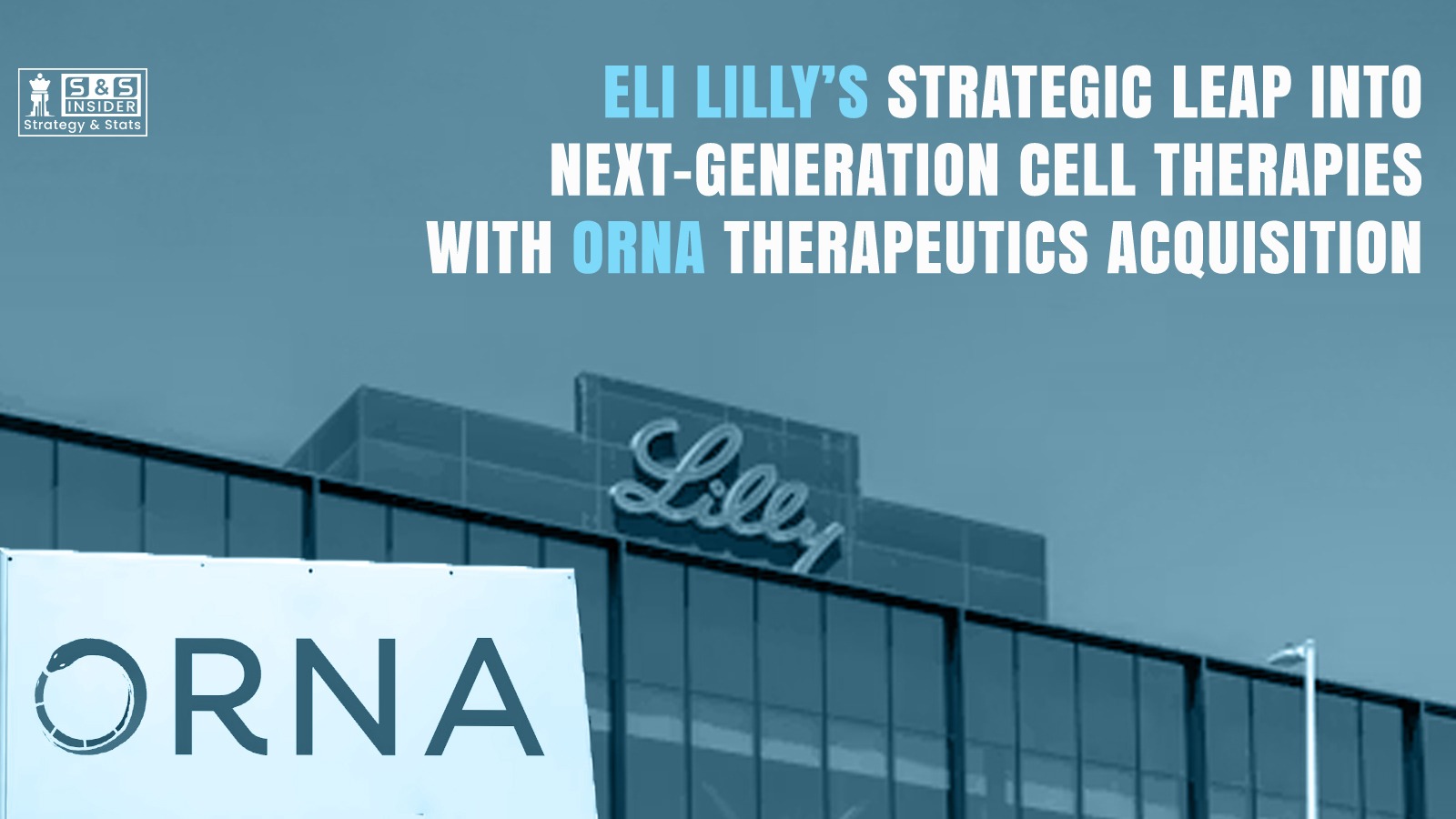
Eli Lilly and Company (NYSE: LLY), a global leader in pharmaceuticals and biotechnology, has announced a definitive agreement to acquire Orna Therapeutics, Inc., a cutting-edge biotech dedicated to in vivo cell therapy, in a transaction valued at up to $2.4 billion in cash and milestone-based payments. This landmark deal marks a significant milestone for Lilly’s expansion into next-generation genetic medicines and in vivo CAR-T therapies, reinforcing its strategic commitment to innovation in immunology and autoimmune disease treatment.
The acquisition is poised to bring transformative technology into Lilly’s pipeline by leveraging Orna’s proprietary circular RNA (circRNA) and lipid nanoparticle (LNP) delivery platforms. These technologies enable the patient’s own body to generate therapeutic cells in vivo, offering a promising alternative to traditional cell therapy approaches that require cells to be extracted, modified outside the body, and then reinfused. This shift could significantly streamline manufacturing, reduce costs, and expand patient accessibility.
Reinforcing Lilly’s Genetic Medicine Capabilities:
Orna Therapeutics, based in Watertown, Massachusetts, has developed a platform centered around engineered circRNA paired with advanced LNP systems, enabling durable expression of therapeutic proteins within the body. Its leading program, ORN-252, targets the CD19 antigen and is designed to treat B cell-driven autoimmune diseases. This asset, described by Lilly as clinical trial-ready, reflects the innovative potential of in vivo CAR-T therapies.
For Lilly, acquiring Orna translates into expanded capabilities in genetic medicines and places the company at the forefront of a new class of therapeutic platforms that could address unmet needs in autoimmune and immunological diseases.
Executive Perspectives on the Acquisition:
Leaders from both companies have underscored the transformative nature of this acquisition. Francisco Ramírez-Valle, Senior Vice President and Head of Immunology Research and Early Clinical Development at Lilly, emphasized that Orna’s platform could “unlock an entirely new class of genetic medicines and cell therapies for patients who currently have few or no treatment options.” This highlights Lilly’s broader vision of delivering breakthrough therapies to patients with complex diseases.
Joe Bolen, Ph.D., Chief Executive Officer of Orna Therapeutics, added that their engineered circRNA technology, combined with best-in-class LNP delivery, has the potential to revolutionize in vivo CAR-T therapy. Bolen noted that joining forces with a global leader like Lilly provides the scale and resources necessary to fully realize the therapeutic potential of their platform.
The strategic alignment between the companies reflects a shared goal of advancing beyond conventional CAR-T and cell therapy models toward approaches that could broaden therapeutic impact and patient access.
Strategic Impact and Competitive Landscape:
Lilly’s acquisition of Orna comes at a time when the biotech and pharmaceutical industries are increasingly focused on harnessing advanced genetic therapies. In vivo CAR-T approaches are gaining attention for their promise to overcome barriers associated with conventional therapies, including supply constraints, high treatment costs, and complex logistics. Analysts also note that this acquisition could help Lilly better compete with other major players exploring similar technologies.
Moreover, this acquisition strengthens Lilly’s portfolio following other recent strategic deals aimed at diversifying its pipeline beyond its successful obesity and metabolic disease treatments. With its broader genetic medicine strategy, Lilly is positioning itself to impact cancer, autoimmune, and immunological disease treatment landscapes significantly.
Integration and Future Outlook:
Under the terms of the agreement, Orna Therapeutics will be integrated into Lilly’s research and early development teams, advancing the combined mission to deliver scalable and patient-centric therapies for challenging immune-mediated diseases. The acquisition is expected to close in the near future, subject to customary closing conditions.
While the acquisition price includes milestone-based payments tied to future clinical progress, the full financial structure has not been fully disclosed. However, the total potential value of up to $2.4 billion underscores Lilly’s confidence in the strategic value of Orna’s platform and its relevance to future therapeutic paradigms.
Conclusion
Eli Lilly’s acquisition of Orna Therapeutics for up to $2.4 billion represents a bold and forward-looking step in the evolution of genetic medicines and cell therapy innovation. By incorporating Orna’s in vivo CAR-T platform and proprietary circRNA technology, Lilly is positioned to overcome traditional cell therapy limitations and expand its therapeutic reach, particularly in autoimmune diseases where treatment options remain limited. This acquisition not only enhances Lilly’s competitive edge but also underscores the industry’s shift toward more efficient, scalable, and patient-accessible therapy platforms.


