
Introduction: A New Era for Customer Engagement
Customer Experience Artificial Intelligence (CX AI), which was initially an experimental feature, has now become the core of how brands engage with their customers. From simply responding to frequently asked questions with the help of chatbots, AI has become an advanced technology that can solve problems and even predict what the customer will want in advance. In any case when it comes to business growth and development, CX AI has become a necessity rather than an option.
What Exactly is CX AI?
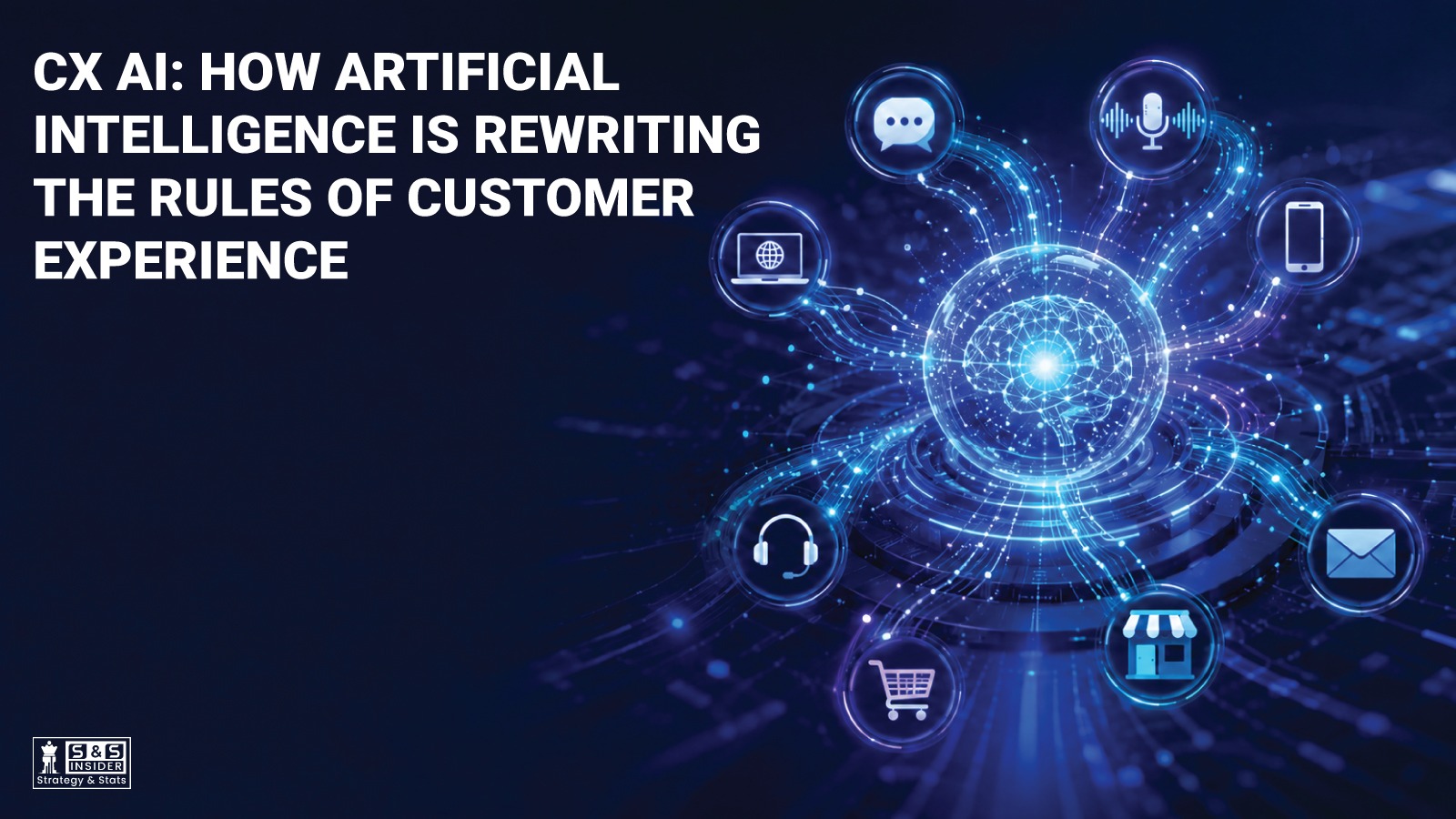
At its core, CX AI is the use of AI technology, such as natural language processing, machine learning, computer vision, and predictive analytics, to enhance the experience customers have with an organization at every point of interaction with that organization. The areas include support, sales, marketing, and post-sales interactions. Instead of thinking of AI as a single tool, organizations are integrating it into the full experience of the customer from start to finish.
Why Businesses Are Investing Now:
Several converging forces are pushing CX AI from a nice-to-have into a strategic priority.
- Rising customer expectations: The consumers of today demand fast, precise, and customized communication irrespective of the mode of communication. An era of instant online solutions has led to a generation that demands quick resolution of queries through custom-tailored communication.
- The cost of inconsistency: Customers are engaging with brands through various channels such as messaging, emails, calls, and social media, but they want to have a seamless interaction experience. This can only happen when all the systems are integrated with each other. Customers feel frustrated when they need to repeat themselves in each medium and thus end up losing their trust in brands.
- Competitive differentiation: With more businesses commoditizing their core offerings, customer experience has emerged as one of the few avenues left for differentiation. Businesses that offer a seamless, easy-to-understand, and empathic experience foster greater loyalty compared to those competing on the basis of price alone.
- Operational efficiency: Answering repetitive questions in a manual way is costly and inefficient. Automating such activities allows companies to give more time for human operators to deal with more complicated issues that require empathy and judgment.
The Technologies Powering CX AI
CX AI is not a single product, but it is an ecosystem of capabilities working together.
- Chatbots and Conversational AI deal with routine questions, leaving human workers to engage in more complex discussions.
- Predictive analytics can help firms predict customer requirements before complaints or requests arise.
- Sentiment analysis lets organizations monitor their customer's sentiment at any moment, transferring frustrated customers to human agents before problems arise.
- AI for voice applications can revolutionize call centers, facilitating frictionless calls without the need to wait on hold.
- Personalization engines make personalized offers based on behavioral data about individual customers.
Used collectively, these tools will move customer experience management from being a reactive process, which is dealing with issues after they have occurred, to being a proactive process
Industry Applications Worth Watching:
Although CX AI technology can be applied in almost all sectors, there are particular sectors that stand out. E-commerce and retail brands have been employing AI to deal with large volumes of routine requests on orders, returns, and product-related issues, while also providing personalized shopping advice to customers. In the healthcare industry, AI is being utilized for non-clinical activities such as making appointments and communicating with patients so that more time can be spent serving the patients directly. The financial services sector employs AI for fraud detection and conversation in order to maintain a high level of compliance.
The Human Element Still Matters:
It is often perceived that CX AI involves replacing the human agents altogether, but the reality is quite different. The best use cases involve the application of AI as a force multiplier and not as a replacement tool. Repetitive tasks are performed using the help of AI, whereas the human agents are made to deal with the complicated situations, which require empathy, discretion, and building relationships. It is these companies that succeed and achieve excellent outcomes in terms of resolving issues without affecting the human touch element.
Common Challenges in Adoption:
There are, however, some challenges to the implementation of CX AI despite the potential. One such challenge relates to the compatibility of legacy software which does not interact easily with artificial intelligence solutions. Another challenge related to data quality, since AI solutions are as effective as the data which is used to train them, and old customer data will negatively affect even the best AI solutions. Additionally, organizational readiness for AI may pose a challenge, as organizations often buy the technology but do not prepare their staff for using it effectively.
What the Future of CX AI Hold?
The CX AI is evolving to become increasingly personalized, autonomous, and integrated into each of the touchpoints with the customer. With time, the focus in the discourse is changing from “should we implement AI” to “how should we implement it properly.” The winners in the race won’t be the organizations that adopt the greatest number of tools but the ones that implement AI correctly, making it augment the relationship with the customer rather than substitute it, scaling without becoming dehumanized.
Conclusion:
CX Artificial Intelligence is one of the major transformations that take place when it comes to relationship building between companies and their customers. For those organizations that are ready to be smart and combine CX AI with understanding the customer’s needs, there is a great chance to distinguish from competitors and establish trust-based relations with the customer.



