
Growth can be observed in the surgical robots market as more and more health care providers opt for state-of-the-art robotic solutions that provide high surgical precision and ensure patient safety and efficiency of surgeries. Modern operating rooms can no longer do without surgical robots as they help perform minimally invasive procedures and ensure better results in numerous medical specialties.
The rising popularity of minimally invasive surgeries is changing the face of the healthcare sector and pushing for rapid adoption of robotic surgery devices by patients and healthcare providers alike. Minimally invasive surgeries cause little trauma to patients, allow quick recovery, and involve shorter hospitalization periods. Robotic surgery technologies continue to advance.
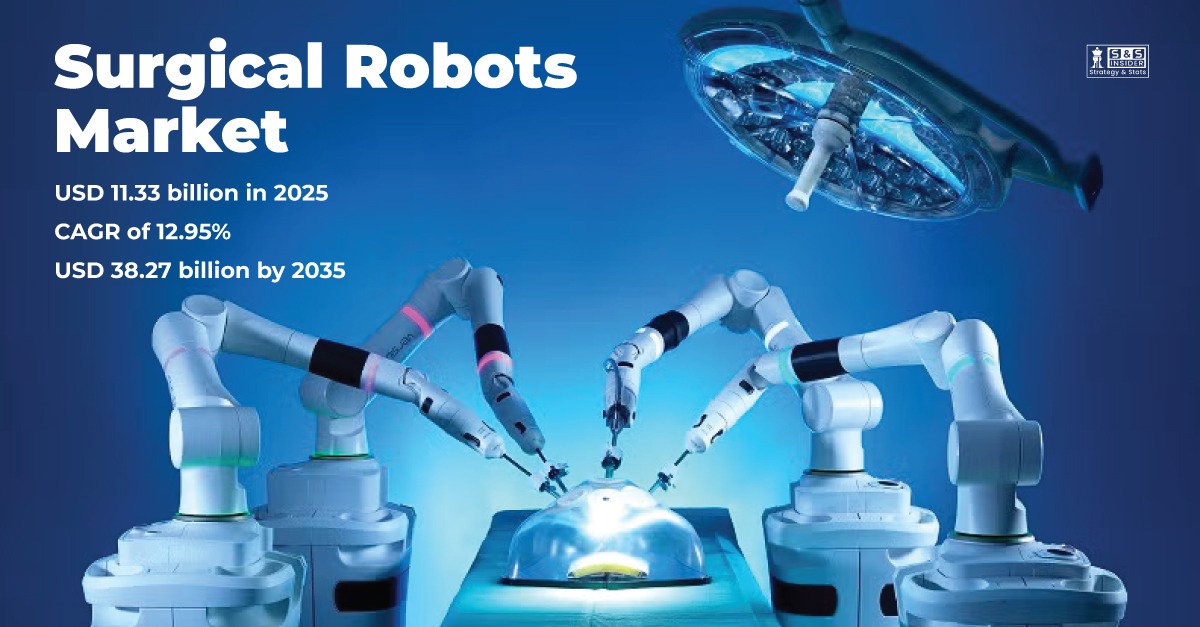
The Surgical Robots Market size was estimated at USD 11.33 billion in 2025 and is expected to reach USD 38.27 billion by 2035 and grow at a CAGR of 12.95% over the forecast period of 2026-2035.
Leading Companies in the Surgical Robots Market
Intuitive Surgical, Inc.
 Intuitive Surgical, Inc. is an important company in terms of robotics in surgery, known as the producer of innovative robotic platforms for surgical procedures. This company provides robotic systems and advanced imaging technologies that enhance minimally invasive surgical operations. Intuitive Surgical, Inc. has established itself in such areas of applications as urology, gynecology, and general surgery. The innovations and professional training programs contribute to the leadership of the company in the market.
Stryker Corporation
 The Stryker Corporation produces robotic devices aimed at enhancing the quality of surgical interventions and their accuracy. This company is focused on developing such technologies which can facilitate surgical procedures. It produces surgical technologies intended to ensure precise results during surgical intervention. The emphasis on technological innovations and integrated health care systems makes the company popular with hospitals and surgical centers.
Zimmer Biomet Holdings, Inc.
 Zimmer Biomet Holdings, Inc. offers robotically assisted orthopedic surgical instruments used for accurate implant placement and enhanced surgery process. The firm concentrates on surgical data analysis and minimally invasive operations as means of achieving better results in the healing process and patient recovery. With the increased adoption of surgical robotic systems in orthopedics, Zimmer Biomet aims to enhance its position in the industry.
Medtronic plc
 Medtronic plc is an innovative firm operating in healthcare technologies. The company specializes in the development of robotic assisted surgeries and minimally invasive treatments. Innovation of surgical navigation, imaging and robot accuracy is a key focus for the company. Medtronic's broad portfolio of healthcare products combined with its strong global presence makes Medtronic one of the leaders in the robotic surgery segment.
Data-backed trends guiding future business opportunities
The growing uptake of minimally invasive surgical operations is another key structural factor that drives the expansion of the market of surgical robots. Robotic-assisted surgery is linked to the decline in complications by 15% to 30%, as well as a decrease in hospitalization by 20% to 50% when compared to conventional techniques. Furthermore, faster recovery time and reduced post-surgery pain encourage healthcare providers to implement robotic assistance more often.
Moreover, the increased precision and control provided by robotic surgery technology is a significant trend that supports the market expansion. The implementation of surgical robots helps diminish the occurrence of hand tremors, magnifies the movements performed by the surgeon, and provides a high-definition stereoscopic vision that allows for an effective execution of interventions on small body parts. Therefore, these benefits are useful in the field of urological operations (prostatectomy), gynecological procedures, and orthopedic operations.
Finally, the growing patient awareness and demands related to innovative health services also contribute to the growing need for robotic surgery. The healthcare organizations introduce surgical robots to increase patient satisfaction, optimize procedure results, and achieve a competitive advantage within the healthcare market.
Transforming modern surgery through robotic precision and innovation
It can be concluded that there will be stiff competition among the major players operating within the market due to their continued efforts to invest in innovations and technological developments. In addition, the rising investments in robotic technology and precision-guided surgical systems are anticipated to open up more growth avenues for the industry players.
Increasing demand for effective and efficient healthcare solutions is expected to drive more adoption of robotic surgery as hospitals and other facilities increasingly concentrate on achieving better treatment outcomes. Improvements in imaging technology and motion control systems will help fuel adoption of robotic surgery around the world.
Robotic surgery has emerged as an essential part of the current healthcare system, and the rising usage of the surgical robots in different specialties is expected to propel the market growth going forward.



