
Polyphenol Market Report Scope & Overview:
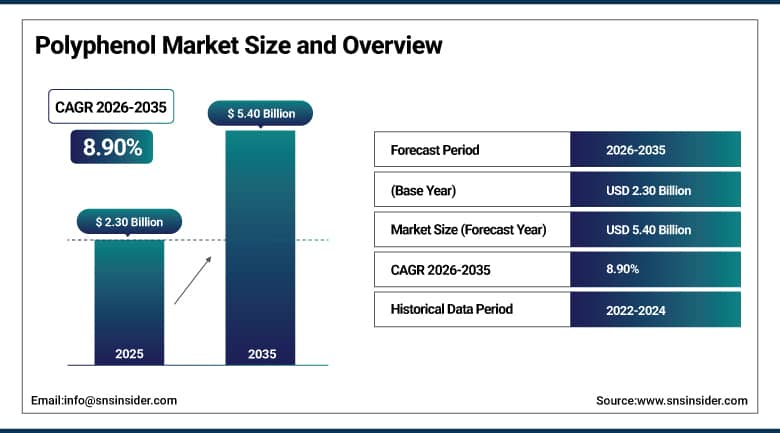
The Polyphenol Market was valued at USD 2.30 Billion in 2025 and is expected to reach USD 5.40 Billion by 2035, growing at a CAGR of 8.90% from 2026 to 2035.
Polyphenols are a structurally diverse and ubiquitous class of naturally occurring plant secondary metabolites characterized by the presence of multiple phenolic rings in their molecular architecture, encompassing more than 8,000 identified compounds organized into major structural families including the flavonoids whose catechins, anthocyanins, flavonols, and isoflavones provide the characteristic pigmentation and astringency of fruits and vegetables, the phenolic acids whose hydroxycinnamic and hydroxybenzoic acid derivatives are found in whole grains, coffee, and spices, the stilbenes whose resveratrol in grapes and wine has attracted substantial scientific attention for its cardiovascular and longevity-associated biological effects, and the lignans found in seeds, whole grains, and berries whose phytoestrogenic properties create women's health supplementation interest. These compounds' primary biological role in plants is protection against ultraviolet radiation, pathogen attack, and oxidative stress.
In August 2025, Barry Callebaut partnered with an influential brand of health food to design a range of supplements made of cocoa to be consumed by health-conscious consumers, using its extensive experience in processing cocoa and its Cabosse Naturals collection of upcycled cacao fruit to manufacture polyphenol-standardized cocoa extracts, where their polyphenols are measured against a standard based on flavanol concentration proven to offer cardiovascular benefits through clinical research. In November 2025, Barry Callebaut officially incorporated the upcycling of cacao fruit from the pulp to the husk in its sustainability solutions offerings under the Cabosse Naturals brand as a response to the need for circular economy among the ingredient industry through conversion of the agricultural waste of cacao fruits to polyphenol-standardized ingredients.
Market Size and Forecast
-
Market Size in 2026E: USD 2.50 Billion
-
Market Size by 2035: USD 5.40 Billion
-
CAGR: 8.90% from 2026 to 2035
-
Fastest Growing Region: Asia Pacific
-
Largest Region: North America
To Get More Information On Polyphenol Market - Request Free Sample Report
Polyphenol Market Trends
-
Upcycled plant by-products are emerging as sustainable sources of polyphenol ingredients.
-
Nano-encapsulation technologies are improving polyphenol bioavailability and targeted delivery.
-
Precision fermentation is enabling scalable production of high-value polyphenol compounds.
-
Functional beverages are driving increased incorporation of polyphenols for health-focused formulations.
-
Growing clinical research is strengthening scientifically validated health claims for polyphenol-based products.
U.S. Polyphenol Market Outlook
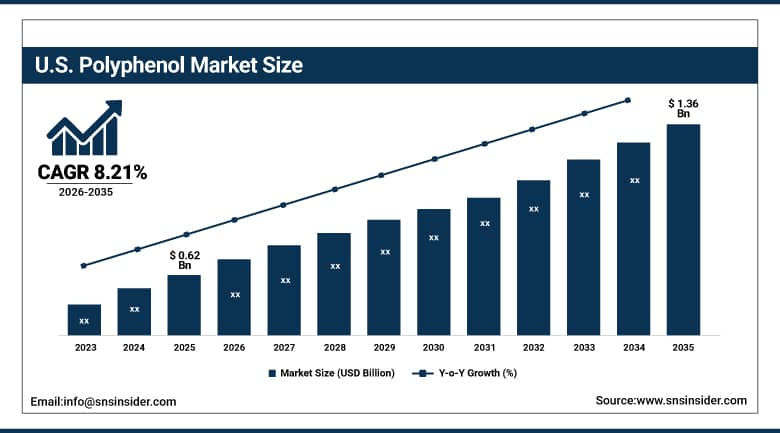
The U.S. Polyphenol Market was valued at approximately USD 0.62 Billion in 2025 and is expected to reach approximately USD 1.36 Billion by 2035, growing at a CAGR of approximately 8.21%.
The United States is the world's largest polyphenol market within the dominant North American region, reflecting its position as the most commercially developed dietary supplement and functional food market globally whose consumer health consciousness, high per-capita supplement expenditure, and extensive retail distribution infrastructure for nutraceutical products create the demand environment that sustains premium polyphenol ingredient procurement. U.S. consumers' growing awareness of grape seed, green tea, resveratrol, and quercetin polyphenol compounds through mainstream health media, social media nutrition influencer content, and clinical research reporting creates ingredient-specific consumer pull that enables product developers to command premiums for polyphenol-standardized ingredients. The FDA's updated healthy food labelling framework and ongoing evaluation of qualified health claims for polyphenol compounds.
FutureCeuticals Inc. launched NatureKnit, a plant-based product combining dietary fibre with polyphenols for health-focused applications targeting the gut health and metabolic wellness consumer segments whose growing recognition of the prebiotic-polyphenol interaction in supporting gut microbiome diversity created a product concept addressing both dietary fibre and polyphenol consumption objectives simultaneously. The combined fibre-polyphenol format leverages the established consumer understanding of dietary fibre's digestive health benefits while introducing polyphenols' antioxidant and anti-inflammatory properties within a single format whose convenience advantage over consuming multiple separate supplements addresses the supplement fatigue that motivates consumer consolidation toward multi-benefit formats. International Flavors & Fragrances integrated polyphenol enrichment capability into its nutritional ingredients platform in 2025, expanding its delivery system technology portfolio to address polyphenol bioavailability enhancement.
Polyphenol Market Segment Analysis
-
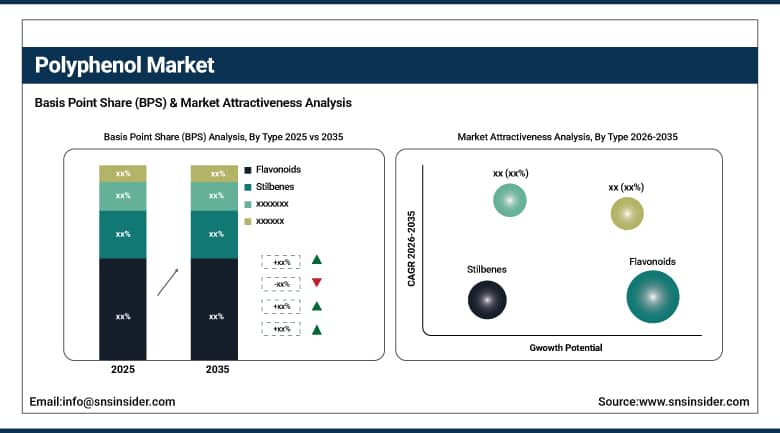
By Type, the flavonoids segment dominated the polyphenol market in 2025, while the stilbenes segment (resveratrol) is among the fastest growing types through premium supplement positioning.
-
By Source, the fruits segment dominated the polyphenol market with approximately 62.40% share in 2025, driven by the high natural polyphenol concentration of grapes, berries, apples, and citrus.
-
By Application, the functional foods & beverages segment dominated the polyphenol market with approximately 38.20% share in 2025, while the dietary supplements segment is growing at the fastest CAGR.
-
By End User, the food & beverage industry segment dominated the polyphenol market in 2025, while the nutraceutical & supplement manufacturers segment is the fastest growing end user category.
By Type, flavonoids dominate, resveratrol grows fastest
Flavonoids retained the dominant type position in the polyphenol market in 2025, reflecting the structural breadth of the flavonoid sub-family whose catechins from green tea, anthocyanins from berries, quercetin from onions and apples, isoflavones from soy, and hesperidin from citrus collectively create the most commercially diverse and commercially scaled polyphenol ingredient category. Grape seed proanthocyanidins and green tea catechins represent the largest commercial volume segments within the flavonoid category whose established supply chains, analytical standardization methods, and accumulated clinical evidence bases enable ingredient supplier quality specifications and functional food label communication at the mass market scale.
Stilbenes including resveratrol are among the fastest growing polyphenol types through their premium positioning in longevity and anti-ageing supplement formulations whose consumer interest, amplified by scientific and media discussion of resveratrol's NAD+ and sirtuin pathway interactions, sustains above-average ingredient demand growth despite the bioavailability challenges whose solution through nano-encapsulation and pterostilbene substitution technologies creates continued innovation in the segment.
By Application, functional foods dominate, supplements grow fastest
Functional foods and beverages retained the dominant application position with approximately 38.20% of polyphenol market revenue in 2025, reflecting the enormous commercial volume of polyphenol-containing food and beverage products whose chocolate, tea, coffee, wine, fruit juice, and fortified food formats collectively represent the largest consumer delivery mechanism for polyphenol compounds whether or not the polyphenol content is specifically marketed as a functional benefit. The food and beverage industry's growing incorporation of polyphenol content communication into product packaging narratives, ranging from dark chocolate brands emphasizing cocoa flavanol content to green tea beverage brands communicating catechin concentration, creates commercial demand for polyphenol-standardized ingredients whose measured content enables accurate and legally defensible labelling claims.
Dietary supplements are growing fastest as the concentrated polyphenol extract format enables therapeutic-range polyphenol intake that food consumption alone cannot reliably achieve, creating a supplement category whose health-motivated consumer base and premium pricing sustain above-market revenue growth proportional to health consciousness trend strength.
Regional Analysis
|
Region |
Major Country |
Share within Region, 2025 (%) |
|---|---|---|
|
North America |
United States |
84.73% |
|
Europe |
France |
27.84% |
|
Asia Pacific |
China |
38.47% |
|
Middle East & Africa |
UAE |
22.84% |
|
Latin America |
Brazil |
43.84% |
North America Polyphenol Market Insights
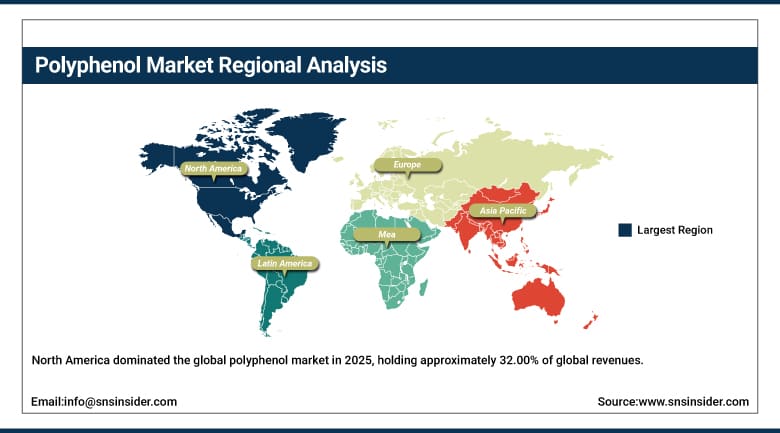
North America dominated the global polyphenol market in 2025, holding approximately 32.00% of global revenues. The United States accounts for approximately 84.73% of regional revenue through its advanced dietary supplement and functional food market whose consumer health consciousness, high per-capita supplement expenditure, and extensive natural products retail infrastructure create the demand environment for premium polyphenol ingredient procurement. Canada contributes meaningful supplementary North American demand through its growing natural products market.
Get Customized Report as Per Your Business Requirement - Enquiry Now
Europe Polyphenol Market Insights
Europe held prominent share of global polyphenol revenues in 2025. France accounts for approximately 27.84% of European revenues through its extensive wine industry whose grape polyphenol research heritage and consumer cultural relationship with polyphenol-rich food and beverage consumption creates both scientific innovation and commercial market depth. EFSA's approved health claim for olive oil hydroxytyrosol protecting blood lipids provides Europe's most commercially significant polyphenol ingredient claim framework. Germany, Italy, and Spain each contribute meaningful European demand through their functional food, supplement, and pharmaceutical industries.
Asia Pacific Polyphenol Market Insights
Asia Pacific is the fastest-growing regional polyphenol market, reflecting the region's traditional cultural relationship with polyphenol-rich food and beverage consumption including green tea, traditional herbal medicine, and fermented plant food traditions whose integration with modern health supplement and functional food formats creates growing commercial demand. China accounts for approximately 38.47% of Asia Pacific revenues through its world-leading green tea production and extract manufacturing, growing supplement market, and traditional medicine integration of polyphenol-rich botanical extracts. Japan and South Korea contribute meaningful regional demand through their mature functional food markets and cosmetic application of polyphenol ingredients.
MEA & Latin America Polyphenol Market Insights
Middle East and Latin America represent growing polyphenol markets where health and wellness trends and functional ingredient adoption are creating expanding demand. The UAE leads MEA revenues at approximately 22.84% of the regional total through its health-conscious consumer base, growing nutraceutical retail market, and the regional headquarters of international supplement brands. Brazil leads Latin American revenues at approximately 43.84% of the regional total through its extensive biodiversity providing unique polyphenol-rich plant sources including açaí, cupuaçu, and guaraná whose export and domestic application creates a distinctive polyphenol ingredient portfolio.
Market Dynamics
Growth Drivers: Rising consumer preventive healthcare investment creating demand for evidence-based polyphenol ingredients and functional beverage growth incorporating polyphenol content as a health differentiation platform.
The global preventive healthcare trend whose consumer recognition of lifestyle diet's role in chronic disease risk reduction is creating sustained market growth for health-functional ingredients including polyphenols represents the most commercially reliable demand driver for the polyphenol ingredient market. WHO data showing non-communicable diseases including cardiovascular disease, type 2 diabetes, and cancer collectively causing 74 percent of global mortality creates a consumer disease prevention motivation that polyphenol ingredients' anti-inflammatory, antioxidant, and metabolic health benefits directly address. The growing strength of clinical evidence connecting polyphenol consumption to specific health outcome improvements, including Mediterranean diet adherence studies demonstrating cardiovascular mortality reduction and specific polyphenol intervention trials showing blood pressure, cholesterol, and glycaemic control improvement, provides a science base that enables sophisticated health benefit communication to health-motivated consumers.
Restraints: High extraction and purification costs for premium polyphenol ingredients and bioavailability limitations of many polyphenol compounds reducing in vivo efficacy relative to in vitro antioxidant activity measurements.
Plant polyphenol extraction economics depend on raw material polyphenol concentration, solvent and process selection, and purification depth requirements whose combined production cost for pharmaceutical-grade standardized polyphenol extracts can reach USD 50 to USD 500 or more per kilogram depending on purity specification, creating ingredient cost levels that restrict polyphenol application to premium product formulations whose retail price positioning can absorb ingredient cost without margin compression. The bioavailability challenge, whereby the most-studied polyphenol health effects were observed in epidemiological studies of food consumption whose polyphenol matrix effects and long-term dietary patterns differ substantially from the concentrated extract supplement conditions where clinical effects are typically evaluated, creates scientific uncertainty about the effective therapeutic doses achievable through supplement consumption that limits health claim filing success at the most specific efficacy claim level.
Opportunities: Upcycled agricultural waste polyphenol extraction creating cost-competitive ingredient supply chains and personalized nutrition polyphenol supplementation guided by genetic and microbiome profiling.
The conversion of fruit processing waste streams including grape pomace, apple pomace, citrus peel, olive mill waste, and cocoa pod husk into commercially viable polyphenol ingredient supply represents a circular economy business model opportunity whose economics are becoming progressively more attractive as waste disposal costs increase and polyphenol ingredient demand growth sustains price levels that justify extraction investment in processing facility co-location. Grape pomace, generated at approximately 20 percent of crushed grape weight in winemaking, represents a particularly abundant polyphenol source whose proanthocyanidin and anthocyanin content has established commercial extraction operations at scale across European wine regions. Personalized nutrition's growing feasibility, enabled by direct-to-consumer genetic testing and gut microbiome analysis whose outputs identify polyphenol metabolism genotypes.
Recent Developments:
-
2025: Barry Callebaut officially integrated upcycled cacao fruit fractions into its Cabosse Naturals sustainability portfolio, and announced a partnership with a health food brand to develop polyphenol-standardised cocoa-based supplements targeting health-conscious consumers with clinically referenced flavanol content specifications.
-
2025: Olam International expanded West African cocoa processing capacity through technology investment improving polyphenol ingredient quality and yield, and International Flavors & Fragrances expanded its nutritional ingredients platform with polyphenol bioavailability enhancement delivery system technology.
-
2024: FutureCeuticals Inc. launched NatureKnit, a plant-based product combining dietary fibre and polyphenols for gut health applications, and DOHLER announced acquisition plans for SVZ to strengthen its red fruit and vegetable polyphenol ingredient portfolio.
Polyphenol Market Key Players are:
-
Cargill Inc.
-
DSM Nutritional Products (dsm-firmenich)
-
BASF SE
-
Archer Daniels Midland Company
-
Chr. Hansen A/S
-
Barry Callebaut AG
-
Naturex SA (Givaudan)
-
Kemin Industries Inc.
-
Sabinsa Corporation
-
International Flavors & Fragrances Inc.
-
FutureCeuticals Inc.
-
DOHLER GmbH
-
Ajinomoto OmniChem Natural Specialities
-
Polyphenolics Inc. (E&J Gallo Winery)
-
Indena SpA
-
Nexira SAS
-
Martin Bauer Group
-
Maypro Industries
-
Fruit d'Or
-
Cyvex Nutrition Inc.
Polyphenol Market Report Scope:
| Report Attributes | Details |
|---|---|
| Market Size in 2025 | USD 2.30 Billion |
| Market Size by 2035 | USD 5.40 Billion |
| CAGR | CAGR of 8.90% From 2026 to 2035 |
| Base Year | 2025 |
| Forecast Period | 2026-2035 |
| Historical Data | 2022-2024 |
| Report Scope & Coverage | Market Size, Segments Analysis, Competitive Landscape, Regional Analysis, DROC & SWOT Analysis, Forecast Outlook |
| Key Segments | • By Type (Flavonoids, Phenolic Acids, Stilbenes, Lignans, Polyphenolic Amides, Others) • By Source (Fruits, Vegetables, Whole Grains, Beverages, Nuts & Legumes, Spices, Others) • By Application (Functional Foods & Beverages, Dietary Supplements, Pharmaceuticals, Cosmetics & Personal Care, Animal Feed, Others) • By End User (Food & Beverage Industry, Nutraceutical & Supplement Manufacturers, Pharmaceutical Companies, Cosmetics Industry, Animal Nutrition) |
| Regional Analysis/Coverage | North America (US, Canada), Europe (Germany, UK, France, Italy, Spain, Russia, Poland, Rest of Europe), Asia Pacific (China, India, Japan, South Korea, Australia, ASEAN Countries, Rest of Asia Pacific), Middle East & Africa (UAE, Saudi Arabia, Qatar, South Africa, Rest of Middle East & Africa), Latin America (Brazil, Argentina, Mexico, Colombia, Rest of Latin America). |
| Company Profiles | Cargill Inc., DSM Nutritional Products (dsm-firmenich), BASF SE, Archer Daniels Midland Company, Chr. Hansen A/S, Barry Callebaut AG, Naturex SA (Givaudan), Kemin Industries Inc., Sabinsa Corporation, International Flavors & Fragrances Inc., FutureCeuticals Inc., DOHLER GmbH, Ajinomoto OmniChem Natural Specialities, Polyphenolics Inc. (E&J Gallo Winery), Indena SpA, Nexira SAS, Martin Bauer Group, Maypro Industries, Fruit d'Or, and Cyvex Nutrition Inc. |
Frequently Asked Questions
The primary growth factors are rising consumer preventive healthcare investment creating evidence-based polyphenol ingredient demand, functional beverage growth incorporating polyphenol health differentiation.
The Polyphenol Market is expected to grow at a CAGR of 8.90% from 2026 to 2035.
North America dominated the Polyphenol Market in 2025, holding approximately 32.00% of global revenues.
The functional foods & beverages segment dominated the Polyphenol Market with approximately 38.20% share in 2025.
