
Retinoscopes Market Report Scope & Overview:
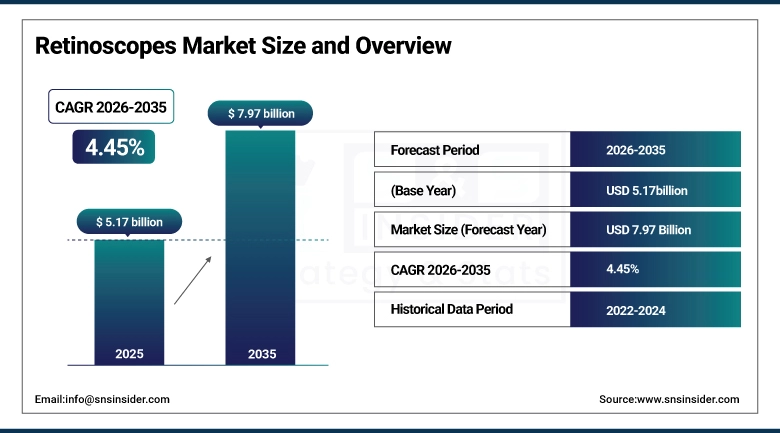
The Retinoscopes Market size is valued at USD 5.17 Billion in 2025 and is projected to reach USD 7.97 Billion by 2035, growing at a CAGR of 4.45% during the forecast period 2025–2035.
The Retinoscopes Market analysis report delivers exhaustive knowledge of accurate eye diagnostics, advancements in the field of ophthalmology and widening penetration in medical establishments as a result of need for sight examination and technological innovation developments from 2026 to 2035.
Retinoscopes demand exceeded 120 million units in 2025, driven by growing vision care needs and adoption across healthcare settings.
Market Size and Forecast:
-
Market Size in 2025: USD 5.17 Billion
-
Market Size by 2035: USD 7.97 Billion
-
CAGR: 4.45% from 2026 to 2035
-
Base Year: 2025
-
Forecast Period: 2026–2035
-
Historical Data: 2022–2024
To Get more information on Retinoscopes Market - Request Free Sample Report
Retinoscopes Market Trends:
-
Rising prevalence of refractive errors and vision disorders is driving increased demand for accurate eye examination tools including retinoscopes across healthcare settings.
-
Advancements in LED-based and digital retinoscopes are improving precision, portability, and ease of use, boosting clinician adoption.
-
Growing investments in ophthalmic infrastructure and expanding eye care services are accelerating market penetration.
-
Increasing emphasis on early diagnosis and preventive eye care is supporting routine vision screening in hospitals and clinics.
-
Expansion of ambulatory surgical centers and specialty ophthalmic clinics is creating new usage environments for diagnostic devices.
-
Rising adoption of portable and handheld retinoscopes is enabling greater flexibility in remote, rural, and point-of-care settings.
U.S. Retinoscopes Market Insights:
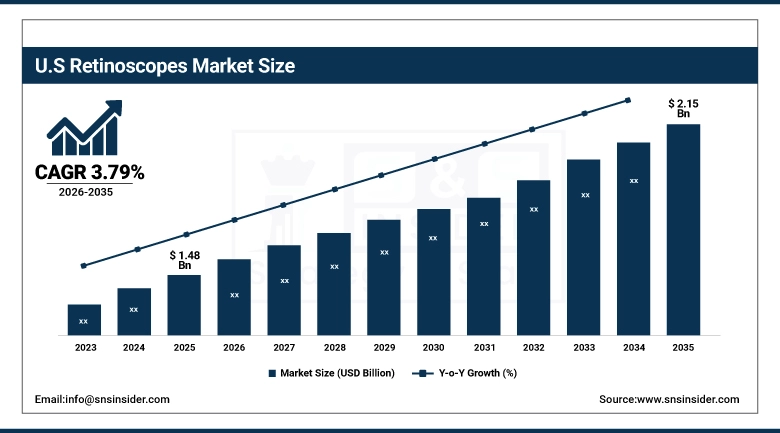
The U.S. Retinoscopes Market is projected to grow from USD 1.48 Billion in 2025 to USD 2.15 Billion by 2035, at a CAGR of 3.79%. Growth is driven by the increase in visual defects, the growth in the infrastructural base of ophthalmology, the increasing popularity of diagnostic instruments, and the growing importance of eye health care prevention programs in hospitals.
Retinoscopes Market Growth Drivers:
-
Rising vision disorders, expanding ophthalmic infrastructure, and demand for accurate diagnostics driving retinoscope adoption.
Increased cases of visual problems along with increased awareness toward the importance of early diagnosis in eye health significantly boosted the demand for retinoscopes. Increasing overall investments are put in place toward development of ophthalmology related facilities and services. Hence leading to the rising number of eye tests conducted at hospitals and clinics. The move toward portable retinoscopes and LED powered ones along with demand for fast results is driving market acceptance.
Over 60% of eye examinations in 2025 incorporated retinoscopy-based assessments, driven by rising vision disorders and growing adoption of advanced diagnostic tools in clinical practice.
Retinoscopes Market Restraints:
-
High cost of advanced retinoscopes and limited access to skilled ophthalmic professionals restraining widespread adoption.
The high cost involved in purchasing state-of-the-art retinoscopes and trained ophthalmic professionals becomes one of the largest obstacles in the market’s expansion. The budget limitation that exists in many developing countries hampers the acquisition of state-of-the-art medical equipment such as the retinoscope. Furthermore, there is an acute lack of skilled medical staff who can properly use this device. There also exist many operational difficulties associated with regular maintenance and calibration of the device.
Retinoscopes Market Opportunities:
-
Expanding teleophthalmology adoption, rising preventive eye care demand, and portable devices creating strong growth opportunities.
The expansion of teleophthalmology, combined with increased awareness about eye health prevention, has created significant potential for the retinoscopes market. Portable and electronic retinoscopes facilitate remote diagnosis and screening of vision disorders, especially among underprivileged populations living in rural areas. With the incorporation of digital health technology into practice, optometrists can conduct better diagnostics and patient monitoring. Investments in healthcare infrastructure development and early diagnosis of refractive errors are additional factors driving the widespread use of retinoscopes.
Over 45% of eye care providers adopted portable or digital retinoscopes in 2025, supported by the growth of teleophthalmology and demand for remote vision screening.
Retinoscopes Market Segmentation Analysis:
-
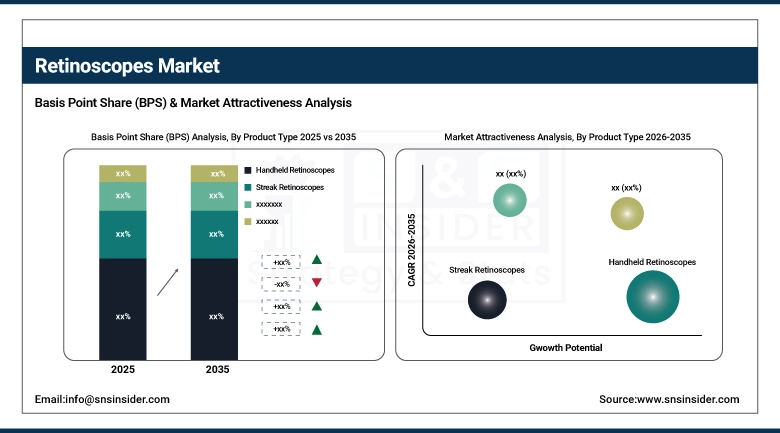
By Product Type, Handheld Retinoscopes held the largest market share of 34.27% in 2025, while Digital Retinoscopes are expected to grow at the fastest CAGR of 6.84% during 2026–2035.
-
By Technology, LED Retinoscopes dominated with a 48.19% market share in 2025, whereas Hybrid Retinoscopes are projected to register the fastest CAGR of 6.12% through 2026–2035.
-
By Distribution Channel, Direct Sales captured the largest share of 39.56% in 2025, while Online Sales are anticipated to expand at the fastest CAGR of 7.03% during the forecast period.
-
By End-User, Hospitals accounted for the highest market share of 41.28% in 2025, while Ophthalmic Centers are expected to grow at the fastest CAGR of 6.57% through 2026–2035.
By Product Type / Device Type, Handheld Retinoscopes Dominate While Digital Retinoscopes Are Fastest Growing:
Handheld Retinoscopes segment dominated the market as they are widely used in clinical setup, are easy to use and give constant results during ophthalmological examination. Refractive state of a subject eye has been rapidly measured by these devices in hospitals, clinics and other ophthalmological institutions.
Digital Retinoscopes are the fastest growing segment, driven by innovations, accuracy in diagnosis, and integration with digital technology. Increased usage of sophisticated instruments used in ophthalmology and the growing need for efficient diagnostic tools are key drivers of this market trend.
By Technology, LED Retinoscopes Dominate While Hybrid Retinoscopes Are Fastest Growing:
LED Retinoscopes segment dominated the market due to its better illumination, energy efficiency, durability, and stable light source. These features make it very favorable for use in the medical field due to improved visibility and increased accuracy when diagnosing problems with eyes.
Hybrid Retinoscopes are the fastest growing segment, attributed to the use of several light sources and superior functionalities. The increasing preference for flexible devices, coupled with technological innovations, has been contributing toward increased usage of hybrid retinoscopes in various medical institutions.
By Distribution Channel, Direct Sales Dominate While Online Sales Are Fastest Growing:
Direct Sales segment dominated the market as a majority of manufacturers and suppliers have contracts with hospitals, eye centers, and clinics that offer tailor-made solutions, technical assistance, and cost-effectiveness. This distribution model develops healthy relationships, price advantage and quality post-sale services so it dominates.
Online Sales are the fastest growing segment, due to factors which includes the rise in digital technology usage, convenience, product availability, and cost-effectiveness. Increased availability through the use of online procurement services and e-commerce sites will make ophthalmic devices more available, especially to small clinics.
By End-User, Hospitals Dominate While Ophthalmic Centers Are Fastest Growing:
Hospitals segment dominated the market owing to large numbers of patients, diagnostic equipment, and qualified doctors specializing in ophthalmology. Hospitals are regarded as the primary institutions where eye checkups are performed, and they represent the major consumers of retinoscopes.
Ophthalmic Centers are the fastest growing segment, driven by increasing specialization within the field of eye care, increasing demand for specialized diagnostic and treatment centers, and a trend among patients to seek out specialized clinics. The development of specialized eye centers, along with investment in ophthalmic technology, is boosting their growth even further.
Retinoscopes Market Regional Analysis:
North America Retinoscopes Market Insights:
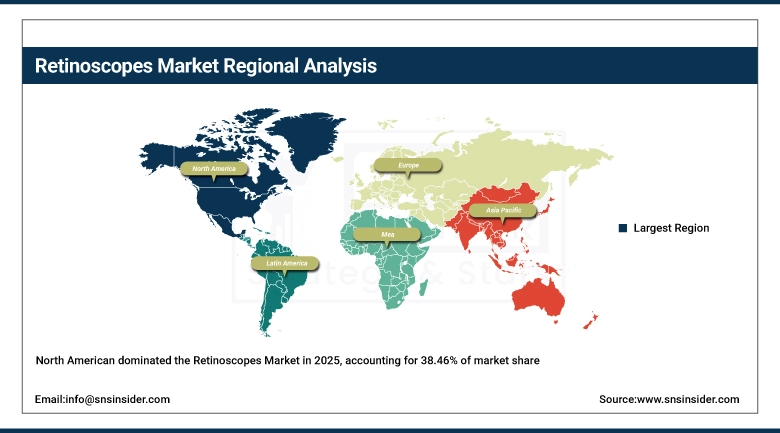
The North America Retinoscopes Market is dominant, holding a 38.46% share in 2025. These favorable trends can be attributed to well-developed healthcare facilities, technological advancement in eye screening systems, and expertise among the eye care specialists. The increasing prevalence of eye disorders along with the practice of eye screening regularly drives market dynamics. Efficient supply chains, state-of-the-art retinoscopes, and growing focus on preventive care continue to boost market growth within hospitals, clinics, and ophthalmic centers.
Get Customized Report as per Your Business Requirement - Enquiry Now
U.S. Retinoscopes Market Insights:
The U.S. Retinoscopes Market is boosted by advanced healthcare systems, technological advancements in ophthalmic applications, and the availability of competent professionals. Increasing occurrences of vision diseases, the presence of regular eye check-ups, and innovations in diagnostic devices fuel the demand for retinoscopes. Effective supply chain management and early diagnosis are other key factors that have aided market growth.
Asia-Pacific Retinoscopes Market Insights:
Asia-Pacific Retinoscopes Market is the fastest-growing region, projected to register a CAGR of 6.30% during the 2026–2035 period. Increasing prevalence rates of eye-related problems, growing consumer education on eye health, and expanding availability of eye care services are the key factors behind this trend. Urbanization trends, rising investments in the healthcare sector, and enhanced healthcare infrastructure in nations such as China, India, Japan, and certain regions of Southeast Asia are driving the uptake rate of retinoscopes in this region.
China Retinoscopes Market Insights:
The China Retinoscopes Market is driven by increasing awareness regarding eye health, developments in the health care sector, and an increased incidence of vision-related conditions. Urbanization, a large middle-class population, and government efforts in providing ophthalmic care drive the market. Technological improvements and wider availability of medical devices help maintain China’s position in the APAC region.
Europe Retinoscopes Market Insights:
The Europe Retinoscopes Market thrives due to advanced healthcare services, stringent regulations, and widespread knowledge of vision care in countries such as Germany, France, and the UK. Drivers for the market include the growing prevalence of refractive disorders, an aging population base, and regular eye screenings. Factors contributing to the expansion of the market include the availability of retinoscopes across hospitals, specialized clinics, and ophthalmology centers, along with the application of cutting-edge technology for eye diagnosis and preventative eye care.
Germany Retinoscopes Market Insights:
Germany stands out as a key market in Europe’s Retinoscopes sector owing to factors such as an effective healthcare infrastructure, stringent regulations, and greater awareness about eye-care management. Factors driving growth include the increased prevalence of ocular diseases, use of sophisticated diagnostic equipment, increased ophthalmology clinics, and preventive eye checkups at healthcare institutions.
Latin America Retinoscopes Market Insights:
Latin America Retinoscopes Market is influenced by increased knowledge about eye care, improved healthcare availability, and increased incidences of eye diseases. With an increase in urbanization and development in eye care services, the market is fueled in developing countries such as Brazil, Mexico, and Argentina. In addition, increased acceptance of eye care diagnostics and increased preventive eye care have been fueling growth.
Middle East and Africa Retinoscopes Market Insights:
The Middle East & Africa Retinoscopes Market is expected to grow due to an increased awareness regarding eye health, the development of the healthcare system, and the prevalence of vision disorders. The expanding urban population and efforts by governments to improve their healthcare system are contributing to an increase in the availability of ophthalmic services.
Retinoscopes Market Competitive Landscape:
Welch Allyn (Hillrom) is a leading medical diagnostics systems supplier, having ophthalmic products including retinoscopes that are extensively utilized throughout the industry. After the acquisitions by Hillrom and subsequently Baxter International Inc, Welch Allyn (Hillrom) has consistently been a front runner in this market with its long-standing tradition of manufacturing medical instruments, extensive distribution networks, and flawless integration within larger healthcare organizations. The company’s innovations, and how easily clinicians can use its products, have facilitated is acceptance in hospitals and clinics around the world.
-
In March 2025, Welch Allyn (Hillrom) expanded its ophthalmic diagnostic portfolio with advanced retinoscope and combined diagnostic sets designed to improve precision, ergonomics, and workflow efficiency, strengthening its adoption across hospitals and clinics globally.
HEINE Optotechnik GmbH & Co. KG is a German based company which enjoys great referring and positive market segment firstly due to its diversified quality, particularly in regards to ophthalmology sector and ENT treatment. HEINE is an industry leader in retinoscope manufacturing due to its use of advanced technology, new LED lighting systems, and long-lasting equipment. The company continuously expands through focused research and potential development, robust collaboration with practicing clinicians. Through its vast marketing networks, stringent quality checks and excellent engineering capabilities, HEINE remains a favourite among ophthalmologists.
-
In February 2025, HEINE Optotechnik GmbH & Co. KG enhanced its retinoscope lineup with advanced LED illumination and high-precision optics, focusing on durability, accuracy, and clinician comfort, reinforcing its strong position in ophthalmic diagnostic equipment.
Keeler Ltd. is an experienced British company that manufactures retinoscope and other devices used in eye examination. With experience, a strong product lineup and penetration in both mature and growing markets, this company has established itself as a prominent player in the industry. It aims to solve modern medical needs by highlighting ergonomics, portability and advanced optical power. Due to the distribution associations, ongoing creativity, and patient-focused ideal business has created a solid corporate character up until now; it maintained its competitive benefits in the retinoscopes market.
-
In January 2025, Keeler Ltd. introduced upgraded retinoscopes featuring LED technology, ergonomic designs, and improved portability, aimed at enhancing diagnostic efficiency and user convenience, supporting its growing presence across ophthalmic centers and healthcare facilities.
Retinoscopes Market Key Players:
Some of the Retinoscopes Market Companies are:
-
Welch Allyn (Hillrom)
-
HEINE Optotechnik GmbH & Co. KG
-
Keeler Ltd.
-
Rudolf Riester GmbH
-
NIDEK Co., Ltd.
-
Topcon Corporation
-
Carl Zeiss Meditec AG
-
Reichert, Inc.
-
Huvitz Co., Ltd.
-
Essilor Instruments / EssilorLuxottica
-
Luneau Technology Group
-
Oculus Optikgeräte GmbH
-
Volk Optical Inc.
-
Shin-Nippon (Rexxam Co., Ltd.)
-
Righton Limited
-
US Ophthalmic
-
NEITZ INSTRUMENTS Co., Ltd.
-
Unitech Vision
-
Suzhou Kangjie Medical Co., Ltd.
-
Opticlar
| Report Attributes | Details |
|---|---|
| Market Size in 2025 | USD 5.17 Billion |
| Market Size by 2035 | USD 7.97 Billion |
| CAGR | CAGR of 4.45% From 2026 to 2035 |
| Base Year | 2025 |
| Forecast Period | 2026-2035 |
| Historical Data | 2022-2024 |
| Report Scope & Coverage | Market Size, Segments Analysis, Competitive Landscape, Regional Analysis, DROC & SWOT Analysis, Forecast Outlook |
| Key Segments | • By Product Type (Streak Retinoscopes, Spot Retinoscopes, Handheld Retinoscopes, Table Top Retinoscopes, Portable Retinoscopes, Digital Retinoscopes, Traditional Retinoscopes) • By Technology (Halogen Retinoscopes, LED Retinoscopes, Xenon Retinoscopes, Hybrid Retinoscopes) • By Distribution Channel (Direct Sales, Distributors & Dealers, Online Sales, Retail Stores / Medical Equipment Stores) • By End User (Hospitals, Ophthalmic Centers, Clinics, Ambulatory Surgical Centers, Diagnostic Laboratories, Other End Users) |
| Regional Analysis/Coverage | North America (US, Canada), Europe (Germany, UK, France, Italy, Spain, Russia, Poland, Rest of Europe), Asia Pacific (China, India, Japan, South Korea, Australia, ASEAN Countries, Rest of Asia Pacific), Middle East & Africa (UAE, Saudi Arabia, Qatar, South Africa, Rest of Middle East & Africa), Latin America (Brazil, Argentina, Mexico, Colombia, Rest of Latin America). |
| Company Profiles | Welch Allyn (Hillrom), HEINE Optotechnik GmbH & Co. KG, Keeler Ltd., Rudolf Riester GmbH, NIDEK Co., Ltd., Topcon Corporation, Carl Zeiss Meditec AG, Reichert, Inc., Huvitz Co., Ltd., Essilor Instruments / EssilorLuxottica, Luneau Technology Group, Oculus Optikgeräte GmbH, Volk Optical Inc., Shin-Nippon (Rexxam Co., Ltd.), Righton Limited, US Ophthalmic, NEITZ INSTRUMENTS Co., Ltd., Unitech Vision, Suzhou Kangjie Medical Co., Ltd., Opticlar |
Frequently Asked Questions
The Retinoscopes Market is expected to grow at a CAGR of 4.45% during 2026–2035.
The market is valued at USD 5.17 Billion in 2025 and is projected to reach USD 7.97 Billion by 2035.
Growth is driven by rising prevalence of vision disorders, increasing awareness of early eye diagnosis, expanding ophthalmic infrastructure, and growing adoption of advanced diagnostic devices across healthcare facilities.
Handheld Retinoscopes dominated with a 34.27% share in 2025, while Digital Retinoscopes are projected to grow at the fastest CAGR of 6.84% during 2026–2035.
North America dominated with a 38.46% share in 2025, while Asia-Pacific is the fastest-growing region, expected to expand at a CAGR of 6.30% during 2026–2035.
