
Sex Reassignment Surgery Market Report Scope & Overview:
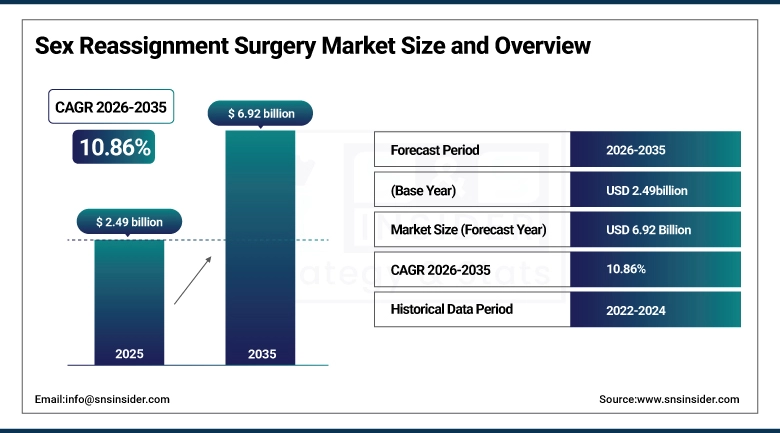
The Sex Reassignment Surgery Market size is valued at USD 2.49 Billion in 2025 and is projected to reach USD 6.92 Billion by 2035, growing at a CAGR of 10.86% during the forecast period 2026–2035.
The Sex Reassignment Surgery Market Report presents an extensive study of market dynamics, surgical developments, and medical application areas. Growing rates of gender dysphoria cases, greater social acceptance of transgender and non-binary people, advances in surgical techniques such as robotics and minimally invasive procedures, and development of healthcare facilities fuel strong market growth from 2026 to 2035.
More than 65,000 sex reassignment procedures will be performed by 2025, due to wider availability of health insurances in developed countries.
Market Size and Forecast:
-
Market Size in 2025: USD 2.49 Billion
-
Market Size by 2035: USD 6.92 Billion
-
CAGR: 10.86% from 2026 to 2035
-
Base Year: 2025
-
Forecast Period: 2026–2035
-
Historical Data: 2022–2024
To Get more information on Sex Reassignment Surgery Market - Request Free Sample Report
Sex Reassignment Surgery Market Trends:
-
Demand driven by increased cases of gender dysphoria, along with societal acceptance of gender diversity.
-
Increase in the popularity of medical tourism, especially within the Asia Pacific region (Thailand, India), where cheaper options exist than in North America and Europe.
-
Clinics utilizing new technologies including robotic surgery and minimally invasive surgery for better results and precision.
-
Preference for facial feminization surgery (FFS) and voice surgeries that make an impact on how others perceive a transgender patient.
-
The trend toward specialized clinics catering to individual needs rather than hospitals, contributing to higher CAGR.
-
Post-operation and psychological counseling as an integral part of the treatment process.
-
Educational and infrastructural investments aimed at widening the number of skilled surgeons.
-
Legal regulations in favor of gender-affirming procedures within the European Union and North America.
-
Expensive procedures leading to a growing trend of seeking affordable options through medical tourism.
U.S. Sex Reassignment Surgery Market Insights:
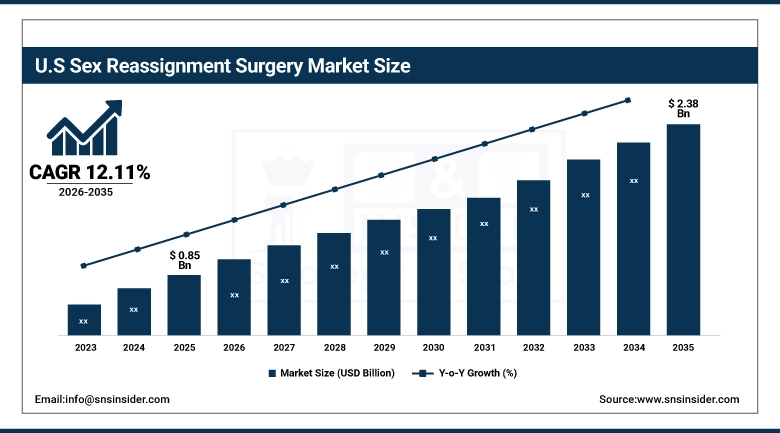
The U.S. Sex Reassignment Surgery Market is projected to grow from USD 0.85 Billion in 2025 to USD 2.38 Billion by 2035, at a CAGR of 12.11%. Growth is fuelled by an increase in the cases of gender dysphoria, greater tolerance for transgender and non-conformist patients, increased use of robotic surgery and other new surgical innovations, and increased investment in specialty clinics and hospital facilities across the world.
Sex Reassignment Surgery Market Growth Drivers:
-
Rising prevalence of gender dysphoria and increasing social acceptance are driving demand for advanced gender-affirming procedures.
Advances in the use of genital reconstruction surgery, chest masculinization surgery, breast augmentation surgery, facial feminization surgery, and voice surgeries are some of the major factors responsible for the growth of the Sex Reassignment Surgery Market. With hospitals, specialized clinics, and ASCs opting for the adoption of technologically advanced approaches such as robotic and minimally invasive surgeries, the quality of operations is being enhanced, and recovery time has been reduced considerably. Adoption of advancements in surgical practices, growth in insurance coverage, and medical tourism in Asia Pacific are contributing to market growth.
More than 58% of hospitals, specialized clinics, and ASCs provided advanced sex reassignment services in 2025.
Sex Reassignment Surgery Market Restraints:
-
High costs, limited accessibility, and social stigma present significant restraints to market growth.
Although the need for such surgery is increasing, sex change operations are still costly, and the entire process may occur only in the developed world. Insurance coverage in many nations, lengthy waiting periods in publicly financed health care, and lack of qualified surgeons are some of the reasons behind this phenomenon. Social stigma, regulatory constraints, and insufficient knowledge in certain regions hamper its adoption. Life-long hormone treatment and psychiatric assistance after the operation are some of the difficulties involved.
In 2025, more than 42% of the patients chose not to undergo sex reassignment operations due to their high cost, lack of insurance, and societal discrimination.
Sex Reassignment Surgery Market Opportunities:
-
Growing development of advanced surgical techniques and personalized gender-affirming procedures presents significant market expansion opportunities.
Robotic assisted, and minimally invasive surgeries are becoming commonplace due to increased need for accuracy, reduction of risk and improved patient satisfaction levels in hospitals, specialist clinics and ambulatory surgeries. Specialists in comprehensive packages including genital reconstruction, chest surgeries, facial feminization and voice alteration stand well-positioned to capitalize on the growing need for services in this regard. Increased insurance coverage in North America and Europe, along with the rise in medical tourism in Asia Pacific provide ample opportunities for both service providers and investors in this industry.
More than 47% of hospitals, specialized clinics and ambulatory centers provided such advanced treatments in 2025.
Sex Reassignment Surgery Market Segmentation Analysis:
-
By Gender Transition, Male-to-Female Transition held the largest market share of 61.54% in 2025, while they are also expected to grow at the fastest CAGR of 11.22% during 2026–2035.
-
By Procedure Type, Genital Surgery (Vaginoplasty, Phalloplasty, Metoidioplasty) dominated with 41.68% market share in 2025, whereas Voice Surgery are projected to record the fastest CAGR of 13.14% through 2026–2035.
-
By Age Group, Adults accounted for the highest market share of 69.87% in 2025, while Adolescents are expected to grow at the fastest CAGR of 13.12% during the forecast period.
-
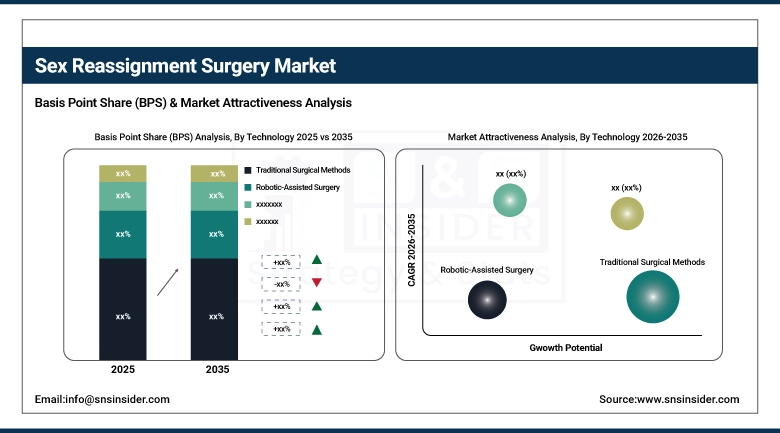
By Technology, Traditional Surgical Methods dominated with a 54.76% share in 2025, while Robotic-Assisted Surgery are anticipated to expand at the fastest CAGR of 12.01% through 2026–2035.
-
By End User, Hospitals held the largest share of 49.49% in 2025, while Specialty Clinics are expected to grow at the fastest CAGR of 11.78% during the forecast period.
By Technology, Traditional Surgical Methods Dominate While Robotic-Assisted Surgery Grows Rapidly:
Surgical Techniques Traditionally Used had the dominant market share due to their extensive use, well-established surgical skills, and accessibility at hospitals and specialist clinics. The traditional techniques serve as the basis for gender-affirming treatment, especially when it comes to genitalia reconstruction and chest surgeries that rely on decades of successful surgical interventions.
Robotic-Assisted Procedures constitute the most fastest growing segment owing to new developments that increase accuracy and minimize risks. The adoption of this technique increases due to healthcare facilities continuously strive to adopt innovative technology that improves both patient experience and outcomes. Medical tourism and increased availability of robotic devices in Asia-Pacific and Europe drive this trend, making robotics an essential component of the future of gender-affirming procedures.
By Gender Transition, Male-to-Female Transition Dominate While also it Grows Rapidly:
Male to Female Transition constitutes the biggest share of the Sex Reassignment Surgery Market, propelled by high demand for surgeries which includes facial feminization surgery, breast augmentation, and voice surgery. Such surgeries are being widely accepted in hospitals and specialist clinics; due to the results they bring about.
Despite already holding a dominant position, the Male to Female Transition segment will experience the fastest growth rate in the near future. Innovations in surgical procedures, ranging from robotic assistance to minimally invasive surgeries, have greatly improved outcomes.
By Procedure Type, Genital Surgery Dominates While Voice Surgery Grows Rapidly:
Genital Surgery (vaginoplasty, phalloplasty, metoidioplasty) accounted for a significant market share as the backbone of sex reassignment procedures. This category is highly popular among hospitals and specialized centers owing to its essentiality in complete sex reassignment and well-defined surgical processes.
Voice Surgery is witnessing a significant rise in adoption, attributed to increased knowledge about the psychological and social advantages associated with voice modification. There is an increase in the rate of acceptance for sex reassignment procedures that go beyond just physical changes.
By Age Group, Adults Dominate While Adolescents Grow Rapidly:
The Adults made up the dominant market segment due to their prior access to the channels through which they could seek health care. According to hospitals and clinics specializing in the provision of gender transition treatments, the adults constitute the majority of the clientele who seek procedures such as genital reconstruction, chest and facial surgeries.
The Adolescents Segment have become the fastest-growing segment due to increased awareness about the procedures, supportive parents, and regulatory changes that have enabled them to seek gender-affirmation treatment. More adolescent clients are seeking facial and chest surgeries as part of their process of self-affirmation.
By End User, Hospitals Dominate While Specialty Clinics Grow Rapidly:
Hospital emerged as the largest provider in the market due to its well-established infrastructural base, multidisciplinary team of professionals, and complex gender reassignment surgery options available there such as genital reconstruction and facial feminization. Hospitals continue to dominate the market since they serve as the major destinations for patients requiring comprehensive treatment due to higher acceptance in the developed world where more favourable policies exist.
The Specialty Clinic emerges as the fastest growing sub-segment, mainly due to the personalized nature of care, reduced wait time, and surgical packages that involve multiple treatments. Specialty clinics continue to gain popularity in medical tourist destinations across Asia Pacific and Europe as they provide cheaper alternatives to hospital-based treatment, along with expertise in a specific field.
Sex Reassignment Surgery Market Regional Analysis:
North America Sex Reassignment Surgery Market Insights
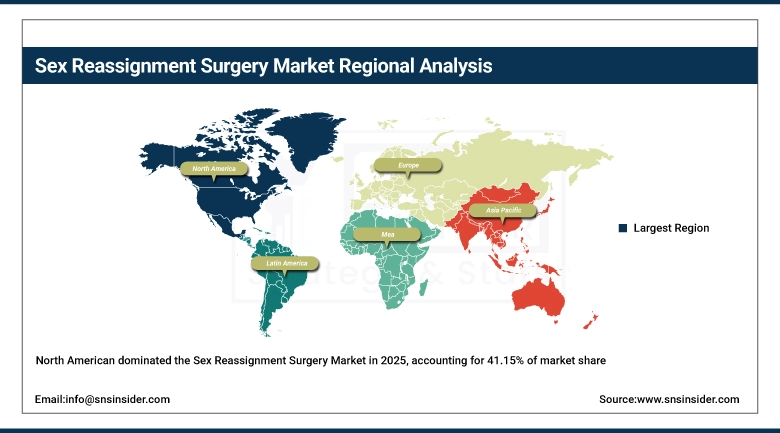
North America holds first position in terms of market share of 41.15% due to its developed healthcare system, robust insurance penetration, and extensive use of gender confirmation surgeries in the U.S. and Canada. Hospital and specialized center setups hold an important position due to their bundled surgery programs. Increasing awareness, supportive regulations, and expert professionals contribute to this dominance. Medical tourism is relatively low compared to Asia-Pacific. However, North America continues to be the most developed market due to positive reimbursement structures and consistent surgical advancements.
Get Customized Report as per Your Business Requirement - Enquiry Now
U.S. Sex Reassignment Surgery Market Insights
The U.S. market is the largest within North America, driven by strong demand for gender-affirming procedures and extensive healthcare infrastructure. Hospitals and specialty clinics provide advanced surgical options, including genital reconstruction, facial feminization, and voice surgery. Supportive reimbursement policies, growing acceptance of transgender healthcare, and availability of skilled surgeons reinforce the country’s leadership. Rising awareness campaigns and integration of psychological support services further strengthen adoption, positioning the U.S. as the key driver of growth and innovation in the region.
Asia-Pacific Sex Reassignment Surgery Market Insights
The Asia-Pacific region is poised to become the fastest growing region, exhibiting a CAGR of 12.50%. This is mainly attributed to countries such as Thailand and India that are known to provide medical tourism with affordable procedures. Factors such as improved healthcare facilities, awareness about the procedures, and government initiatives contribute to the use of these procedures. The specialty clinics sector is dominant here, due to personalized services and surgical expertise.
China Sex Reassignment Surgery Market Insights
The Chinese market is also growing very quickly due to increased investments in health care, heightened recognition of gender reassignment treatment, and greater acceptance by the young generation. There have been gradual incorporations of new surgical procedures in hospitals and special centers; however, there is still an evolving regulatory environment. Additionally, medical tourism in the Asia-Pacific region is another factor driving growth, with China emerging as a strong competitor.
Europe Sex Reassignment Surgery Market Insights
Europe is an important player in the market due to its well-established regulations, insurance, and medical services. The leading players in Europe include countries such as Germany, the United Kingdom, and France, which have developed a broad range of surgical solutions and multi-disciplinary approaches. Higher awareness levels and favorable policies, along with psychological support, further enhance its importance. There is little medical tourism in Europe, but the innovations and competence of clinicians make its future bright.
Germany Sex Reassignment Surgery Market Insights
German market takes the lead in the European continent due to superior healthcare systems, favorable reimbursement policies, and higher levels of gender-affirmation practices. Hospital care and specialist clinics offer full services ranging from genital reconstruction to facial feminization and voice surgeries. Increased advocacy programs and governmental backing for transgender health services drive its success. The German market also benefits from its position as a major medical tourist destination in the European continent.
Latin America Sex Reassignment Surgery Market Insights
Latin America is experiencing consistent growth owing to increased awareness levels, development in medical facilities, and acceptance of gender fluidity. Countries such as Brazil and Mexico have been on the forefront of adopting gender affirming surgeries for their quality and cost efficiency. Medical tourism also plays a major role in driving adoption due to people traveling from developed countries such as North America and Europe for more affordable surgeries. Lack of insurance coverage has been a hurdle but growing investments are paving the way forward.
Middle East & Africa Sex Reassignment Surgery Market Insights
The Middle East and Africa market is still nascent, hindered by the cultural stigma associated with the procedure and strict regulations. Nonetheless, the growing awareness of the technology, development of health care infrastructure, and strong support from advocacy groups are slowly creating demand for the product. South Africa and certain countries in the Middle East region are becoming centers of excellence, with the availability of unique surgical techniques and medical tourism.
Sex Reassignment Surgery Market Competitive Landscape:
Cleveland Clinic
Cleveland Clinic is a major academic health institution in the United States which provides excellent gender affirming surgery services that include various surgical techniques such as vaginal reconstruction, penis construction, breast removal, and face feminization. The institution uses a multidisciplinary approach that focuses on providing patient-centered care that involves the collaboration of the surgical expertise and endocrinology, psychiatry among other supportive care departments.
-
In June 2025, Cleveland Clinic expanded its gender-affirming surgery program, enhancing access to facial feminization and voice surgery services, while strengthening patient support through integrated counseling and post-operative care.
Johns Hopkins Medicine
Johns Hopkins Medicine is a leading academic medical institution in the United States and pioneer in providing gender-affirmation treatments, having founded the country's first ever Gender Identity Clinic in 1966. In its current form, Johns Hopkins' Center for Transgender and Gender Expansive Health offers a complete suite of treatment options, ranging from hormones, gynecology, urology, counseling, and surgery, which include vaginoplasty and breast reconstruction. Johns Hopkins has a focus on research-backed trauma-informed care, further bolstering its competitive standing in the SRS market.
-
In February 2025, Johns Hopkins expanded its transgender health programs, integrating primary care and surgical services to meet rising demand, while advancing research and training initiatives for clinicians in gender-affirming medicine.
Mount Sinai Health System
The Mount Sinai Health System, headquartered in New York, has taken a proactive approach toward gender-reassignment surgery by establishing the Center for Transgender Medicine and Surgery (CTMS). The Mount Sinai CTMS established in 2016 was the first organization in New York City to provide services for genital reassignment surgery. At present, the hospital offers a wide range of medical care such as hormonal management, behavioral management, gynecological, urological care, and facial feminization surgery.
-
In January 2026, Mount Sinai established CTMS, one of the first broad, multispecialty transgender care programs in the U.S., expanding access to genital reconstruction and integrated support services for transgender and non-binary patients.
Sex Reassignment Surgery Market Key Players:
Some of the Sex Reassignment Surgery Market Companies are:
-
Cleveland Clinic
-
Johns Hopkins Medicine
-
Mount Sinai Health System
-
Mayo Clinic
-
Massachusetts General Hospital
-
NYU Langone Health
-
University of California San Francisco (UCSF) Health
-
Cedars-Sinai Medical Center
-
Oregon Health & Science University (OHSU)
-
Boston Medical Center
-
Rush University Medical Center
-
University of Michigan Health
-
Stanford Health Care
-
University of Minnesota Medical Center
-
Gender Confirmation Center (San Francisco)
-
Bangkok Hospital (Thailand)
-
Yanhee Hospital (Thailand)
-
Kamol Hospital (Thailand)
-
GRS Montreal (Canada)
-
Sheba Medical Center (Israel)
| Report Attributes | Details |
|---|---|
| Market Size in 2025 | USD 2.49 Billion |
| Market Size by 2035 | USD 6.92 Billion |
| CAGR | CAGR of 10.86% From 2026 to 2035 |
| Base Year | 2025 |
| Forecast Period | 2026-2035 |
| Historical Data | 2022-2024 |
| Report Scope & Coverage | Market Size, Segments Analysis, Competitive Landscape, Regional Analysis, DROC & SWOT Analysis, Forecast Outlook |
| Key Segments | • By Gender Transition (Male-to-Female Transition, Female-to-Male Transition), • By Procedure Type (Genital Surgery (Vaginoplasty, Phalloplasty, Metoidioplasty), Chest Surgery (Mastectomy, Breast Augmentation), Facial Feminization Surgery (Brow Lift, Rhinoplasty, Chin and Jaw Reconstruction), Voice Surgery, Others), • By Age Group (Adolescents, Adults, Others), by Technology (Traditional Surgical Methods, Robotic-Assisted Surgery, Minimally Invasive Surgery, Others), • By End User (Hospitals, Ambulatory Surgical Centres, Specialty Clinics, Others) |
| Regional Analysis/Coverage | North America (US, Canada), Europe (Germany, UK, France, Italy, Spain, Russia, Poland, Rest of Europe), Asia Pacific (China, India, Japan, South Korea, Australia, ASEAN Countries, Rest of Asia Pacific), Middle East & Africa (UAE, Saudi Arabia, Qatar, South Africa, Rest of Middle East & Africa), Latin America (Brazil, Argentina, Mexico, Colombia, Rest of Latin America). |
| Company Profiles | Cleveland Clinic, Johns Hopkins Medicine, Mount Sinai Health System, Mayo Clinic, Massachusetts General Hospital, NYU Langone Health, University of California San Francisco (UCSF) Health, Cedars-Sinai Medical Center, Oregon Health & Science University (OHSU), Boston Medical Center, Rush University Medical Center, University of Michigan Health, Stanford Health Care, University of Minnesota Medical Center, Gender Confirmation Center (San Francisco), Bangkok Hospital (Thailand), Yanhee Hospital (Thailand), Kamol Hospital (Thailand), GRS Montreal (Canada), and Sheba Medical Center (Israel). |
Frequently Asked Questions
North America dominated with a 41.15% share in 2025, while Asia-Pacific is the fastest-growing region, expected to expand at a CAGR of 12.50% during 2026–2035.
Genital Surgery (Vaginoplasty, Phalloplasty, Metoidioplasty) dominated with a 41.68% share in 2025, while Voice Surgery are projected to grow at the fastest CAGR of 13.14% during 2026–2035.
Market is propelled by social acceptance, medical innovation, and expanding access to gender-affirming care and Advancements in surgical techniques and technologies (robotic-assisted, minimally invasive methods).
The market is valued at USD 2.49 Billion in 2025 and is projected to reach USD 6.92 Billion by 2035.
The Sex Reassignment Surgery Market is projected to grow at a CAGR of 10.86% during 2026–2035.
