
Transcutaneous Oximetry Systems Market Report Scope & Overview:
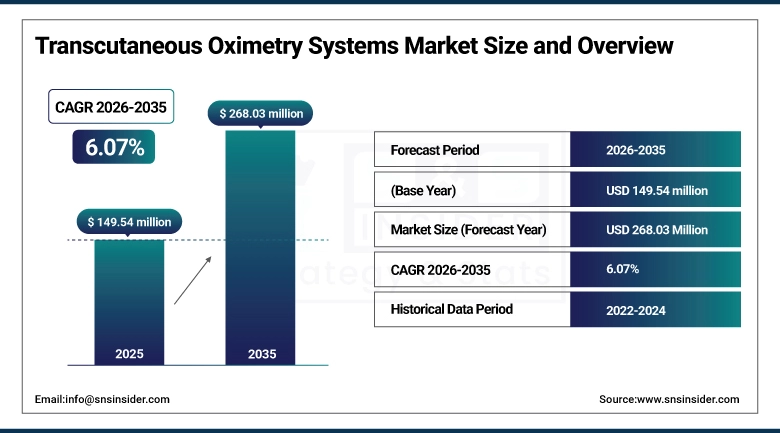
The Transcutaneous Oximetry Systems Market size is valued at USD 149.54 Million in 2025 and is projected to reach USD 268.03 Million by 2035, growing at a CAGR of 6.07% during the forecast period 2026–2035.
Market Analysis Report on Transcutaneous Oximetry Systems highlights the dynamics of the market including technological developments and clinical applications in the coming period from 2026 to 2035. The increase in the prevalence of peripheral artery disease (PAD) and diabetic foot ulcers, use of non-invasive methods for monitoring tissue oxygenation in intensive care unit and neonatal care facilities, and increased need for wound healing diagnostics and vascular assessments are anticipated to fuel steady growth in the market.
There were more than 1.85 million uses of transcutaneous oximetry systems for clinical procedures in 2025.
To Get more information on Transcutaneous Oximetry Systems Market - Request Free Sample Report
Transcutaneous Oximetry Systems Market Trends:
-
Rising prevalence of peripheral artery disease (PAD), diabetic foot ulcers, and chronic wounds is significantly increasing the demand for transcutaneous oxygen monitoring in vascular diagnostics and wound care management.
-
Growing adoption of non-invasive tissue oxygenation assessment in hospitals and specialty vascular clinics is driving clinical integration of TcPO₂ systems into routine diagnostic workflows.
-
Increasing use of transcutaneous oximetry in critical care and ICU settings for continuous oxygenation monitoring is improving patient management and outcome-based decision-making.
-
Expansion of neonatal intensive care applications is boosting demand for precise oxygen monitoring to manage premature infants and reduce hypoxia-related complications.
-
Advancements in sensor technology, including heated electrode systems and fiber-optic oxygen sensors, are improving measurement accuracy and device reliability.
-
Rising shift toward portable and multi-parameter monitoring systems is enabling point-of-care diagnostics and expanding usage beyond traditional hospital settings.
-
Increasing focus on limb salvage procedures and prevention of unnecessary amputations is accelerating adoption of TcPO₂-guided treatment planning in vascular care.
U.S. Transcutaneous Oximetry Systems Market Insights:
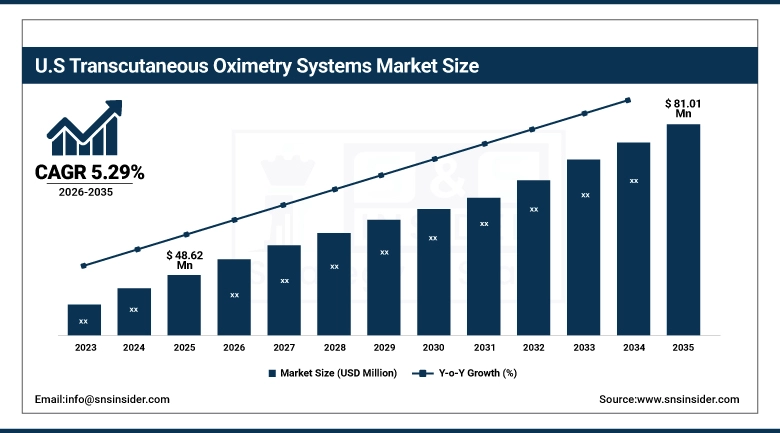
The U.S. Transcutaneous Oximetry Systems Market is projected to grow from USD 48.62 Million in 2025 to USD 81.01 Million by 2035, at a CAGR of 5.29%. Factors stimulating growth include the increased prevalence of PAD and diabetic foot ulcers; an increase in the number of hospitals adopting non-invasive measurement of tissue oxygen levels; growing usage in critical care units; increasing demand for limb salvage and wound healing diagnostics; and an increasing adoption rate of TcPO2 systems in patient monitoring and hospital networks throughout the US.
Transcutaneous Oximetry Systems Market Growth Drivers:
-
Rising prevalence of peripheral artery disease (PAD), diabetic foot ulcers, and chronic ischemic conditions driving strong adoption of non-invasive tissue oxygen monitoring systems.
Increased incidence rate of vascular disease-related complications, diabetic conditions, and chronic wounds is a major factor contributing to the expansion of the Transcutaneous Oximetry Systems market. There is an increasing trend among medical practitioners to use TcPO₂ technology for precise measurement of tissue oxygenation, leg blood flow, and healing capacity of wounds, especially for diagnosing PAD, diabetic foot ulcers, and critical care.
More than 60 percent of all vascular diagnostic tests and chronic wound assessment procedures conducted at tertiary hospitals in 2025 utilized transcutaneous oximetry measurements for making informed decisions regarding the course of treatment.
Transcutaneous Oximetry Systems Market Restraints:
-
High cost of transcutaneous oximetry systems, limited reimbursement support, and requirement for trained clinical interpretation are restraining wider market adoption.
The Transcutaneous Oximetry Systems Market is highly constrained by the prohibitive costs involved in procuring advanced TcPO2 devices, alongside maintenance, calibration, and consumable sensor costs. The low level of reimbursement for non-invasive oxygen saturation measurement methods in many healthcare settings also poses constraints on device purchases, especially for smaller and medium-sized hospitals. Moreover, the requirement for experienced clinicians to make accurate interpretations of TcPO2 results, especially when dealing with complicated cases such as edema, compromised circulation, and diabetes-related ulcers, also acts as a constraint on its application in clinical practice.
Transcutaneous Oximetry Systems Market Opportunities:
-
Expansion of precision-based vascular diagnostics and growing clinical focus on tissue oxygenation-guided treatment planning is creating strong growth opportunities for the Transcutaneous Oximetry Systems Market.
As more focus is placed on value-based care and the early identification of diseases, the use of TcPO₂ devices in vascular surgery, wound care management, and intensive care monitoring is expected to rise. The application of oxygen content measurement tools in the limb salvage procedure, chronic wounds assessment, and perfusion analysis continues to be applied as part of the standardized diagnosis process in hospitals and specialty clinics.
In 2025, more than 38% of the vascular and wound care treatments in tertiary hospitals utilized oxygen measurement devices to guide medical professionals' decisions.
Transcutaneous Oximetry Systems Market Segmentation Analysis:
-
By Application, Peripheral Artery Disease (PAD) Assessment held the largest market share of 34.25% in 2025, while Diabetic Foot Ulcer Evaluation is expected to grow at the fastest CAGR of 7.68% during 2026–2035.
-
By End User, Hospitals dominated with a 56.85% market share in 2025, whereas Specialty Clinics (Vascular & Wound Care Clinics) are projected to record the fastest CAGR of 7.63% through 2026–2035.
-
By Product Type, Standalone Transcutaneous Oximetry Devices accounted for the largest share of 41.55% in 2025, while Portable Diagnostic Systems are expected to grow at the fastest CAGR of 7.45% during the forecast period.
-
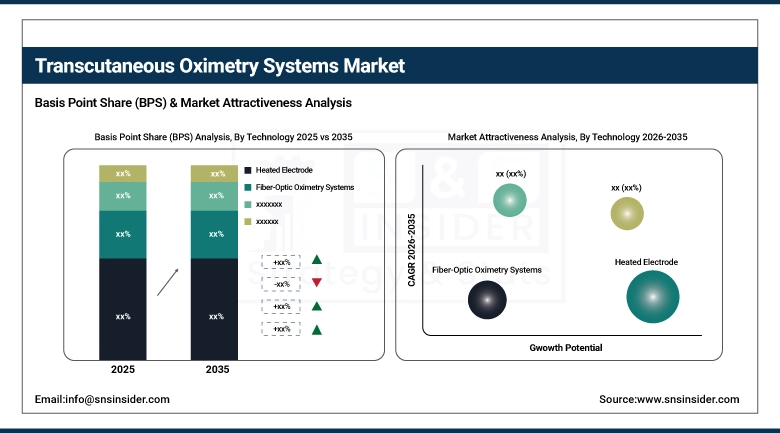
By Technology, Heated Electrode (Clark-type Sensors) dominated with a 46.24% share in 2025, while Fiber-Optic Oximetry Systems are anticipated to expand at the fastest CAGR of 6.86% through 2026–2035.
-
By Modality / Measurement Type, Continuous TcPO₂ Monitoring held the largest share of 44.63% in 2025, while Multi-site Tissue Oxygen Mapping is expected to grow at the fastest CAGR of 7.29% during 2026–2035.
By Technology, Heated Electrode (Clark-type Sensors) Dominate While Fiber-Optic Oximetry Systems Grow Rapidly:
Heated Electrode (Clark-type Sensors) segment dominated the market revenue contributor owing to their clinically trusted performance over decades, extensive use in hospitals, and accurate measurement capabilities of the transcutaneous oxygen tension. The devices have wide applications in hospitals and specialized clinics, ranging from peripheral artery disease evaluation to diabetic foot ulcers and critical care management.
Fiber-Optic Oximetry Systems are the fastest-growing segment owing to rising requirements for precise, minimally invasive, and real-time oxygen monitoring equipment. Improvements in sensor sensitivity and signal stability are contributing to their rapid adoption.
By Application, Peripheral Artery Disease (PAD) Assessment Dominates While Diabetic Foot Ulcer Evaluation Grows Rapidly:
Peripheral Artery Disease (PAD) Assessment segment dominated of the market owing to the extensive clinical utilization of TcPO₂ systems for assessing peripheral limb perfusion and ischemic conditions, aiding treatment decision-making processes in vascular diseases.
Diabetic Foot Ulcer Evaluation is the fastest-growing segment, across the globe, propelled by the growing diabetes incidence rate and increased burden of chronic non-healing wounds. The rising focus on early diagnosis of tissue hypoxia, reduction in amputations, and effective wound healing results have been boosting the adoption of TcPO₂ systems in clinical practice.
By End User, Hospitals Dominate While Specialty Clinics Grow Rapidly:
Hospitals dominated the market owing to its well-developed infrastructure, high volume of patients and extensive usage of state-of-the-art technology systems. The TcPO₂ device finds wide applications in hospital vascular laboratories, ICUs, and wound care centers for assessing real time tissue oxygenation.
The Specialty Clinic segment (vascular and wound care clinics) is the fastest growing end-user segment due to the increasing decentralization of vascular testing procedures and demand for specialized wound management facilities. The TcPO₂ system is being increasingly employed in this segment for out-patient diagnostics and wound healing assessment.
By Product Type, Standalone Transcutaneous Oximetry Devices Dominate While Portable Diagnostic Systems Grow Rapidly:
Standalone Transcutaneous Oximetry Devices dominated the market due to their established clinical use, high diagnostic reliability, and widespread installation in hospitals and vascular diagnostic centers. These systems remain the primary choice for detailed tissue oxygen measurement in complex vascular and wound assessment procedures.
Portable Diagnostic Systems are the fastest-growing segment, driven by increasing demand for point-of-care testing, mobility in clinical workflows, and expanding use in outpatient and emergency care settings.
By Modality / Measurement Type, Continuous TcPO₂ Monitoring Dominates While Multi-site Tissue Oxygen Mapping Grows Rapidly:
Continuous TcPO₂ Monitoring segment dominated the market owing to its capability to continuously assess tissue oxygenation in real-time, thereby making it extremely useful for monitoring purposes in ICUs, vasculature diagnosis, and wound healing assessment. The technique is extensively favored in hospitals, where continuous monitoring of patients plays an important role in decision-making.
Multi-Site Tissue Oxygen Mapping represents the fastest-growing segment, attributed to the rising requirement for assessing regional perfusion and wound oxygen distribution in greater detail. The technique is increasingly being adopted in vascular cases, the treatment of diabetic feet, and research work.
Transcutaneous Oximetry Systems Market Regional Analysis:
North America Transcutaneous Oximetry Systems Market Insights:
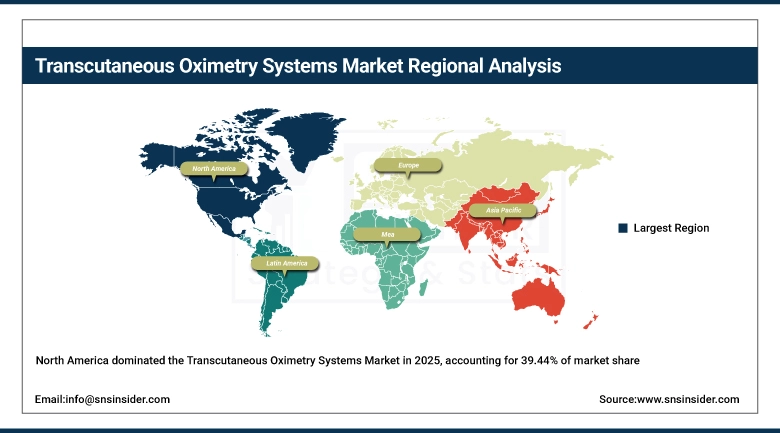
The North America Transcutaneous Oximetry Systems Market is dominant, holding a 39.44% share in 2025, stimulated by the high incidence of peripheral arterial disease, diabetic foot ulcers, and chronic wounds, coupled with significant adoption of cutting-edge vascular diagnostics technology in both the United States and Canada. The extensive use of TcPO2 systems in hospitals, vascular labs, and critical care units will drive regional leadership. Emphasis on limb salvage treatments, preventative wound management, and early detection of ischemia will drive demand further. The availability of sophisticated healthcare facilities, supportive reimbursement policies, and ongoing developments in patient monitoring devices will solidify the region's dominance.
Get Customized Report as per Your Business Requirement - Enquiry Now
United States Transcutaneous Oximetry Systems Market Insights:
The U.S. Transcutaneous Oxygen Measurement System Market is propelled by the existence of patients with ailments such as diabetes and chronic wounds. Usage of TcPO² systems within hospitals, specialist vascular care centers, and ICU units is driving the growth of the market. The need for non-invasive testing, diagnosis of oxygen deficiency in tissues, and lower instances of amputations are fueling its adoption.
Asia-Pacific Transcutaneous Oximetry Systems Market Insights:
The Asia-Pacific Transcutaneous Oximetry Systems Market is the fastest-growing region, projected to expand at a CAGR of 7.46% during 2026–2035. This can be attributed to factors such as the high prevalence rate of diabetes in the region, rise in incidence rate of vascular diseases, and advancements in wound care diagnostics in regions such as China, India, Japan, and South Korea. The development of better healthcare infrastructure, increased use of specialty centers, and investment in modernizing hospitals will fuel the adoption of TcPO₂ devices in the region. Factors which include the need for affordable non-invasive diagnostic tools and improvements in clinical outcomes from chronic wounds will contribute to the steady growth in the region.
China Transcutaneous Oximetry Systems Market Insights:
The China Transcutaneous Oximetry Systems Market is expanding due to rising burden of diabetes and vascular diseases, along with rapid modernization of hospital infrastructure and diagnostic capabilities. Increasing adoption of advanced wound care technologies in tertiary hospitals and specialty clinics is driving demand. Government focus on healthcare system upgrades, chronic disease management, and expansion of critical care services is supporting wider clinical use.
Europe Transcutaneous Oximetry Systems Market Insights:
The Europe Transcutaneous Oxygen Pressure Measurement Devices Market is propelled by extensive adoption of vascular testing technology, aging population, and increasing cases of chronic wounds and ischemia. The growing usage of TcPO₂ devices in healthcare facilities and specialized clinics in countries including the UK, Germany, and France provides consistent demand. The focus on early detection, limb salvage procedures, and wound care practices improves market adoption. Government regulations that favor innovative medical devices and increased patient outcome considerations boost regional market expansion.
Germany Transcutaneous Oximetry Systems Market Insights:
Germany Transcutaneous Oximetry Systems Market Growth Drivers include the presence of an advanced healthcare sector, good research environment in clinics, and extensive use of precise diagnostic tools. The increasing use of TcPO₂ systems in vascular surgeries, wound treatment, and hospital monitoring processes is fuelling market growth. Efforts to ensure high levels of clinical accuracy and minimal complication rates have resulted in the rising acceptance rate of TcPO₂ systems for the treatment of chronic diseases in patients.
Latin America Transcutaneous Oximetry Systems Market Insights:
The Latin America Transcutaneous Oximetry Systems Market is growing due to rising incidence of diabetes-related complications, vascular diseases, and chronic wounds, particularly across Brazil, Mexico, and Argentina. Expanding access to advanced diagnostic technologies in urban hospitals and specialty clinics is supporting gradual adoption. Increasing healthcare investments, improvement in hospital infrastructure, and growing awareness of non-invasive diagnostic methods are further driving demand.
Middle East & Africa Transcutaneous Oximetry Systems Market Insights:
The Middle East & Africa Transcutaneous Oximetry Systems Market is seeing strong growth owing to the rising incidence of diabetes and vascular diseases and increased expenditure on healthcare facilities. The growing usage of sophisticated diagnostic and intensive care equipment in nations such as UAE, Saudi Arabia, and South Africa will aid the growth of this market. Growth in specialty hospitals, a greater emphasis on managing chronic diseases, and better availability of technologically advanced devices will contribute to this growth.
Transcutaneous Oximetry Systems Market Competitive Landscape:
Radiometer Medical ApS (Danaher) is one of the largest suppliers focusing on advanced blood gas and transcutaneous monitoring products including the ones designed for clinical evaluation using the principle of TcPO2. The firm is known for developing highly sophisticated patient monitoring technologies which help in evaluating oxygenation in real time to make clinical decisions in hospitals and ICUs. Its robust research and development, diagnostic ecosystem through Danaher, and global presence enhance its market leadership in the transcutaneous oximetry space.
-
In October 2025, Radiometer expanded its advanced patient monitoring portfolio with enhanced transcutaneous oxygen monitoring integration designed to improve ICU workflow efficiency and vascular assessment accuracy across hospital networks.
Perimed AB is one of the leading Swedish medical devices firms, which specializes in the development of products that deal with vascular and microcirculation diagnostics. In particular, the company has made a name due to its extensive expertise in the area of transcutaneous oxygen measurements and perfusion measurement devices. Its products are extensively used in clinical and research facilities that aim to evaluate tissue oxygenation and microcirculation functions. One of the distinguishing features of the company is its unique laser Doppler and transcutaneous oxygenation devices (TcPO2), which provide reliable data about peripheral blood flow.
-
In September 2025, Perimed AB introduced an upgraded vascular diagnostic platform integrating enhanced transcutaneous oxygen measurement capabilities to support improved wound healing assessment and peripheral vascular research applications.
SenTec AG is a medical technology firm based in Switzerland that focuses on developing devices for non-invasive monitoring of patients, mainly transcutaneous CO2 and O2 monitors utilized in critical care, anesthesia, and neonatal environments. The company is well-known for its Sentec Digital Monitoring (SDM) technology that enables continual non-invasive measurements of blood gases and oxygen levels. The company’s high regard for precision, safety, and usability in the clinical setting makes it a popular pick in ICU and neonatal intensive care unit settings.
-
In August 2025, SenTec AG launched an upgraded digital monitoring platform with improved transcutaneous oxygen sensing accuracy and enhanced integration with ICU patient monitoring systems for real-time clinical decision support.
Transcutaneous Oximetry Systems Market Key Players:
Some of the Transcutaneous Oximetry Systems Market Companies are:
-
Radiometer Medical ApS (Danaher)
-
Perimed AB
-
SenTec AG
-
Koninklijke Philips N.V.
-
Drägerwerk AG & Co. KGaA
-
GE HealthCare
-
Medtronic plc
-
Masimo Corporation
-
Nihon Kohden Corporation
-
Nonin Medical Inc.
-
Smiths Medical (Smiths Group plc)
-
Halma plc
-
Masimo Corporation (TNI Medical segment)
-
Medicap Homecare GmbH
-
Humares GmbH
-
MGC Diagnostics Corporation
-
Moor Instruments Ltd.
-
Contec Medical Systems Co., Ltd.
-
ADVIN Health Care
-
HemoCue AB
| Report Attributes | Details |
|---|---|
| Market Size in 2025 | USD 149.54 Million |
| Market Size by 2035 | USD 268.03 Million |
| CAGR | CAGR of 6.07% From 2026 to 2035 |
| Base Year | 2025 |
| Forecast Period | 2026-2035 |
| Historical Data | 2022-2024 |
| Report Scope & Coverage | Market Size, Segments Analysis, Competitive Landscape, Regional Analysis, DROC & SWOT Analysis, Forecast Outlook |
| Key Segments | • By Application (Peripheral Artery Disease (PAD) Assessment, Diabetic Foot Ulcer Evaluation, Critical Care & ICU Oxygen Monitoring, Neonatal Oxygen Monitoring, Others) • By End User (Hospitals, Specialty Clinics (Vascular & Wound Care Clinics), Ambulatory Surgical Centers (ASCs), NICUs (Neonatal Intensive Care Units), Diagnostic Laboratories, Research & Academic Institutes, Others) • By Product Type (Standalone Transcutaneous Oximetry Devices, Integrated Patient Monitoring Systems, Portable Diagnostic Systems, Multi-parameter Monitoring Platforms, Others) • By Technology (Heated Electrode (Clark-type Sensors), Transcutaneous Oxygen Pressure (TcPO₂) Sensors, Fiber-Optic Oximetry Systems, Hybrid Multi-sensor Systems, Others) • By Modality / Measurement Type (Continuous TcPO₂ Monitoring, Spot / Intermittent Oxygen Measurement, Multi-site Tissue Oxygen Mapping, Regional Perfusion Assessment, Others) |
| Regional Analysis/Coverage | North America (US, Canada), Europe (Germany, UK, France, Italy, Spain, Russia, Poland, Rest of Europe), Asia Pacific (China, India, Japan, South Korea, Australia, ASEAN Countries, Rest of Asia Pacific), Middle East & Africa (UAE, Saudi Arabia, Qatar, South Africa, Rest of Middle East & Africa), Latin America (Brazil, Argentina, Mexico, Colombia, Rest of Latin America). |
| Company Profiles | Radiometer Medical ApS (Danaher), Perimed AB, SenTec AG, Koninklijke Philips N.V., Drägerwerk AG & Co. KGaA, GE HealthCare, Medtronic plc, Masimo Corporation, Nihon Kohden Corporation, Nonin Medical Inc., Smiths Medical (Smiths Group plc), Halma plc, Masimo Corporation (TNI Medical segment), Medicap Homecare GmbH, Humares GmbH, MGC Diagnostics Corporation, Moor Instruments Ltd., Contec Medical Systems Co., Ltd., ADVIN Health Care, HemoCue AB |
Frequently Asked Questions
North America dominated with a 39.44% share in 2025, while Asia-Pacific is the fastest-growing region, expected to expand at a CAGR of 7.46% during 2026–2035.
Hospitals Systems dominated with a 56.85% share in 2025, while Specialty Clinics (Vascular & Wound Care Clinics) are projected to grow at the fastest CAGR of 7.63% during 2026–2035.
Growth is driven by rising prevalence of peripheral artery disease and diabetic foot ulcers, increasing demand for non-invasive tissue oxygen monitoring, expanding use in critical care and neonatal monitoring.
The market is valued at USD 149.54 Million in 2025 and is projected to reach USD 268.03 Million by 2035.
The Transcutaneous Oximetry Systems Market is projected to grow at a CAGR of 6.07% during 2026–2035.
