
Ubiquitin Proteasome Market Report Scope & Overview:
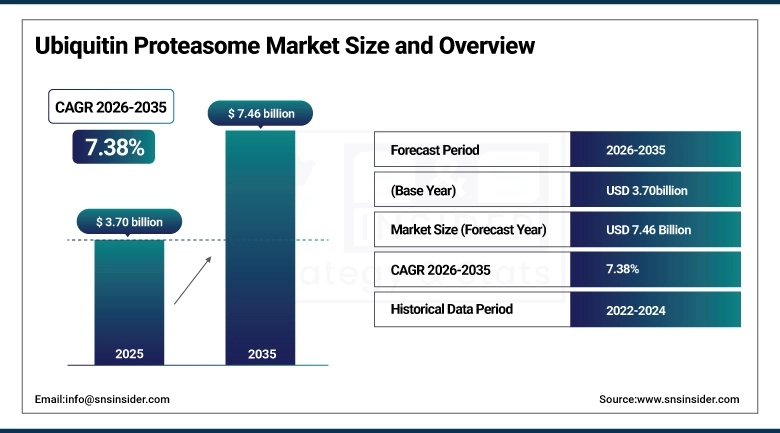
The Ubiquitin Proteasome Market size is valued at USD 3.70 Billion in 2025 and is projected to reach USD 7.46 Billion by 2035, growing at a CAGR of 7.38% during the forecast period 2026–2035.
The Ubiquitin-Proteasome Market Analysis Report is an extensive evaluation of market trends, drugs developments, and therapy usage. Increased incidence rates of cancer and neurodegenerative diseases, increased number of proteasome inhibitors and ubiquitin pathway modulators in pipeline development, increased use of sophisticated assays and research tools, and rising investments in R&D activities are some of the main factors boosting market growth through 2026-2035.
In 2025, consumption of proteasome inhibitors and ubiquitin pathway modulators has exceeded USD 2.5 billion in market valuation and constituted more than 65% of all proteasome research used in oncology cases.
Market Size and Forecast:
-
Market Size in 2025: USD 3.70 Billion
-
Market Size by 2035: USD 7.46 Billion
-
CAGR: 7.38% from 2026 to 2035
-
Base Year: 2025
-
Forecast Period: 2026–2035
-
Historical Data: 2022–2024
To Get more information on Ubiquitin Proteasome Market - Request Free Sample Report
Ubiquitin Proteasome Market Trends:
-
Increasing incidence of cancer and neurodegenerative disorders is contributing to the growing demand for proteasome inhibitors.
-
The emphasis on innovative pathways including inhibitors of deubiquitinating enzymes and E3 ligases is influencing pipeline expansion.
-
Growing use of assay kits is driving the development of drugs and academic research.
-
The large investments made by pharmaceutical and biotechnology organizations are facilitating innovations in ubiquitin pathway modulators.
-
The patent expiry of currently available drugs is creating a space for new medicines.
-
The developments in the fields of high throughput screenings and biologics have helped in pathway modulation.
-
The collaborations between pharmaceutical companies, contract research organizations (CROs), and academia are boosting clinical trials.
U.S. Ubiquitin Proteasome Market Insights:
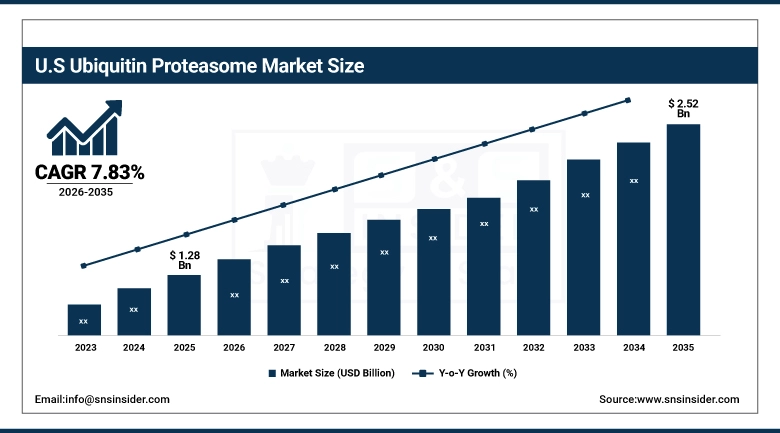
The U.S. Ubiquitin Proteasome Market is projected to grow from USD 1.28 Billion in 2025 to USD 2.52 Billion by 2035, at a CAGR of 7.83%. Growth is due to the increase in cases of cancer and neurodegenerative disorders, the increasing importance of autoimmune and metabolic disorders, growing popularity of proteasome inhibitors and ubiquitination pathway inhibitors, and the increasing use of highly sophisticated diagnostic kits and other research equipment used for various applications.
Ubiquitin Proteasome Market Growth Drivers:
-
Growth in the Ubiquitin Proteasome Market is being driven by the rising prevalence of cancer, neurodegenerative, and autoimmune disorders, which are increasing demand for proteasome inhibitors and pathway modulators.
Development of assay systems, reagents, and scientific research instruments by the pharmaceutical industry, biotech firms, and universities is making headway in the area of drug discovery and development. More financial investment in the field of R&D combined with progress in biologics, RNA-based therapies, and high throughput screening techniques will improve efficacy and use in oncology and chronic diseases.
More than 60 percent of top pharmaceuticals and biotechnology companies are incorporating ubiquitin-proteasome pathway in their R&D by 2025 and are expected to be one of the key players for multi-billion dollars growth until 2035.
Ubiquitin Proteasome Market Restraints:
-
Restraints in the Ubiquitin Proteasome Market are shaped by several critical challenges that limit growth potential.
Highly costly developments and complicated manufacturing processes contribute to the prohibitive nature of advanced therapeutics, which may be less available in developing countries. The difficulty in gaining regulatory approval, coupled with high safety standards, slows the process of bringing new proteasome inhibitors and pathway modulators to market. Safety concerns relating to potential off-target effects and lack of sufficient clinical evidence also constrain their availability. Furthermore, reliance on specific equipment and expertise also acts as an entry barrier for new companies.
Up to 40% of pipeline products have been delayed or canceled due to these restraints by 2025, illustrating the extent of the effect of these constraints on market growth until 2035.
Ubiquitin Proteasome Market Opportunities:
-
Growing development of targeted proteasome inhibitors and personalized ubiquitin pathway modulators presents significant opportunities for the Ubiquitin Proteasome Market.
In recent times, pharmaceutical firms, biotech firms, and universities are embracing these new drugs for treating cancer, neurodegenerative diseases, and autoimmune diseases. Improvements in drug delivery mechanisms such as oral, injectable, and intravenous methods, along with enhanced efficacy, safety, and compliance, are driving more widespread usage. Additionally, strategic collaborations between industry and academia are accelerating clinical research, fostering innovation, and expanding therapeutic applications across diverse patient populations.
As of 2025, more than 48% of major healthcare and research entities were utilizing the use of ubiquitin-proteasome inhibitors in their clinical and research studies, indicating promising prospects for long-term growth until 2035.
Ubiquitin Proteasome Market Segmentation Analysis:
-
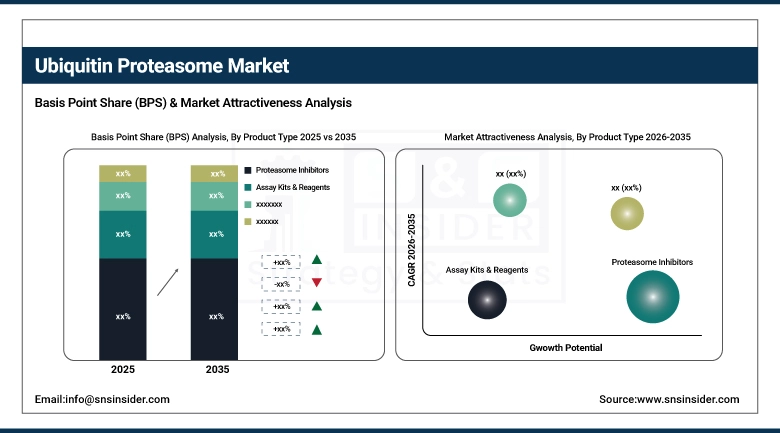
By Product Type, Proteasome Inhibitors held the largest market share of 42.58% in 2025, while Ubiquitin Pathway Modulators are expected to grow at the fastest CAGR of 8.81% during 2026–2035.
-
By Mechanism of Action, Proteasome Inhibitors Action dominated with 44.68% market share in 2025, whereas Deubiquitinating Enzyme are projected to record the fastest CAGR of 9.18% through 2026–2035.
-
By Application, Oncology accounted for the highest market share of 49.76% in 2025, while Neurodegenerative Disorders are expected to grow at the fastest CAGR of 8.94% during the forecast period.
-
By End User, Pharmaceutical Companies held the largest share of 39.87% in 2025, while Biotechnology Firms are expected to grow at the fastest CAGR of 8.42% during the forecast period.
By Product Type, Proteasome Inhibitors Dominate While Ubiquitin Pathway Modulators Antibodies Grow Rapidly:
The Proteasome Inhibitors constitute the dominant market segment on account of their well-recognized application in the treatment of cancer and neurodegenerative diseases, which have been adopted extensively in hospitals, specialty clinics, and research organizations. The efficiency of the drug in regulating protein degradation pathways is the major reason behind its dominance.
The Ubiquitin Pathway Modulators emerge as the fastest-growing market segment owing to increasing demand for new drugs such as deubiquitinating enzyme inhibitors and E3 ligase modulators. Moreover, expanding indications in the treatment of autoimmune, metabolic, and chronic conditions, together with the development of formulations via oral, injectable, and intravenous routes, have propelled its adoption.
By Mechanism of Action, Proteasome Inhibitors Action Dominate While Deubiquitinating Enzyme Grow Rapidly:
Proteasome Inhibitor Market Growth is dominating and fueled by the well-established status of proteasome inhibitors in oncology and neurodegenerative therapy with widespread adoption in various health care settings. Proven effectiveness in controlling the process of protein degradation has resulted in the dominance of such drugs.
Deubiquitinase Inhibitor market Growth is the fastest-growing segment, which has gained traction due to the increased interest in innovative methods to increase precision in managing protein turnover. Increasing uses in conditions including autoimmune diseases, metabolic syndromes, and others, together with continued innovation in drug delivery methods and improving safety profiles, have propelled their popularity.
By Application, Oncology Dominate While Neurodegenerative Disorders Grow Rapidly:
Oncology remains the dominant segment, supported by the extensive use of proteasome inhibitors in cancer treatment and their proven efficacy in targeting protein degradation pathways. Strong adoption across hospitals, specialty clinics, and research institutions highlights their central role in therapeutic strategies.
Neurodegenerative Disorders, however, represent the fastest growing application area, driven by rising prevalence of conditions such as Alzheimer’s and Parkinson’s disease. Increasing focus on novel ubiquitin pathway modulators, coupled with advancements in drug delivery systems and improved safety profiles, is accelerating adoption and positioning this segment as a key driver of future market expansion.
By End User, Pharmaceutical Companies Dominates While Biotechnology Firms Grow Rapidly:
The Pharmaceutical Companies make up the dominant market share due to their heavy investment in proteasome inhibitors, ubiquitin pathway modifiers, and a pipeline of therapies for oncological diseases and neurodegenerative conditions. Their experience in conducting extensive clinical trials has cemented their position as leaders within this field.
The Biotechnology Companies have been identified as the fastest-growing market segment, owing to advancements in the areas of deubiquitinating enzyme inhibitors, E3 ligases, and innovative biologics. Their adaptability in embracing novel technologies, in conjunction with partnerships with academic organizations and contract research organizations (CROs), is driving discovery and making them important players in the future growth of the market.
Ubiquitin Proteasome Market Regional Analysis:
North America Ubiquitin Proteasome Market Insights:
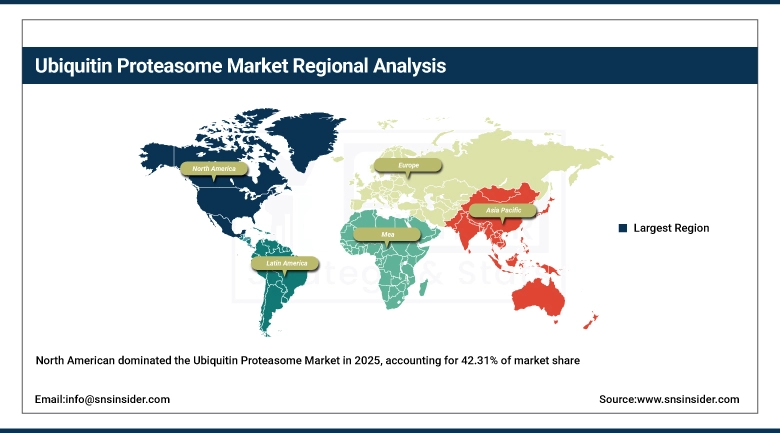
North America continues to rule the roost with market share of 42.31% owing to well-established healthcare infrastructure, high level of clinical expertise, and significant usage of proteasome inhibitors for both oncological and neurodegenerative diseases. Advanced therapies are predominantly adopted by hospitals and clinics, whereas supportive reimbursement environment and continued advances in oral, injectable, and intravenous dosage forms have ensured its market dominance. The increasing incidence of autoimmune and chronic diseases augurs well for the growth prospects of the market.
Get Customized Report as per Your Business Requirement - Enquiry Now
U.S. Ubiquitin Proteasome Market Insights:
The United States market enjoys dominance due to high number of clinical trials being conducted, the adoption of proteasome inhibitors, and substantial research and development activities. Superior healthcare systems, increasing specialty clinics, and the use of biologics and pathways modulators play an essential role in the dominance of the market. Improved delivery technology and effective reimbursement structures improve access, while growing incidences of cancers and neurological disorders ensure growth.
Asia Pacific Ubiquitin Proteasome Market Insights:
Asia Pacific has become one of the rapidly growing regions with CAGR at 9.07% due to the establishment of more biotech centers, increased investments in the healthcare sector, and an increase in the occurrence of cancer and neurodegenerative diseases. Nations such as China, India, and Japan are leading the growth of proteasome inhibitors and pathways regulators due to favorable government policies and research & development activities.
China Ubiquitin Proteasome Market Insights:
China represents a major growth driver within Asia Pacific owing to fast healthcare development, robust government investment, and increasing number of biotechnology clusters. The rising occurrence of cancer and neurodegenerative conditions contributes to the use of drugs inhibiting proteasomes and regulating pathways. Innovative treatments are being developed by local companies with help from international organizations to conduct more trials.
Europe Ubiquitin Proteasome Market Insights:
European countries have a very strong standing in the healthcare industry on the basis of their highly developed healthcare system, high clinical acceptance, and significant investment in research and development. The leading European countries that dominate in fields such as oncology and neurodegeneration include Germany, France, and the United Kingdom, with assistance from already existing pharmaceutical firms and academic institutes.
Germany Ubiquitin Proteasome Market Insights:
Germany stands out as one of the key players in Europe, thanks to the presence of cutting-edge clinical facilities, an excellent drug industry, and wide usage of proteasome inhibitors. The incidence of cancer and neurodegenerative diseases, along with government backing for research, makes pathway modulators a hot area for innovations. Partnerships between universities, biotech companies, and international drug companies enhance clinical research pipelines.
Latin America Ubiquitin Proteasome Market Insights:
Germany is considered among the leading countries in Europe due to its state-of-the-art clinical establishments, good pharmaceutical industry, and extensive use of proteasome inhibitors. The prevalence of cancer and neurological disorders, and support from the government in research and development, make pathways modulators an attractive field of innovation. Collaborations between academic institutions, biotechnology firms, and pharmaceutical companies bolster the pipeline for clinical research.
Middle East & Africa Ubiquitin Proteasome Market Insights:
The Middle East and Africa market is steadily growing, with factors such as healthcare system modernization, increased incidence of cancers and auto-immune diseases, and rising demand for innovative treatment solutions contributing to the growth. Nations such as Saudi Arabia, United Arab Emirates (UAE), and South Africa have been making investments into their healthcare system infrastructure. There has been an increasing trend toward the use of proteasome inhibitors and pathway modulators.
Ubiquitin Proteasome Market Competitive Landscape:
Merck KGaA
Merck KGaA, based out of Germany, is a prominent player in the market owing to its emphasis on the study of oncological conditions and neurodegenerative diseases. Merck KGaA concentrates on the development of proteasome inhibitors along with ubiquitin pathway modulators by using the expertise that it has gained in the field of biologics and immunotherapies. Its efforts in the area of formulation technology and collaboration with academia ensure its dominance in the area of precision medicines.
-
In June 2025, Merck advanced clinical development of Melflufen, a peptide‑conjugated alkylator targeting proteasome pathways, strengthening its oncology pipeline.
Takeda Pharmaceutical Company
Takeda Pharmaceutical Company, which operates from Japan, is one of the world’s largest companies in oncology and immunology and holds a substantial position in the Ubiquitin Proteasome space. The product portfolio of the company involves proteasome inhibitors and pathway modulators, the development of which has been made possible through its subsidiary company, Millennium Pharmaceuticals, which developed Velcade (bortezomib). The company is involved in research in biologics targeting autoimmune and neurodegenerative disorders.
-
In December 2025, Takeda expanded its proteasome inhibitor pipeline with new trials in multiple myeloma and autoimmune conditions, reinforcing its leadership in targeted therapies.
Amgen Inc.
Amgen Inc., a leading biotech organization in the United States, has an important presence in the Ubiquitin Proteasome market due to its experience with biologics and targeted treatments. Amgen focuses on precision oncology and neurodegeneration applications and incorporates proteasome inhibitors in its immunotherapy pipeline. The organization has advanced research and development skills and possesses a robust biologics manufacturing platform, alongside collaboration with universities for innovations in pathway modulators.
-
In January 2025, Amgen progressed early‑phase trials of proteasome‑related biologics in oncology, while expanding collaborations to accelerate neurodegenerative disorder research.
Ubiquitin Proteasome Market Key Players:
Some of the Ubiquitin Proteasome Market Companies are:
-
Merck KGaA
-
Takeda Pharmaceutical Company
-
Amgen Inc.
-
Bristol Myers Squibb
-
Johnson & Johnson (Janssen)
-
Novartis AG
-
Pfizer Inc.
-
AbbVie Inc.
-
Biovision Inc.
-
Promega Corporation
-
Tocris Bioscience
-
Thermo Fisher Scientific
-
Bio-Techne Corporation
-
Enzo Life Sciences
-
Cell Signaling Technology
-
Santa Cruz Biotechnology
-
Boston Biomedical
-
Millennium Pharmaceuticals (subsidiary of Takeda)
-
Gilead Sciences
-
Roche Holding AG
| Report Attributes | Details |
|---|---|
| Market Size in 2025 | USD 3.70 Billion |
| Market Size by 2035 | USD 7.46 Billion |
| CAGR | CAGR of 7.38% From 2026 to 2035 |
| Base Year | 2025 |
| Forecast Period | 2026-2035 |
| Historical Data | 2022-2024 |
| Report Scope & Coverage | Market Size, Segments Analysis, Competitive Landscape, Regional Analysis, DROC & SWOT Analysis, Forecast Outlook |
| Key Segments | • By Product Type (Proteasome Inhibitors, Ubiquitin Pathway Modulators, Assay Kits & Reagents, Research Tools & Consumables, Others), • by Mechanism of Action (Proteasome Inhibitors Action, Deubiquitinating Enzyme, E3 Ligase Modulators, Ubiquitin-like Modifier Pathway Agents, Others), • By Application (Oncology, Neurodegenerative Disorders, Autoimmune Diseases, Cardiovascular & Metabolic Disorders, Others), • By End User (Pharmaceutical Companies, Biotechnology Firms, Academic & Research Institutions, Contract Research Organizations, Others) |
| Regional Analysis/Coverage | North America (US, Canada), Europe (Germany, UK, France, Italy, Spain, Russia, Poland, Rest of Europe), Asia Pacific (China, India, Japan, South Korea, Australia, ASEAN Countries, Rest of Asia Pacific), Middle East & Africa (UAE, Saudi Arabia, Qatar, South Africa, Rest of Middle East & Africa), Latin America (Brazil, Argentina, Mexico, Colombia, Rest of Latin America). |
| Company Profiles | Merck KGaA, Takeda Pharmaceutical Company, Amgen Inc., Bristol Myers Squibb, Johnson & Johnson (Janssen), Novartis AG, Pfizer Inc., AbbVie Inc., Biovision Inc., Promega Corporation, Tocris Bioscience, Thermo Fisher Scientific, Bio-Techne Corporation, Enzo Life Sciences, Cell Signaling Technology, Santa Cruz Biotechnology, Boston Biomedical, Millennium Pharmaceuticals (subsidiary of Takeda), Gilead Sciences, Roche Holding AG. |
Frequently Asked Questions
North America dominated with a 42.31% share in 2025, while Asia-Pacific is the fastest-growing region, expected to expand at a CAGR of 9.07% during 2026–2035.
Proteasome Inhibitors dominated with a 42.58% share in 2025, while Ubiquitin Pathway Modulators are projected to grow at the fastest CAGR of 8.81% during 2026–2035.
Key drivers include the rising prevalence of cancer and neurodegenerative diseases, expanding drug discovery pipelines, growing adoption of proteasome inhibitors and pathway modulators.
The market is valued at USD 3.70 Billion in 2025 and is projected to reach USD 7.46 Billion by 2035.
The Ubiquitin Proteasome Market is projected to grow at a CAGR of 7.38% during 2026–2035.
