
Western Blotting Market Report Scope & Overview:
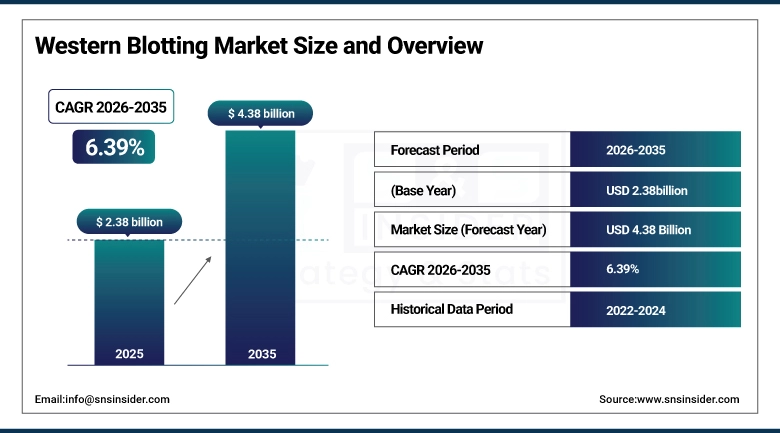
The Western Blotting Market size is valued at USD 2.38 Billion in 2025 and is projected to reach USD 4.38 Billion by 2035, growing at a CAGR of 6.39% during the forecast period 2026–2035.
The Western Blotting Market analysis report highlights the factors that influence the performance of market dynamics, technology advancements, and therapeutic uses. The increasing use of proteins analysis for diagnostic purposes, the growing incidence rate of infections and autoimmunity diseases, increased utilization of advanced detection techniques, and enhanced research facilities are some of the factors contributing to the strong market growth over 2026-2035.
The use of western blotting has surpassed the 2.3 billion assays mark in 2025 due to the importance of this technique in disease diagnosis and biomarker validation.
Market Size and Forecast:
-
Market Size in 2025: USD 2.38 Billion
-
Market Size by 2035: USD 4.38 Billion
-
CAGR: 6.39% from 2026 to 2035
-
Base Year: 2025
-
Forecast Period: 2026–2035
-
Historical Data: 2022–2024
To Get more information on Western Blotting Market - Request Free Sample Report
Western Blotting Market Trends:
-
Higher uptake of automated blotting technologies to enhance efficiency and consistency.
-
The importance of sustainability and environmentally friendly products in laboratory settings.
-
Higher applications in oncology and autoimmune testing, expanding beyond the detection of infections.
-
The need for highly sensitive kits to generate continuous revenue streams.
-
Integration of digital imaging and artificial intelligence in the blotting process.
-
Changing from manual techniques to semi-automation and automation in research laboratories.
-
Increased collaboration between pharmaceuticals, biotechnology firms, and research centers for biomarker verification.
-
The application of blotting technology in food safety and agriculture-related diseases.
U.S. Western Blotting Market Insights:
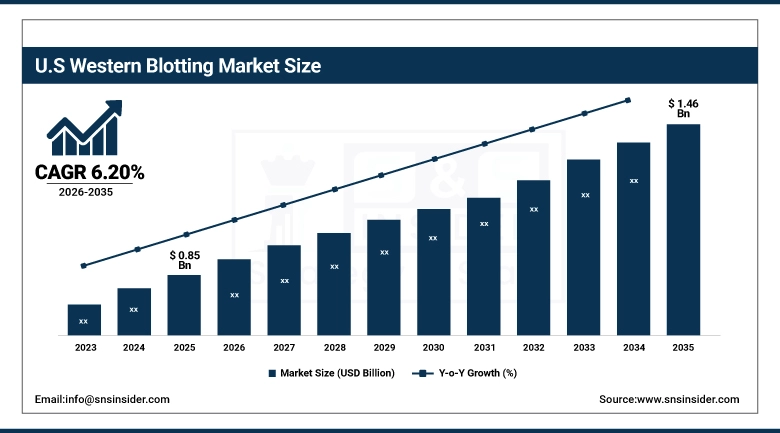
The U.S. Western Blotting Market is projected to grow from USD 0.85 Billion in 2025 to USD 1.46 Billion by 2035, at a CAGR of 6.20%. Factors contributing to the growth of the Western Blotting industry include increased demands for protein studies in diagnostics, higher occurrences of infectious, autoimmune, and cancer diseases, robust acceptance of sophisticated detection techniques like fluorescence multiplexing, and capital expenditure on novel manual, semi-automatic, and automatic blotting equipment within hospitals, laboratories, biotech firms, and academic centers.
Western Blotting Market Growth Drivers:
-
Rising prevalence of infectious diseases, autoimmune disorders, and cancer biomarkers is driving demand for advanced Western Blotting technologies.
Advanced blotting machines, fluorescence multiplexing detection technology, and high-sensitivity reagents are being increasingly employed by hospitals, diagnostic labs, biotech firms, and research centers to ensure accurate diagnoses and research findings. The development of manual, semiautomated, and fully automated platforms, together with increased reproducibility, efficiency, and digitized imaging, is driving adoption even faster while enhancing clinical utility and facilitating market growth.
In 2025, more than 61% of hospitals, diagnostic labs, and research centers have applied Western Blotting technology for diagnosing diseases and studying proteomics and biomarkers.
Western Blotting Market Restraints:
-
Limited reproducibility and variability in results present significant restraints for the Western Blotting Market.
Though widely adopted, issues such as antibody variability, human error, and sensitivity constraints make the technique unreliable for clinical and research purposes. The high cost associated with chemicals, supplies, and equipment used in the process is another limitation that makes its adoption hard, especially in labs with limited resources and emerging economies. Furthermore, the presence of other methods of analyzing proteins like ELISA and mass spectrometry is another factor that limits its expansion.
In 2025, a 125800 number of laboratories reported challenges with high reagent costs and limited access to advanced automated blotting systems, restricting broader adoption in resource-constrained regions.
Western Blotting Market Opportunities:
-
Expanding applications of Western Blotting in non-traditional sectors present significant opportunities for market growth.
Apart from diagnostic uses, laboratory settings that cater to agriculture, food and beverages, and environmental testing are now relying on blots to identify any pathogenic agents or contaminants. The growing emphasis on proteomics, biomarker detection, and drug discovery is set to boost the demand for sophisticated blotting equipment. Providers of sustainable reagents, digital imaging solutions, and artificial intelligence-based analysis systems could gain significant traction due to such industry trends.
The percentage of organizations that adopted Western Blotting technology in other sectors was recorded to be over 47% in 2025.
Western Blotting Market Segmentation Analysis:
-
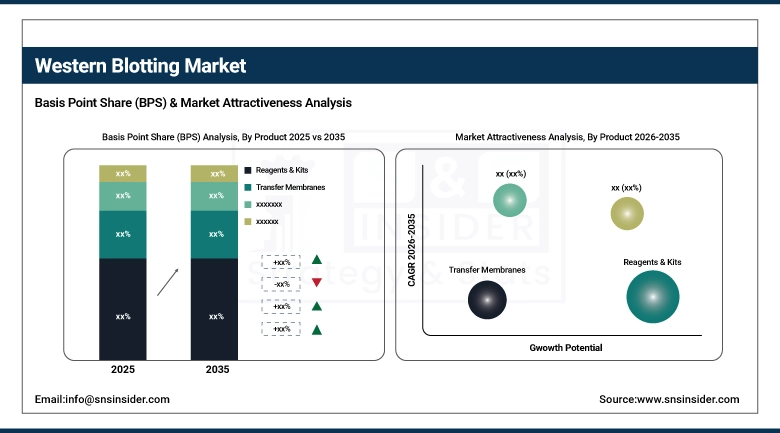
By Product, Reagents & Kits held the largest market share of 45.17% in 2025, while they are also expected to grow at the fastest CAGR of 7.12% during 2026–2035.
-
By Technology, Manual Western Blotting dominated with 51.85% market share in 2025, whereas Automated Western Blotting are projected to record the fastest CAGR of 7.20% through 2026–2035.
-
By Detection Method, Chemiluminescent Detection accounted for the highest market share of 44.59% in 2025, while Fluorescent Detection are expected to grow at the fastest CAGR of 7.73% during the forecast period.
-
By Disease Area, HIV Diagnostics dominated with a 30.28% share in 2025, while Cancer Biomarker Studies are anticipated to expand at the fastest CAGR of 7.75% through 2026–2035.
-
By Application, Medical Diagnostics (HIV, Lyme, infectious diseases) held the largest share of 39.84% in 2025, while Scientific Research (proteomics, biomarker validation, drug discovery) are expected to grow at the fastest CAGR of 7.11% during the forecast period.
By Product, Reagents & Kits Dominate While Advanced Consumables Grow Rapidly
The Reagents & Kits category dominates the market share as these are essential components used in each test performed and are constantly in demand in all the hospitals, diagnostic centers, and research institutions. They have proved highly effective in detecting proteins, and hence are extensively used. Constant improvements in performance and easy use have also helped the category maintain its market leadership.
However, Reagents & Kits also emerged as a fastest growing category within the market. High demand is owing to high-throughput testing requirements and use in automated blotting systems. The increasing application in the fields of proteomics and biomarker validation is also expected to drive their growth.
By Technology, Manual Western Blotting Dominates While Automated Systems Grow Rapidly
Manual Western Blotting is the dominant product in the market, thanks to its standard methods, accuracy, and use in numerous studies and diagnostic centers. Its popularity among professionals has made it a favored product for protein identification, especially in small centers that have to consider costs.
Automated Western Blotting represents the fastest growing product. The demand for greater speed and accuracy and incorporation into advanced imaging and analytical technologies has accelerated the growth of automated Western Blotting among biotech companies and research institutions.
By Detection Method, Chemiluminescent Detection Leads While Fluorescent Detection Expands Rapidly
Chemiluminescent Detection remains the dominating product in Western Blotting market, known for its sensitivity, well-established methods, and applicability in clinical diagnostics. Chemiluminescent Detection has gained popularity due to its reliability and applicability to detect proteins at very low concentrations, which makes it the method of choice for diagnostic laboratories and research facilities.
Fluorescent Detection is the most fastest growing type of Western Blot detection due to increasing requirements for multiplex protein detection and automated image visualization. It is becoming more popular in advanced research and precision medicine due to the need to detect several targets simultaneously.
By Disease Area, HIV Diagnostics Dominate While Cancer Biomarker Studies Driving at Rapid Growth
HIV Diagnostics is the dominating the segments within Western Blotting and is backed by its well-established status as the standard test for confirmatory diagnosis. The reliability of HIV Diagnostics in conjunction with its regulatory approval and extensive use in various hospitals and diagnostics laboratories have enabled the segment to maintain its dominant position in the market.
Cancer Biomarker Studies is the fastest growing segment within Western Blotting due to the increased number of screening programs, improvement in healthcare facilities, and constant demand for confirmatory tests. Adoption of automated blotting technologies and improved detection techniques continue to drive growth within this segment.
By Application, Medical Diagnostics Lead While Scientific Research Expands Rapidly
Medical Diagnostics application accounts for the dominant share of the Western Blotting Market, thanks to its importance in confirming the presence of diseases such as HIV and Lyme Disease and others through Western Blotting testing. This application is important since it is very accurate and has been used in a number of laboratories around the world to make correct diagnoses.
Scientific Research applications account for the fastest-growing application in the market. This is due to increasing research in proteomics, drug discovery, and biomarker validation. Scientists from biotechnology companies and educational institutions now prefer the use of this technology when undertaking scientific research activities.
Western Blotting Market Regional Analysis:
North America Western Blotting Market Insights:
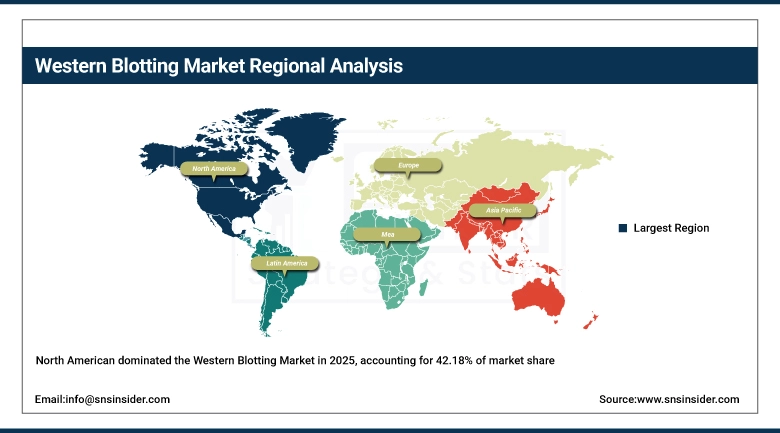
The North America Western Blotting Market has captured 42.18% of the market share due to its robust healthcare system, superior diagnostic facilities, and automation of blotting technologies in the United States and Canada. The increasing occurrence of diseases along with investment in proteomics and biomarkers facilitates growth. Innovations in blotting reagents and other associated components add to the domination of the market. Reimbursement policies also play a role in making North America the most mature Western Blotting technology market.
Get Customized Report as per Your Business Requirement - Enquiry Now
U.S. Western Blotting Market Insights:
U.S. Western Blotting Market, there is significant funding toward research, high numbers of diagnostic laboratories, and wide adoption of modern blotting technology. The need for confirmatory tests on HIV, cancer biomarkers, and autoimmunity has been one of the key growth drivers. The adoption of automation and artificial intelligence for imaging has made the U.S. one of the frontrunners in the implementation of Western Blotting. Growth in the pharmaceutical and biotechnology industry is a key factor behind this success.
Asia Pacific Western Blotting Market Insights:
The Asia Pacific Western Blotting Market is expected to grow significantly at a CAGR of 8.45% due to the increase in health care expenditure, prevalence of infections, and use of advanced technology. This market is witnessing significant growth due to research activities taking place in countries such as China, India, and Japan along with growth in their biotechnology industry. The increasing importance being laid on research concerning biomarkers for cancer and protein analysis also contributes to market growth.
China Western Blotting Market Insights:
China's Western Blotting Market is supported by an extensive development of healthcare infrastructure, the robust backing of government to advance biotechnologies, and growing demand for sophisticated diagnostic tools. The growing incidence of infectious diseases and cancer biomarkers is contributing to an increasing use of blotting technologies by hospitals and laboratories. Both local players are focusing on automation and innovation of reagents, while multinational companies continue to develop partnerships for enhancing their presence in the market.
Europe Western Blotting Market Insights:
The Europe Western Blotting Market enjoys robust support from the presence of well-developed healthcare infrastructure, stringent regulations, and high-level deployment of blotting techniques for diagnostic and research purposes. The increasing incidences of autoimmune diseases and cancer biomarkers spur the need for this product. Some prominent nations that are spearheading the use of Western blots include Germany, the United Kingdom, and France. These regions have made notable strides due to their substantial investments in research and development initiatives, along with partnerships with biotech companies.
Germany Western Blotting Market Insights:
Germany’s Western Blotting Market is bolstered by the country’s robust biotech industry, highly developed scientific research facilities, and solid health care facilities. There is a high demand for research in cancer biomarkers, proteomics, and infectious diseases that fuels the need for blotting systems. Automation in German labs for better reliability and efficiency in blotting is on the rise. Favorable government policies and partnerships between academia and the industry further strengthen Germany’s position as a prominent European market for Western Blotting technology.
Latin America Western Blotting Market Insights:
The Latin American Western Blotting Market is showing consistent growth due to the development of healthcare facilities and increased requirement for diagnostic tests related to infections. The countries like Brazil and Mexico are playing a key role in adopting the technology owing to their efforts in ensuring public health and investing in biotechnology research. Although the lack of sophisticated automation is one of the restraining factors in the region, increasing partnerships with companies are helping in overcoming this obstacle.
Middle East & Africa Western Blotting Market Insights:
The Market for Middle East & Africa Western Blotting is gaining traction due to an increase in the prevalence of infectious diseases and increased investments toward healthcare facilities. The highest adoption of products in this market can be seen in South Africa, Saudi Arabia, and the UAE, among other nations. The lack of automated equipment and expensive reagents are challenges faced, although increasing support from governments and collaboration with manufacturers helps drive the market.
Western Blotting Market Competitive Landscape:
Bio-Rad Laboratories
Bio-Rad Laboratories is a leading life science corporation of the United States that operates actively in the Western Blotting industry. Its product line features an extensive range of reagents, kits, electrophoresis apparatuses, transfer membranes, and imaging equipment. Bio-Rad Laboratories focuses on quality and reliability, as the company has many years of experience in the field of protein assays and diagnostics. The corporation is actively investing in new blotting technology development, automation, and cooperation with scientific organizations.
-
In May 2025, Bio-Rad introduced enhanced ECL substrates under its Clarity™ line, improving sensitivity for chemiluminescent detection and strengthening its consumables portfolio for diagnostic and research applications.
Thermo Fisher Scientific Inc.
Thermo Fisher Scientific Inc., based in the United States, is a market leader in laboratory equipment and supplies and has made a name in the Western Blotting segment. The firm offers protein gel system, blotting membrane, fluorescent detection products, and high-end imaging systems to ensure an overall solution for scientists and doctors. The range of offerings from Thermo Fisher is based on the pillars of innovation, scalability, and reliability, all backed up with efficient distribution and customer support.
-
In July 2025, Thermo Fisher expanded its Invitrogen™ blotting product line with new multiplex fluorescent kits, enabling simultaneous detection of multiple proteins and advancing research in oncology and autoimmune disorders.
Merck KGaA
The Merck KGaA Company is one of the most well-known companies in the Western Blotting industry due to it offers a diverse product range from reagents to membranes and even a variety of imaging techniques in its product portfolio. It has an emphasis on developing and innovating quality consumables and imaging products, which also comes from an advanced R&D department and a strong supply chain system. It also seeks to diversify into cancer biomarker studies and autoimmune testing for better growth in the future.
-
In September 2025, Merck launched new fluorescent blotting reagents under the MilliporeSigma label, designed to improve multiplex protein detection and accelerate biomarker discovery in oncology research.
Western Blotting Market Key Players:
Some of the Western Blotting Market Companies are:
-
Bio-Rad Laboratories
-
Thermo Fisher Scientific Inc.
-
Merck KGaA
-
GE Healthcare
-
Hoffmann-La Roche Ltd
-
LI-COR Inc.
-
Cell Signaling Technology Inc.
-
GenScript
-
Takara Bio Inc.
-
Leinco Technologies
-
ElabScience Biotechnology Inc.
-
Azure Biosystems Inc.
-
Advansta Inc.
-
HiMedia Laboratories
-
SBH Sciences
-
Bio-Techne
-
Lumigen Inc.
-
ICL Inc.
-
Agilent Technologies
-
PerkinElmer Inc.
| Report Attributes | Details |
|---|---|
| Market Size in 2025 | USD 2.38 Billion |
| Market Size by 2035 | USD 4.38 Billion |
| CAGR | CAGR of 6.39% From 2026 to 2035 |
| Base Year | 2025 |
| Forecast Period | 2026-2035 |
| Historical Data | 2022-2024 |
| Report Scope & Coverage | Market Size, Segments Analysis, Competitive Landscape, Regional Analysis, DROC & SWOT Analysis, Forecast Outlook |
| Key Segments | • By Product (Reagents & Kits, Electrophoresis Blotting Systems, Transfer Membranes, Gel Electrophoresis Equipment, Others), • By Technology (Manual Western Blotting, Automated Western Blotting, Semi-Automated Systems, Digital Imaging Systems, Others), • By Detection Method (Chemiluminescent Detection, Colorimetric Detection, Fluorescent Detection, Radioisotopic Detection, Others), • By Disease Area (HIV Diagnostics, Lyme Disease, Cancer Biomarker Studies, Autoimmune Disorders, Others), • By Application (Medical Diagnostics (HIV, Lyme, infectious diseases), Scientific Research (proteomics, biomarker validation, drug discovery), Agriculture (crop pathogen detection), Food & Beverage Testing (contamination, quality control), Others) |
| Regional Analysis/Coverage | North America (US, Canada), Europe (Germany, UK, France, Italy, Spain, Russia, Poland, Rest of Europe), Asia Pacific (China, India, Japan, South Korea, Australia, ASEAN Countries, Rest of Asia Pacific), Middle East & Africa (UAE, Saudi Arabia, Qatar, South Africa, Rest of Middle East & Africa), Latin America (Brazil, Argentina, Mexico, Colombia, Rest of Latin America). |
| Company Profiles | Bio-Rad Laboratories, Thermo Fisher Scientific Inc., Merck KGaA, GE Healthcare, Hoffmann-La Roche Ltd, LI-COR Inc., Cell Signaling Technology Inc., GenScript, Takara Bio Inc., Leinco Technologies, ElabScience Biotechnology Inc., Azure Biosystems Inc., Advansta Inc., HiMedia Laboratories, SBH Sciences, Bio-Techne, Lumigen Inc., ICL Inc., Agilent Technologies, and PerkinElmer Inc. |
Frequently Asked Questions
North America dominated with a 42.18% share in 2025, while Asia-Pacific is the fastest-growing region, expected to expand at a CAGR of 8.45% during 2026–2035.
Reagents & Kits dominated with a 45.17% share in 2025, while it also projected to grow at the fastest CAGR of 7.12% during 2026–2035.
Growth is driven by rising demand for protein analysis in disease diagnostics, increasing prevalence of infectious, autoimmune, and cancer-related disorders, strong adoption of advanced detection technologies.
The market is valued at USD 2.38 Billion in 2025 and is projected to reach USD 4.38 Billion by 2035.
The Western Blotting Market is projected to grow at a CAGR of 6.39% during 2026–2035.
