
Wireless Medical Device Market Report Scope & Overview:
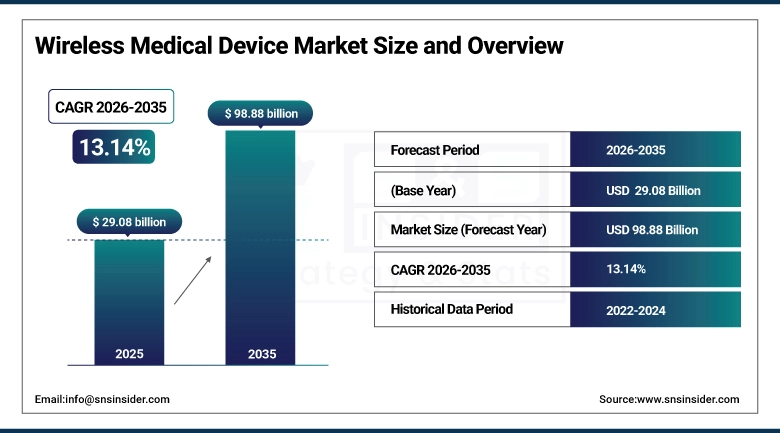
The Wireless Medical Device Market size is valued at USD 29.08 Billion in 2025 and is projected to reach USD 98.88 Billion by 2035, growing at a CAGR of 13.14% during the forecast period 2026–2035.
Insights on the Wireless Medical Device Market provide a comprehensive analysis of trends, development in technology, and use of wireless health care products in hospitals, at homes, and patient monitoring services. Several important aspects that have significantly contributed to growth in market include the growing use of smart wearable and implantable devices in patients suffering from chronic illnesses, incorporation of highly sophisticated wireless systems like Bluetooth, Wi-Fi, NFC, 4G/5G, and an increase in the demand for telehealth services and instant exchange of patient information between providers.
Wireless monitoring and connected care solutions are expected to support Billions of patients globally by 2025, with adoption expanding significantly through 2035.
To Get more information on Wireless Medical Device Market - Request Free Sample Report
Wireless Medical Device Market Trends:
- Rising adoption of AI-enabled wireless medical devices is improving real-time monitoring, predictive diagnostics, and clinical decision-making across care settings.
- Increasing prevalence of chronic diseases and aging population is driving demand for continuous remote health monitoring and early diagnosis solutions.
- Rapid expansion of Remote Patient Monitoring (RPM) programs is accelerating deployment of connected wearables, smart patches, and implantable devices.
- Growing shift toward home-based healthcare models is boosting adoption of portable and wearable medical monitoring systems.
- Increasing integration of IoT and cloud-based healthcare platforms is enabling real-time data sharing and remote physician access.
- Advancements in 5G, Bluetooth, and wireless connectivity are enhancing uninterrupted patient data transmission and monitoring accuracy.
U.S. Wireless Medical Device Market Insights:
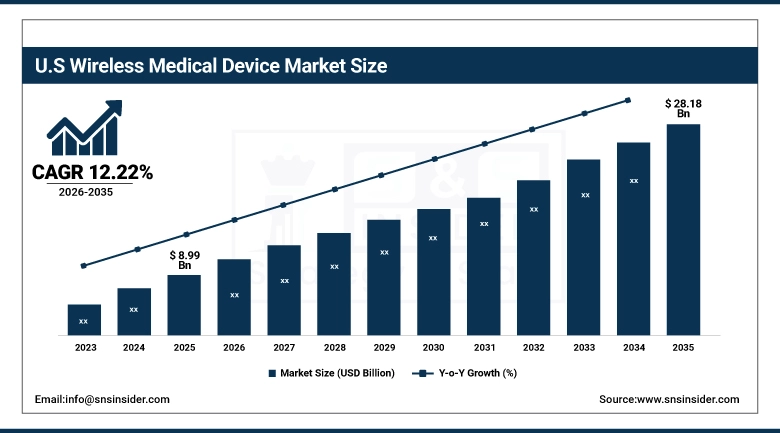
The Wireless ECG & Remote Cardiac Monitoring Market is projected to grow from USD 8.99 Billion in 2025 to USD 28.18 Billion by 2035, at a CAGR of 12.22%. Key positive growth drivers within the sector will be the growing ecosystem of remote patient monitoring, rising chronic conditions, and an increasingly aged global population, along with the increased usage of wireless medical devices in order to monitor health and manage diseases. Market uptake is set to gain considerable momentum through growing regulatory approval and reimbursement for connected devices during the forecast period of 2026 to 2035.
Wireless Medical Device Market Growth Drivers:
-
Rising adoption of AI-enabled wireless medical devices across hospitals, homecare, and ambulatory settings is driving strong demand for continuous patient monitoring, real-time diagnostics, and remote clinical decision support systems.
Significant progress made in the development of wearable sensors, implantable monitoring devices, and cloud-based healthcare systems is driving the adoption of next generation wireless medical devices, including smart ECG monitoring systems, glucose monitoring sensors, pulse oximeters, and vitals monitoring devices that allow for real-time transfer of information and analysis of patients' health. Rising incidences of chronic conditions (such as cardiovascular disease, diabetes, and respiratory conditions) combined with the global aging trend and fast growth of remote patient monitoring initiatives and telemedicine services are fueling demands for connected medical ecosystems.
More than 60% of digital health monitoring programs in developed healthcare systems are now integrating wireless medical devices with AI and cloud-based analytics platforms as of 2025.
Wireless Medical Device Market Restraints:
-
High integration complexity and elevated cost of advanced wireless medical devices and connected healthcare ecosystems are restraining large-scale deployment across cost-sensitive healthcare systems and developing regions globally.
The market for Wireless Medical Devices suffers greatly from the dependency on the conventional wired systems of monitoring as well as the current hospital setup, which have been established and rooted in numerous healthcare institutions in emerging and developing countries. The high cost of state-of-the-art wearable sensors, wireless implantable, artificial intelligence-driven diagnostic solutions, and cloud-based monitoring technology, as well as the mandatory regulations surrounding cybersecurity issues and data protection for the patients, is hindering the widespread adoption of wireless medical technologies.
Wireless Medical Device Market Opportunities:
-
Rapid transformation toward digital healthcare ecosystems and value-based care models is creating significant opportunities for advanced wireless medical device technologies globally.
The Wireless Medical Devices Market is gaining momentum due to the rapid development of predictive healthcare and health intelligence systems, wherein interlinked devices are progressively employed to move away from a reactive model of care delivery towards a preventive one. Investment in AI-enabled digital therapeutics, telemedicine, and patient analytics software is paving the way for enhanced precision in disease diagnosis and tailored treatment.
Over 55% of all new digital health infrastructure projects worldwide will focus on interoperable wireless monitoring systems and patient analytics solutions driven by AI technology by 2035.
Wireless Medical Device Market Segmentation Analysis:
-
By Product Type, Diagnostic & Monitoring Devices held the largest market share of 34.25% in 2025, while Smart Wearable Medical Devices are expected to grow at the fastest CAGR of 14.72% during 2026–2035.
-
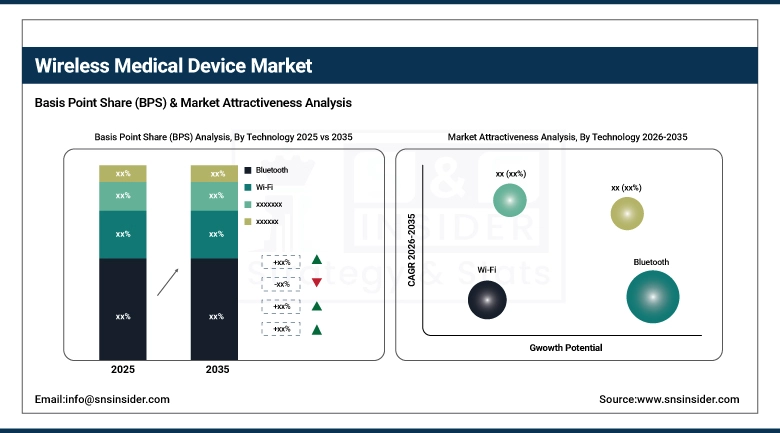
By Technology, Bluetooth-enabled devices held the largest share of 31.05% in 2025, while Cellular (4G/5G)-enabled medical devices are expected to grow at the fastest CAGR of 17.99% during 2026–2035.
-
By Application, Remote Patient Monitoring (RPM) dominated with 29.85% market share in 2025, while Chronic Disease Management is expected to grow at the fastest CAGR of 13.24% during 2026–2035.
-
By End User, Hospitals & Clinics held the largest share of 36.95% in 2025, while Homecare Settings are expected to grow at the fastest CAGR of 14.95% during 2026–2035.
-
By Distribution Channel, Direct Sales / Institutional Sales held the largest market share of 40.51% in 2025, while Online Channels are expected to grow at the fastest CAGR of 16.54% during 2026–2035.
By Technology, Bluetooth Dominates While Cellular (4G/5G) Grows Rapidly:
Bluetooth segment dominated the market, as it is still the most used wireless medical connectivity technology that provides features such as low power consumption, easy device connection, and wide compatibility. The extensive use of Bluetooth technology in hospitals and at-home care gadgets and wearable healthcare devices is proof of its dominance in the market.
Cellular (4G/5G) is the fastest-growing segment due to the rising demand for remote real-time monitoring, reliable and fast data transmission, and deployment of the connected healthcare ecosystem.
By Product Type, Diagnostic & Monitoring Devices Dominates While Smart Wearable Medical Devices Grows Rapidly:
Diagnostic & Monitoring Devices segment dominated the market due to the extensive use of these devices for continuous monitoring of patients, monitoring of vital signs, and clinical diagnosis in hospitals, emergency centers, and disease management programs. These devices have already been widely adopted into the healthcare system as they help in detecting diseases at an early stage.
Smart Wearable Medical Devices is the fastest-growing segment due to growing adoption of wearable devices for continuous monitoring and physiological monitoring of patients.
By Application, Remote Patient Monitoring Dominates While Chronic Disease Management Grows Rapidly:
Remote Patient Monitoring segment dominated the market owing to the increasing use of wireless technology for continuous monitoring of patients, acute and chronic disease management, and the emergence of decentralized health care delivery. This is further emphasized by the role played by the technology in facilitating real-time clinical decision making and minimizing dependency on hospitals in the wireless medical industry.
Chronic Disease Management is the fastest-growing segment, thanks to the increasing prevalence of chronic diseases across the world that require continuous monitoring and personalizing treatment regimens.
By End User, Hospitals & Clinics Dominates While Homecare Settings Grows Rapidly:
Hospitals & Clinics segment dominated the market due to robust infrastructure, high patient flow, and presence of advanced monitoring systems in place. Being key to the delivery of acute care services, these entities have remained dominant in the market due to these characteristics.
Homecare Settings is the fastest-growing segment, in the past years due to the fast pace at which decentralization of healthcare facilities is taking place, along with the preference among patients for home-based monitoring.
By Distribution Channel, Direct Sales / Institutional Sales Dominates While Online Channels Grows Rapidly:
Direct Sales / Institutional Sales segment dominated the market due to extensive purchases made by hospitals, healthcare organizations, and major diagnostic chains for advanced wireless medical devices and enterprise solutions.
Online Channels is the fastest-growing segment, due to growing digitalization in healthcare purchases and preference for buying wearables and wireless medical devices directly from consumers. Increasing adoption of e-commerce services, growing awareness about remote monitoring technology, and easy availability of smart medical devices are driving their adoption through online channels.
Wireless Medical Device Market Regional Analysis:
North America Wireless Medical Device Market Insights:
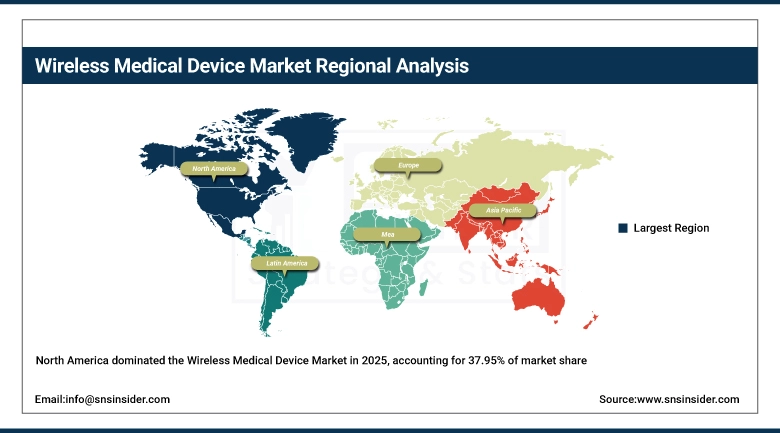
The North America Wireless Medical Device Market is dominated, holding a 37.95% share in 2025 as a result of its well-developed digital health care ecosystem, wide-scale deployment of remote patient monitoring solutions, and broad adoption of connected medical devices across various hospitals and at home environments. The advantage of this region comes from having world-class medical devices vendors, sophisticated healthcare IT infrastructures, and strong reimbursement models for wireless monitoring technology solutions. Constant investments in AI-enabled diagnostic equipment, wearables for heart monitoring, and cloud-powered healthcare technology platforms continue to solidify its market leadership position.
Get Customized Report as per Your Business Requirement - Enquiry Now
United States Wireless Medical Device Market Insights:
The United States Wireless Medical Device Market holds the prominent place among other regional markets, thanks to the early adoption of innovative solutions, the presence of major medical equipment players, and large-scale deployment of remote patient monitoring systems. The nation is focusing on developing AI-based wearables, wireless diagnostic equipment, and wireless patient monitoring systems on the cloud.
Asia-Pacific Wireless Medical Device Market Insights:
The Asia-Pacific Wireless Medical Device Market is the fastest-growing region, projected to expand at a CAGR of 14.25% during 2026–2035. The driver of its development is the fast growth of digital health care infrastructure, increasing occurrence of chronic illnesses, and widespread usage of cost-effective wearable monitoring devices. Such countries as China, India, Japan, and South Korea are demonstrating an impressive progress in their telehealth services, remote monitoring programs, and smartphones combined with medical devices. Growing accessibility of health care facilities, investment in smart hospitals, and high penetration of wireless connectivity solutions are making things move even faster.
China Wireless Medical Device Market Insights:
The market of China Wireless Medical Device Market is growing fast because of the active governmental support for the country’s digital health care system, widespread implementation of smart hospital systems, and increased local manufacturing of connected medical devices. China invests a lot of money in artificial intelligence-based diagnostic systems, wearable health monitoring equipment, and cloud-based information environments for both city and countryside regions.
Europe Wireless Medical Device Market Insights:
manufacturing capabilities, and rising penetration rates of health technology in hospitals and home care services. Nations like Germany, UK, France, Italy, and Scandinavia have been investing heavily in remote patient monitoring systems, wearable health monitors, and hospital connectivity solutions. There is an increasing trend towards utilizing wireless ECG monitoring devices, smart wearable health devices, and cloud-based chronic diseases management solutions. Robust regulations backing up patients' data security and interoperability standards are fueling their adoption.
Germany Wireless Medical Device Market Insights:
The Germany Wireless Medical Devices Market is propelled by its superior health infrastructure, well-developed medical engineering industry, and technological leadership in precision diagnostics and connected health solutions. The nation is concentrating on developing AI-based diagnostics software and wireless heart monitoring equipment, besides hospital interoperable communication systems. Increased investments in digital hospital transformation projects and utilization of smart wearables in clinical workflows are boosting demand for wireless medical devices in Germany.
Insights on the Latin America Wireless Medical Device Market:
The Latin America Wireless Medical Device Market is registering growth on account of growing digitalization within the healthcare industry, increasing use of remote healthcare solutions, and the adoption of economical wearable medical monitoring devices. The gradual use of wireless diagnostic tools and remote monitoring technologies by countries like Brazil, Mexico, and Argentina helps manage chronic diseases effectively while minimizing the workload at hospitals. Investments in telemedicine technologies and mobile health apps contribute towards growing adoption of wireless medical devices, especially in urban hospitals and private healthcare networks.
Middle East & Africa Wireless Medical Device Market Insights:
The market for wireless medical devices in the Middle East and Africa region is witnessing significant growth owing to the growing healthcare modernization efforts, increased incidence of chronic illnesses, and higher investments in intelligent healthcare infrastructure. The UAE, Saudi Arabia, Israel, and South Africa are among the nations that have opted to implement wireless monitoring technology and wearable healthcare devices.
Wireless Medical Device Market Competitive Landscape:
Medtronic PLC operates in the field of medical technology and is known to be proficient in cardiac monitoring, wearable diagnostic equipment, and wireless implantable medical devices. Medtronic PLC plays an important role in the development of remote cardiac care due to the range of products it offers, such as loop implantable recorders, wireless ECG monitoring, and patient management systems. The competitive advantage of Medtronic PLC includes its clinical knowledge of cardiovascular treatment, partnerships with hospitals, and the use of AI for remote patient monitoring.
-
In July 2025, Medtronic expanded its cardiac monitoring portfolio by enhancing its next-generation implantable cardiac device ecosystem integrated with cloud-based remote monitoring capabilities, strengthening its position in continuous wireless cardiac surveillance and chronic disease management solutions.
Koninklijke Philips N.V. is one of the world’s premier health technology companies and excels at offering solutions such as connected care solutions, wearables for medical use, and wireless monitoring of patients from hospitals to their homes. The company is well-known for providing advanced patient monitoring solutions, wireless diagnostics services, and a comprehensive remote patient monitoring ecosystem that can be utilized in hospitals and homecare settings. The unique strength of Koninklijke Philips N.V. is the robust digital health ecosystem, AI-based clinical decision support systems, and its global healthcare provider network.
-
In June 2025, Philips advanced its remote patient monitoring ecosystem by upgrading its AI-enabled wearable cardiac monitoring and hospital-connected patient platform, improving real-time clinical insights and expanding its integrated care delivery capabilities across hospital and homecare settings.
GE HealthCare Technologies Inc. is one of the leading firms specializing in the development and delivery of medical imaging systems, clinical monitoring devices, and digital health systems, having a solid reputation in wireless clinical monitoring platforms and artificial intelligence-powered diagnostic solutions. The firm offers highly advanced wireless patient monitoring systems, intelligent hospital communication platforms, and diagnostic devices integrated with the cloud for clinical decision-making processes. Competitive advantage in GE HealthCare Technologies is provided by the firm's solid global installed base of hospitals and ongoing innovations in healthcare analytics with AI technology.
-
In August 2025, GE HealthCare strengthened its patient monitoring portfolio by introducing enhanced wireless monitoring platforms integrated with AI-based predictive analytics for critical care and hospital-wide patient surveillance, improving early detection of clinical deterioration and workflow efficiency across healthcare systems.
Wireless Medical Device Market Key Players:
Some of the Wireless Medical Device Market Companies are:
-
Medtronic plc
-
Koninklijke Philips N.V.
-
GE HealthCare Technologies Inc.
-
Abbott Laboratories
-
Boston Scientific Corporation
-
Siemens Healthineers AG
-
DexCom Inc.
-
Masimo Corporation
-
Omron Healthcare Inc.
-
Baxter International Inc.
-
Biotronik SE & Co. KG
-
AliveCor Inc.
-
Fitbit Health Solutions
-
Samsung Electronics Co. Ltd.
-
F. Hoffmann-La Roche Ltd.
-
Becton, Dickinson and Company
-
Stryker Corporation
-
Johnson & Johnson Services Inc.
-
Digi International Inc.
-
Qualcomm Incorporated
| Report Attributes | Details |
|---|---|
| Market Size in 2025 | USD 29.08 Billion |
| Market Size by 2035 | USD 98.88 Billion |
| CAGR | CAGR of 13.14% From 2026 to 2035 |
| Base Year | 2025 |
| Forecast Period | 2026-2035 |
| Historical Data | 2022-2024 |
| Report Scope & Coverage | Market Size, Segments Analysis, Competitive Landscape, Regional Analysis, DROC & SWOT Analysis, Forecast Outlook |
| Key Segments | • By Product Type (Diagnostic & Monitoring Devices, Therapeutic Devices, Smart Wearable Medical Devices, Implantable Wireless Medical Devices, Others) • By Technology (Bluetooth, Wi-Fi, Near Field Communication (NFC), Zigbee, Cellular / 4G / 5G, Others) • By Application (Remote Patient Monitoring, Chronic Disease Management, Fitness & Wellness Monitoring, Home Healthcare, Hospital & Clinical Monitoring, Others) • By End-User (Hospitals & Clinics, Homecare Settings, Ambulatory Surgical Centers, Diagnostic Centers, Long-Term Care Facilities, Others) • By Distribution Channel (Direct Sales / Institutional Sales, Online Channels, Retail Pharmacies, Medical Device Distributors, Others) |
| Regional Analysis/Coverage | North America (US, Canada), Europe (Germany, UK, France, Italy, Spain, Russia, Poland, Rest of Europe), Asia Pacific (China, India, Japan, South Korea, Australia, ASEAN Countries, Rest of Asia Pacific), Middle East & Africa (UAE, Saudi Arabia, Qatar, South Africa, Rest of Middle East & Africa), Latin America (Brazil, Argentina, Mexico, Colombia, Rest of Latin America). |
| Company Profiles | Medtronic plc, Koninklijke Philips N.V., GE HealthCare Technologies Inc., Abbott Laboratories, Boston Scientific Corporation, Siemens Healthineers AG, DexCom Inc., Masimo Corporation, Omron Healthcare Inc., Baxter International Inc., Biotronik SE & Co. KG, AliveCor Inc., Fitbit Health Solutions, Samsung Electronics Co. Ltd., F. Hoffmann-La Roche Ltd., Becton, Dickinson and Company, Stryker Corporation, Johnson & Johnson Services Inc., Digi International Inc., Qualcomm Incorporated |

Frequently Asked Questions
North America dominated with a 37.85% share in 2025, while Asia-Pacific is the fastest-growing region, expected to expand at a CAGR of 14.25% during 2026–2035.
Bluetooth dominated with a 31.05% share in 2025, Zigbee are projected to grow at the fastest CAGR of 17.99% during 2026–2035.
Growth is driven by rising prevalence of chronic diseases, rapid expansion of remote patient monitoring and telehealth ecosystems, increasing adoption of AI-enabled wearable and implantable medical devices.
The market is valued at USD 29.08 Billion in 2025 and is projected to reach USD 98.88 Billion by 2035.
The Wireless Medical Device Markets projected to grow at a CAGR of 13.14% during 2026–2035.
