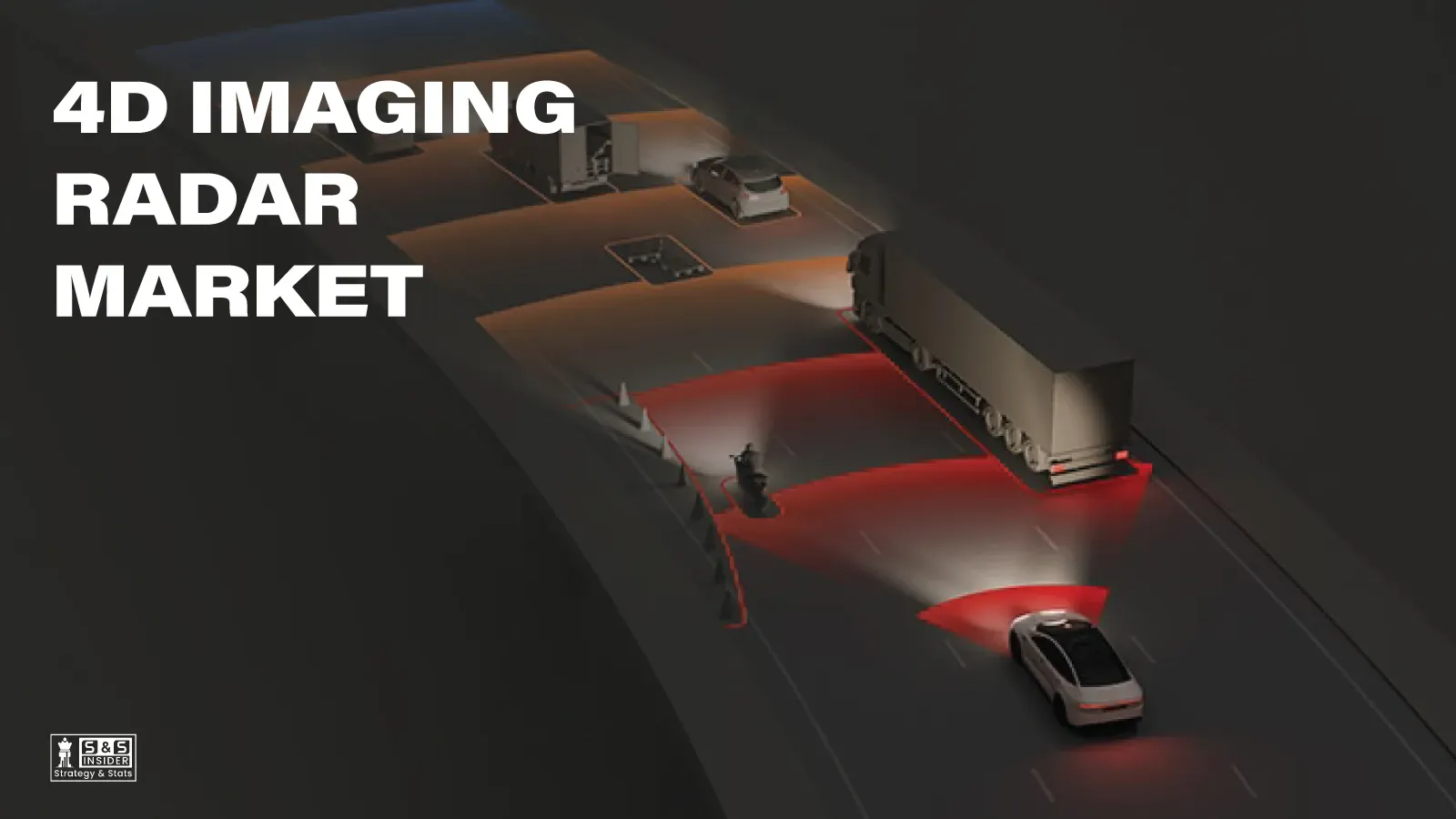
The 4D Imaging Radar Market is undergoing a major transformation to shape the future of intelligent mobility through offering high resolution environment perception technology for ADAS, autonomous vehicles, industrial automation, and smart transportation applications. In contrast to traditional radar systems that offer information about an object’s distance and velocity only, the 4D imaging radars can provide comprehensive data regarding distance, velocity, azimuth, and elevation of an object. This makes it possible for a vehicle or machine to have a better understanding of its surrounding environment even under adverse weather and lighting conditions.
As per the data available on SNS Insider, the value of the 4D Imaging Radar Market stood at USD 2.89 billion in 2025 and is anticipated to grow up to USD 20.34 billion in 2035, registering a compound annual growth rate of 21.54% from 2026-2035. The market is growing owing to factors such as increasing penetration of autonomous cars, growing use of ADAS technology, electric cars, and intelligent transport systems. Constant improvements in terms of radar resolution, object classification, sensor fusion, and artificial intelligence are driving its adoption commercially.
Gain Actionable Intelligence on the 4D Imaging Radar Market - Request a Sample Report
Major Key Companies
1. Arbe Robotics
 Arbe Robotics has become known as one of the global innovators in the development of ultra-high-resolution 4D Imaging Radar Technology. Arbe Robotics produces radar chipsets and perception solutions that are capable of producing precise environmental maps for self-driving cars, ADAS (advanced driver assistance systems), trucks and industrial automation. The imaging radar technology produced by Arbe allows better object detection, point cloud generation at a higher resolution, as well as operation during rain, fog, darkness, and other difficult driving conditions. Arbe is actively working on improving radar processing, perception algorithms powered by AI, and automotive platforms.
2. Uhnder Inc.
 Uhnder Inc. is one of the key players behind the development of the 4D imaging radar-on-chip technologies that have been designed to bring about a paradigm shift in the automotive industry. The software-defined digital radar platform from Uhnder offers high resolution in detecting objects and preventing interference along with advanced environmental awareness for ADAS and autonomous vehicles. The use of digital radar technology in place of analog radar technology helps ensure better functionality of the radar and increased reliability. The innovations made in digital radar are constantly being upgraded by Uhnder Inc.
3. Texas Instruments
 Texas Instruments is among the top semiconductor firms and a major player in developing automotive radar technologies through the diverse range of radar processors, millimeter-wave sensors, and embedded processing technologies available in the market. These radar systems from Texas Instruments provide the best sensing capabilities for applications such as automotive safety systems, industrial automation, robotics, traffic management and intelligent transportation infrastructures. Texas Instruments is always making significant efforts in developing an integrated radar chipset, AI-driven edge processing systems and efficient semiconductor technologies to create efficient and scalable radar systems.
What Is Driving the Future of the 4D Imaging Radar Industry?
The fast-growing application of autonomous driving solutions and ADAS is the key factor boosting demand in the global 4D imaging radar market. Carmakers are incorporating 4D imaging radars into passenger cars, commercial vehicles and electric vehicles to ensure improved functions, such as collision avoidance, adaptive cruise control, blind spot detection, and autonomous driving. In contrast to cameras and LiDAR, imaging radar operates accurately in bad weather, which makes it an essential sensing solution in future mobility.
Among the most vital trends that are influencing the dynamics of the market are those of artificial intelligence, sensor fusion, and edge computing. The existing autonomous vehicles use radars, cameras, LiDARs, and ultrasonic sensors in order to create an environmental model, thus providing better efficiency and safer driving experience. Not only in the automotive industry, but 4D imaging radar technology is used in fields such as medicine, industrial robots, aviation, intelligent cities, traffic management, and surveillance.
North America presently dominates in the market because of its huge investment in autonomous vehicles, improvements in its defense systems, semiconductors, and ITS (Intelligent Transport Systems). Conversely, the Asia-Pacific region is expected to dominate in terms of growth rate during the forecast period because of its quick adoption of electric vehicles, increased manufacturing of automobiles, smart city initiatives, and mobility technology investment in nations such as China, Japan, South Korea, and India.
The Road Ahead
Future trends in the field of the 4D Imaging Radar industry will see continuous development in the domain of digital radar technology, artificial intelligence, sensor fusion, and autonomy. Given the increasing concern of the various industries with regards to their safety, efficiency, and environment, the 4D imaging radar will become a vital sensing technology in the domains of automobiles, medicine, automation, aerospace, and smart infrastructure.
The companies that continue to invest in technologies such as high-resolution radar chipsets, artificial intelligence perception systems, scalable semiconductor architectures, and collaboration with automobile manufacturers will be in a favorable position to reap from the opportunities that will come with the development in the industry over the years. Considering the role of autonomous cars and smart mobility in the digital economy of the future, 4D imaging radar technology will be significant.