The European region has been able to build up its presence in the world Adhesive Films Market, owing to the increasing demand for lightweight, sustainable, and high-performance adhesives within the auto, packing, and aviation industry sectors. Increasing awareness about chemical restrictions and sustainability has been shaping the adhesive film manufacturing process in the region.
According to SNS Insider, the Europe Adhesive Films Market is estimated to be USD 5.56 Billion in 2025 and is projected to reach USD 8.99 Billion by 2035, growing at a CAGR of approximately 4.92% during 2026–2035. This growth builds on the broader global Adhesive Films Market, valued at USD 21.39 Billion in 2025 and expected to reach USD 35.68 Billion by 2035 at a CAGR of 5.27% due to the industry responds to the changes in requirements and sustainable development. The study of trading and exports will show the impact of industrial dynamics and regulation on international business operations.
Gain Actionable Intelligence on this Market – Request a Sample Report
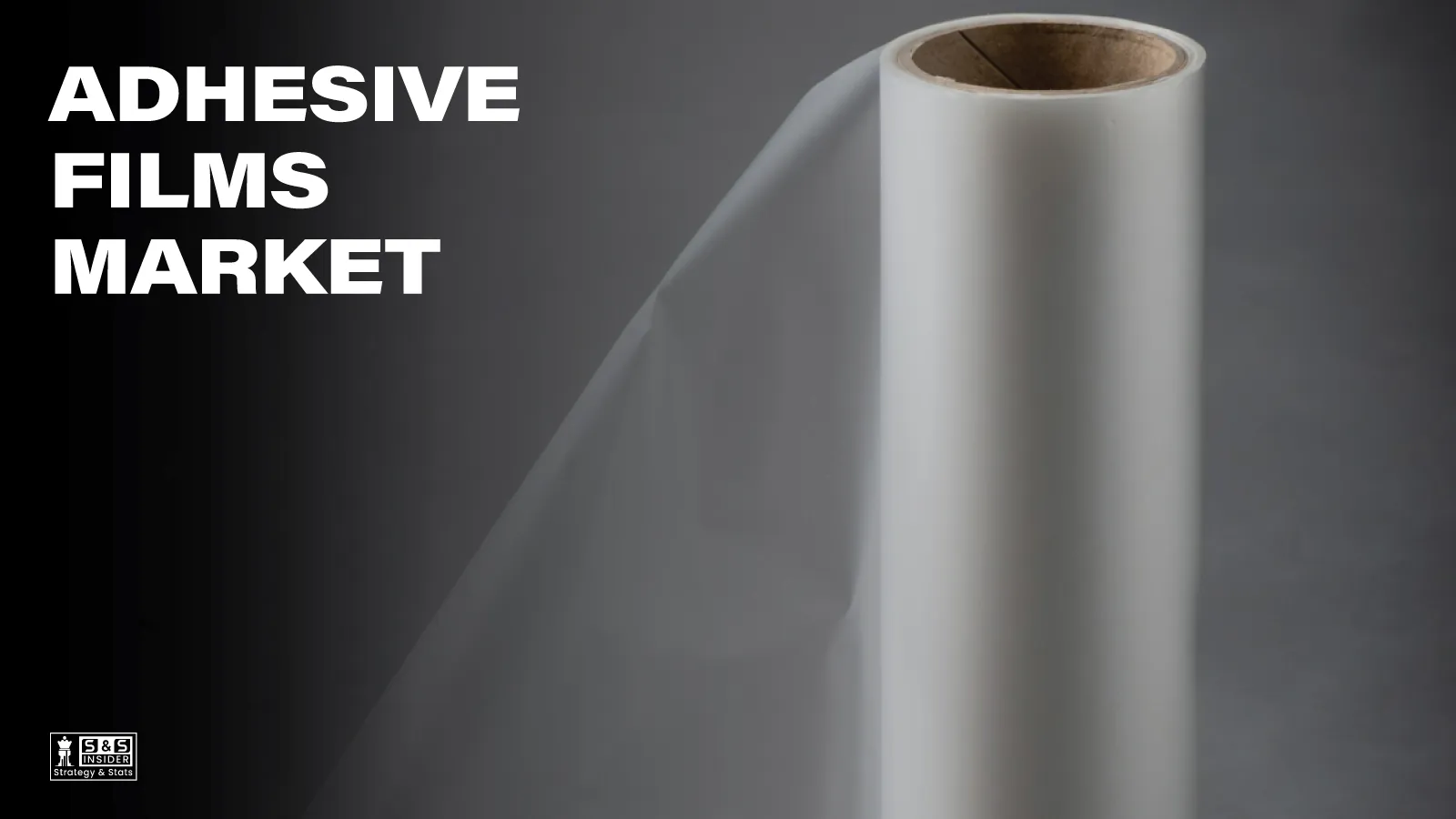
Why Europe Leads in Sustainable Adhesive Film Innovation
The European market for adhesive films relies on the automotive, aerospace, and packaging industries, which are increasingly demanding high-performance bonding solutions that can replace mechanical fasteners and liquid adhesives. The regulations on chemical substances in Europe, including REACH, are encouraging companies to adopt solvent-free, water-based, and bio-degradable adhesive products.
This pressure of regulation has been used as an experimentation environment in Europe regarding recyclable adhesive film technology especially in food packaging, pharmaceutical labelings, and construction like window sealing, HVAC systems, and flooring.
Germany, France, and the UK Drive Regional Demand
Germany is still leading the European market, providing about 24.6% of total regional revenue. Germany is characterized by a high consumption rate of adhesive tapes used for cars as well as chemical production.
France and UK contribute to the demand due to their growing industries of packaging and construction. In the region, policies of REACH compliance and environmental policies favor the development of adhesive films, which leads to a constant demand for the adhesive films.
Companies Driving Europe's Adhesive Films Industry
Mondi Group
 The Mondi Group is making investments in the development of bio adhesives made from plants such as starch, cellulose, and polylactic acid, in light of Europe's growing trend towards using biodegradable packaging material. In line with the increasing sustainability efforts within the packaging industry, the effort made by the company in developing alternative adhesives that come from plants makes it possible for the company to cater to food, consumer goods, and speciality packaging markets that want to reduce their reliance on oil-based resins.
Constantia Flexibles
 Constantia Flexibles is making use of low-waste, recyclable, and biodegradable adhesive films in their products to cater to sustainable packaging initiatives in food and consumer goods industries. The reason for this strategy is the increasing pressure coming from the EU environmental policies and REACH compliance requirements. It is forcing the companies to change the composition of their adhesives. By using environment-friendly adhesives, Constantia Flexibles is gearing up to cater to the increasing demands of brands.
UPM Raflatac
Sustainability has been one of the core factors that have motivated the development of the Bi-axially Oriented Polypropylene (BOPP) adhesive films by UPM Raflatac since the material accounts for about 38.5% of the global market share in 2025 because of its tensile strength, transparency, and recyclability. Such sustainability is helpful in promoting the packaging and labelling industries because there is an increasing need for film materials that can be recycled. The European regulations are becoming stricter regarding the use of recyclable materials than conventional plastics.
Some of the other prominent companies in Europe which are involved in the market are Henkel AG & Co. KGaA, tesa SE, Sika AG, and Bostik SA, along with some prominent global companies like 3M, Avery Dennison, and H.B. Fuller.
What Sets Europe's Adhesive Films Industry Apart
- Regulatory-driven innovation – Both REACH and EU’s circular economy strategy are contributing to the trend towards solvent-free and biodegradable adhesives formulations.
- Automotive and aerospace demand – Increasing need for light bonding in vehicle manufacture and structural aviation has been fueling the use of adhesives films.
- Sustainable packaging commitments – Starch, cellulose, and polylactic acid-based bio-acrylics are getting popularity in food and pharmaceutical packing.
- Recyclable film materials – Films made from BOPP have remained popular for labels and laminations owing to their recycling capacity and strength.
- Construction sector adoption – The application of adhesive films is now common practice in window sealing, HVAC systems and floor laying throughout the area.
Market Dynamics Shaping Growth
The growing requirement for smart and functional packaging is one of the most important growth drivers, as the use of adhesive films is important for tamper-proof and moisture-proof packaging. The development of e-commerce is another factor that drives the demand for protective packaging and authentication labeling.
On the other hand, the rising restraints for the market include price volatility of raw materials, which is a major drawback in the manufacture of adhesive films since the process depends greatly on petroleum-based resins like polypropylene and polyethylene.
In addition, there are numerous opportunities for development in terms of bio-based and recyclable adhesive films as the manufacturers strive to meet the requirements of the circular economy.
The Future of the Europe Adhesive Films Industry
The adhesive films market in Europe is expected to enjoy consistent growth until 2035 due to regulations like REACH, circular economy strategies, and increasing demand from the automotive, aerospace, and sustainable packaging segments. Germany will continue to be the major source of demand, while France and the UK add to demand through their construction and packaging activities.
Adhesive films companies that keep innovating in the area of bio-based products, recyclable films, and solvent-free manufacturing processes will find themselves well positioned to take advantage of growing opportunities within the European regulatory environment.