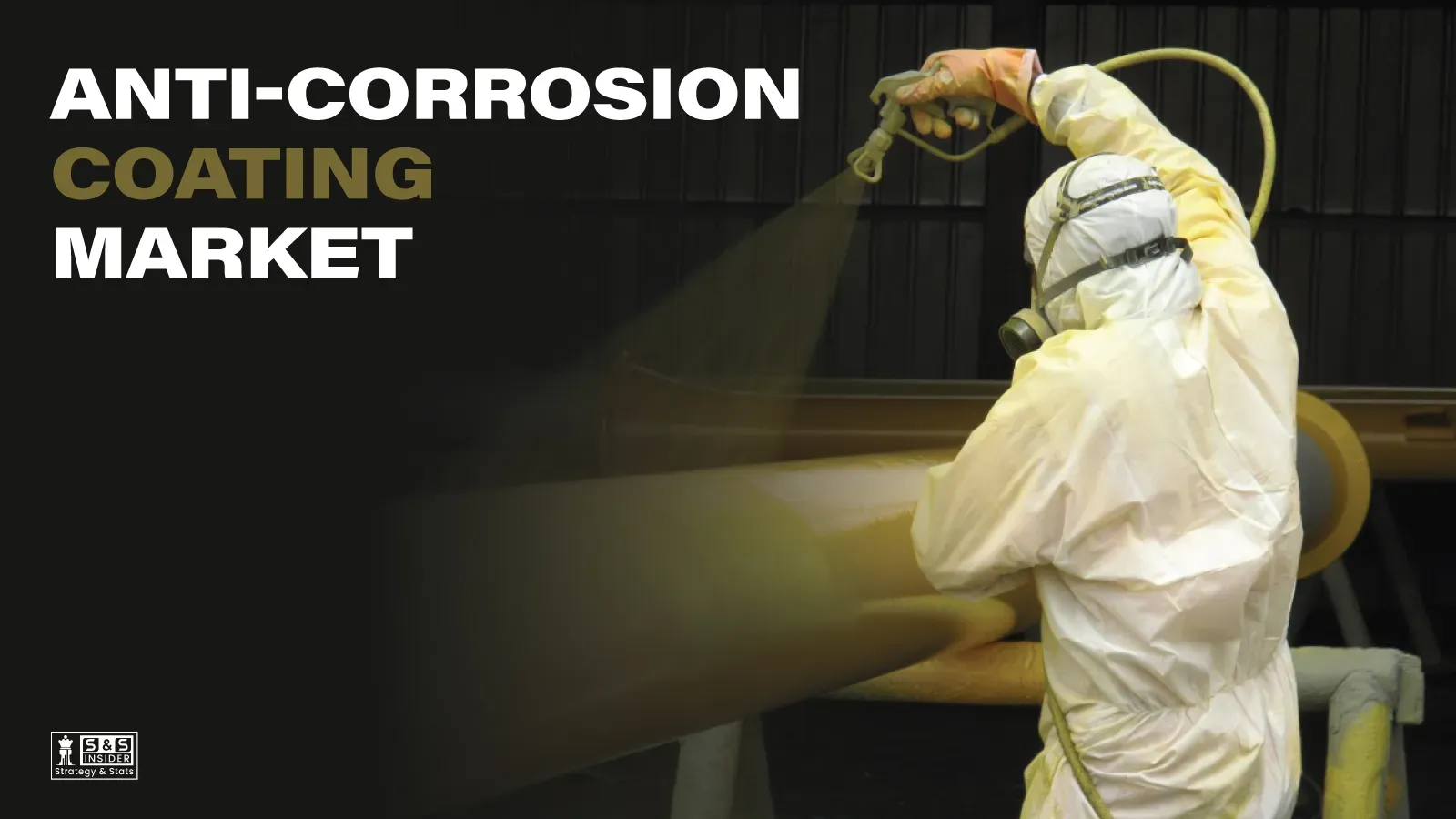
The Anti-Corrosion Coatings Market is witnessing growth owing to the increasing focus on the protection and extended life of metallic structures and machinery across various industries. The coatings market is moving ahead from being just protective coatings by coming up with innovative coatings based on nanotechnology, self-repairing properties, and superior performance capabilities suitable for harsh conditions. In addition, environmental concerns are promoting the development of water-based and biodegradable coatings.
The Anti-Corrosion Coating Market had a valuation of USD 32.27 billion in 2023 and is expected to touch USD 47.38 billion by 2032 with an annual growth rate of 4.36% during 2024-2032. Drivers of growth include the growing infrastructure construction, growing oil & gas operations, marine construction, manufacturing industry, and renewables. Moreover, organizations’ attempts to cut costs on maintenance and avoid corrosion-related equipment breakdowns are driving demand for durable protective coatings.
To Get More Information on Anti-Corrosion Coating Market – Request Sample Report
Top Anti-Corrosion Coating Companies
1. AkzoNobel N.V.
AkzoNobel is one of the major producers of protective coatings which can be used in industry for asset protection purposes. Products of AkzoNobel are developed to protect surfaces against corrosion, chemicals, weather and mechanical influences. Intershield and Intergard are examples of such products used in different industries.
Despite the fact that AkzoNobel gives importance to environmental aspects of coating, it still pays attention to its performance and applies technologies in marine, infrastructure, energy and industrial markets, where reduction of maintenance needs and prolongation of life of assets are becoming crucial factors.
2. PPG Industries, Inc.
PPG Industries offers protective coating technology for industrial, infrastructure, transportation, and energy industries. These include products like Amercoat and SigmaFast that are used for providing good protection to surfaces under tough operating environments. These protective coatings help prevent corrosion and improve durability and efficiency of application.
Environmental standards are rising, and PPG is working on coatings that have good sustainability properties. With its investments in protective coating technologies, the firm can capitalize on demand in these technologies.
3. Jotun
Jotun is a prominent producer of anti-corrosive coatings providing solutions for marine, offshore, energy, infrastructure, and industrial sectors. The Jotamastic and Hardtop lines are used by Jotun in order to offer corrosion resistance and high-quality surface coating for equipment under adverse environmental conditions. Jotun technologies are highly relevant in cases of long maintenance periods.
Innovation still plays an important role in the company’s strategy. In June 2024, Jotun launched its first CX-grade anticorrosive powder coating which can be useful in extreme conditions contributing to the increase in steel strength and decrease in maintenance.
4. Sherwin-Williams
The Sherwin-Williams Company provides an array of coatings that protect industrial buildings, pipeline, energy plants, and infrastructure. Coatings like Macropoxy and Dura-Plate are created specifically for protection from corrosion and challenging environmental conditions and increase the lifetime of the assets in industrial environments.
This company’s leadership is confirmed by its extensive knowledge and vast coatings lineup. As the owner of the infrastructure becomes more concerned about lifecycle costs compared to the cost of application of the coating, the importance of durable coating systems grows.
Key Factors Driving Anti-Corrosion Coating Market Growth
Longevity of industrial and infrastructure facilities has become one of the primary driving forces of the market. Pipelines for oil and gas, storage tanks, offshore drilling rigs, bridges, and other transport facilities as well as industrial equipment experience corrosion due to exposure to moisture, chemicals, salt water, heat, and physical strain. Coatings play an important role in preventing metal damage.
Technological advancement is another factor that is changing the industry. Smart coating, nano coating, and self-healing technology have become popular because they are able to offer better protection while in certain instances being able to react to any form of surface damage. Another way in which technological advancement is affecting the industry is through sensors which can help monitor corrosion.
Another major trend relates to sustainable coatings. Environmental factors, such as the emissions of volatile organic compounds, force manufacturers to develop water-based, low-VOC, and bio-based solutions. Although solvent-based coatings still constitute the highest share of the market in terms of technology in 2023, about 48.6%, environmental pressures will lead to innovations in this field.
The Road Ahead
The future of the Anti-Corrosion Coating Market will increasingly depend on the ability of manufacturers to combine durability, cost efficiency, sustainability, and intelligent functionality. Acrylic resin led the market in 2023 with approximately 31.5% share, while the oil and gas industry accounted for around 30.5%, demonstrating the continuing importance of proven protective technologies in demanding applications.
The Asia Pacific region continued to dominate the regional market in 2023, accounting for a projected share of 42.8% due to its industrialization and infrastructural developments, whereas the North American market is projected to witness substantial growth over the forecast period. Recent advancements such as the collaboration between Sparc Technologies and BHP Mitsubishi Alliance in February 2025 for testing out improved coatings at a Queensland mine show how the industry is heading towards sustainability. Organizations that can develop such coatings despite complying with environmental rules and cost constraints will find future success.