
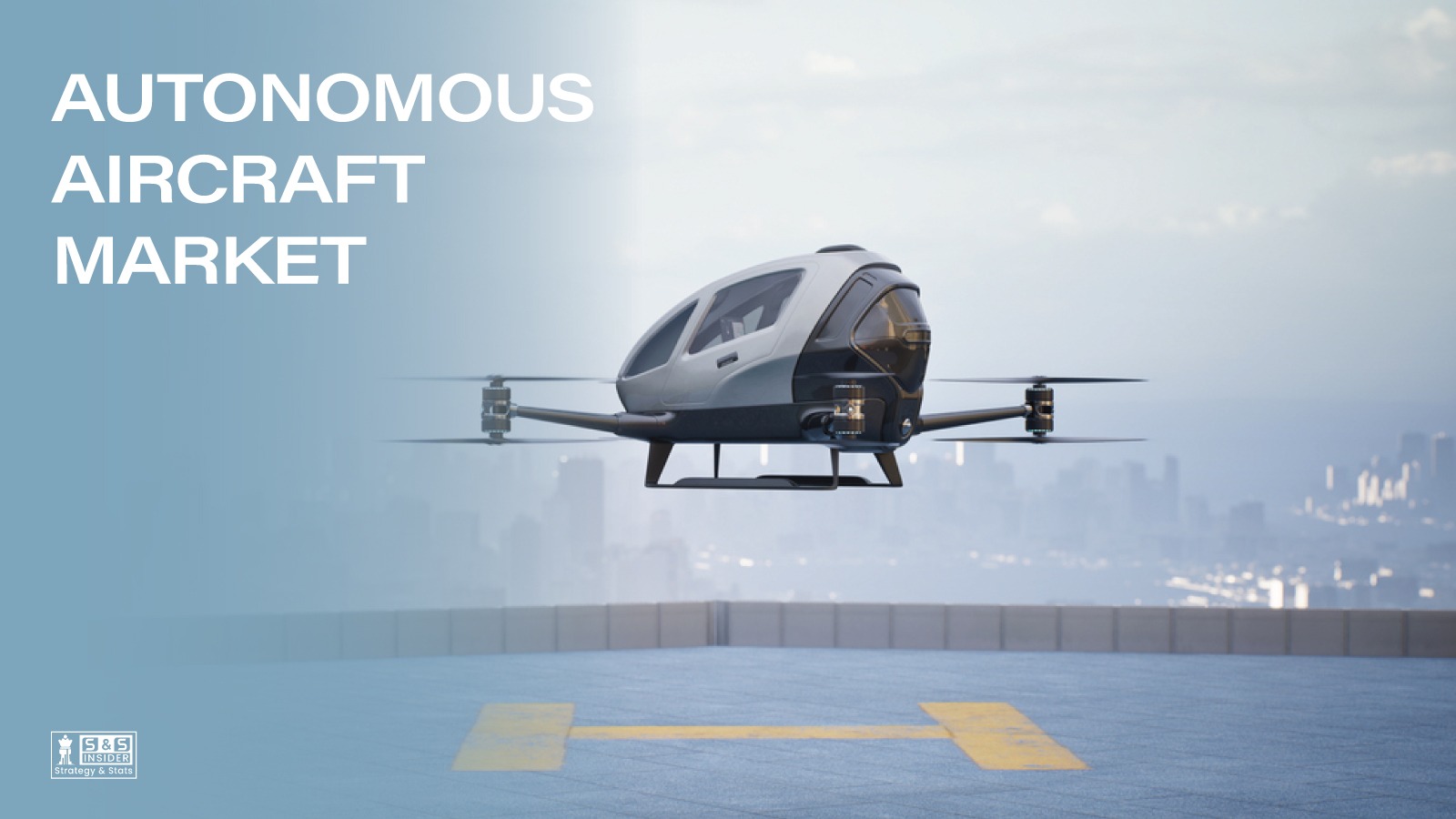
The Autonomous Aircraft Market is booming. Aerospace companies, defense contractors, and commercial firms are sinking loads of money into self-flying tech. These planes rely on AI, cool sensors, and real-time data to handle most tasks on their own. So, pilots can take it easy most of the time.Plus, they cover a bunch of areas now - from military spying and exploring enemy territory to hauling goods and maybe even future city transit services.
What's boosting things is that folks want better efficiency, safety, and longer flights. As a result, these autonomous craft are getting used more around the world. Both governments and aerospace companies are eying the next big thing – advanced platforms to cut costs, boost success rates, and handle tricky jobs. So, as this tech keeps improving, it looks like it will play an even bigger part in flight's future.
The global Autonomous Aircraft Market size stood at USD 8.76 billion in 2025 and is expected to climb to USD 54.70 billion by 2035, reflecting a CAGR of 20.34% from 2026 to 2035.Autonomous Aircraft Market.
Key Players
The leading companies operating in the Autonomous Aircraft Market include The Boeing Company, Airbus SE, Lockheed Martin Corporation, Northrop Grumman Corporation, RTX Corporation, General Atomics Aeronautical Systems, AeroVironment Inc., DJI, Anduril Industries, BAE Systems, Saab AB, Thales Group, Leonardo S.p.A., Honeywell Aerospace Technologies, Safran Group, Elbit Systems Ltd., Kratos Defense & Security Solutions, Embraer, Joby Aviation, and Archer Aviation.
Strategic Developments & Industry Innovations
The market is benefiting from rapid advancements in artificial intelligence, autonomous navigation, machine learning, and sensor integration technologies. These innovations are helping aircraft perform increasingly sophisticated missions with higher accuracy and operational reliability.
Defense organizations continue expanding the deployment of autonomous aircraft for intelligence, surveillance, and reconnaissance operations, while commercial aviation companies are exploring autonomous cargo transport and advanced air mobility solutions. The growing development of eVTOL aircraft and intelligent flight systems is further strengthening market growth prospects.
Leading Companies in the Global Autonomous Aircraft Industry
1. The Boeing Company
 Boeing is still a big deal in aerospace, pouring tons of money into autonomous tech. Besides making top-notch military and commercial planes, they're adding AI, self-navigating gear, and automated systems to their new stuff. This pushes surveillance, protect ops, cargo hauling, and cool future moves in transport. So, by always researching and building neat stuff, they stay right up there as kings of smart flying tech.
2. Lockheed Martin Corporation
 Lockheed Martin is huge when it comes to boosting defense with autopilot planes. Their tech lets armies gather info, keep an eye on enemies, and carry out slick ops. By plugging in smarts sensors, and set-it-and-forget-it plan-making systems, they give fighters a leg up in grilling scenarios and doing better in action. Pouring cash into solo flying gear locks down growth for years ahead.
3. Northrop Grumman Corporation
 Northrop Grumman knows all about crafts that don't need pilots and clever flying tech. They cook up spy planes that cruise for ages, and their work on self-flying tech and boss-systems makes things easier and ups odds of pulling off ops without a hitch. Pumping out fresh ideas keeps them on top of the heap in the world of solo flights.
Data-Backed Trends Guiding Future Business Opportunities
One of the primary factors driving market expansion is the growing demand for intelligence, surveillance, and reconnaissance operations. Military organizations are increasingly adopting autonomous aircraft to gather real-time information, conduct long-duration missions, and improve operational effectiveness while reducing risks to personnel.
Another important trend is the emergence of autonomous cargo transportation. Logistics companies and aviation operators are exploring autonomous warfare systems to improve delivery efficiency, lower operational costs, and expand transportation capabilities in remote and challenging environments.
Urban air mobility is also creating new opportunities for the industry. Companies are investing in autonomous and electric aircraft technologies designed to support future transportation systems. These platforms have the potential to transform passenger and cargo mobility within urban environments while addressing growing transportation challenges.



