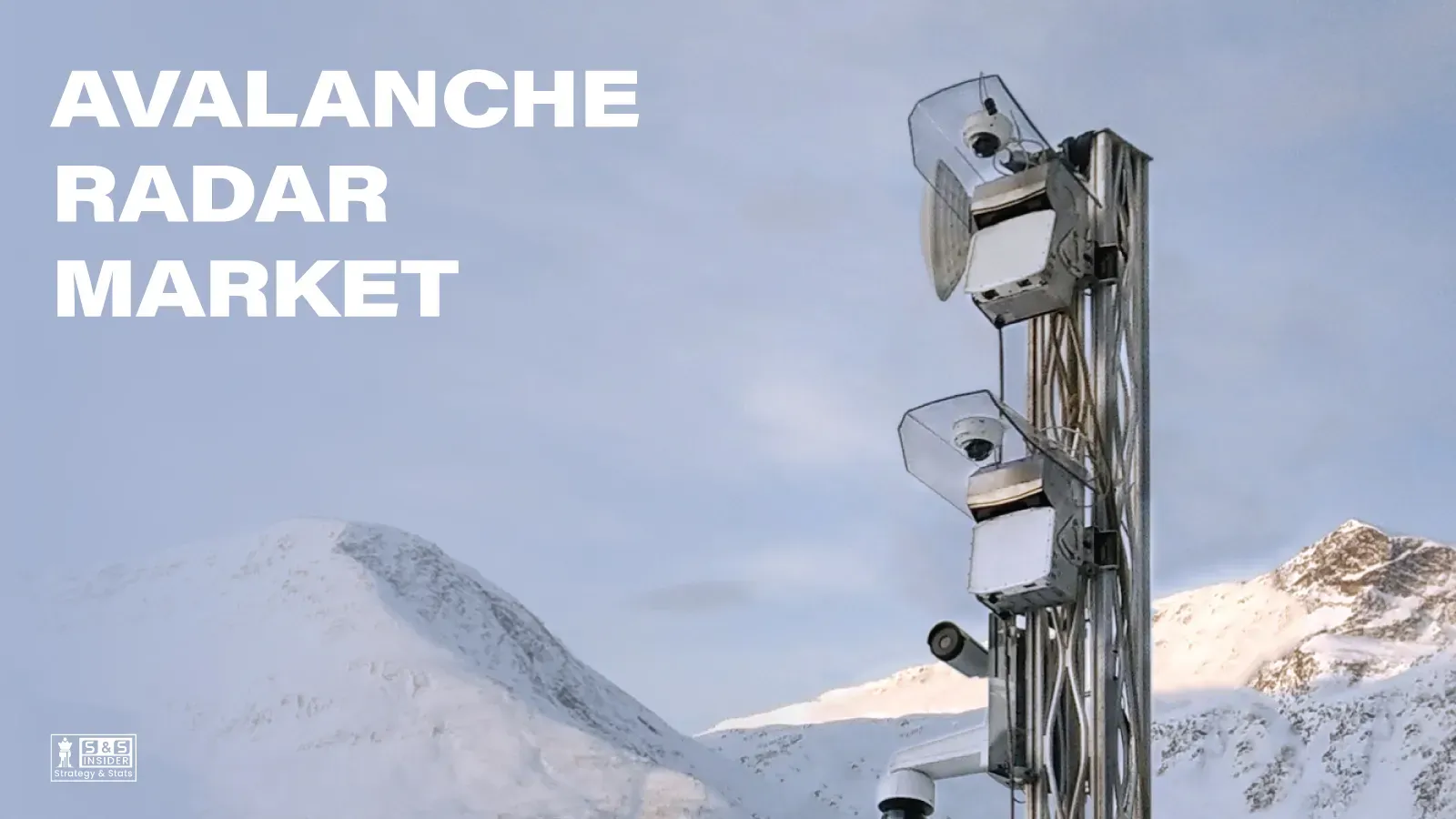
The Avalanche Radar Market is rapidly gaining its relevance in managing disasters across the globe due to investments made by the governments, defense organizations, meteorological organizations, and other infrastructure managers for the purpose of adopting latest technologies to enhance avalanche detection capabilities and ensure overall safety of the people. The avalanche radars give real time monitoring of snow movements and issue early warnings to safeguard people, transportation facilities, ski resorts, and other vital infrastructure in mountainous areas. Increasing climatic variability, snowfall disasters, and disaster preparedness awareness is driving market growth.
As per SNS Insider, the market value of Avalanche Radar Market is USD 3.73 billion in 2024 and is estimated to reach USD 75.60 billion by 2032 with an astounding CAGR of 45.67% in 2025–2032. The development in radar imaging, artificial intelligence, near-infrared sensing, automation, and wireless communication is playing an important role in improving the accuracy and efficiency of the system of avalanche prediction. Governments and organizations are investing heavily in robust monitoring technology as a part of their climate change adaptation strategy.
Gain Actionable Intelligence on the Avalanche Radar Market – Request a Sample Report
Top 3 Avalanche Radar Companies
1. Kongsberg Gruppen

Kongsberg Gruppen is an international company specializing in modern technological solutions in such spheres as defense, aerospace, maritime, and sensing. It creates highly-advanced radar systems used in surveillance, environment monitoring, and other important functions related to people's safety. Drawing on years of experience in the development of radar systems, Kongsberg is continuously developing new possibilities for applying radar systems in complicated conditions, such as mountainous areas with risks of avalanches.
- In 2025, Kongsberg introduced the GhostEye MR radar alongside the NASAMS system, enhancing advanced radar capabilities for high-precision detection and monitoring, demonstrating the company's continued investment in next-generation sensing technologies.
2. Geobrugg AG
Geobrugg AG is a world leader in the field of natural hazards protection systems, which include rockfall, landslides, debris flow and avalanche protection systems. The firm works for transportation companies, mining industries, infrastructures and governmental organizations around the globe by providing engineering solutions that aim at improving people's safety. Geobrugg is constantly making efforts to enhance the performance of its products through research and testing.
- In January 2025, the Geobrugg systems were successfully tested through joint efforts with HKUST and IMHE at the largest test site in Dongchuan, China. The successful testing helped validate the capability of the system in terms of their ability to resist impact loading.
3. Hexagon AB

Hexagon AB is the world leader in digital reality, sensors, positioning, and intelligent safety systems. The company designs radar, geospatial, and monitoring solutions, which ensure safer operations within the mines, infrastructures, constructions, and industries. Moreover, Hexagon integrates continuously such innovative technologies like artificial intelligence, automation, and real-time analysis within its monitoring systems allowing organizations to make quick decisions regarding their safety.
- In September 2024, Hexagon introduced its next-generation Collision Avoidance System featuring advanced 4D radar technology and CAS Insights, significantly improving object detection capabilities and operational safety in GNSS-denied environments.
What is Driving the Future of the Avalanche Radar Market?
The rising climate uncertainty and snow disasters are some of the main elements that have played an instrumental role in the growth of the global Avalanche Radar Market. The governments have increased their preparedness plans for the disasters by introducing intelligent monitoring systems that offer them real-time and continuous avalanche detection. There is an increase in the use of avalanche radars by the transportation agencies, ski resorts, hydro power stations, and the military to reduce any risk, fasten the response time and limit damage to the infrastructure.
Innovations in technology have significantly enhanced the process of monitoring avalanches. The latest radar technology includes artificial intelligence and machine learning, among others such as sophisticated imaging, near-infrared detection, data analysis and communication through cloud platforms. Small scalable radars are gaining more popularity due to the ability to conduct effective monitoring in harsh weather conditions in the mountainous terrain.
The market is also experiencing growth through improved cooperation between research institutions, defense agencies, and tech firms. Many radar technologies that were initially designed for military surveillance purposes are now finding civilian application in disaster management scenarios and thereby providing new avenues for dual-use sensors. Investment in automation, remote sensing capabilities, reliable communications and data analysis tools are all improving the performance of avalanche warning systems.
The Road Ahead
The future of the Avalanche Radar Market is bound to evolve due to constant developments in technology such as artificial intelligence, radar imagery, automation and disaster management. With the impact of climate change, making it more difficult to predict and detect snow-related dangers, there is an increased focus among government bodies and operators of infrastructures towards investing in intelligent monitoring that can forecast avalanches accurately in real time. This increasing need will bring about many possibilities for future development in radar technology.
Businesses that are putting their investments into technologies such as sophisticated sensors, artificial intelligence-based analytics, automated monitoring tools, and partnerships would be in an advantageous position in harnessing the tremendous market growth opportunities. With governments around the world becoming more proactive in their approach toward disaster preparedness and resilient infrastructure development, the role of avalanche radars would be indispensable for years to come.