
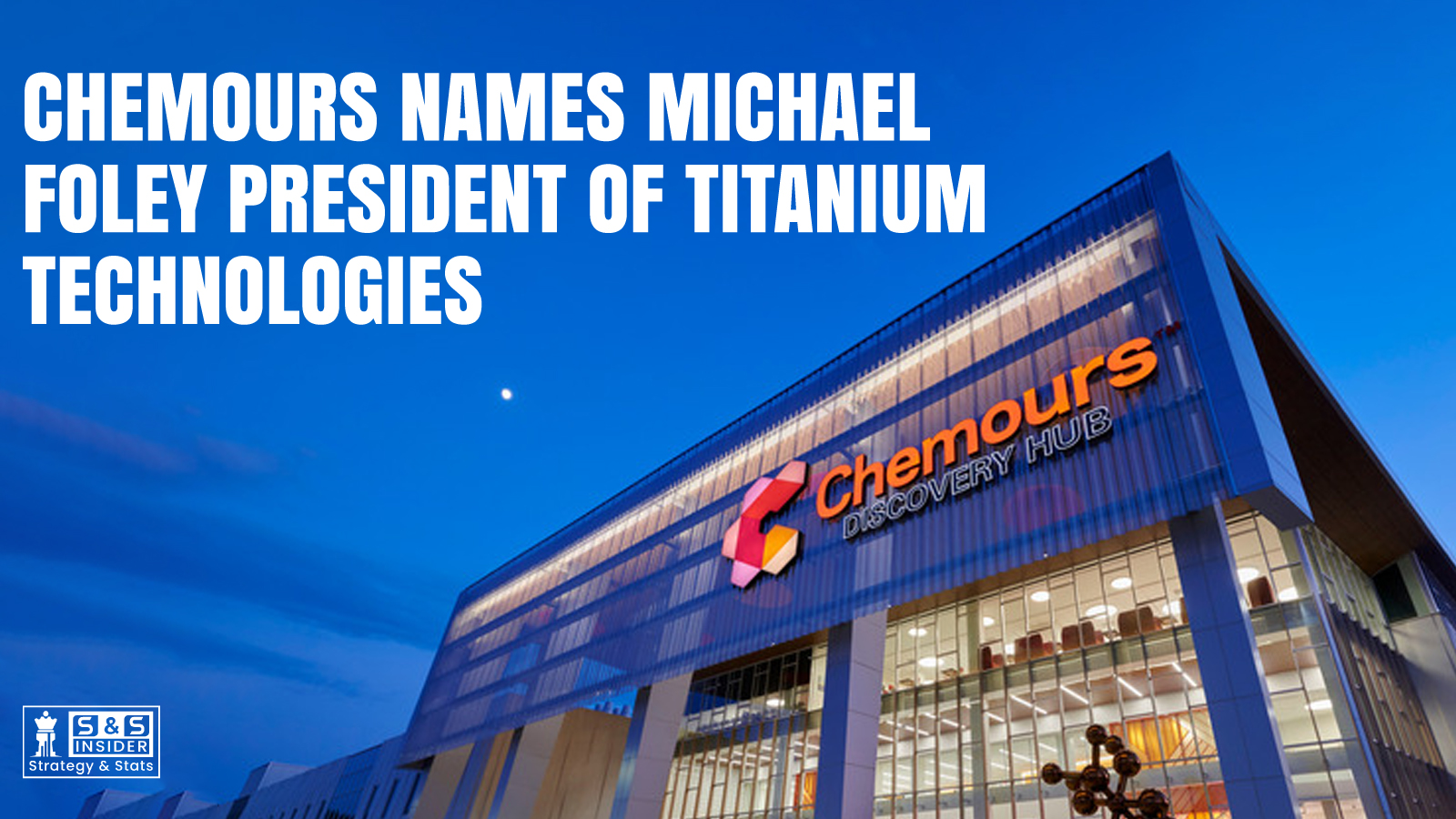
The Chemours Company (NYSE: CC), a major global specialty chemicals manufacturer, has announced a key leadership transition that signals a deeper strategic focus on its Titanium Technologies business. Effective February 2026, Michael Foley will take over as President of Chemours Titanium Technologies (TT), succeeding Damián Gumpel, who is departing the company after leading the business segment. This leadership shift comes at a time when chemical companies are navigating shifting market demands, sustainability expectations, and competitive pressures.
What the Leadership Change Involves
Chemours’ press release confirms that Michael Foley will succeed Damián Gumpel as President of the Titanium Technologies unit beginning in February 2026. The company publicly thanked Gumpel for his contributions and wished him well in his future endeavors. During the transition, Denise Dignam, President and CEO of Chemours, will continue to provide leadership support to ensure continuity and ongoing progress in the Titanium Technologies business.
The Titanium Technologies segment of Chemours is one of the world’s largest producers of titanium dioxide (TiO₂), a critical pigment and processing material used in global coatings, laminates, and plastics markets. Titanium dioxide remains a high-value, high-demand material due to its performance characteristics and diverse industrial applications.
Why Michael Foley’s Appointment Matters
Michael Foley arrives at Chemours with extensive leadership experience in the chemical industry. Most recently, he served as President & General Manager of the Formulated Specialties Business at Momentive Performance Materials, where he oversaw a $1 billion portfolio spanning five business units, eight discrete manufacturing sites, and roughly 2,000 employees worldwide. His tenure at Momentive included portfolio optimization, organizational restructuring, and operational efficiency initiatives, all of which are valuable assets as he steps into the Chemours leadership role.
Foley’s background includes significant experience in major industrial firms like General Electric, where he focused on operational excellence and methodologies such as Lean and Six Sigma. He holds a Bachelor of Science in Environmental Engineering and an MBA from Rensselaer Polytechnic Institute, equipping him with both technical and strategic credentials.
Chemours CEO Denise Dignam commented that Foley’s “proven track record of strategic transformation and operational leadership will be instrumental as we continue to advance our Titanium Technologies business and deliver value for our customers, partners, and shareholders.” This endorsement underscores the company’s intent to double down on execution and value delivery amid evolving market demands.
The Strategic Context Behind the Move:
The Titanium Technologies segment plays a central role in Chemours’ broader Pathway to Thrive strategy, a corporate initiative focused on long-term value creation through operational excellence, commercial performance, and portfolio strength. As one of the world’s leading producers of TiO₂, the TT unit contributes materially to Chemours’ revenue and reputation. By placing a seasoned industry executive at its helm, Chemours appears to be preparing for the next phase of growth and competitiveness in this space.
This leadership change coincides with a period of adjustment and transformation within the specialty chemicals industry. Market participants are grappling with a range of headwinds, from geopolitical disruptions affecting raw material supply chains to sustainability pressures that require companies to innovate with greener, more efficient chemistry solutions. Having a leader with a strong operational and strategic background can help Chemours navigate these complexities with agility.
What This Means for Chemours and Its Stakeholders?
For customers, the appointment of Foley may signal an intensified focus on customer partnerships, innovation, and product reliability. In Titanium Technologies, where product performance and consistency are paramount, leadership continuity paired with operational know-how may translate into better service levels, faster responsiveness, and greater product innovation over time.
For investors, the move represents a leadership reset designed to reinforce the company’s core business pillars. Leadership transitions in large industrial firms often offer early insights into where management believes the greatest opportunities, and challenges that lie in it. By entrusting the TT unit to Foley, Chemours is signaling that this segment remains a strategic priority with significant growth potential.
Additionally, the transition provides momentum in the context of broader industry competition. Specialty chemical markets are increasingly influenced by digital process optimization, sustainability expectations, and regulatory climates that vary globally. An experienced leader with a proven track record can better position Chemours to respond to both industry trends and customer needs.


