
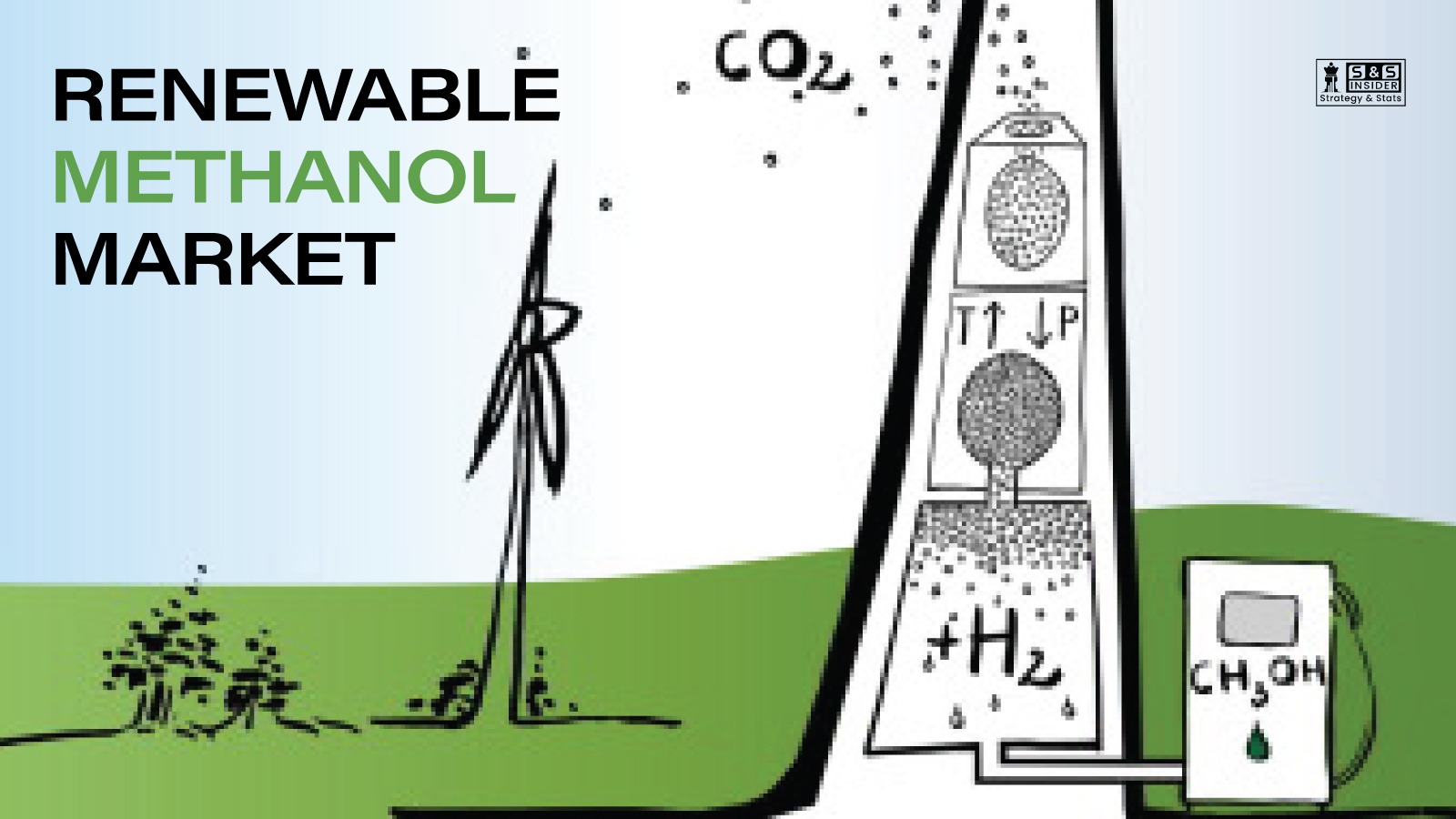
Renewable methanol is increasingly becoming one of the most critical sustainable fuel options that play an essential role in enabling the decarbonization processes around transportation, shipping, chemicals, and energy sectors. Renewable methanol can be manufactured from renewable resources like biomass, urban waste, green hydrogen and CO2 to provide industries with a clean fuel that contributes to the decrease of greenhouse gas emissions in comparison with traditional petroleum products. Rapid expansion of green fuel infrastructure and carbon neutral industrial operations boosts adoption worldwide.
Companies across the world strive to become environmentally friendly and comply with new emission requirements, developing more sustainable approaches for their activities. Due to its versatility in terms of applications, renewable methanol attracts much attention as a marine fuel, hydrogen carrier, industrial raw material, and power generation fuel. Rapid progress in carbon capture, waste-to-fuel production, and green hydrogen generation is expected to drive further growth in the industry.
According to SNS Insider, the Renewable Methanol Market was valued at USD 2.41 billion in 2025 and is projected to reach USD 42.42 billion by 2035, expanding at a CAGR of 33.29% during 2026–2035.
Leading Companies Competing in Renewable Methanol Industry are:
1. Methanex Corporation
 Methanex Corporation is among the largest manufacturers of methanol around the world, with significant presence in North America, Latin America, Europe, and Asia Pacific regions. The company produces conventional methanol, low-carbon methanol and various fuels, including those used in marine transportation, energy generation, automotive use, and chemical manufacturing applications. The company has been making investments in clean fuels and carbon reductions to improve its sustainability offerings. Recent news shows that the company has expanded into signing more agreements with regard to low-emissions marine fuel supply amid growing usage by international shipping companies for meeting international emissions standards.
 Carbon Recycling International (CRI) is an industrial technology company focused on carbon capture and utilization services. It converts carbon dioxide along with renewable hydrogen into various sustainable methanol products to be used in applications such as transportation, industrial energy uses, chemicals manufacturing, and other purposes. The company offers innovative technology platforms for emissions-to-liquid processes for reducing industrial carbon footprint. Recently, it has signed deals for scaling up its renewable methanol production activities in Europe and North America.
 Enerkem Inc. specializes in transforming non-recyclable solid wastes from municipal waste into renewable fuels and chemicals using gasification techniques. The company manufactures renewable methanol, ethanol, and biofuels utilized in various transportations and industrial applications. Enerkem’s waste-to-fuel technology aids in cutting down the need for landfilling operations and reducing greenhouse gases emissions at once. As per the recent news report, Enerkem has intensified its international expansion efforts through new collaborations in establishing new waste-to-renewable-fuels facilities for large scale commercialization.
 Proman AG is an established methanol producer and is increasingly becoming involved in renewable and low-carbon fuel technologies. The company produces and sells methanol products that can be used as marine fuel, generating electricity, and other industrial operations. Proman is developing methanol products using renewable energy and carbon capture systems. As per the latest reports, Proman has initiated low emission methanol supply operations in the maritime sector.
 OCI N.V. is an organization that deals with the production and sale of nitrogen-based fertilizers, methanol products and renewable fuels. It serves energy, industrial, and agricultural sectors globally. OCI focuses on producing methanol and ammonia fuels in order to reduce carbon footprint in industries. Its renewable fuel operations aim to assist transportation and manufacturing industries move towards using clean energy. Recently, it invested in large-scale infrastructure development of renewable fuel manufacturing facilities.
 Thyssenkrupp AG is a multinational conglomerate organization dealing with manufacturing, engineering, industrial decarbonization, and hydrogen production. The company has advanced electrolysis, industrial decarbonization, and green hydrogen systems, which are used to produce renewable fuels. Thyssenkrupp is among organizations that have developed advanced chemical engineering technologies in order to help manufacturers in the production of cleaner fuels. Recently, it invested in green hydrogen and electrolysis projects to facilitate renewable fuel production.
 Veolia is the leading provider of environmental solutions, resource management, and waste recovery technology for the development of sustainable energy solutions. The firm produces renewable fuels and energy products from waste generated by industries and municipalities, and these include renewable methanol feedstocks solutions. Veolia has been strengthened in its operations due to the company's expertise in providing sustainable fuel development through circular economy systems and waste-to-energy technology. In recent times, the company has increased the number of projects that relate to fuel production and carbon reduction.
8. SABIC
 SABIC is one of the major chemical companies in the world that is focused on sustainability and the production of circular carbon solutions and low-emission industrial materials. The firm manufactures renewable chemicals and feedstocks that are used in various fields such as transportation, energy production, packaging, and construction. In line with SABIC's efforts toward sustainable business, the company has increasingly been working on renewable methanol and low-carbon energy production methods.
Renewable methanol is bound to become one of the main fuels of sustainable development and industrial decarbonization in the coming years, considering the increasing focus on renewable fuels among both governments and companies globally. The growing utilization in marine transportation, manufacturing operations, aviation, and power plants opens up a bright perspective for players in the industry.
Future innovations in carbon capture technology, infrastructure for green hydrogen, production of fuels from organic waste and utilization of renewable energy resources are anticipated to contribute to rapid growth even further. With the growing effort of industries to reach net-zero emission goals, the best performing companies within the renewable methanol market are bound to lead the way towards success.



