The Retail Automation Market is currently witnessing considerable growth, owing to increasing adoption of AI-based technology solutions, automated checkouts, intelligent inventory management solutions, robotics in warehouses, and intelligent point of sales solutions by retailers. Increasing labor costs, the desire for touchless shopping experience, and increasing penetration of e-commerce solutions have led to increased adoption of automation technology solutions that help in streamlining processes, eliminating errors, and optimizing inventory management processes. Technologies, such as self-checkout kiosks, electronic shelf label, computer vision and AI-based analytics are enabling retailers to achieve higher efficiencies while offering faster and personalized shopping experiences to customers.
According to SNS Insider, the Retail Automation Market size is estimated at USD 29.35 billion in 2025 and is expected to expand up to USD 74.56 billion by 2035 at a CAGR of 9.77% from 2026-2035. In the United States, the Retail Automation Market size was recorded at around USD 7.19 billion in 2025 and is projected to reach up to USD 18.32 billion by 2035 due to the extensive usage of self-service checkouts, artificial intelligence technology in retail analytics, and advanced technologies used in connected stores. Various retailers in supermarket chains, convenience stores, specialty stores, and e-commerce fulfillment centers have begun the process of digitalization in order to reduce labor costs, increase inventory accuracy, and provide seamless omnichannel experience.
Gain Actionable Intelligence on the Retail Automation Market - Request a Sample Report
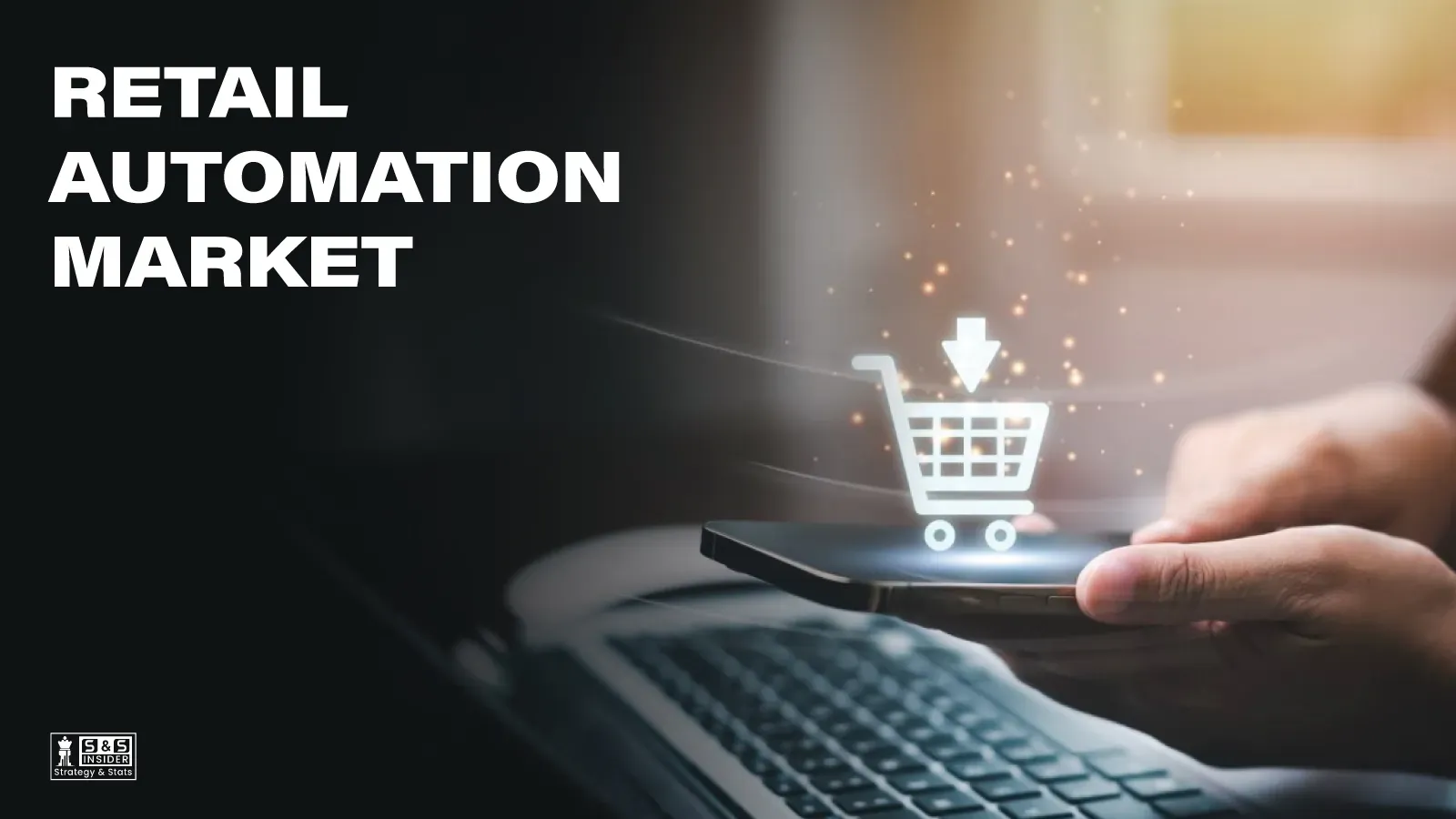
Retail Automation Market Analysis
The Retail Automation market is growing because of the substantial investment made by retailers in technology that can help improve their efficiency and engagement with customers. The market was dominated by the in-store implementation segment, which accounted for 57.8% of total revenue in 2025. This was largely attributed to the wide usage of self-service checkout kiosks, electronic shelf labels, smart POS terminals, and AI-based customer services solutions. The warehouse automation implementation segment is fast becoming the leading growth driver for the market.
The U.S. continues to dominate in terms of being the leading market for retail automation owing to its substantial investment by both retailers such as Walmart, Costco and Kroger, as well as IT providers like Toshiba, NCR Voyix, and Honeywell. The growing implementation of technologies such as artificial intelligence enabled checkouts, cloud-based POS solutions, computer vision and robots is helping retailers optimize their stores' performance and provide shoppers with faster and personalized shopping experience.
Top 5 Retail Automation Companies
1. Toshiba Global Commerce Solutions
 Toshiba Global Commerce Solutions is a renowned company providing cutting-edge solutions in the retail industry in terms of POS systems, self-checkout systems, retail software, and store management solutions using cloud technology. The technology provided by the company assists retailers in increasing their checkout process, improving inventory management and enhancing consumer experience while at the same time helping retailers adopt an omnichannel approach towards retail. The company is investing extensively in retail innovation through artificial intelligence. At the NRF 2025 event, Toshiba launched its TCx 820 POS Terminal and MX Vision Kiosk with biometric and intelligent checkout technology.
2. Diebold Nixdorf
 The Diebold Nixdorf is known for developing solutions in the realm of connected commerce that can be used to transform retail environments using self-service checkouts, smart POS systems, retail software, and AI-based analytics. This allows the retailers to optimize their operations and make them more efficient. The firm keeps on adding to its automation offerings with modular checkout systems, cloud connectivity, computer vision, and AI-based retail analytics. These help in omnichannel commerce, faster transactions, reduced shrinkage, and enhanced operational visibility.
3. Fujitsu Limited
 The Fujitsu Limited offers a wide range of automation services to the retail sector. These solutions are based on artificial intelligence, IoT technology, cloud computing, and analytics. Among other services offered by the company are point of sale systems, cashless payment systems, inventory optimization systems, and customer analytics software solutions which are used by retailers for digitalization of their business and effective decision making. The main goal of the company is assisting the retailers in creating smart shops using connected technology.
4. Honeywell International Inc.
 Honeywell International is a key vendor of automated retail hardware and warehousing technologies such as barcode scanners, RFID technology, mobile computers, voice-directed workflows, warehouse automation systems and industrial Internet of Things technology. These technologies assist retailers in streamlining their supply chain management process, increasing inventory precision and enhancing order fulfillment. Honeywell keeps on developing its technology ecosystem for retail businesses by incorporating AI, automation and analytics capabilities in warehouse and store operations. The solutions are commonly adopted in various supermarkets, distribution centers, logistics centers and e-commerce order fulfillment centers. your content here. Text will wrap on the left side.
5. Panasonic Holdings Corporation
 Panasonic Holdings Corporation provides a diverse array of retail automation technology that includes point-of-sale terminals, self-service kiosks, digital signage, surveillance technology and infrastructure for the connected retail environment. Panasonic's technology enables retailers to update their stores to become more efficient, secure and satisfying for customers. The company also keeps up with technological development in such spheres as artificial intelligence imaging, edge computing and intelligent automation. The smart retail platform from Panasonic facilitates fast checkout, improves store security, creates customer insights and improves operational management in supermarkets, convenience stores, and specialty retail stores.
What the Future of Retail Automation Holds?
Retail Automation Market trends in the coming years would be characterized by fast adoption of technologies like artificial intelligence, machine learning, robotics, and computer vision within physical retail stores and virtual retail channels. Retail stores will adopt autonomous checkouts, AI-enabled inventory management systems, smart shelves and predictive analytics systems in order to become more efficient and offer better consumer experience. With omnichannel retailing continuing to grow, automation systems will be crucial in integrating all retailing operations.
Automated warehouses are another aspect which is predicted to see a lot of developments through the use of autonomous mobile robots (AMRs), automated guided vehicles (AGVs), robotic pickers and intelligent warehouse management solutions. Such technology will assist in handling large volumes of orders more efficiently while also dealing with manpower shortage issues and operational costs. On the other hand, cloud-based retail management systems, IoT-enabled devices and edge computing will assist retailers in tracking their inventory, prices and consumer behavior.
Emerging technologies such as cashier-less stores, digital twins, generative AI, and advanced analytics are expected to redefine the retail landscape over the next decade. Growing investments in smart retail infrastructure across North America and the rapidly expanding retail sector in Asia Pacific will further accelerate market growth. As retailers prioritize efficiency, customer convenience, and data-driven decision-making, automation will become a core component of future retail strategies, creating new opportunities for technology providers and transforming the global shopping experience.