
The deployment of STATCOMs has been on the rise due to resource allocation and real integration of renewable energy sources into energy systems, as well as increasing complexity in widely dispersed power grids. These are advanced systems that can be used as Static Synchronous Compensitors to control voltage, improve power factor and stabilize grid through dynamic reactive power compensation. Since now a days, the power grids is going more decentralized and variable because of solar and wind.
You can find STATCOM systems within utility operations, industrial plants and renewable power generation stations where voltage oscillations or transmission losses take place and need to be mitigated using STATCOM systems. Such advanced systems respond fast and perform far better than compensation devices from the past, they quickly become a must-have component of modern energy infrastructures.
According to SNS Insider, STATCOM Market was worth of USD 0.72 billion in 2025 and is expected to grow at a CAGR of over 7.12% from one side to USD 1.43 billion by the time it reaches USD billion by 2035 As a result, during the period of 2026-2035, the annual growth of this industry will be about 7.12%.
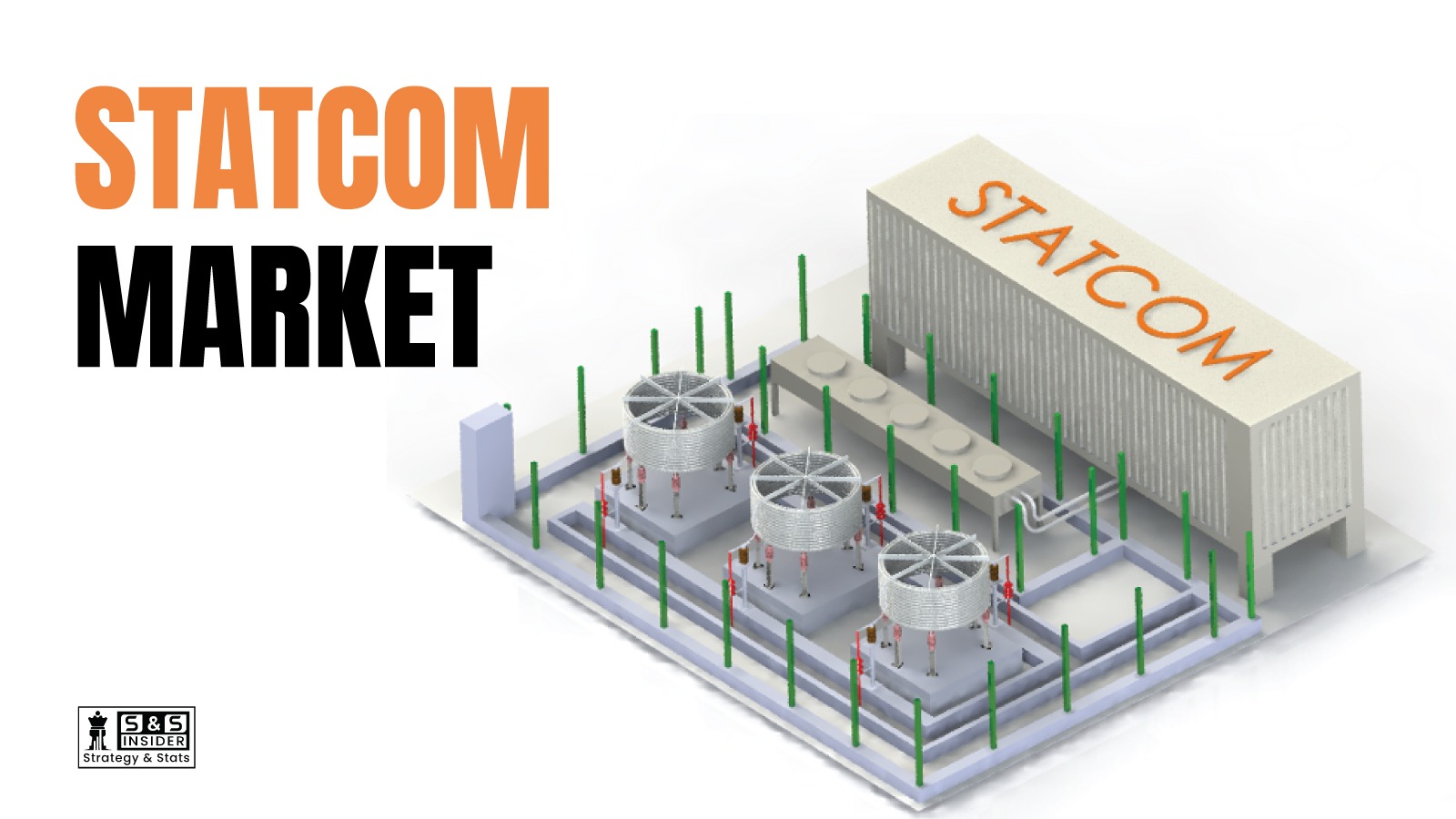
Key Players in the Global STATCOM Industry
ABB Ltd.
 Abb Ltd. is one of the leading companies engaged in the provision of innovative power and automation technologies, which include STATCOM technology solutions. The products offered by the firm provide great efficiency in terms of power regulation and are extensively employed in various utility projects. ABB Ltd. places much emphasis on digitalization technologies and smart grids, which increases the market share of its STATCOM solutions.
Siemens Energy AG
 The company Siemens Energy offers innovative power solutions for STATCOM systems aimed at ensuring stable power generation and renewable energy management. Due to advanced power electronics technologies used by the firm, STATCOM technology solutions provided by the company have great performance and accuracy of voltage control.
Mitsubishi Electric Corporation
 Mitsubishi Electric provides STATCOM systems that combine high performance with power supply stability and optimal grid operation for commercial buildings. Widely deployed in industrial and utility applications, the company’s solutions are noted for durability, precision and advanced control technologies.
Hitachi Energy (Hitachi Ltd.)
 Hitachi Energy is a global leader in grid automation and power quality solutions as well, offering innovative Static Synchronous Compensator (STATCOM) to strengthen modern electricity networks. The solutions that it provides are focused on accommodating renewables integration while supporting voltage regulation and grid reliability.
GE Grid Solutions (General Electric)
 About GE GridSolutionsGE Grid Solutions provides a complete range of products and services for transmission, distribution and grid optimization. Company is engaged in the integration of best digital technologies with power electronics to offer voltage control and grid stabilization solutions.
Toshiba Energy Systems & Solutions Corporation
 Toshiba Energy Systems provides low harmonics, and reliable STATCOM solution for improved power quality and grid stability. It brings utility and industrial-grade high-performance solutions based on its deep domain expertise of energy systems coupled with advanced engineering capabilities.
Eaton Corporation plc
 Eaton is a power management company providing STATCOM systems in fulfilment of increasing the energy efficiency and grid performance. Its solutions are extensively adopted in industrial and commercial applications, enabling reliable and efficient power distribution.
How STATCOM Technology Enhances Grid Stability
With a significant increase in renewable energy sources interconnection, STATCOM technology is becoming an important part of maintaining grid stability. Compared to conventional compensation technologies used for reactive power, STATCOM provides fast dynamic performance in voltage control which allows utilities to accommodate operating point variability. These systems also help maintain constant power quality, reduce transmission losses and avoid voltage instability in multivariable grid spaces.
Recent technological advances in the field of power electronics and digital control systems are providing additional capabilities to STATCOM. Smart technologies, real time monitoring of system and analytics further enhances the performance and predictive maintenance. With the continuing investment from across the globe in Renewable Energy and Grid Modernization, it expected for STATCOM solutions to record steady growth on account of its energy efficiency and improved grid flexibility features. In the foreseeable future, STATCOM technology should continue to play an important part in developing reliable, efficient and (even) forward-looking energic systems.



