
Telepresence devices are revolutionizing enterprise communication through facilitating highly immersive virtual interactions among teams that are dispersed geographically. Telepresence systems utilize cameras, screens, microphones, coders/decoders, control units, software and more recently artificial intelligence functionalities to deliver highly immersive experiences similar to those of physical meetings. The technology is gaining acceptance in businesses, hospitals, schools, factories and government offices amid the adoption of working remotely.
As per SNS Insider, the U.S. Telepresence Equipment Market is valued at USD 1.06 billion in 2025 and is anticipated to reach USD 2.41 billion by 2035, registering a CAGR of 8.57% during 2026 to 2035. On a global scale, the Telepresence Equipment Market size stood at USD 2.85 billion in 2025 and is expected to touch USD 6.04 billion by 2035, with a CAGR of 7.80% over the period 2026–2035. Some of the key factors impacting the market include increasing acceptance of hybrid working models, meeting technology with artificial intelligence, cloud-based collaboration systems, and telepresence equipment.
Gain Actionable Intelligence on this Market – Request a Sample Report
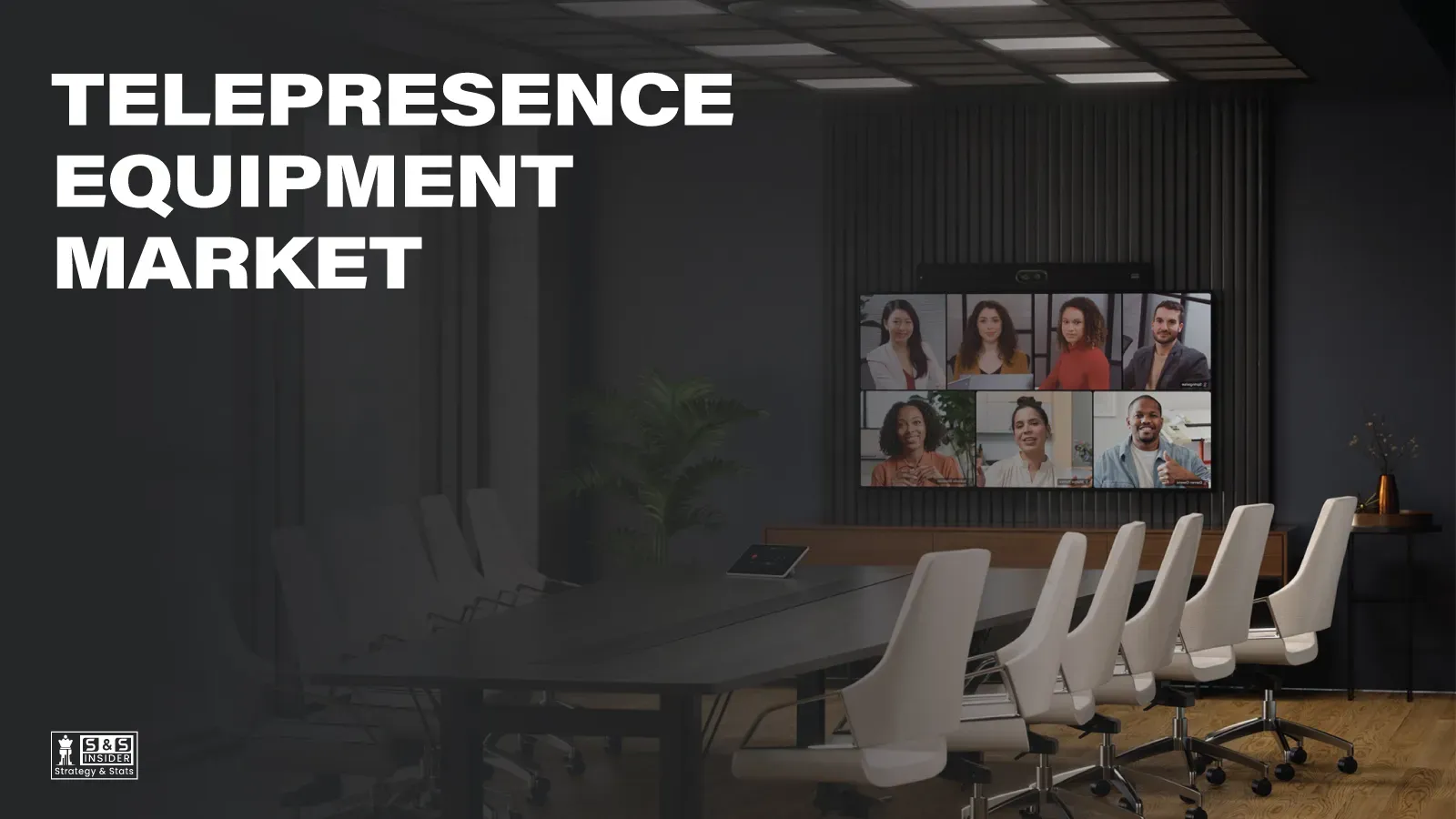
U.S. Telepresence Equipment Market Analysis
The United States is among the leading telepresence equipment markets in the world, based on robust investments in enterprise technology, well-established unified communications systems, broad adoption of hybrid working arrangements and presence of leading technology firms. The financial services industry, technology companies, professional service firms, healthcare organizations and government institutions are progressively investing in telepresence equipment for meeting rooms.
The increasing inclination towards good quality hybrid conferences has led to organizations adopting the use of integrated room solutions that include better quality of audio and video, connectivity and collaboration as compared to the ordinary webcams and conferencing technologies. AI-controlled camera functionality, speaker tracking, intelligent framing and better microphones have ensured that remote participation becomes even easier and natural. The health care organizations are also adopting more telepresence uses that include consultation by specialists, telehealth, virtual patient interactions and mobile video systems.
Top 5 Global Telepresence Equipment Companies
1. Cisco Systems, Inc.
 Cisco is a prominent player in the telepresence hardware market, offering collaboration suites, video, camera, microphone and conferencing hardware. The firm offers solutions tailored to enterprise environments that require security and scalability of communications across various sites. In 2026, Cisco Systems added to its line of Room Bar Pro hardware by equipping them with AI-powered speaker tracking and auto-framing functionality, thus enhancing their native Webex functionality and also ensuring interoperability with other platforms including Zoom and Microsoft Teams. This represents Cisco’s move to position room systems that incorporate intelligent technology on multiple platforms to enterprises interested in flexible hybrid meeting infrastructure.
2. Logitech International S.A.
 Logitech provides telepresence devices with a comprehensive range of conference cameras, video bars, microphones and meeting room solutions. The company's products are intended for use by organizations that span from startups to larger companies that look to implement scalable collaboration tools. The emphasis on smart cameras, high-quality audio recording and ease of use corresponds to the increasing popularity of convenient telepresence solutions. Logitech's products are especially suited for organizations looking to upgrade smaller meeting rooms and hybrid workspaces.
3. Huawei Technologies Co., Ltd.
 Huawei offers enterprise collaboration and telepresence technologies that are intended to facilitate high-quality video communications for distributed enterprises. Huawei's products incorporate a combination of cameras, displays, audio equipment, network connectivity and collaboration software, forming an integrated environment for meetings. The presence of Huawei in Asia Pacific and other international regions will help adopt their technology in enterprises, governments, education and healthcare sectors. Further innovation in intelligent collaboration systems will enhance the significance of telepresence in digital workplace ecosystems.
4. Zoom Communications, Inc.
 Zoom has emerged as a powerful player in the realm of telepresence owing to its cloud collaboration solution and expanding range of certified hardware vendors. It allows enterprises to leverage dedicated room hardware and cloud-based meetings and collaboration solutions. As per the agreement signed between Zoom Communications and Neat in 2025, Neat Board 50 and Neat Bar Pro devices were certified by Zoom for natively deploying the Zoom Rooms solution. This collaboration is indicative of the overall approach of Zoom to support certified telepresence hardware from third parties and allow enterprises greater freedom in their deployments of standardized hybrid meeting infrastructure.
5. Double Robotics, Inc.
 Double Robotics is known for producing mobile telepresence robots which give the remote user the opportunity to navigate through physical spaces instead of being stuck inside a traditional meeting room. Its technologies offer use cases in various sectors such as health care, education, corporate environments, and facility management. The company launched the Double 3 Pro telepresence robot with LIDAR-based autonomous navigation and obstacle avoidance in 2026. It has made the use of mobile telepresence possible in hospital rounding, manufacturing floor walkthroughs, facility tours and participation in the remote workplace.
What the Future of the Telepresence Equipment Market Holds?
The future of the Telepresence Equipment Market will be determined by the advent of AI-driven hardware, cloud-based management solutions, hybrid work practices, health care applications, and mobile robots. The intelligent camera and microphone systems are expected to evolve into being capable of recognizing speakers, adjusting the frame of view, and cutting down on ambient noises, all without any input from the user. Cloud-based management is also expected to play an increasing role as businesses will be managing telepresence equipment from different office locations.
In addition to that, the SME market segment is poised to get a boost with smaller-sized video bars and cost-effective room systems bringing down the expenses of telepresence implementation. Furthermore, the developing nations in the Asia Pacific, Middle East, and Latin American regions are poised to create further demand for telepresence solutions as companies set up their operations and infrastructure for digital collaboration. Thus, telepresence will expand its reach beyond the premium technology in boardrooms to become an integral part of everyday communication.



