
The healthcare business is undergoing a major digital transition and pathology is one of the disciplines that is transforming most profoundly. Pathologists have depended on traditional glass slides and microscopes to diagnose illness and assess tissue samples for decades. These approaches remain the mainstay of clinical practice, but, the increased desire for accuracy, efficiency and cooperation has expedited the use of digital pathology technology. One of these developments is Whole Slide Imaging (WSI) which is a cornerstone technology that is transforming current pathology operations.
Whole Slide Imaging allows pathology labs to digitize conventional glass slides into high-resolution digital pictures that can be seen, analyzed, saved and shared online. The technology allows for remote consultation, AI-supported diagnoses, educational purposes and research activities, as well as enhanced workflow efficiency. Healthcare firms are increasingly modernizing their operations and WSI systems are becoming essential tools for pathology departments across the globe.
The Whole Slide Imaging Market is valued at USD 1.31 Billion in 2025 and is predicted to reach USD 2.49 Billion by 2035, rising at a CAGR of 6.71% from 2026–2035. The market growth is driven by the shift from conventional pathology techniques to digital pathology platforms, increased demand for telepathology services, rising acceptance of artificial intelligence in diagnostics and investments in sophisticated healthcare infrastructure.
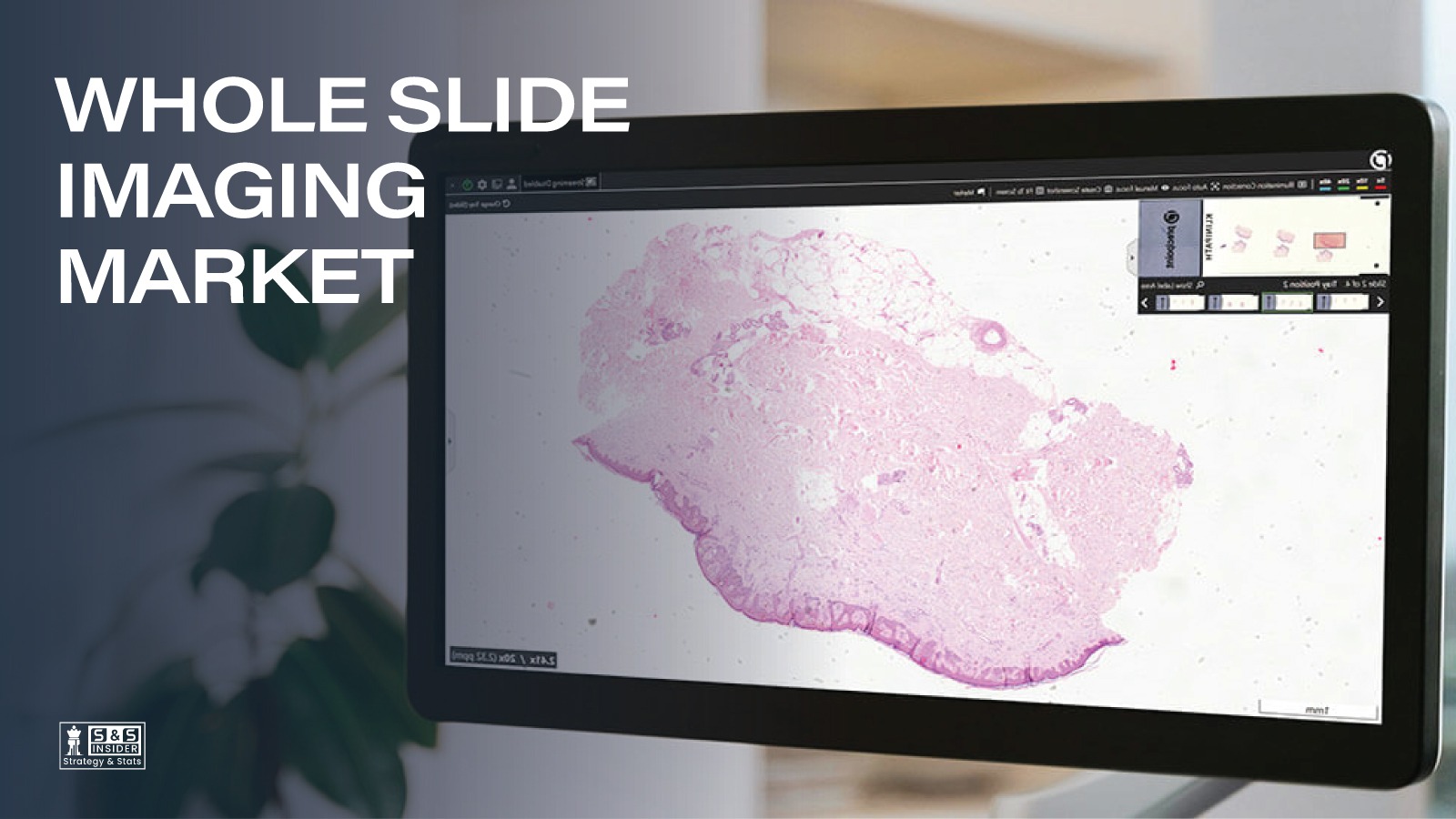
Top Whole Slide Imaging Companies Driving Digital Pathology Innovation
1. Philips

Philips has been committed to healthcare innovation and cutting-edge imaging technology and has become one of the most known brands in digital pathology. Through the provision of comprehensive digital pathology systems, intended to facilitate clinical diagnosis, collaboration and workflow optimization, the firm has been a key contributor to the acceleration of the adoption of Whole Slide Imaging solutions. Philips continues to invest in technologies that enable pathologists to increase diagnosis accuracy while improving laboratory efficiency. Its digital pathology platform helps healthcare facilities upgrade their pathology workflow and enhance patient outcomes.
Why Philips Leads the Digital Pathology Revolution
- Comprehensive digital pathology solutions for clinical applications
- High-resolution slide scanning and image management capabilities
- Strong focus on workflow efficiency and diagnostic accuracy
- Support for remote pathology collaboration and consultation
- Continuous investment in healthcare innovation
2. Leica Biosystems

Leica Biosystems is well known for its expertise in pathology and lab workflow solutions. The firm produces state-of-the-art Whole Slide Imaging solutions that allow healthcare providers and researchers to digitize pathology slides with unmatched picture quality. As pathology departments move to digitization, Leica Biosystems is committed to providing solutions that simplify laboratory workflow and enhance diagnostic decision making. It has a strong position in pathology labs globally and is a significant player in the expansion of the WSI industry.
Leica Biosystems Advances Precision Pathology
- Industry-leading expertise in pathology workflows
- Advanced slide scanning and imaging technologies
- Strong support for diagnostic and research applications
- Integration with digital pathology ecosystems
- Focus on improving laboratory efficiency and collaboration
3. Roche

Roche is a worldwide pioneer in pharmaceuticals and diagnostics focused on advancing science to improve people’s lives. The company’s foray into digital pathology is part of its overall ambition to bring cutting-edge technology into clinical decision-making. Roche develops and supports Whole Slide Imaging systems that enable pathologists to get high-quality digital pictures and more effectively collaborate across healthcare networks. The company’s thrust on data-driven healthcare and diagnostic innovation is well aligned with the expanding acceptance of AI-assisted pathology solutions.
Roche Strengthens the Future of AI-Enabled Diagnostics
- Extensive expertise in diagnostics and healthcare technologies
- Strong focus on digital transformation in pathology
- Support for AI-assisted image analysis applications
- Global presence across healthcare and laboratory markets
- Commitment to personalized medicine and precision diagnostics
4. 3DHISTECH

3DHISTECH has grown to become a specialist digital pathology and imaging solutions supplier. The firm provides innovative slide-scanners, medical image-analysis software and digital pathology solutions for clinical and research purposes. Its technologies allow labs and research institutes to digitize massive numbers of pathology slides with remarkable picture quality and accessibility. By concentrating only on digital pathology innovation, 3DHISTECH has become a major player in the burgeoning Whole Slide Imaging industry.
3DHISTECH Focuses on Specialized Digital Imaging Excellence
- Dedicated expertise in digital pathology technologies
- Advanced slide scanning and image analysis solutions
- Strong support for research and clinical applications
- High-resolution imaging capabilities for complex specimens
- Commitment to innovation in pathology digitization
Digital Transformation Continues to Accelerate Market Growth
One of the most important forces driving the Whole Slide Imaging industry is the continuous transition from traditional glass-slide pathology to totally digital processes. Healthcare companies are becoming aware of the advantages of digital pathology, including quicker case assessment, better data management, greater cooperation and increased access to specialized knowledge.
The expanding use of telepathology has also increased the need for WSI systems. Digital slides can be instantaneously moved across institutions, so pathologists can work together no matter where they are. This feature has been especially helpful in areas without specialties of pathology.
Furthermore, the advent of artificial intelligence and machine learning technologies is opening up new potential for pathology labs. AI-powered solutions may aid with image analysis, pattern recognition, and diagnostic assistance, enabling healthcare practitioners to enhance productivity without compromising high standards of accuracy.
The Future of Pathology Will Be Increasingly Digital
As healthcare systems continue to undergo digital transformation, Whole Slide Imaging is likely to play an increasingly vital role in pathology diagnosis, teaching and research. Generating, storing, analyzing and sharing high-resolution digital pathology pictures is allowing healthcare providers to increase operational efficiency while broadening access to professional diagnostic services.
Innovation in the digital pathology space is being advanced by companies like Philips, Leica Biosystems, Roche, and 3DHISTECH. Their investments in imaging technologies, software platforms and workflow solutions are expediting the move to increasingly connected and data-driven pathology settings.
With the rising need for AI-assisted diagnostics, telepathology services, and digital health infrastructure, the Whole Slide Imaging market is poised for continued development in the next decade. As pathology moves beyond classical microscopy, these industry leaders will continue to play a vital role in influencing the future of diagnostic medicine and improving patient care globally.



