
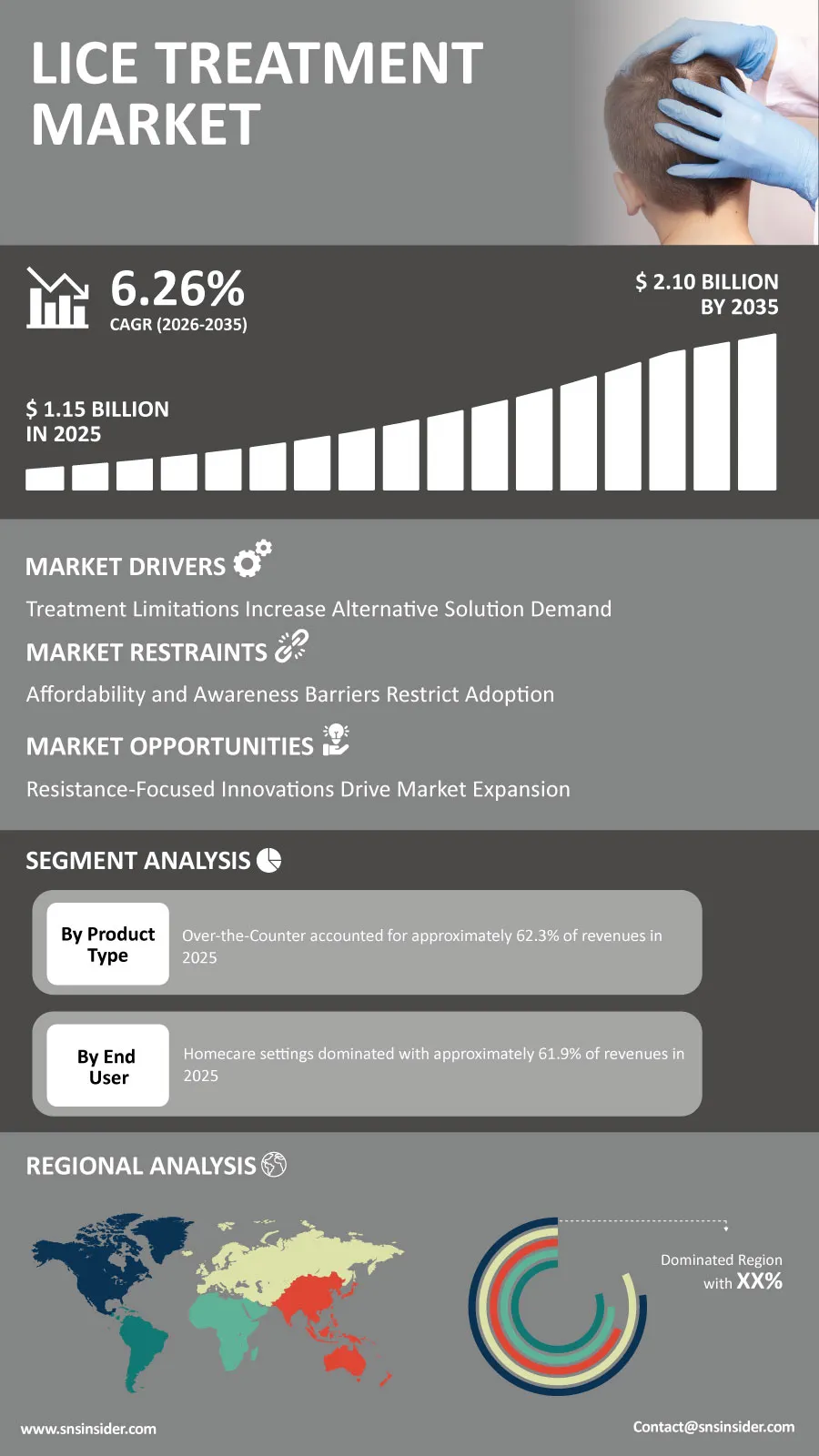
The global Lice Treatment Market is projected to witness sustained growth over the next decade as healthcare providers, parents, schools, and public health organizations continue prioritizing effective management of head lice infestations. “According to a recent study by SNS Insider, the global Lice Treatment Market size valued at USD 1.15 billion in 2025, is anticipated to grow to USD 2.10 billion by 2035, registering a CAGR of 6.26% over the 2026–2035 forecast period.”
Greater knowledge about early detection, easy access to over-the-counter as well as prescribed drugs, and constantly improving effectiveness are changing the landscape of the global market. The companies are concentrating on developing safe drugs that have improved efficacy in addition to the issue of the increasing problems related to resistance to the available drugs.
Similarly, healthcare experts are motivating people to act promptly and employ proper practices in order to minimize the chances of spreading this infection and ensure good health outcomes for patients.
To Get Detailed Insights on the Lice Treatment Market – Request a Sample Report
Innovation Continues to Transform Lice Management
Industry trends in lice treatments involve new formulation advances intended to increase effectiveness while also increasing safety for the patients and providing convenience. Companies are becoming more inclined towards investing in products that use novel mechanisms of action, which will allow them to offer efficacious treatments for difficult cases without relying on conventional insecticides.
Additionally, the trend towards safer and family-friendly products due to increasing demand is influencing product development. On the other hand, increasing accessibility via digital retail channels is making it easier for consumers to purchase their products.
The emergence of professional lice removal services, supported by specialized treatment technologies and expert consultation, is creating additional opportunities across the broader market ecosystem.
Key Market Findings Highlight Growth Opportunities
Among product categories, over-the-counter products accounted for 62.3% of global market revenue in 2025, reflecting strong consumer preference for convenient and readily accessible treatment options.
Prescription therapies are expected to emerge as the fastest-growing product segment throughout the forecast period, supported by increasing demand for advanced treatment solutions in cases where conventional therapies provide limited effectiveness.
By condition type, pediculosis capitis represented approximately 68.7% of market revenue in 2025, highlighting the widespread occurrence of head lice infestations, particularly among school-aged children.
From a route of administration perspective, topical treatments captured 73.5% of total market revenue in 2025, maintaining their position as the preferred therapeutic approach due to ease of application and established clinical acceptance. Meanwhile, oral therapies are expected to experience strong growth as healthcare providers increasingly utilize systemic treatment options for difficult-to-manage cases.
Among dosage forms, shampoos accounted for 48.2% of market revenue in 2025, supported by consumer familiarity and ease of use. Tablets are projected to witness notable growth over the coming years as oral treatment options continue gaining wider clinical acceptance.
Distribution channel analysis indicates that retail pharmacies generated 55.4% of global revenue in 2025, while online pharmacies are expected to register the fastest expansion as consumers increasingly choose discreet and convenient purchasing options through digital platforms.
Growing Awareness Supports Market Expansion
Public health education programs, school awareness campaigns, and educational efforts have assisted in increasing knowledge about effective lice treatment solutions among parents and care providers. Early detection, early treatment, and better availability of health care information are assisting in ensuring that there is a sustained demand for effective treatments globally.
Companies are developing new products which help make treatments more convenient, faster, and also more patient-compliant, thereby giving rise to new avenues of growth.
Regional Markets Continue to Expand
North America continued to lead the way in 2025 as the most significant regional market owing to high awareness levels, a dense network of retail pharmacies, product availability, and investment in pediatric health care. The region is still gaining from the presence of established guidelines and wide availability of prescription drugs and non-prescription drugs.
On the other hand, Asia-Pacific is expected to grow at the fastest pace up to 2035 owing to enhanced access to healthcare, increasing disposable income levels, increasing hygiene consciousness, and increased availability of commercial drugs.
Leading Companies Strengthen Competitive Position
Competition within the lice treatment market remains active as manufacturers continue investing in product innovation, portfolio expansion, consumer education initiatives, and digital distribution strategies. Companies are introducing advanced formulations while expanding their presence across both retail and online healthcare channels.
Key companies operating in the global lice treatment market include GlaxoSmithKline, Alliance Pharmaceuticals, Perrigo, Prestige Consumer Healthcare, Johnson & Johnson, Reckitt, Sanofi, Teva Pharmaceutical Industries, Taro Pharmaceutical Industries, and Lice Clinics of America.
An SNS Insider analyst Parry Kardani commented, "Growing awareness of effective lice management, continued innovation in treatment formulations, and increasing availability of convenient therapeutic options are transforming the market. Manufacturers that focus on safety, efficacy, and consumer-friendly solutions are expected to strengthen their competitive position over the coming decade."
About the Author

Get in touch




