
Health Check-up Market Report Scope & Overview:
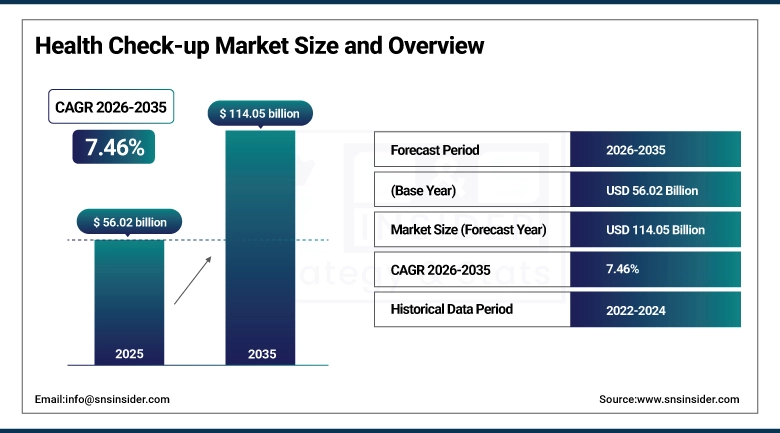
The Health Check-up Market size is valued at USD 56.02 Billion in 2025 and is projected to reach USD 114.05 Billion by 2035, growing at a CAGR of 7.46% during the forecast period 2026–2035.
The analysis report on the health check-up market offers an in-depth overview of the market dynamics, service innovations, and preventive uses. The increasing lifestyle-related health issues, awareness of the need for early detection, the rise of digital health check-ups, and the expansion of healthcare infrastructure are some of the key factors driving the health check-up market with robust growth prospects for the period 2026-2035.
The preventive health check-up services recorded over 450 million packages across the globe in 2025.
To Get more information on Health Check-up Market - Request Free Sample Report
Health Check-up Market Trends:
-
Increasing demand for preventive health check-ups due to awareness of lifestyle diseases.
-
Growth in corporate wellness services that offer employees diagnostic check-ups.
-
Increasing use of AI-based diagnostic and risk assessment solutions in hospitals and clinics.
-
Increasing interest in genetic and biomarker testing for personal health and wellness.
-
High emphasis on affordability and accessibility with bundled offers from diagnostic chains.
-
Increasing demand for routine health screening from rehabilitation centers and nursing homes.
-
Increasing consumer preference for comfort and convenience with digital access to reports and tests.
-
Government-backed health screening campaigns and insurance schemes.
U.S. Health Check-up Market Insights:
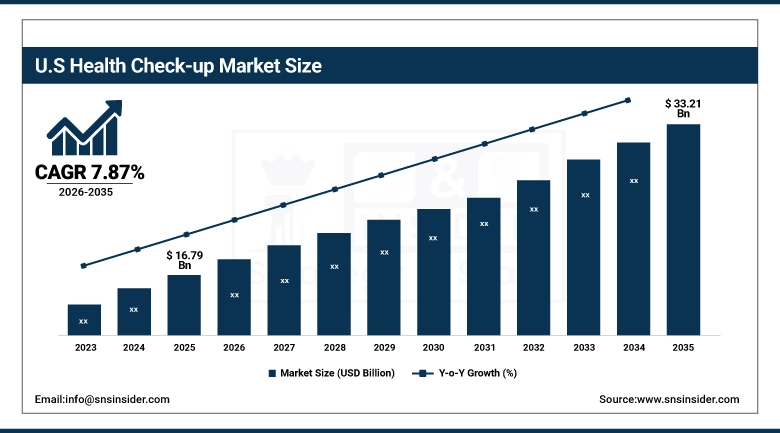
The U.S. Health Check-up Market is projected to grow at a CAGR of 7.87% during the forecast period, i.e., from USD 16.79 Billion in 2025 to USD 33.21 Billion by 2035. This growth can be attributed to the increase in lifestyle diseases, increased awareness about preventive healthcare, high adoption rates of advanced diagnostic technologies, and investments in innovative technologies including digital, genetic, and imaging-based diagnostic solutions.
Health Check-up Market Growth Drivers:
-
Rising lifestyle-related diseases and preventive healthcare awareness are key drivers of Health Check-up Market growth.
Entities such as hospitals, diagnostic centers, corporate entities, and home healthcare services are increasingly using advanced diagnostic technologies including AI-based risk assessment tools, genetic testing, and imaging services to diagnose chronic conditions in patients and ensure better health outcomes. Innovations in digital technologies, home sampling services, and personalized diagnostic services have also helped in the adoption of advanced diagnostic services, which is further improving the effectiveness of preventive care services and driving the market.
Over 48% of hospitals, diagnostic centers, and corporate wellness providers utilized advanced health check-up services in 2025 to detect lifestyle diseases, manage chronic conditions, and promote preventive healthcare.
Health Check-up Market Restraints:
-
High costs of advanced diagnostic packages and unequal access to preventive healthcare remain key restraints for the Health Check-up Market.
In addition, low levels of awareness and health literacy among different demographics contribute to low levels of routine screening participation. Infrastructure gaps between urban and rural areas result in unequal access to sophisticated diagnostic tools. Operation-related challenges, including a lack of trained staff, long turnaround times for test results, and patient concerns about data privacy within digital platforms, also contribute to low levels of adoption. Affordability is also a barrier to adoption, especially in rural and disadvantaged populations.
More than 42% of smaller clinics and rural healthcare providers experienced difficulties in providing sophisticated health check-up services to patients in 2025, citing cost, infrastructure, and patient willingness to pay for routine screening packages.
Health Check-up Market Opportunities:
-
Expanding preventive healthcare adoption and digital innovation are creating major opportunities in the Health Check-up Market.
The integration of genetic testing, biomarker analysis, and telehealth services is creating new avenues for early detection and long-term management of the disease. Furthermore, the emergence of corporate wellness programs, government screening programs, and insurance programs is fueling the growth of the market across varied demographics. Instead of focusing on conventional diagnostic services, the focus has shifted toward the integration of AI-based analysis, health monitoring through wearable devices, and personalized wellness programs.
More than 65% of large hospital groups and diagnostic centers in 2025 are looking to increase preventive health check-ups, signifying the growth prospects for the market.
Health Check-up Market Segmentation Analysis:
-
By Type, Active Preventive health check-ups Safety Systems held the largest market share of 39.46% in 2025, while they are also expected to grow at the fastest CAGR of 5.52% during 2026–2035.
-
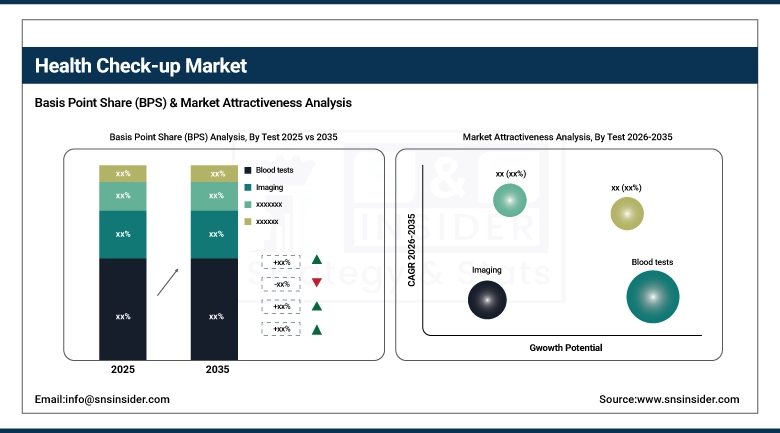
By Test, Blood tests (CBC, glucose, lipid profile) dominated with 46.55% market share in 2025, whereas Genetic & biomarker tests are projected to record the fastest CAGR of 6.08% through 2026–2035.
-
By Provider, Hospitals accounted for the highest market share of 36.82% in 2025, while Home Health Agencies are expected to grow at the fastest CAGR of 5.22% during the forecast period.
-
By Age Group, 31-45 years dominated with a 29.72% share in 2025, while 61+ years are anticipated to expand at the fastest CAGR of 5.06% through 2026–2035.
-
By Purpose, Regular monitoring detection held the largest share of 41.82% in 2025, while they are also expected to grow at the fastest CAGR of 5.64% during the forecast period.
-
By Technology, Automated analyzers dominated with a 38.92% share in 2025, while Biomarkers/genetic testing are anticipated to expand at the fastest CAGR of 6.28% through 2026–2035.
By Type, Active Preventive Health Check-ups Safety Systems Lead and Expand Rapidly:
Active Preventive Health Check-ups Safety Systems segment both led and grew the highest in 2025, indicating the segment’s dual capability of leading and growing the highest in the market. This segment has proven to be the most trustworthy in the market due to the effectiveness of these health check-ups in the early detection of lifestyle-related diseases. In contrast, the Active Preventive Health Check-ups Safety Systems segment is also the fastest-growing segment in the market, driven by the growing awareness of preventive healthcare and the integration of these health check-ups in corporate wellness programs.
By Test, Blood Tests Lead While Genetic & Biomarker Testing Expands Rapidly:
Blood Tests (CBC, Glucose, Lipid Profile) were at the forefront of the health check-up market in 2025, given their reliability and affordability, and widespread acceptance among clinicians and across various healthcare facilities and corporate sectors. Blood Tests continue to be at the core of preventive healthcare, providing valuable information about patient health and wellness.
Genetic & Biomarker Tests is the fastest-growing segment in this market, driven by increasing demand for personalized preventive care, early detection of cancer, and precision medicine opportunities. The segment witnessed rapid acceptance in 2025, especially for risk assessment and wellness programs for patients, especially in urban areas.
By Provider, Hospitals Lead While Home Health Agencies Expand Rapidly
Hospitals accounted for the largest portion of the health check-up market in 2025, driven through their well-developed infrastructure, diagnostic facilities, and trust among the patients. Hospitals are the major providers of organized preventive care services, including cardiac, metabolic, and cancer screenings.
Home Health Agencies are the fastest-growing segment, driven by the increasing need for convenience, cost-effectiveness, and customized care services. This segment has seen tremendous growth due to the increasing demand for home sample collection services, teleconsultations, and mobile diagnostic services, which patients are opting for.
By Age Group, Adults 31–45 Years Lead While Seniors Expand Rapidly:
Adults in the range of 31 to 45 years formed the largest consumer base for health check-ups in the market in 2025. This is due to their active involvement in health check-ups and corporate health programs. This group requires comprehensive health check-up services that include metabolism, heart health, and lifestyle-related conditions.
The senior citizen group of 61+ years is growing rapidly due to the prevalence of chronic conditions and the need for routine monitoring. This group has seen a significant increase in the adoption of health check-ups in 2025 for managing cardiovascular conditions, diabetes, and other conditions associated with aging.
By Purpose, Regular Monitoring & Detection Dominate and Expand Rapidly
The Regular Monitoring & Detection segment both led and grew the most in the year 2025, further emphasizing the importance of this segment in the broader scope of preventive healthcare. People and healthcare providers are increasingly using this as a way of identifying the early stages of chronic diseases such as diabetes, heart conditions, and cancer.
However, this segment has also seen the highest growth in the industry due to the increasing awareness of the importance of preventive care and the integration of insurance and corporate wellness programs. This is also due to the fact that people are seeking the best and complete monitoring solutions, further emphasizing the trust and growth of this segment.
By Technology, Automated Analyzers Lead While Biomarkers & Genetic Testing Expand Rapidly:
Automated Analyzers held a prominent share in the market for health check-ups in 2025, based on factors such as efficiency, precision, and capacity to perform large numbers of diagnostic tests within a short period. Hospitals and diagnostic centers widely used Automated Analyzers for routine health check-ups, including blood, metabolic, and cardiac tests.
Biomarkers & Genetic Testing is one segment that is growing at a rapid pace, attributed to increasing needs for personalized preventive care and early detection of complex diseases such as cancer and cardiovascular diseases. The segment witnessed a wide acceptance in 2025, especially for risk profiling and management of various diseases, along with wellness programs among urban populations.
Health Check-up Market Regional Analysis:
North America Health Check-up Market Insights:
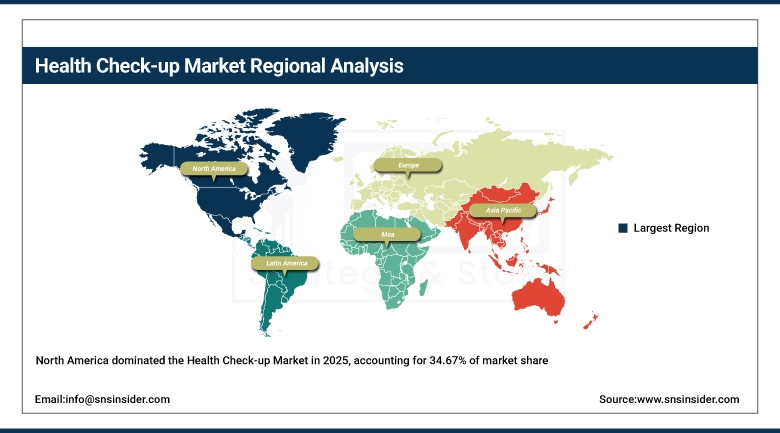
The health check-up market in the world was led by North America in 2025 with a share of 34.67%. This is due to the well-developed infrastructure in the region, which has also seen the penetration of insurance services and the adoption of health check-ups. In the region, there has been the development of structured packages in the healthcare sector, including the detection of cardiac, metabolic, and cancer risk factors in the United States and Canada. In addition, the rise of lifestyle diseases in the region has seen the government support health check-ups through reimbursement.
Get Customized Report as per Your Business Requirement - Enquiry Now
U.S. Health Check-up Market Insights:
The U.S. maintained its position as the largest contributor in the North American region due to the high level of preventive care awareness, extensive hospital infrastructure, and strong penetration of corporate wellness programs. Increasing demand for home diagnostics, teleconsults, and personalization packages further boosted growth in the region. The incidence of chronic diseases such as diabetes and cardiovascular disease, and insurance-based preventive screenings, ensured the U.S. led the way in structured health check-ups.
Asia-Pacific Health Check-up Market Insights:
The Asia Pacific region was observed to be the fastest-growing region with a CAGR of 8.72%. This was due to the increase in discretionary income, urbanization, and the growing importance of preventive care. Countries such as India, China, and Japan saw a surge in the need for routine screenings and corporate wellness programs. Home diagnostics, telemedicine, and mobile health also saw significant adoption in countries within the Asia Pacific region.
China Health Check-up Market Insights:
One of the fastest-growing health check-up markets was China, which entered the health check-up industry in 2025, driven by high rates of urbanization, increasing disposable income, and a growing awareness of the importance of preventive healthcare. There was aggressive expansion by hospitals and health check-up chains, which provided packages for metabolic, cardiac, and cancer check-ups. The government’s emphasis on preventive medicine, along with insurance-based initiatives, helped drive adoption in urban centers.
Europe Health Check-up Market Insights:
The health check-up market in Europe has witnessed steady growth, driven by the presence of universal healthcare, government-run screening programs, and the focus on preventive medicine. Countries such as Germany, the UK, and France were the key contributors to the health check-up market. The growth of the health check-up market was further driven by the increasing need for genetic testing, biomarker analysis, and the use of digital health solutions, which improved the outcomes of preventive medicine.
Germany Health Check-up Market Insights:
The German market was the largest in Europe in 2025, driven by its universal healthcare system, focus on preventive medicine, and advanced diagnostic capabilities. The concept of structured packages had gained significant traction in hospitals and diagnostic centers, with blood tests, imaging, and genetic tests being the cornerstone of preventive medicine. Screening programs for cancer and cardiovascular diseases were also undertaken by the government.
Latin America Health Check-up Market Insights:
The health check-up market in Latin America recorded moderate growth, with the expansion of the private healthcare infrastructure and the increasing awareness of lifestyle diseases. Brazil and Mexico were the key countries where health check-ups were offered through packages by diagnostic centers and hospitals. However, the low penetration of insurance cover was an impediment. The growth prospects are also driven by the increasing investment in telehealth and mobile diagnostics.
Middle East & Africa Health Check-up Market Insights:
The Middle East & Africa segment recorded steady growth, driven by increasing investments in healthcare in the Gulf countries and the expansion of hospital infrastructure. The segment of preventive screenings also witnessed increased adoption, especially for cardiovascular and metabolic conditions. However, the segment was restricted due to low awareness, affordability, and uneven access to healthcare services in the region. The segment is expected to benefit from the increasing government initiatives and investments in preventive care.
Health Check-up Market Competitive Landscape:
Apollo Hospitals, a prominent healthcare provider in India, holds a substantial position in the health check-up sector, leveraging its preventive care offerings, advanced diagnostic capabilities, and tailored wellness initiatives. Furthermore, the company prioritizes accessibility and affordability, facilitated by its extensive hospital network and digital health platforms.
-
In 2025, Apollo expanded its preventive health check-up portfolio with AI-enabled risk assessment tools, enhancing early detection of lifestyle diseases across its hospital network.
Fortis Healthcare is a leading chain of private hospitals in India, which offers a wide range of preventive health check-ups at its hospitals. Fortis is a healthcare organization that emphasizes the delivery of quality healthcare, cutting-edge diagnostic technology, and patient-centric health and wellness programs. The organization’s strategy is to enhance its range of specialized health check-ups for cardiac, oncology, and lifestyle-related diseases, and the adoption of digital health solutions to enhance patient engagement.
-
In 2025, Fortis introduced integrated preventive health packages combining genetic screening and lifestyle assessments, aiming to reduce long-term disease risks and improve patient outcomes.
Max Healthcare is a renowned Indian healthcare company that specializes in providing services in the field of preventive health check-ups. Max places significant emphasis on providing comprehensive diagnostic packages, corporate health check-ups, and imaging services. The company has also focused its efforts on providing digital services and personalized preventive health check-ups to cater to the population in urban India.
-
In 2025, Max Healthcare launched targeted preventive health programs. These initiatives, concentrating on metabolic disorders and cardiovascular risks, benefited from the integration of AI-driven diagnostic tools.
Health Check-up Market Key Players:
Some of the Health Check-up Market Companies are:
-
Apollo Hospitals
-
Fortis Healthcare
-
Max Healthcare
-
Manipal Hospitals
-
Dr. Lal PathLabs
-
Thyrocare Technologies
-
Metropolis Healthcare
-
SRL Diagnostics
-
MedPlus Health Services
-
Quest Diagnostics
-
LabCorp (Laboratory Corporation of America Holdings)
-
Mayo Clinic
-
Cleveland Clinic
-
Johns Hopkins Medicine
-
Mount Sinai Health System
-
HCA Healthcare
-
Siemens Healthineers
-
GE Healthcare
-
Philips Healthcare
-
Cerner Corporation (Oracle Health)
| Report Attributes | Details |
|---|---|
| Market Size in 2025 | USD 56.02 Billion |
| Market Size by 2035 | USD 114.05 Billion |
| CAGR | CAGR of 7.46% From 2026 to 2035 |
| Base Year | 2025 |
| Forecast Period | 2026-2035 |
| Historical Data | 2022-2024 |
| Report Scope & Coverage | Market Size, Segments Analysis, Competitive Landscape, Regional Analysis, DROC & SWOT Analysis, Forecast Outlook |
| Key Segments | •By Type (Active Preventive health check-ups Safety Systems, Comprehensive check-ups, Disease-specific check-ups, Routine/wellness check-ups, Others), •By Test (Blood tests (CBC, glucose, lipid profile), Imaging (X-ray, MRI, CT), Physiological tests (ECG, stress tests), Genetic & biomarker tests, Others), •By Provider (Hospitals, Diagnostic centers, Private clinics, Home health agencies, Others), •By Age Group (31–45 years, 46–60 years, 61+ years, 19–30 years, 0–18 years, Others), •By Purpose (Early disease detection, Regular monitoring, Risk assessment, Others), •By Technology (Automated analyzers, Regular monitoring, Biomarkers/genetic testing, Others) |
| Regional Analysis/Coverage | North America (US, Canada), Europe (Germany, UK, France, Italy, Spain, Russia, Poland, Rest of Europe), Asia Pacific (China, India, Japan, South Korea, Australia, ASEAN Countries, Rest of Asia Pacific), Middle East & Africa (UAE, Saudi Arabia, Qatar, South Africa, Rest of Middle East & Africa), Latin America (Brazil, Argentina, Mexico, Colombia, Rest of Latin America). |
| Company Profiles | Apollo Hospitals, Fortis Healthcare, Max Healthcare, Manipal Hospitals, Dr. Lal PathLabs, Thyrocare Technologies, Metropolis Healthcare, SRL Diagnostics, MedPlus Health Services, Quest Diagnostics, LabCorp (Laboratory Corporation of America Holdings), Mayo Clinic, Cleveland Clinic, Johns Hopkins Medicine, Mount Sinai Health System, HCA Healthcare, Siemens Healthineers, GE Healthcare, Philips Healthcare, Cerner Corporation (Oracle Health). |

Frequently Asked Questions
Asia-Pacific is projected to grow at the highest CAGR of 8.72%, fueled by rising middle-class demand, affordable packages, and expanding hospital networks.
North America leads with about 34.67% share in 2025, thanks to insurance coverage and advanced diagnostic infrastructure.
Opportunities are Expansion of home diagnostics and telehealth services, Growth in genetic and biomarker testing for precision medicine, Rising demand for corporate wellness programs, etc.
Preventive health check-ups account for 39.46% of the market in 2025 and are expected to remain the largest segment, with the fastest CAGR (5.52%).
The market is expected to grow at a CAGR of 7.46%, driven by preventive healthcare adoption, chronic disease prevalence, and technological advancements.
