
Pediatric Clinical Trials Market Report Scope & Overview:
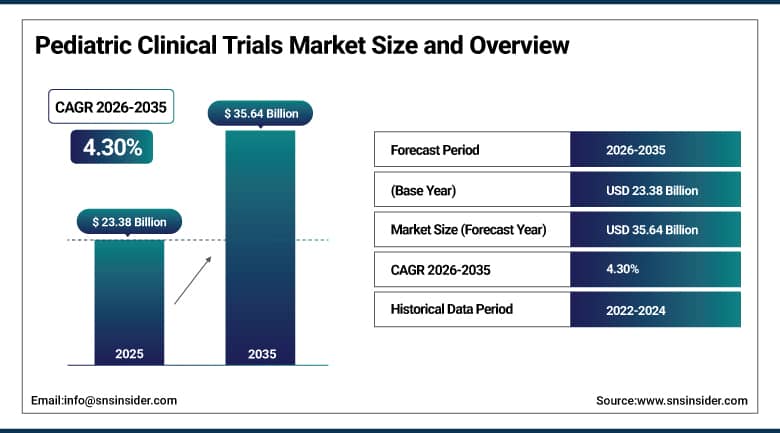
The Pediatric Clinical Trials Market size was USD 23.38 Billion in 2025 and is expected to reach USD 35.64 Billion by 2035, growing at a CAGR of 4.30% from 2026–2035.
The Pediatric Clinical Trials Market is growing because of increased funding in the development of pediatric drugs, greater incentives for conducting age-specific clinical trials through regulations, and heightened awareness regarding the requirement for age-specific drugs. Pharmaceutical and biotechnological companies are increasing their investment in pediatric drug development because of the need to meet the requirements of pediatric investigations and expand the indications of their products. Increasing incidences of chronic diseases, genetic disorders, infectious diseases, and pediatric cancer are expected to drive the need for conducting clinical trials. Moreover, advancements in decentralized trials, digital health, and patient enrollment techniques are expected to fuel market growth.
According to the World Health Organization (WHO), approximately 1 in 10 children worldwide lives with a disability or chronic health condition requiring long-term healthcare, highlighting the growing need for pediatric-specific medicines and clinical research. The U.S. Food and Drug Administration (FDA) states that since the implementation of the Best Pharmaceuticals for Children Act (BPCA) and the Pediatric Research Equity Act (PREA), more than 1,100 pediatric labeling changes have been made to prescription medicines, significantly strengthening pediatric clinical research. Additionally, the National Cancer Institute (NCI) estimates that nearly 400,000 children and adolescents aged 0–19 years are diagnosed with cancer globally each year, driving substantial demand for pediatric oncology clinical trials.
To Get More Information On Pediatric Clinical Trials Market - Request Free Sample Report
Pediatric Clinical Trials Market Trends
-
Gene therapy and cell therapy trials for rare pediatric diseases are a rapidly growing clinical trial category.
-
Decentralized clinical trial methods are improving pediatric enrollment rates by reducing burden on families.
-
AI-powered patient identification tools are helping sponsors identify eligible pediatric patients across healthcare systems.
-
FDA Rare Pediatric Disease Priority Review Voucher Program keeps incentivizing industry investment in niche childhood diseases.
-
Growing CAR-T cell therapy development for pediatric oncology is driving Phase I and Phase II clinical trial volumes.
The U.S. Pediatric Clinical Trials Market Outlook
The U.S. Pediatric Clinical Trials Market was valued at approximately USD 7.96 Billion in 2025. It is expected to reach approximately USD 11.82 Billion by 2035, growing at a CAGR of approximately 4.03%.
The U.S. market is fueled by the growing focus on conducting research to create a new and efficient pediatric treatment for diseases that can be either rare genetic or chronic diseases. Various regulations aimed at pediatric drug development such as PREA, BPCA, and the Rare Pediatric Disease Priority Review Voucher Program have a positive effect on market development. Additionally, the increase in awareness regarding the importance of age-appropriate drug testing and increased funding for this activity from both the government and private institutions is driving market growth in the domestic environment.
According to the National Institutes of Health (NIH), the agency invested approximately USD 5.9 billion in pediatric research during FY2024, supporting clinical trials across oncology, rare diseases, infectious diseases, neurology, and genetic disorders.
Pediatric Clinical Trials Market Segment Analysis
-
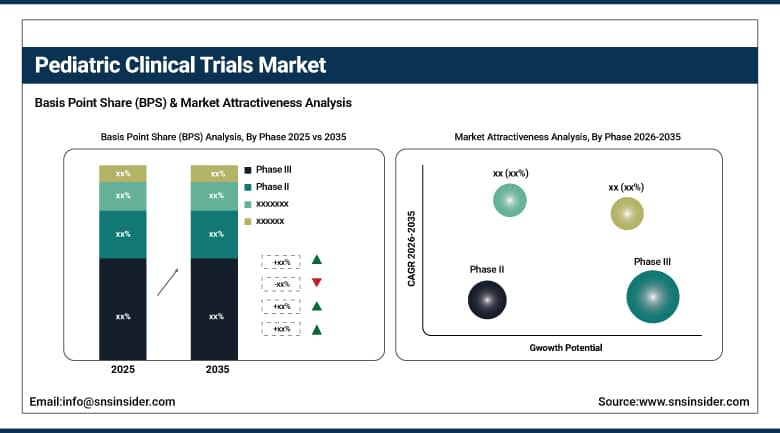
By Phase, Phase III segment dominated the Pediatric Clinical Trials Market in 2025 with 49% share; Phase II segment is the fastest growing segment.
-
By Study Design, Treatment Studies segment dominated the Pediatric Clinical Trials Market in 2025 with 72% share; Observational Studies segment is the fastest growing segment.
-
By Indication, Infectious Diseases segment dominated the Pediatric Clinical Trials Market in 2025 with 28% share; Oncology segment is the fastest growing segment.
By Phase, Phase III segment dominates the Pediatric Clinical Trials Market, Phase II segment expected to grow fastest
The Phase III segment dominated the Pediatric Clinical Trials Market owing to the key role it plays in evaluating the safety and efficacy of the pediatric drugs prior to their approval by regulatory authorities. Such trials use large pools of patients and give the necessary evidence needed for the commercialization of the products. Growing investments in the pharmaceuticals industry, increasing pediatric drug pipeline, and strict regulations for the safety evaluation of pediatric medicines have been driving the growth of Phase III trials.
The Phase II segment is the fastest growing owing to the increasing number of novel pediatric medications that enter the stage of efficacy and dose optimization. Such trials not only determine the efficacy of the medications but also determine the proper dose for them. Growing research in rare pediatric diseases, increasing biologic and gene therapy pipeline, and various initiatives from regulatory authorities to promote pediatric drug development are fueling the growth of Phase II trials.
By Study Design, Treatment Studies segment dominates the Pediatric Clinical Trials Market, Observational Studies segment expected to grow fastest
The Treatment Studies segment dominated the Pediatric Clinical Trials Market due to the fact that most of the pediatric clinical trials are concerned with testing new drugs, vaccines, biologics, and therapies. This kind of research produces important evidence about safety and efficacy that helps in obtaining approvals and in improving treatment standards. There has been an increase in the need for drugs specific for pediatrics, an increase in investments in pharmaceutical research, and increased prevalence of childhood diseases leading to growth in treatment-oriented clinical trials.
The Observational Studies segment is the fastest growing because of the increasing importance being accorded to clinical evidence related to the disease course, its outcome, and safety in pediatric population. Observational research is increasingly being used by clinicians and researchers to make decisions based on evidence without changing the treatment of patients. Increasing developments in healthcare analytics, use of EHRs, and increasing interest in personalized pediatric medicine are driving rapid growth in the global clinical research industry.
By Indication, Infectious Diseases segment dominates the Pediatric Clinical Trials Market, Oncology segment expected to grow fastest
The Infectious Diseases segment dominated the Pediatric Clinical Trials Market because of the prevalence of infections caused by bacteria, viruses, and respiratory infections amongst children all across the world. Research in pediatric vaccines, antibiotics, and antivirals has been constant, and government-led immunization programs, emphasis on prevention of childhood infectious diseases, and development of vaccines have fueled market growth. The ever-growing need for better and safer treatments in pediatrics further helps to maintain the dominance of this market segment.
The Oncology segment is the fastest growing owing to the rising investments in the development of targeted therapy, immunotherapy, and precision medicine for childhood cancer. With growing knowledge in the biology of childhood cancer, there has been an expansion in the clinical trial pipeline of pediatric cancers. There are increased partnerships between pharmaceutical companies, research institutions, and pediatric hospitals, along with incentives provided by regulatory bodies for rare pediatric diseases.
Regional Analysis
|
Region |
Major Country |
Share within Region, 2025 (%) |
|---|---|---|
|
North America |
United States |
82.5% |
|
Europe |
Germany |
24.6% |
|
Asia Pacific |
China |
40.6% |
|
Middle East & Africa |
UAE |
22.8% |
|
Latin America |
Brazil |
43.8% |
North America Pediatric Clinical Trials Market Insights
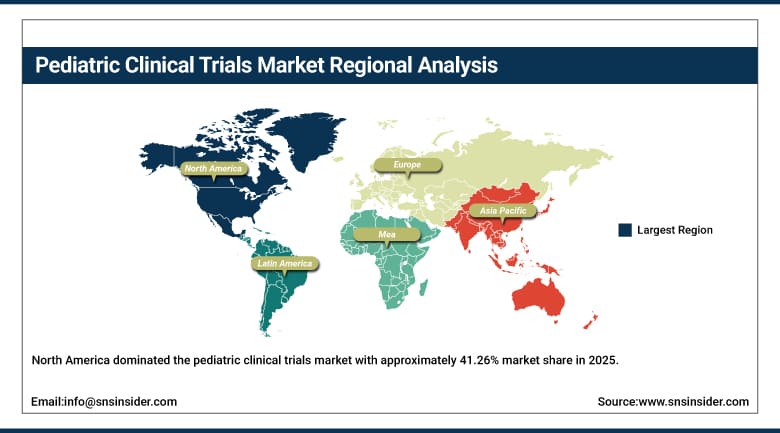
North America dominated the pediatric clinical trials market with approximately 41.26% market share in 2025. Its well-developed healthcare infrastructure, high research funding, and regulatory assistance drive this leadership. The region is home to some of the world's most prominent pharmaceutical companies, research centers, and hospitals, which undertake a high volume of pediatric clinical trials. The FDA and other regulatory authorities offer a supportive environment with programs including pediatric exclusivity and orphan drug designations.
The United States accounts for approximately 82.5% of North American revenue. High healthcare expenditure combined with a strong system for patient recruitment and retention has established North America as a center for sophisticated pediatric clinical trials. This combination of regulatory support, funding, and infrastructure keeps North America firmly in the lead.
Furthermore, the Centers for Disease Control and Prevention (CDC) estimates that nearly 40% of U.S. school-aged children and adolescents have at least one chronic health condition requiring ongoing medical care, emphasizing the need for continuous pediatric therapeutic research. Additionally, the U.S. Food and Drug Administration (FDA) has issued more than 1,100 pediatric labeling updates under the Best Pharmaceuticals for Children Act (BPCA) and the Pediatric Research Equity Act (PREA), reinforcing the expansion of pediatric clinical trial activities and age-specific drug development.
Get Customized Report as Per Your Business Requirement - Enquiry Now
Europe Pediatric Clinical Trials Market Insights
Europe represents a meaningful pediatric clinical trials market, supported by EMA pediatric regulation and strong pharmaceutical R&D infrastructure. Germany leads the regional market, backed by strong pharmaceutical manufacturing and academic medical research. France and the UK contribute meaningful demand through their own expanding pharmaceutical R&D and hospital-based clinical trial networks.
Germany accounts for approximately 24.6% of European revenue. EMA's Pediatric Committee (PDCO) requirements for pediatric investigation plans continue reinforcing systematic pediatric trial conduct across Europe. This regulatory environment should keep supporting steady European pediatric trial market growth.
The European Medicines Agency (EMA) has approved more than 1,300 Pediatric Investigation Plans (PIPs) since the implementation of the EU Paediatric Regulation, significantly strengthening pediatric clinical trial activity and encouraging the development of medicines specifically designed for children. Furthermore, according to the European Commission, more than 30 million children live within the European Union, representing a substantial pediatric population that continues to drive demand for age-appropriate medicines and child-focused clinical research.
Asia Pacific Pediatric Clinical Trials Market Insights
Asia Pacific is the fastest-growing region in the Pediatric Clinical Trials market, with a CAGR of approximately 4.88% through the forecast period. Rising healthcare investments, growing healthcare infrastructure, and growing numbers of clinical trial outsourcing activities to nations like India, China, and South Korea drive this growth. The high pediatric population of the region and increasing demand for treatments of common and uncommon diseases provide immense opportunities.
According to the World Health Organization (WHO), the Asia-Pacific region accounts for more than half of the world's child population, making it the largest region for pediatric healthcare demand. In India, the Ministry of Health and Family Welfare reports that children below 18 years represent approximately 35% of the country's population, supporting expanding pediatric research and clinical trial activities.
China accounts for approximately 40.6% of Asia Pacific revenue. The regulatory authorities in the region are also changing to streamline clinical trial approvals. Growing economic development alongside rising demand for enhanced healthcare facilities keeps accelerating Asia Pacific pediatric clinical trial activity.
Furthermore, China's National Bureau of Statistics reports that the country has approximately 250 million children aged 0–14 years, creating one of the world's largest pediatric patient pools and driving demand for pediatric medicines and clinical research.
MEA & Latin America Pediatric Clinical Trials Market Insights
The UAE accounted for approximately 22.8% of the MEA Pediatric Clinical Trials Market, driven by rising healthcare investments, expanding clinical research infrastructure, and strong government support for medical innovation. The country continues to attract global pharmaceutical companies for pediatric studies through favorable regulations and advanced healthcare facilities. Saudi Arabia is also strengthening its pediatric clinical research capabilities through ongoing healthcare modernization initiatives.
Brazil accounted for approximately 43.8% of the Latin America Pediatric Clinical Trials Market, supported by increasing pharmaceutical R&D investments, expanding clinical trial outsourcing, and a large pediatric patient base. The country's improving regulatory environment and established research centers attract international sponsors.
Market Dynamics
Growth Drivers: Rising burden of pediatric diseases and unmet medical needs
The increasing prevalence of child ailments such as rare genetic conditions, congenital diseases, and childhood cancer is fostering the demand for clinical trials specific to pediatrics. As stated by the American Cancer Society, about 10,000 children under age 15 years are affected by cancer each year in America, therefore necessitating continuous research. Over 200 million children worldwide suffer from chronic disease according to the World Health Organization, most of which have poor treatment options.
Current regulatory initiatives, such as the FDA PREA and EMA Pediatric Regulation, are mandating pharmaceutical companies to conduct pediatric-specific clinical trials before approval of drugs intended for adults in children. All these are pushing sponsors and CROs to build their pipelines of pediatric clinical trials to address these unmet needs. As the disease burden among children keeps on rising worldwide, this structural factor will continuously stay strong.
Restraints: Ethical and recruitment challenges limiting trial enrollment
Pediatric studies are associated with strict ethical considerations because children cannot provide informed consent, and participation requires the consent of parents or guardians. This leads to low rates of participation and makes the trials last longer. As was stated in Pediatrics journal, over 50% of all pediatric trials have been terminated due to problems with recruiting participants.
Additionally, many parents refuse to participate in clinical trials due to concerns about potential risks and side effects. The standards and recommendations of FDA and EMA for pediatric trials make research design and conducting much more difficult. All this increases the costs of trials and makes the number of pediatric drugs smaller.
Opportunities: Expansion of pediatric rare disease trials
The focus on rare pediatric diseases provides many opportunities for growth. In such cases, there is a relatively small population of patients that requires treatment and has limited or non-existent alternatives. Programs under the Orphan Drug Act, as well as the European orphan drug act, provide incentives like tax credits and market exclusivity that promote the development of treatments for rare pediatric diseases.
Advances in gene therapy and precision medicine provide new opportunities for conducting studies on rare pediatric diseases from the molecular point of view. This form of regulatory encouragement promotes clinical trials of pediatric drugs and cooperation between pharmaceutical companies, scientific establishments, and healthcare providers. Opportunities will continue to grow as genome medicine develops further.
Recent Developments:
-
2024: Merck released positive topline results from its Phase 2b/3 trial (MK-1654-004) in June 2024 assessing clesrovimab for RSV disease prevention in infants, achieving its main safety and efficacy endpoints.
-
2024: Novartis shared new Phase IIIb SMART trial evidence in March 2024 assessing the safety and effectiveness of Zolgensma (onasemnogene abeparvovec) in older and heavier children with spinal muscular atrophy.
-
2024: Johnson & Johnson announced FDA Breakthrough Therapy Designation for nipocalimab in February 2024 for treatment of alloimmunized pregnant women at risk of hemolytic disease of the fetus and newborn.
Pediatric Clinical Trials Market Key Players are:
-
IQVIA Holdings Inc.
-
ICON plc
-
Laboratory Corporation of America Holdings (Labcorp)
-
Syneos Health
-
Parexel International Corporation
-
Medpace Holdings, Inc.
-
Fortrea Holdings Inc.
-
Charles River Laboratories International, Inc.
-
Thermo Fisher Scientific Inc.
-
Premier Research
-
PSI CRO AG
-
Worldwide Clinical Trials
-
ClinChoice Inc.
-
Veristat, LLC
-
KCR S.A.
-
CMIC Holdings Co., Ltd.
-
Novotech Health Holdings Pty Ltd.
-
Ergomed PLC
-
Lindus Health Ltd.
-
Emmes Corporation
Pediatric Clinical Trials Market Report Scope:
| Report Attributes | Details |
|---|---|
| Market Size in 2025 | USD 23.38 Billion |
| Market Size by 2035 | USD 35.64 Billion |
| CAGR | CAGR of 4.30% From 2026 to 2035 |
| Base Year | 2025 |
| Forecast Period | 2026-2035 |
| Historical Data | 2022-2024 |
| Report Scope & Coverage | Market Size, Segments Analysis, Competitive Landscape, Regional Analysis, DROC & SWOT Analysis, Forecast Outlook |
| Key Segments | • By Phase (Phase I, Phase II, Phase III, Phase IV) • By Study Design (Treatment Studies, Observational Studies) • By Indication (Infectious Diseases, Oncology, Autoimmune/Inflammation, Respiratory Disorders, Mental Health Disorders, Others) |
| Regional Analysis/Coverage | North America (US, Canada), Europe (Germany, UK, France, Italy, Spain, Russia, Poland, Rest of Europe), Asia Pacific (China, India, Japan, South Korea, Australia, ASEAN Countries, Rest of Asia Pacific), Middle East & Africa (UAE, Saudi Arabia, Qatar, South Africa, Rest of Middle East & Africa), Latin America (Brazil, Argentina, Mexico, Colombia, Rest of Latin America). |
| Company Profiles | IQVIA Holdings Inc., ICON plc, Laboratory Corporation of America Holdings (Labcorp), Syneos Health, Parexel International Corporation, Medpace Holdings, Inc., Fortrea Holdings Inc., Charles River Laboratories International, Inc., Thermo Fisher Scientific Inc., Premier Research, PSI CRO AG, Worldwide Clinical Trials, ClinChoice Inc., Veristat, LLC, KCR S.A., CMIC Holdings Co., Ltd., Novotech Health Holdings Pty Ltd., Ergomed PLC, Lindus Health Ltd., Emmes Corporation. |

Frequently Asked Questions
Rising burden of pediatric diseases, government regulatory incentives for pediatric drug development, and growing investment in rare pediatric disease therapies are the primary growth factors.
The Pediatric Clinical Trials Market was valued at USD 23.38 Billion in 2025.
North America dominated the Pediatric Clinical Trials Market with approximately 41.26% revenue share in 2025.
The Phase III segment dominated the Pediatric Clinical Trials Market in 2025.
The Pediatric Clinical Trials Market is expected to grow at a CAGR of 4.30% from 2026 to 2035.
