
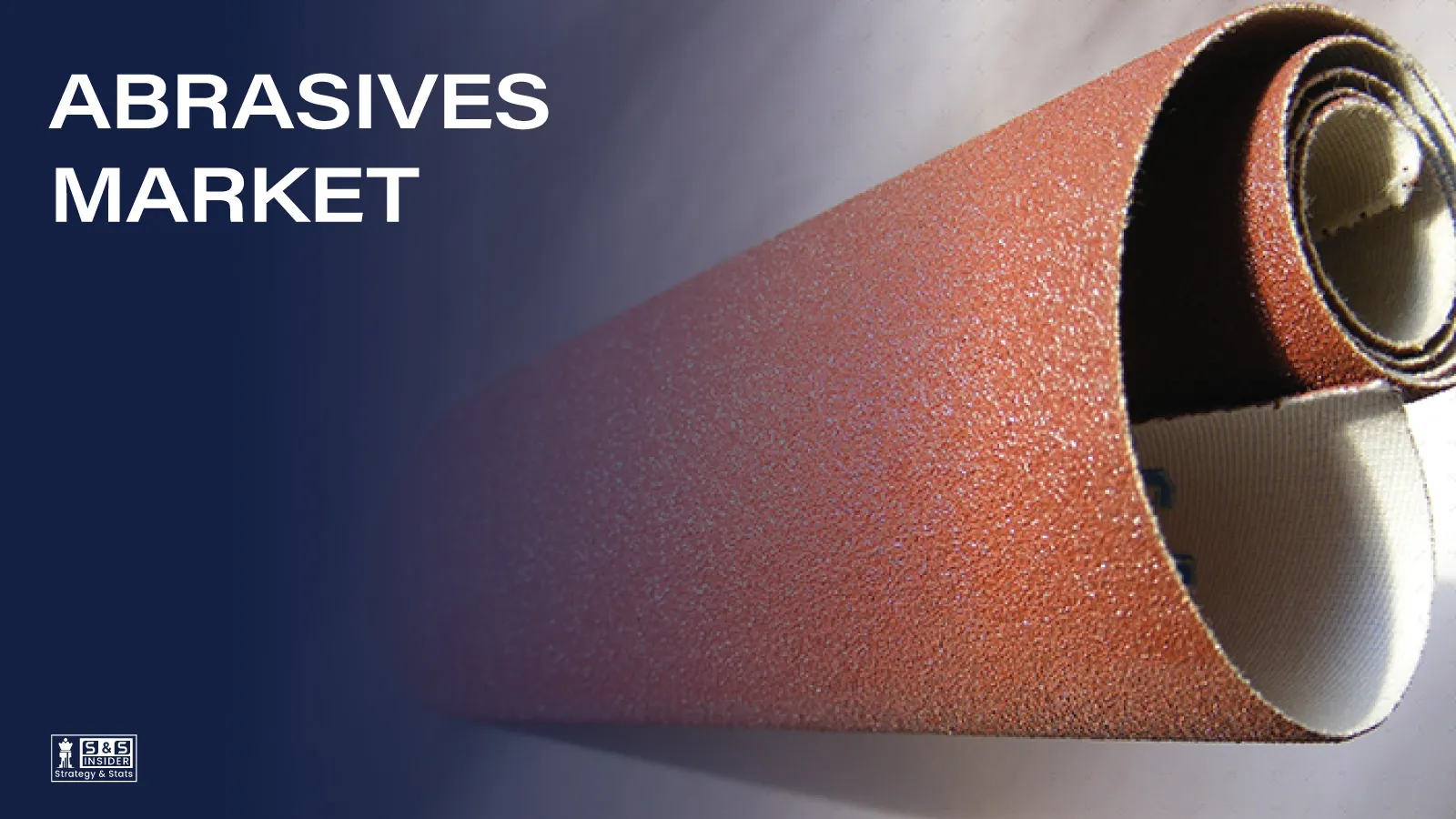
Abrasives have been an important part of industrial manufacturing for hundreds of years, having developed from primitive grinding stones to today’s sophisticated materials that can achieve excellent accuracy in modern-day manufacturing processes. Abrasives are now crucial in virtually all manufacturing sectors where activities such as cutting, grinding, polishing, deburring, shaping, and surface finishing play a major part.
Whether it is automobile body finishing, aerospace components machining, semiconductor wafer fabrication, or advanced ceramics production, there is hardly any manufacturing industry that does not employ the technology of abrasives. The increasing trend of automation and engineering precision among manufacturers adds to the importance of abrasives.
Industry experts report that the total size of the Global Abrasives Market in 2025 will be $44.71 billion and will grow to $69.05 billion till 2035, reflecting a CAGR of 5.60% for the period between 2026 and 2035. The Asia Pacific region is currently leading global consumption but is also the fastest growing market for abrasives globally.
Technology Trends Reshaping the Abrasives Industry
Modern industry relies more and more on precision machining and manufacturing techniques, which opens up additional possibilities for the development of abrasive products. Diamond and CBN super abrasives are becoming widely accepted because of their capability to work on tough materials, such as titanium alloys, steel, ceramics, and semiconductor materials.
The appearance of smart manufacturing and technologies that are used in the Industry 4.0 concept is also bringing changes to grinding and polishing processes. The use of automation systems with sensing and process control capabilities makes surfaces more uniform, decreases material loss and increases productivity.
Sustainability is now another area of interest for producers. Growing needs for low emission abrasives that are made from eco-friendly binders and recyclable materials, as well as requiring less energy to manufacture and use, have been observed.
On the other hand, the fast development of production of electric cars and semiconductors introduces completely new areas of abrasive usage, including batteries, power electronics, and wafers.
Leading Companies Transforming the Abrasives Market
1. DuPont de Nemours Inc.
 DuPont has extended its dominance in abrasives by way of investment in the technology behind semiconductor polishing and chemical mechanical planarization. With increasing complexity in chip production methods, DuPont’s specialty in precision materials is becoming even more critical.
2. Saint-Gobain SA
 The Saint-Gobain corporation is known around the world as one of the key manufacturers of abrasive materials due to its constant innovations in the realm of special grain materials and advanced grinding technology solutions. The release of the Lumeos system in 2024 by the corporation emphasized that sustainable development was becoming an increasingly crucial element of abrasive material design.
3. Robert Bosch GmbH
 Bosch offers a complete portfolio of abrasive products for professional use and industry requirements, including cutting disc, grinding wheel, sanding system, and surface preparation. The dominance of Bosch is still evident owing to its extensive involvement in the production of automobiles and industrial tools.
4. Tyrolit Group
 Tyrolit has established itself as a company that provides high-quality technologies for grinding, dressing, and cutting that have been specifically designed to be used in industries that require precision machining work. Tyrolit specializes in aerospace, medical, and machining industries.
5. Carborundum Universal Ltd.
 As one of the leading abrasive producers in Asia, Carborundum Universal provides customers worldwide with bonded abrasives, coated abrasives, super abrasives, and electro-minerals. The diversified range of production makes this company well-positioned for industrial growth economies.
6. Fujimi Inc.
 Fujimi is engaged in developing specialized polishing materials and slurries that find broad application in semiconductor and electronic device manufacturing. The company capitalizes on the fast-growing trend towards construction of state-of-the-art semiconductor fabrication plants across the globe.
7. Noritake Co. Ltd.
 Noritake has successfully created a global market for its products in grinding wheels and precision finishing tools. These tools have been highly appreciated in many industries like automobile industry, steel industry, and machinery production, which require very high-speed machining operations.
8. Wendt Corporation
 Wendt emphasizes its superabrasive products made of diamonds and CBNs that are used in difficult industrial environments. It has become a prominent provider of tools and machines that are used in difficult industrial environments.
Market Segmentation Highlights
The synthetic abrasives segment was the biggest contributor to market revenue in 2025, capturing well over 65% of the revenue generated across the industry. Its superior consistency, strength, and ability to comply with stringent industrial requirements are behind its continued popularity.
Bonded abrasives were the leading product category, contributing over 50% of the total industry revenue, based on their widespread use in the production of metal parts, in foundries, building construction, and general manufacturing operations.
From an application point of view, automotive manufacturing is by far the biggest consumer category, contributing more than one-third of the total market revenue. These processes are widely applied across vehicle manufacturing processes.
Nevertheless, the electrical and electronics segment is likely to post the highest growth in the coming decade.
Regional Market Outlook
The Asia Pacific region is presently the largest regional market, contributing close to 44% to the revenues generated globally. The leading producer and consumer of these products are China on account of its huge manufacturing facilities across various industries such as automotive, electronics, construction, and industrial machinery.
North America is still a lucrative market, driven by investments in the aerospace industry, medical devices manufacturing, and semiconductors, while Europe is benefited from its robust industries in automotive and engineering, spearheaded by Germany.
The Latin America and Middle East regions are also coming up as significant growth areas.
The Future of Abrasive Technologies
The future of abrasive technology will be guided by automation, sustainable engineering, and precision engineering considerations. The emerging technologies in advanced materials including titanium alloys, silicon carbide ceramics, and nickel superalloys require machining capabilities that traditional abrasives fail to offer cost effectively.
The trend towards greater use of electric automobiles and semiconductor production is bound to escalate the need for super abrasives that can achieve micro scale precision and longer tool lives.
The more advanced the industry, the more advanced the abrasives become as they shift from being mere consumables to valuable engineered components that directly impact production capabilities.



