
The collaborative combat aircraft industry is one of the most important innovations in military aviation today. Collaborative Combat Aircraft (CCA) are complex unmanned systems designed to fly alongside manned fighter aircraft, supporting their missions with intelligence, electronic warfare, surveillance, reconnaissance and combat operations. These systems are transforming the face of air warfare allowing armed forces to extend operational reach, enhance mission effectiveness and reduce risks to human pilots in contested environments.
Defence organisations globally are upgrading their air forces with a view to collaborative combat aircraft. Modern conflict increasingly requires highly linked systems operating in complex and fast changing battlefields. CCAs offer enhanced operational flexibility and situational awareness, allowing military leaders to better position their forces. Their capacity to operate with manned aircraft is altering old conceptions of battle and generating new potential for force multiplication.
The size of the market for Collaborative Combat Aircraft was estimated to be 848.98 million dollars in 2025, and it is anticipated that it would expand at a compound annual growth rate (CAGR) of 12.73% between 2026 and 2033, reaching 2207.88 million dollars by 2033.
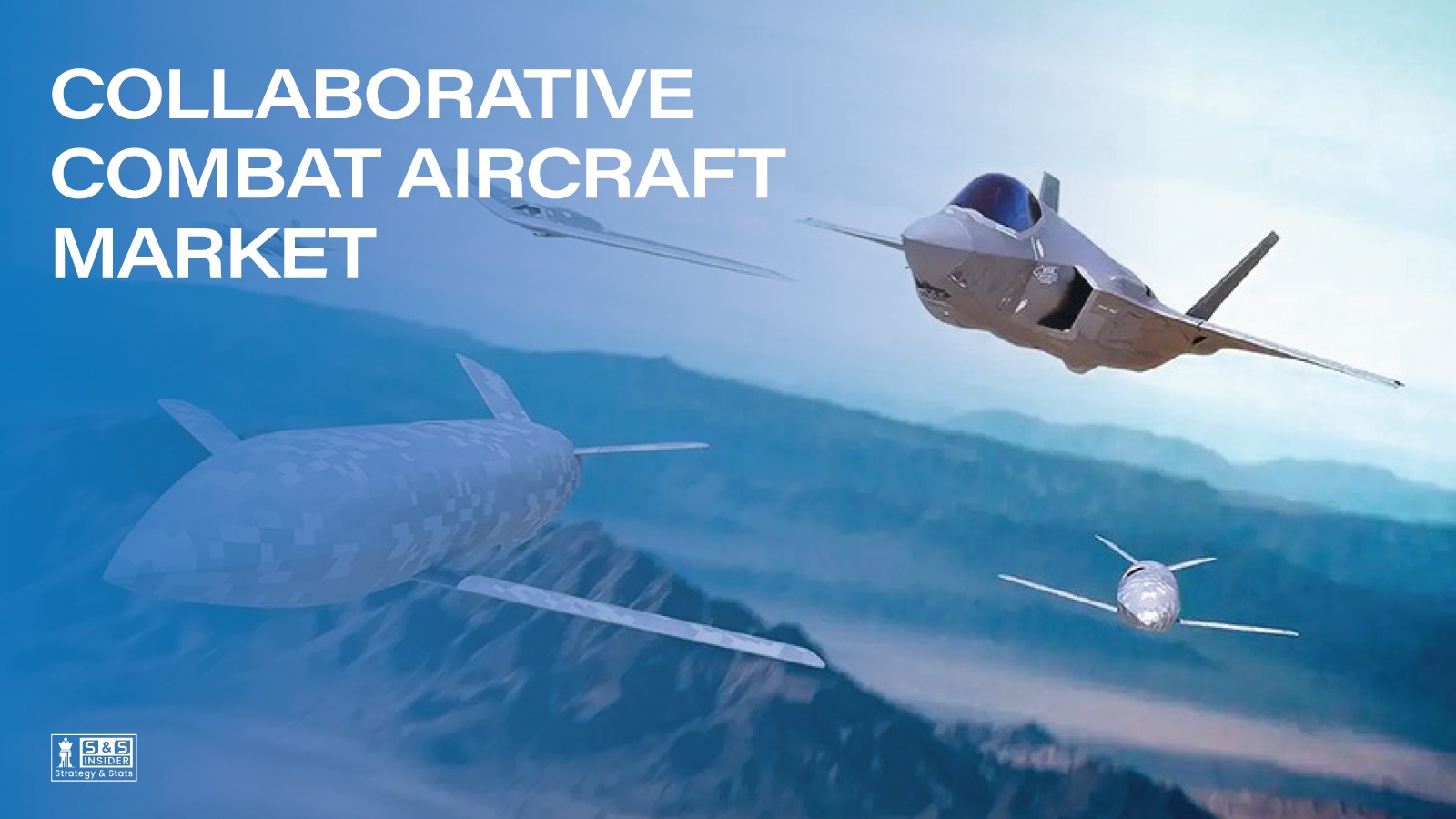
Leading Collaborative Combat Aircraft Companies Driving Market Competition
1. Anduril Industries
 Anduril Industries has become a leading developer in autonomous defence technology and next-generation military equipment. The business develops defence technologies that include artificial intelligence, autonomous capabilities and modern software. The company’s collaborative combat aircraft programmes are intended to enable manned-unmanned teaming and increase mission effectiveness. Anduril focuses on quick development cycles and modular system designs. The company’s significant emphasis on autonomous technology gives it a leading position in the expanding CCA industry.
2. Lockheed Martin Skunkworks
 Lockheed Martin Skunk Works is renowned for producing some of the most sophisticated aerospace and defence technology in the world. The division works on future generation military aircraft programmes and autonomous aviation technologies. Its collaborative combat aircraft initiatives are focused on fusion of unmanned platforms with sophisticated fighter aircraft to boost mission capability. The corporation has decades of expertise in stealth technologies, sophisticated sensors and military aircraft. “Strong defence partnerships position it to be a leader in future air combat systems.
3. Boeing Co.
 Boeing is heavily into military planes and autonomous defence technology. The business is working on advanced designs for collaborative combat aircraft that would operate seamlessly with human fighter fleets. Its experience in aerospace engineering, mission systems integration and military aircraft development underpins its market position. Boeing continues to invest in autonomous operations, artificial intelligence and next generation defence capabilities. The company’s goal is to provide scalable solutions that enhance operational flexibility and effectiveness in warfare.
4. Northrop Grumman.
 Northrop Grumman is a top defence contractor with a history of developing unmanned systems, autonomous technology and sophisticated aircraft platforms. The firm is focused on producing very sophisticated technology that can assist difficult military tasks. Joint combat aircraft programmes are oriented on networked operations, intelligence collection and autonomous mission execution. Northrop Grumman continues to invest significantly in artificial intelligence and secure communications technology. Its robust portfolio of defence programmes adds to its competitive edge in the CCA market.
Market Trends Supporting Growth
Major military countries' increasing defence modernisation programmes are the main driver of the growth of the collaborative combat aircraft market. Governments are also investing in modern air combat systems that boost operational effectiveness and reduce risks to troops. As military aircraft fleets age, defence organisations are looking for next generation technology to meet increasing mission demands in highly contested areas.
One of the key trends driving market growth is the increasing adoption of manned-unmanned teaming concepts. Today, fighters are integrated with autonomous systems to enhance situational awareness, mission range and operational flexibility in modern military tactics. CCAs are to be force multipliers, supporting reconnaissance, surveillance, electronic warfare and attack missions.
Will Collaborative Combat Aircraft Define the Future of Air Warfare?
The cooperative combat aircraft market is set to witness significant growth as militaries transition to more autonomous and AI-enabled technology. Defence organisations are increasingly recognising the strategic utility of unmanned systems working alongside human pilots and reducing operational risk.
Expected future trends include more artificial intelligence capabilities, better sensor integration, more secure communication architectures and increased autonomy. These advances will enable networked combat aircraft to conduct more complex missions across a wide spectrum of operational environments. The future of air combat will be more data-driven and connected. The collaborative combat aircraft will be part of modern warfare.



