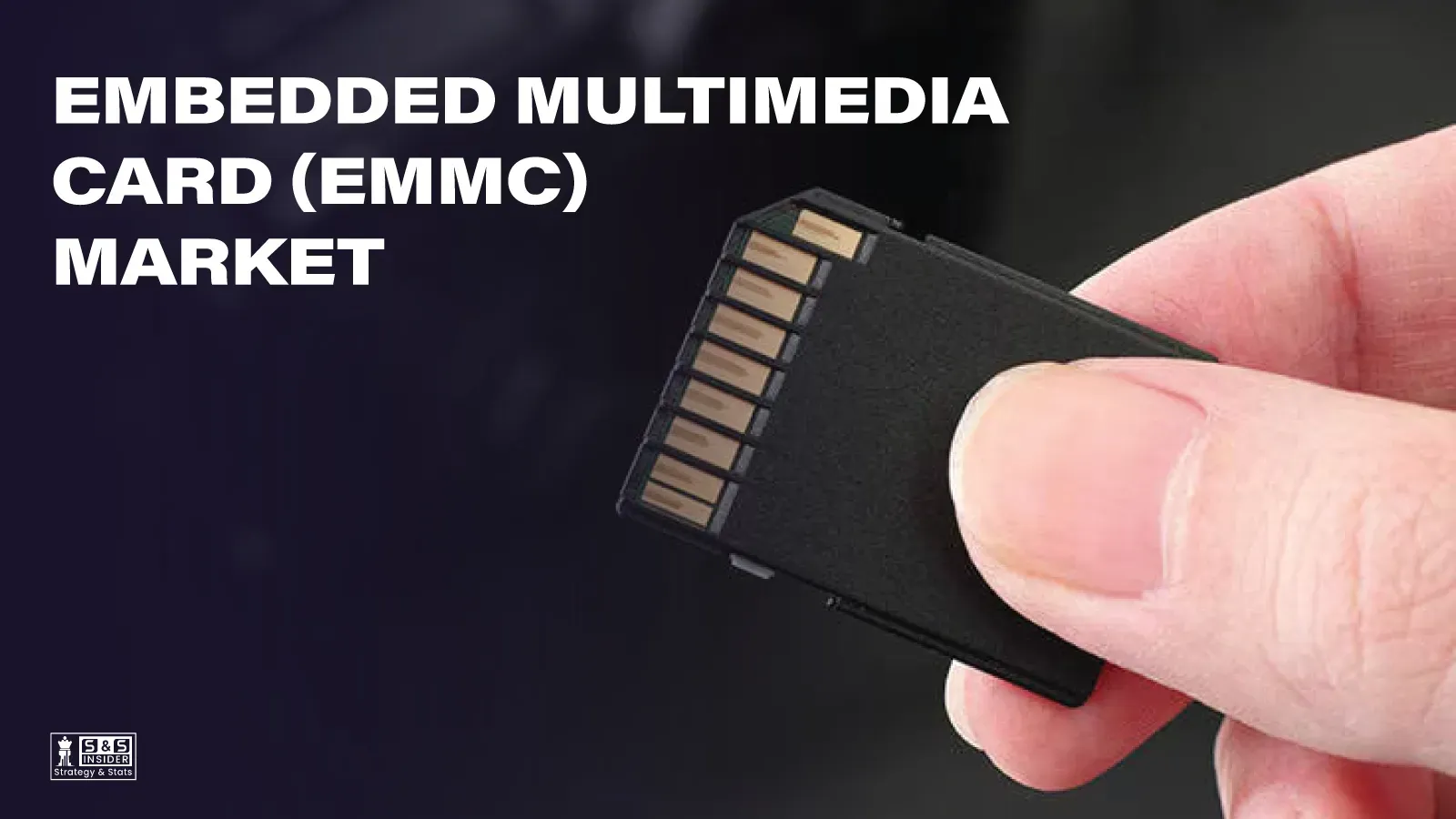
Embedded Multimedia Card (eMMC) market holds an important place in the semiconductor and embedded storage industry, offering miniature, reliable, and affordable flash memory options for many electronic devices. Despite new storage solutions, such as Universal Flash Storage (UFS), entering the premium products, eMMC remains the go-to solution for mid-range smartphones, tablets, smart TVs, industrial IoT devices, automotive infotainment devices, and many other embedded products due to the low cost, reliability, and easy integration.
As per SNS Insider, the Embedded Multimedia Card (eMMC) Market size is expected to grow from USD 8.51 billion in 2024 to USD 13.06 billion by 2032, registering a CAGR of 5.55% during the forecast period 2025–2032. The market growth is driven by the rising demand for embedded storage in consumer electronics, connected cars, industrial automation, and IoT ecosystem. More than 70% of mid-range smartphones still use eMMC as their primary storage interface. Among the trends that have greatly impacted this industry is the increasing use of eMMC in automotive infotainment systems, Advanced Driver Assistance Systems (ADAS), industrial edge devices, and intelligent manufacturing machines.
Gain Actionable Intelligence on the Embedded Multimedia Card (eMMC) Market - Request a Sample Report
Major Key Companies in the Industry Include:
1. Samsung Electronics
 Samsung Electronics leads the world in terms of flash memory technology and continues to be a prominent innovator within the embedded multimedia card space. The company provides superior eMMC storage products for smartphones, tablets, smart televisions, automotive devices, industrial products, and the Internet of Things (IoT). With its vast semiconductor fabrication capabilities, Samsung is able to provide outstanding high-performance, reliable, low-power-consumption embedded storage with a long lifespan. Samsung continues developing and implementing future NAND flash technology, improved controllers, and better manufacturing processes aimed at increased storage density and performance in data transfer.
2. Micron Technology
 Micron Technology is one of the world's top players in the memory manufacturing industry, known for providing reliable and quality storage products in consumer electronics, industrial automation, automotive systems and enterprise environments. The eMMC product range offered by Micron Technology is renowned for its reliability, robustness, and durability. Micron Technology has been consistently investing in automotive memories, Industrial IoT Storage and advanced NAND technologies. Micron Technologies' approach towards automotive reliability, wide operating temperature range, and higher endurance is aiding the growth of embedded memory usage in connected and autonomous cars.
3. Kioxia Holdings Corporation
 Kioxia Holdings Corporation has positioned itself as one of the key players in terms of development of flash memory technology and embedded storage solutions. Kioxia provides a broad line of eMMC solutions specifically targeted at automotive electronics, industrial automation, consumer electronics, networking devices, and embedded computing applications. Kioxia places special emphasis on durability, high performance, and adherence to strict industry standards in its solutions. Its newest eMMC solutions have been developed to meet tough automotive standards and serve such purposes as infotainment systems, telematics, navigation platforms and ADAS applications.
What is Driving the Future of the eMMC Industry?
As more embedded computing applications arise in consumer electronics, automotive, industrial automation, health care devices, and intelligent infrastructure, there will be a growing need for smaller and reliable storage devices. As premium phones are steadily moving to adopt UFS storage, eMMC continues to hold its ground in mid-range phones, IoT devices, embedded controllers, intelligent home appliances, and industrial machines since cost-efficiency, durability, and high performance are critical in such products.
Moreover, another key element that contributes to the industry growth is fast-growing number of connected cars and industrial IoT. New-generation vehicles need reliable embedded storage for infotainment, navigation, telematics, firmware, and ADAS, whereas industrial edge devices need durable storage for operations in challenging conditions. Improvements in NAND flash, storage controllers, thermal management, and storage capacity are helping suppliers meet these needs.
The Road Ahead
The future of the Embedded Multimedia Card (eMMC) market would depend on further innovation within the realms of flash memory technology, automotive electronics, industrial automation and IoT connectivity. While high-speed interfaces are expected to gain increasing popularity among high-end computing platforms, the eMMC would remain an integral part of the computing landscape providing reliable and efficient storage for billions of embedded devices around the globe. With connected devices getting smarter and proliferating in number, the eMMC technology would continue playing an important role in building the future of embedded computing.