The use of graphics processors is becoming transformed by means of artificial intelligence, cloud computing, gaming, and high-performance computing. In America, graphics processors are not used exclusively for gaming console anymore, rather they now support computing requirements of AI, data center, research, healthcare imaging, autonomous driving, and enterprise applications. The companies have invested a lot in the implementation of graphics processor technology owing to its advantages in terms of computing speed and efficiency.
Unlike conventional processing units, the latest graphics processing units offer enormous parallel computing power, which allows for better performance of AI algorithms, real-time rendering, simulation and data analysis. The increasing funding for generative AI, cloud computing, VR, AR and edge computing technologies is further boosting the demand for GPUs in the American market. The development of ray tracing, AI-enabled rendering and energy-efficient hardware architectures is widening the applications of GPUs.
According to SNS Insider, the U.S. Graphic Processor Market was valued at approximately USD 13.62 Billion in 2025 and is anticipated to further increase up to around USD 50.45 billion by 2035 with a CAGR of 14% during the forecast period. On a global level, the Graphic Processor Market achieved USD 46.01 billion in 2025 and will further reach USD 170.45 billion by 2035 with a CAGR of 13.99%.
Gain Actionable Intelligence on the Graphic Processor Market – Request a Sample Report
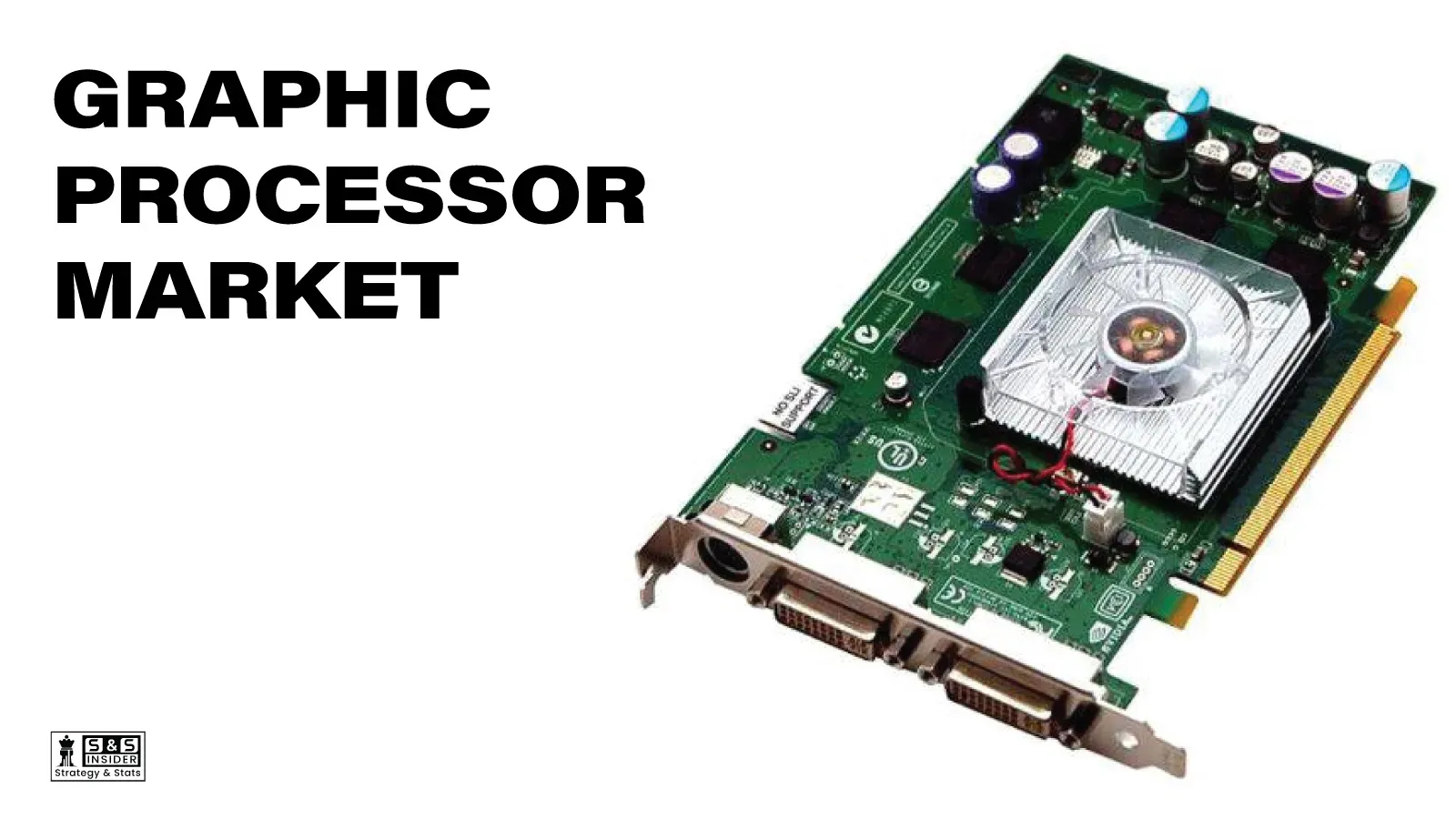
U.S. Graphic Processor Market Analysis
The US continues to be the world leader in graphics processors technology innovation owing to the dominance of industry titans like NVIDIA, AMD, Intel, Qualcomm and Apple. The US dominance in technologies like artificial intelligence, cloud computing, gaming, high performance computing and semiconductors research has made consistent demands for cutting-edge graphics processors. Ongoing investments in AI infrastructure, data centers, autonomous technology and edge computing, among others, will ensure that the United States maintains its dominance in graphics processors technology innovation and development.
While the CHIPS and Science Act keeps boosting domestic semiconductor manufacturing alongside promoting investment in cutting-edge computing capabilities and robust supply chains, on the other hand, the increased use of AI servers, GPU cloud services, machine learning frameworks and high-performance computing systems has created lucrative prospects for graphics processors manufacturers. The growing use of GPUs in finance, health care, scientific applications, simulations and autonomous driving is set to ensure sustained growth in the market.
Top 5 Leading Graphic Processor Companies
NVIDIA Corporation

NVIDIA has maintained its supremacy in the graphics processor market on a global scale because of its dominance in gaming GPUs, AI accelerators, professional visualization and data center computing. The RTX graphics chips, CUDA software environment, AI platform development, and high-performance computing from NVIDIA have become popular standards for machine learning, research work, enterprise AI implementations, and advanced graphics use cases. Ongoing innovations in GPU technology, AI infrastructure, cloud computing, autonomous computing, and accelerated computing have reinforced NVIDIA’s position as a technology leader across the globe, allowing companies to develop and deploy the next generation of AI and HPC workloads.
- In 2025, NVIDIA released its GeForce RTX 5090 graphics card that is built around the Blackwell architecture and is equipped with 92 billion transistors, 21,760 CUDA cores, 32 GB of GDDR7 RAM, and DLSS 4 with Multi-Frame Generation, allowing to provide AI-powered frame generation.
Advanced Micro Devices (AMD)

The company has increased its competitive strength through its constant innovations of Radeon graphics processors aimed at games, professional workstations, AI and high-performance computing use cases. With the company focusing on providing innovative GPU architectures, improved energy efficiency, and leading processing power, it is able to compete successfully in consumer and enterprise market segments. Through the continued investments in graphics technologies of the next generation, AI acceleration, data centers and scalable computing platforms, AMD is further increasing its market presence amid the growing demand for such products.
- In 2025, The Radeon RX 9070 XT from AMD was released, which was based on the RDNA 4 architecture and gave about 40 percent more ray tracing capability than its predecessor RDNA 3 architecture, besides including FSR 4 AI upscaling feature.
Intel Corporation

Intel has been increasing its footprint in the market for discrete GPUs and has been enhancing the graphical performance in its portfolio of computing products. Intel has been investing heavily in areas such as AI acceleration, graphics for gaming, cloud computing, high-performance computing, and developer software to improve its standing in the overall GPU market environment. Through advancements in graphical architecture, AI-driven computing and hardware-software integration, Intel is set to provide high-performing energy-efficient graphical technology solutions.
- In 2025, Intel introduced its Arc B580 graphics card with a core count of 20 Xe-cores and 12 GB of GDDR6 memory in its Battlemage architecture, providing competent performance in 1080p and 1440p gaming while also reaffirming Intel's dedication to the discrete graphics industry.
Qualcomm Incorporated
 Qualcomm has emerged as one of the premier providers of GPUs for smartphones, laptops, automobiles, and edge-AI devices. Their Snapdragon range of products features GPUs that incorporate cutting-edge technologies in order to provide capabilities for AI processing, mobile gaming, XR applications, and power-efficient computing. The company’s investments in AI-empowered mobile processors, automotive computing platforms, and new Snapdragon technology will allow the company to take advantage of growing demand for edge computing in the US.
Apple Inc.
 Apple is pushing forward with innovations in graphics processing, leveraging custom-built silicon used in Macs, iPads, and iPhones. The company’s unique approach to memory architecture and integrated GPU design provides powerful graphics at the same time as outstanding energy efficiency for creative professionals, developers, and enterprise-level users. Further development of the company’s AI and professional content creation capabilities and high performance computing on its custom chips will further spur GPU innovation.
What the Future of Graphic Processor Technology Holds?
Graphics processor technology in the future will revolve around AI, supercomputing, cloud gaming, autonomous cars, and enterprise applications of increasing sophistication. AI-driven rendering and ray tracing, virtualization, and graphics through the cloud will continue to reshape the computing experience of the consumer as well as that of professionals. Increasing investments in AI hardware, semiconductor production, memory technology and cloud data centers are anticipated to result in a great need for next-generation graphics processing units. This is amid increased use of graphics processor technology in healthcare diagnostics, simulations, robotics, finance modeling, digital twins and immersive technologies.
As firms within the United States continue with digital transformation and AI implementation at an increasing rate, graphics processors will continue being among the key technologies driving the future of computing. Those companies that will continue investing in AI innovations, semiconductors architectures, energy efficiency, and GPU platform scalability will be setting the future course for the U.S. graphics processor market.
The Road Ahead
The Graphic Processor Market has moved into a new era of growth because of the integration of artificial intelligence, cloud computing, and accelerated computing into almost all industries. GPU companies are now not limited to the development of gaming capabilities but have gone on to develop platforms that can enable generative AI, large language models, scientific computing, autonomous vehicles, cloud gaming, and real-time analytics.
United States is anticipated to be a leading player in GPU technology, backed by robust semiconductor investments, AI infrastructure buildup and increasing HPC needs. With companies moving towards upgrading data centers and using AI-enabled applications, next generation graphics processing units with enhanced memory capabilities, increased energy efficiency and optimized AI architecture will gain relevance. Companies that are working towards accelerating AI, building software platforms, incorporating cloud computing and developing latest architectures for GPUs can dominate in the upcoming innovation cycle and drive the future of Graphic Processor Market.