Rapid development in next generation electronics, electric vehicle (EVs), aerospace and renewable energy sectors has increased the need for advanced polymers in various applications. Among these, polyimide films have emerged as an essential material owing to their high temperature resistance, dielectric properties, mechanical strength and resistance to chemicals. As industries are moving towards designing compact, lightweight and reliable components, the importance of polyimide films as key material has been recognized.
Unlike the regular polymer films, the polyimide film has the capability of tolerating operating temperature up to 400°C continuously without affecting its dimensional stability and dielectric strength. This film is very ideal for applications in flexible printed circuits, semiconductor packaging, aerospace insulating materials, EV batteries, and high-frequency communication systems. Increasing investment in flexible electronics, 5G infrastructure, and electric vehicles is expected to bolster future market expansion.
According to SNS Insider, the value of the Polyimide Film Market was USD 2.92 billion in 2025, which is anticipated to grow to USD 5.97 billion by 2035, at a growth rate of 7.63%. The total market value is forecasted to be USD 3.14 billion in 2026, while the Asia Pacific is anticipated to remain the largest and the fastest growing region. The U.S. Polyimide Film Market size was recorded at approximately USD 0.620 billion in 2025 and is estimated to reach USD 1.27 billion by 2035.
Gain Actionable Intelligence on the Polyimide Film Market - Request a Sample Report
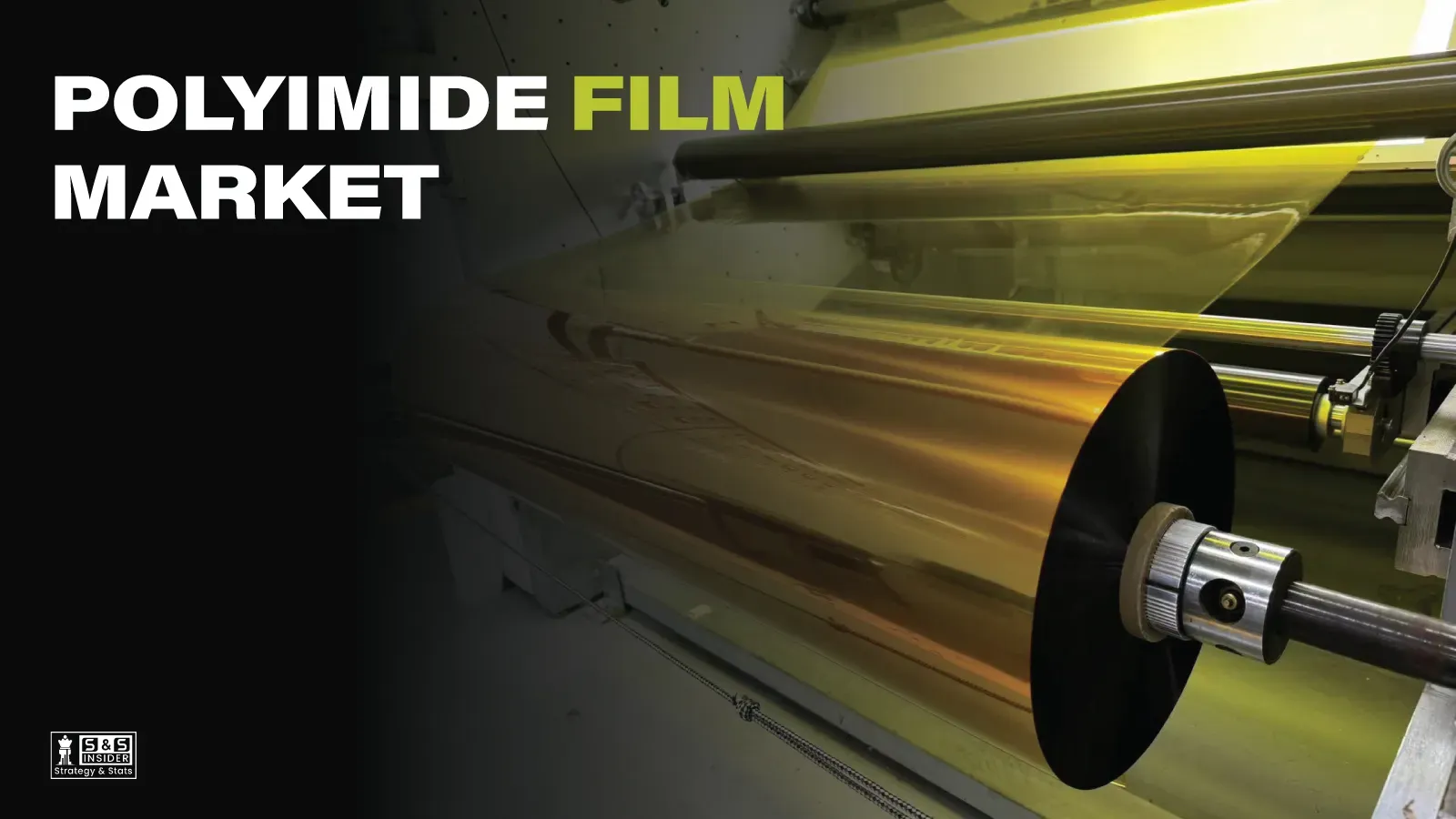
U.S. Polyimide Film Market Analysis
The demand for polyimide film remains on an upward trajectory owing to its suitability in applications where ordinary polymer films fail to perform under harsh conditions. Its use is advantageous due to its exceptional electrical insulation property, heat resistance, flexibility, and strength. Polyimide films are used in the manufacture of consumer electronics and are therefore majorly driven by consumer electronics. The International Data Corporation estimates the shipment of 1.4 billion smartphones, 170 million tablets, and 350 million laptops in 2025. Each of these consumer products requires the application of flexible printed circuits using polyimide films as substrates.
The United States remains another country that is contributing to the consumption of premium grade polyimide films. Increased investment in semiconductor fabrication through the CHIPS and Science Act of the U.S., together with vigorous activity in the aerospace, defense electronics, and electric vehicle manufacturing industries, have been pushing up demand for advanced polyimides that are used in semiconductor packaging substrates.
Top 5 Leading Polyimide Film Companies:
1. Kaneka Corporation
 Kaneka Corporation is one of the prominent producers of premium-grade polyimide films that can be utilized in electronics, flexible display technology and industries. The firm specializes in manufacturing advanced materials with enhanced thermal stability, dielectric properties and mechanical strength for future generation electronic gadgets. In 2025, Kaneka introduced its next generation colourless polyimide film which was to be used in flexible OLED display applications. The new product offers enhanced optical transparency as well as temperature stability during the manufacturing of displays.
2. Kolon Industries Inc.
 Kolon Industries has been considered as one of the top-notch producers of polyimide film which forms the core element used in flexible electronic products, automobiles, and industrial manufacturing operations. The films have been widely used in flexible screen devices, electronics parts, and high-quality insulation material. In the year 2025, Kolon increased the production capacity of polyimide films in South Korea because of the increasing demand for flexible OLED displays from their companies.
3. Ube Industries Ltd.
 Development of new materials like polyimide film that has very good properties and is used in various fields like electronic industry, semiconductors, and automobile industry is among the key activities of Ube Industries. Reliability of material and innovations in manufacturing process and high-performance polymers are the key focus areas of Ube Industries. Polyimide film from Ube Industries plays a very important role in these applications.
4. Taimide Tech Inc.
 The company produces superior quality films of polyimide which can be used in applications such as flexible printed circuits, semiconductor encapsulations, industrial electronics, and advanced communications. Taimide Tech has established itself as a key player in the value chain of electronics in Asia by focusing on specialty films. With its investments in production and material development, Taimide Tech has managed to cater to the increased demands from the markets of flexible electronics and semiconductors.
5. SKC Kolon PI
 SKC Kolon PI is one of the major companies that produce polyimide films for various products such as flexible printed circuit boards, OLED displays, and electric cars, among others. This company continues adding to its product line the range of advanced films needed for new applications because of the characteristics of lightweight, strength, and heat resistance. The knowledge of making specialty films will certainly come in handy in future developments in the electronic and automotive industries.
Future Outlook of the Polyimide Film Market:
Future expectations for the Polyimide Film Market are extremely bright as the demand for flexible circuits is growing among electronics manufacturers, semiconductor companies are working on high-end packaging and EV manufacturing is flourishing worldwide. The contribution of Flexible Printed Circuits to market sales was about 40% in 2025 and the share of the electronics industry in terms of end use was about 54%.
Some of the technological developments that are expected to promote the growth of the market include the use of low dielectric polyimide films in 5G communication systems, colorless polyimide films in flexible OLED display, insulating materials in batteries for electric vehicles, solar photovoltaics, and aerospace thermal insulating systems. Increased use in these high-value applications will aid in maintaining the premium products market throughout the forecast period.
It is attributed to the fact that the cost of manufacturing these films is relatively higher than that of other types of films because they are costly. However, advances in the field of specialty polyimide films will open up new possibilities within the industry. Given the current focus on thermal properties, reliability, miniaturization, and energy conservation, polyimide films will remain one of the most advanced materials out there.