Introduction:
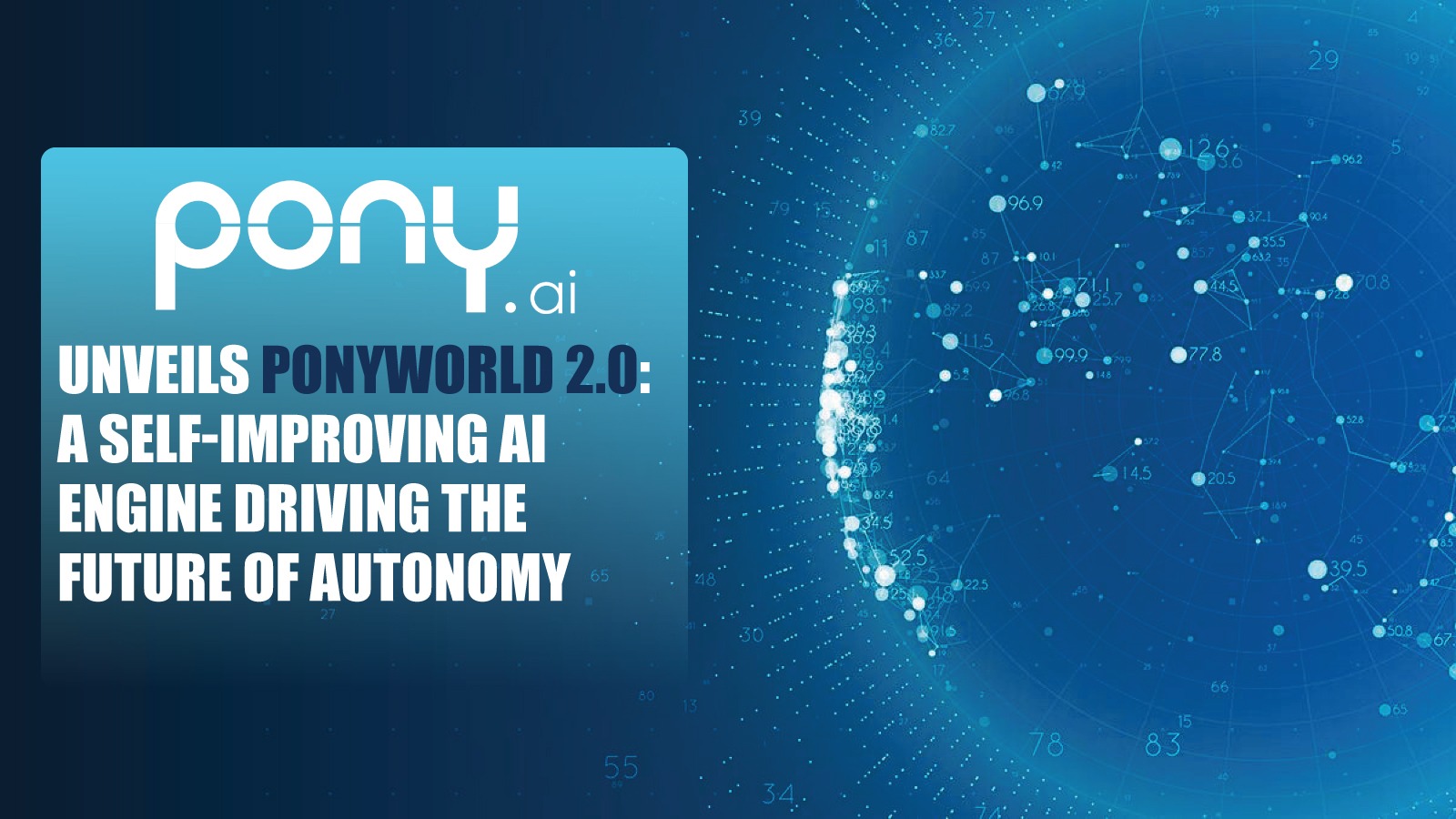
Autonomous driving is entering a transformative phase, where artificial intelligence is no longer just reactive but continuously evolving. Pony.ai has taken a major leap in this direction with the launch of PonyWorld 2.0, a next-generation physical AI engine designed to accelerate the development and deployment of self-driving vehicles.
This innovation reflects a shift from traditional rule-based systems toward dynamic, self-improving AI frameworks capable of learning from real-world environments at scale.
What is PonyWorld 2.0?
PonyWorld 2.0 is an advanced “world model” that serves as the core intelligence behind autonomous driving systems. It integrates perception, decision-making, and simulation into a unified framework, enabling vehicles to better understand and navigate complex real-world scenarios.
At the heart of Pony.ai’s technology strategy, PonyWorld works alongside its Virtual Driver system to power end-to-end autonomous driving capabilities. The upgraded 2.0 version introduces a self-improving mechanism, meaning the system continuously learns from both real-world driving data and large-scale simulations, significantly enhancing its adaptability and performance over time.
Moving Toward Self-Improving Physical AI:
One of the most significant aspects of PonyWorld 2.0 is its ability to function as a “physical AI engine.” Unlike conventional AI models that rely heavily on static datasets, this system actively interacts with real-world environments and refines its behavior through continuous feedback loops. This self-improving capability reduces the dependency on manual engineering and allows the system to handle rare or complex driving scenarios more effectively.
It also accelerates the development cycle, enabling faster iteration and deployment of autonomous driving solutions. By combining real-world data with simulated environments, Pony.ai is addressing one of the biggest challenges in autonomy: achieving scalability while maintaining safety and reliability.
As per https://www.snsinsider.com/reports/physical-ai-market-9007, the market is gaining strong momentum as advancements in robotics, computer vision, and edge AI enable machines to interact intelligently with real-world environments. Increasing adoption of autonomous systems across industries such as transportation, manufacturing, and defense is a key growth driver. Additionally, rising investments in automation, AI research, and intelligent mobility solutions are accelerating deployment. These systems combine perception, learning, and real-time decision-making, making them essential for next-generation technologies like autonomous driving.
Enhancing Autonomous Driving Capabilities:
PonyWorld 2.0 enhances multiple aspects of autonomous driving performance. Improved perception allows vehicles to better identify objects, predict movements, and interpret dynamic environments. Enhanced planning and control systems ensure smoother and safer navigation in both urban and highway settings.
The integration of simulation capabilities enables the system to test millions of driving scenarios virtually, reducing the need for extensive on-road testing. This not only improves efficiency but also helps uncover edge cases that are difficult to encounter in real-world conditions.
Together, these advancements contribute to a more robust and reliable autonomous driving system capable of operating in diverse and challenging environments.
Accelerating Robotaxi and Commercial Deployment:
The launch of PonyWorld 2.0 is closely aligned with Pony.ai’s broader goal of scaling autonomous mobility services, particularly robotaxis. The company has already made significant progress in commercial deployments, including obtaining permits for fully driverless operations in major cities and expanding its global footprint.
By enabling faster learning and continuous improvement, PonyWorld 2.0 supports the efficient scaling of robotaxi fleets. This is critical for achieving profitability and widespread adoption, as companies must balance performance, safety, and operational costs.
The technology also strengthens Pony.ai’s ability to collaborate with automakers and mobility platforms, further accelerating commercialization efforts.
Competitive Advantage in the Autonomous Driving Race:
The autonomous driving industry is highly competitive, with major players investing heavily in artificial intelligence, sensors, and software development. Pony.ai’s focus on a unified, self-improving world model gives it a distinct competitive edge.
Traditional approaches often rely on fragmented systems that require extensive manual tuning. In contrast, PonyWorld 2.0 offers an integrated solution that evolves over time, reducing complexity and improving efficiency.
This approach aligns with the broader industry shift toward AI-driven autonomy, where machine learning models play a central role in enabling scalable and reliable self-driving solutions.
Industry Implications and Market Impact:
The introduction of PonyWorld 2.0 highlights a growing trend toward AI-first architectures in autonomous driving. As the industry moves beyond early-stage development, the focus is shifting to scalability, cost efficiency, and real-world performance.
Self-improving AI engines like PonyWorld 2.0 have the potential to redefine how autonomous systems are built and deployed. They enable faster innovation cycles, reduce operational costs, and improve safety outcomes, making them a key driver of future growth in the sector.
This development also signals increasing convergence between artificial intelligence and physical systems, paving the way for broader applications beyond transportation, including logistics and smart cities.
Future Outlook:
Looking ahead, Pony.ai is expected to continue refining its AI models and expanding its global presence. The company’s ongoing investments in research, partnerships, and infrastructure position it well to capitalize on the growing demand for autonomous mobility solutions.
As regulatory frameworks evolve and public acceptance increases, technologies like PonyWorld 2.0 will play a crucial role in enabling large-scale deployment. The ability to continuously learn and adapt will be a defining factor in determining which companies lead the autonomous driving revolution.
Conclusion:
The launch of PonyWorld 2.0 marks a significant milestone in the evolution of autonomous driving technology. By introducing a self-improving physical AI engine, Pony.ai is addressing key challenges related to scalability, safety, and efficiency.
This innovation not only strengthens the company’s position in the competitive autonomous driving landscape but also sets a new benchmark for AI-driven mobility solutions. As the industry continues to evolve, technologies like PonyWorld 2.0 will be instrumental in shaping a future where autonomous vehicles become a seamless part of everyday life.