The market for process intensification in Europe is gaining pace as the use of compact reactors, advanced separation technologies, and modular manufacturing technology has become increasingly common among chemical, pharmaceutical, and petrochemical industries. With process intensification, more efficient production processes can be achieved with less equipment, thus contributing to Europe's initiative to achieve low-carbon industrial manufacturing.
Based on insights provided by SNS Insider, the Europe Process Intensification Market will be worth USD 1.10 Billion in 2025 while reaching USD 3.01 Billion in value by 2035 at an approximate CAGR of 10.80%. The growth of the Europe Process Intensification Market will be influenced by stringent EU environmental regulations, government initiatives for decarbonizing industries, and the consistent investment in energy-efficient chemical manufacturing processes. This comes on the heels of the global Process Intensification Market which will be valued at USD 3.80 Billion in 2025 before rising to USD 10.81 Billion in value by 2035 at a CAGR of 11.04%.
Gain Actionable Intelligence on Process Intensification Market – Request a Sample Report
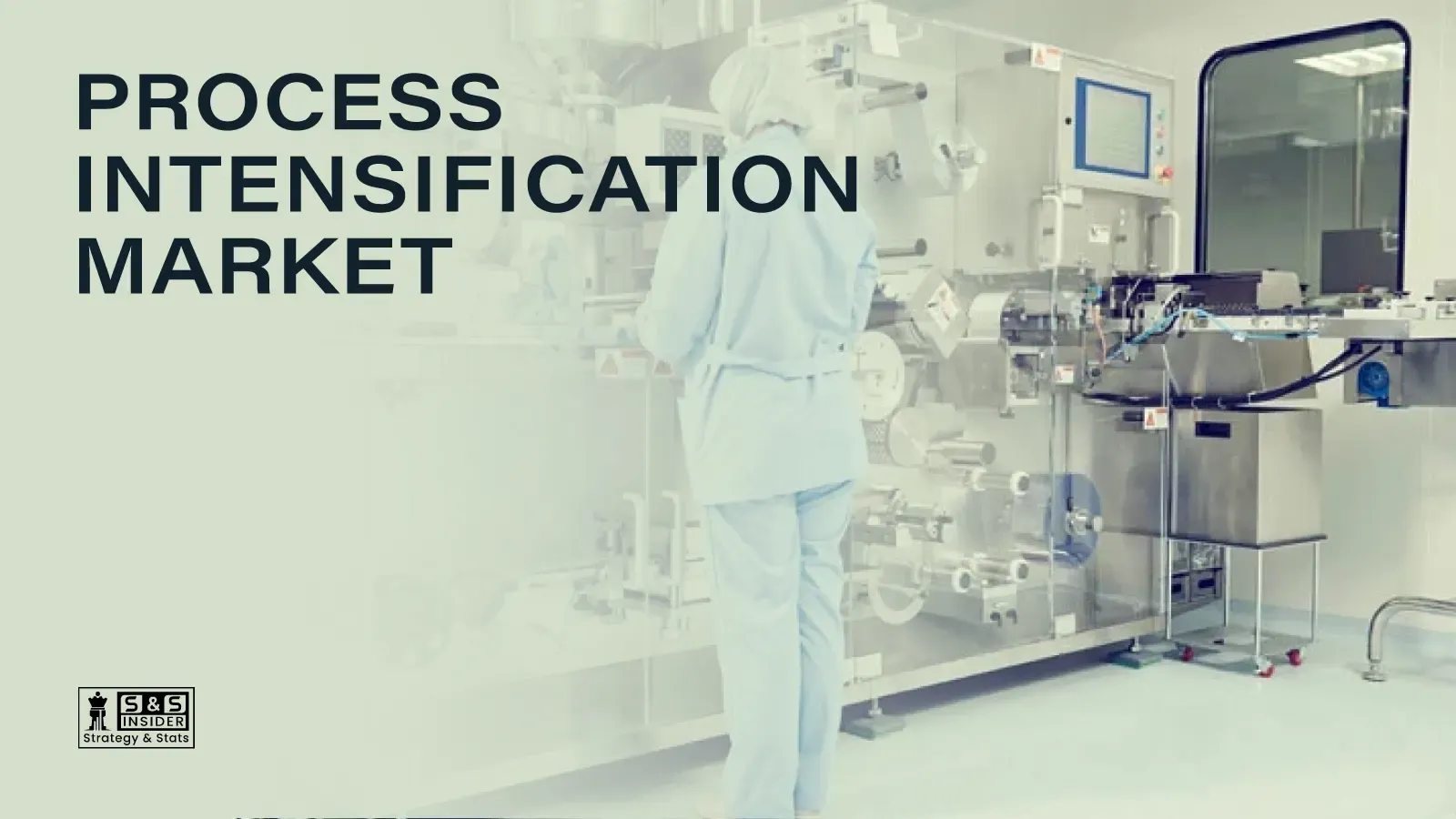
Why Europe Continues to Drive Demand
The Europe region continues to be a major one within the process intensification global market because of the tough environmental policies, strong sustainable manufacturing practices, and investment in energy-efficient chemical process equipment technology. Initiatives aimed at supporting industrial decarbonization, circular economy, and energy efficiency will ensure the long-term growth of the market.
Germany is the country with the highest demand for process intensification, as the country represents 22.80% of the total European revenue in 2025 due to the presence of the highly developed chemical and pharmaceutical industry and manufacturing and continued investments into the industrial processes.
Where European Investment Is Concentrated
- The technology adoption of microreactors accounts for a major part at 34.20% in 2025 due to higher efficiency of reactions, better heat and mass transfer properties, and high safety levels.
- The most rapidly growing type of equipment is advanced distillation systems expected to register a 11.36% CAGR on account of rising demand for separation equipment that consumes less energy and produces low CO2 emissions – which is the direct result of EU carbon prices policy.
- Chemicals are dominating in terms of applications (38.50%) and end-use (39.40%) markets in order to actively minimize the consumption of energy and generation of wastes in the manufacturing of chemicals in Europe.
- The fastest growing end-use market is pharmaceuticals due to the introduction of continuous manufacturing and microreactor technology for production of biologics and specialty drugs in Europe at a CAGR of 12.73%.
- The most rapidly growing core technology is membrane technology with a CAGR of 12.16%.
Regulatory and Strategic Momentum Shaping the Region
The planned acquisition by Honeywell of the Catalyst Technologies business unit of Johnson Matthey for a consideration of £1.8 billion announced in May 2025 greatly increases its offerings of catalyst and process technologies for refining, petrochemical production, and the production of sustainable chemicals – an acquisition which has direct implications for the European & Global chemical manufacturing companies looking for process intensification technologies which will help decrease their carbon emissions and enable the transition to renewable energy.
It is the very environment in Europe, where industrial decarbonization and circular economy policies prevail, which has fostered such acquisitions.
Companies Driving Europe's Process Intensification Industry
Sulzer Ltd.
 Sulzer extended its process intensification solutions in 2025 with high-end separation and mixing technologies to boost productivity and decrease energy usage in sustainable chemical processing. Being a Switzerland-based company with strong expertise in European industrial chemistry, the portfolio expansion at Sulzer is expected to help the region in the development of low carbon-intensive separation and mixing solutions in chemical manufacturing.
GEA Group
 In 2024, GEA presented new process intensification technologies with high performance for application in food and pharmaceutical industries to enable improved manufacturing efficiency and reduced equipment size. The company's innovations in compact processing technology strengthen Germany's position as the leader in the process intensification market in Europe in terms of revenue share, especially within the rapidly growing pharmaceutical end use segment.
Honeywell International
In 2025, Honeywell highlighted its latest development in the field of process intensification technologies, which help the chemical companies increase energy efficiency and optimize the performance of plants via the use of miniaturized process solutions. The addition of Johnson Matthey Catalyst Technologies is expected to boost Honeywell's efforts in the field of process intensification technologies within the European chemical industry.
Other established players active in Europe include Alfa Laval, Ehrfeld Mikrotechnik BTS, Buss ChemTech, Linde plc, and SGL Carbon.
Market Dynamics and Outlook
Growth Drivers
- Stringent EU environmental regulation pushing manufacturers toward compact, energy-efficient processing technology
- Strong government support for industrial decarbonization, circular economy practices, and energy efficiency
- Rising adoption of digital process optimization and AI-based process control across European manufacturing
Restraints
- High initial capital investment required for advanced reactors and integrated processing equipment
- Technical complexity of process design, scale-up, and integration, limiting adoption among small and medium-sized manufacturers
Opportunities
- Growing adoption of modular manufacturing, smart factories, and Industry 4.0 technologies across European industrial facilities
- Expanding investment in specialty chemicals and pharmaceutical manufacturing, supporting demand for compact, sustainable production systems
Manufacturers that combine advanced separation technology with digital process optimization capability are best positioned to capture growth across Europe's process intensification industry through 2035.