
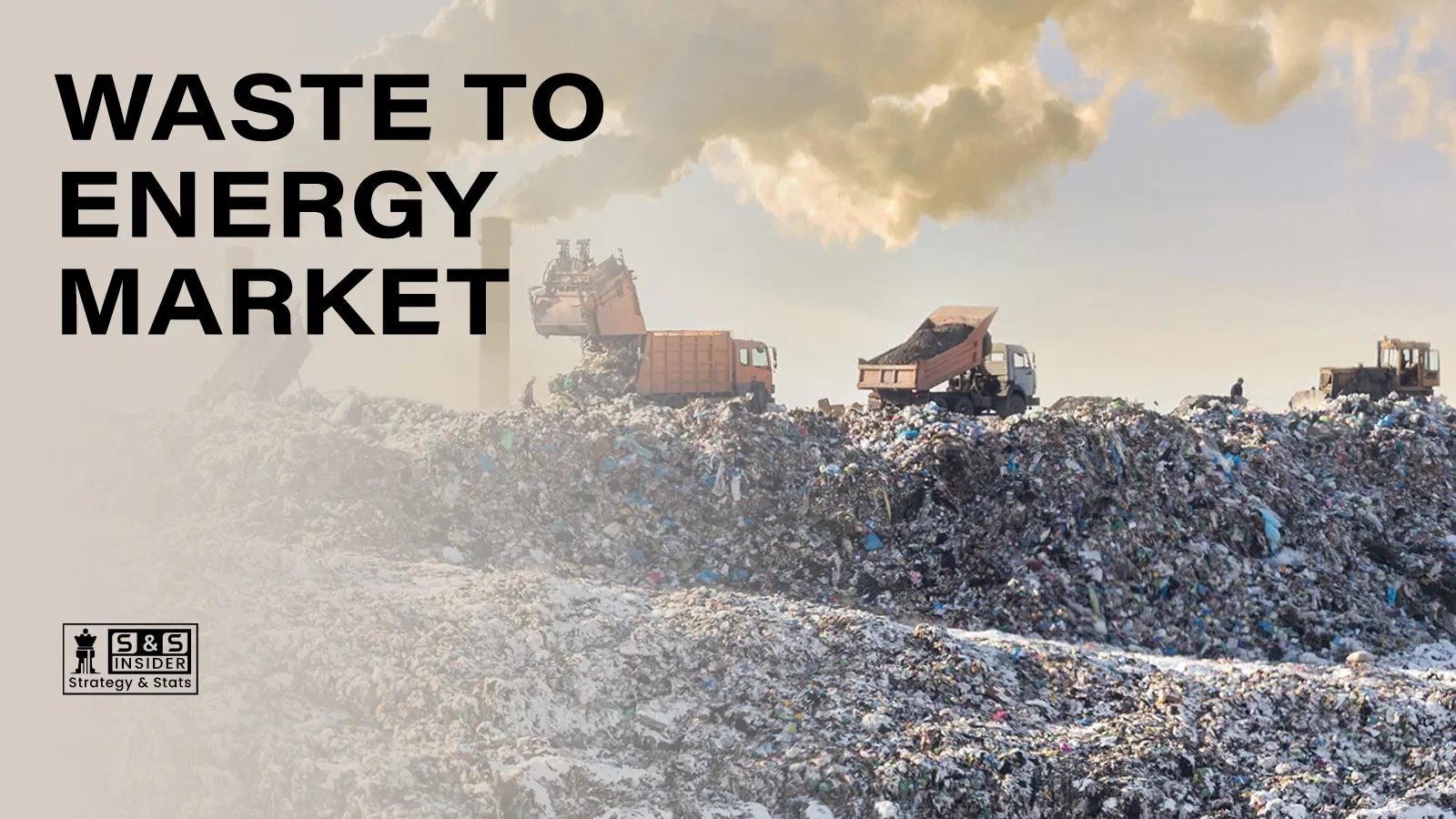
The Waste to Energy Market was worth USD 39.35 billion in 2025 and is expected to touch USD 56.14 billion in 2035, exhibiting a CAGR of 3.64% from 2026-2035. The factors driving the growth of the market include rising municipal waste generation, stringent landfill diversion policies, government policies favoring renewable energy sources, and ongoing investments in innovative waste treatment technologies. Waste to energy is now an important part of infrastructural development due to sustainability and energy security objectives of the nations.
Due to increasing municipal solid wastes, restrictions on landfills, and requirement of renewable energy sources, there is an increasing use of waste-to-energy technologies all over the world. Increasingly, the government and municipalities have started moving away from conventional techniques of waste management and adopted advanced techniques to turn waste into energy using electricity, heat, and fuels for transportation purposes. Advances in gasification, biomethane production, and combustion have played a major role in the process.
Gain Actionable Intelligence on the Waste to Energy Market – Request a Sample Report
Key Players
Major companies operating in the global Waste to Energy Market include Mitsubishi Heavy Industries, Ltd., Waste Management, Inc., A2A S.p.A., Veolia Environnement S.A., Hitachi Zosen Corporation, MVV Energie AG, Martin GmbH für Umwelt- und Energietechnik, Babcock & Wilcox Enterprises, Inc., Zhejiang Jinjiang Environment Holding Co. Limited, SUEZ Group, Xcel Energy Inc., Wheelabrator Technologies Inc., Covanta Holding Corporation, China Everbright International Limited, Keppel Infrastructure Holdings Pte. Ltd., Doosan Enerbility Co., Ltd., Ramboll Group A/S, Reworld Waste, LLC, CNIM, Green Investment Group Limited, and other regional infrastructure providers.
Strategic Developments & Industry Innovations
- December 2024: Arc Ento Tech secured USD 5 million to develop three waste-to-energy facilities in Sydney using biological and mechanical treatment technologies.
- December 2023: India's Rourkela Municipal Corporation commissioned a bio-methanation facility capable of converting organic waste into electricity and organic manure.
- 2025: Veolia expanded its energy-from-waste portfolio across Europe to support municipalities pursuing sustainable waste management and renewable power generation.
- 2024: Hitachi Zosen continued advancing gasification and biological wastewater treatment technologies for higher energy recovery and lower emissions.
- Waste-to-energy facilities are increasingly integrating advanced gasification, biomethane production, AI-enabled monitoring, and emissions control systems to improve efficiency and environmental performance.
Top Players Driving Innovation in the Waste to Energy Market
1. Veolia Environnement S.A.: Strengthening Integrated Waste Recovery
 Veolia is among the best in the world when it comes to providing environmental services in smart waste management through its waste-to-energy plants that generate power from municipal solid waste. Through investments in effective combustion systems, recycling and emission-reducing technologies, Veolia enables cities to rely less on landfills for waste disposal.
2. Hitachi Zosen Corporation: Advancing High-Efficiency Waste Processing
 Hitachi Zosen has built its reputation with its capability in gasification, combustion, and biological waste management technologies. Hitachi Zosen has continued to invest in future generation technologies for energy recovery which are efficient, clean, and will help municipal governments generate maximum renewable energy from the waste.
3. Covanta Holding Corporation: Expanding Renewable Energy Infrastructure
 Despite the rise of renewable energy providers in the market, Covanta continues to be one of the significant companies offering energy from waste technologies in North America. The facilities operate by producing electricity from the municipal solid waste while recycling the reusable components of the waste.
How the Waste to Energy Market Is Transforming Sustainable Resource Recovery
Waste-to-energy technology is revolutionizing waste management through the utilization of municipal, industrial, and agricultural waste into useful energy sources without relying on landfills. Generation of electricity remains the primary application for waste-to-energy technology, generating more than 71% of revenues in 2025, while transport fuels are the most rapidly expanding source of energy produced due to low-carbon fuels being preferred by many industries.
At the same time, the plasma-arc gasification becomes the fastest-growing technology due to higher energy efficiency and the capability to recover additional useful materials. As the capacity of landfills decreases and renewable energy goals become more stringent, investment in waste conversion technologies is likely to grow throughout the next decade. Improvement in technologies such as gasification, biomethane, plant monitoring, and emission controls will increase efficiency further.



