
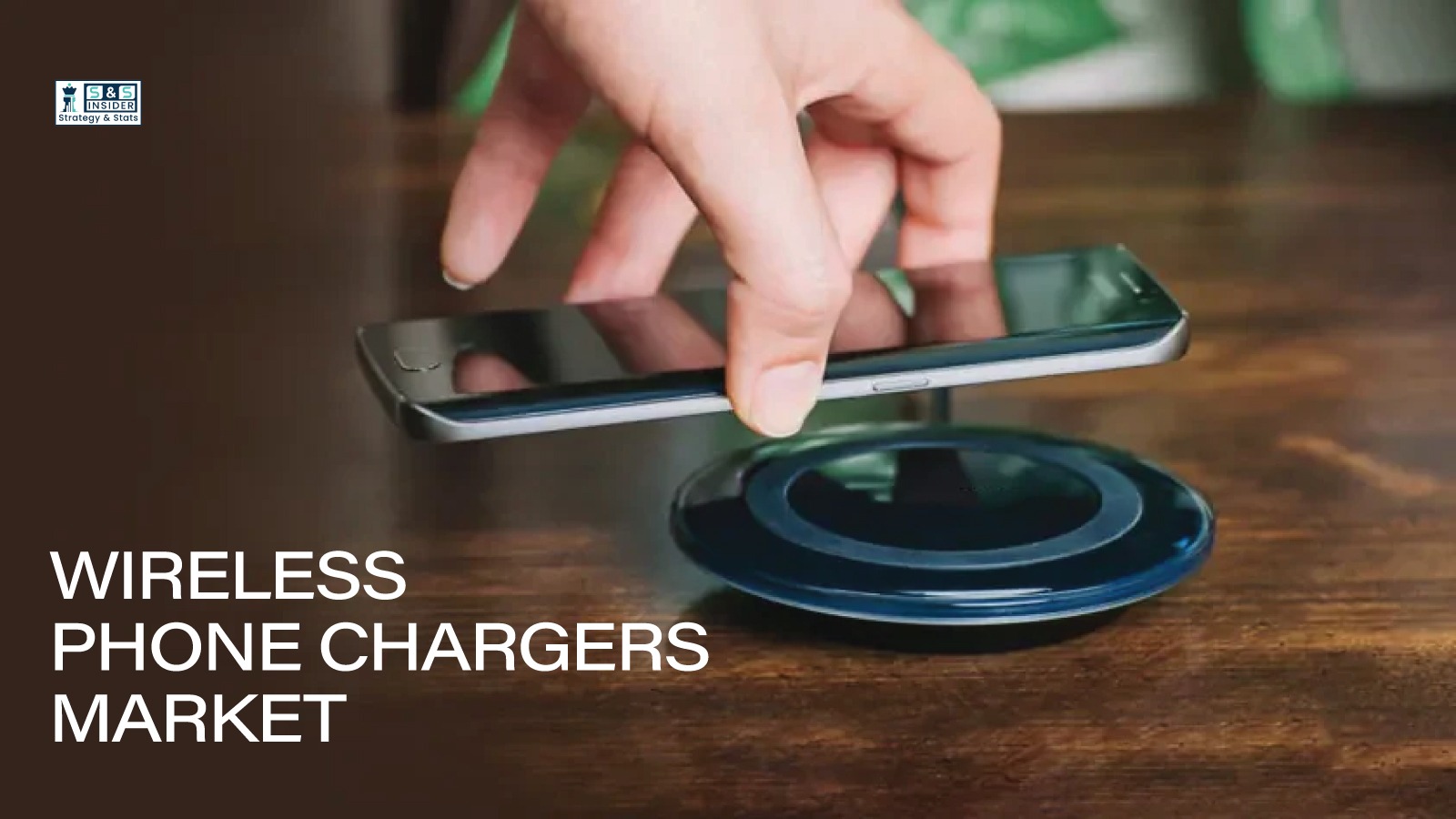
The wireless phone chargers market is experiencing immense growth propelled by increasing smartphone penetration, easy adoption of fast wireless charging technologies and growing preference for convenient cable-free solutions among consumers. Continued innovation in wireless charging standards (e.g., Qi and Qi2) improve interoperability, higher power levels that enable increased efficiency, multi-device/FOD functionality support which will see the continued proliferation of WPT from mainly consumer markets expansion into residential/IoT & commercial applications as well automotive public Infrastructure. Globally market expansion is further boosted due to the wireless charging being integrated from smart homes, connected vehicles and offices, airports & hospitality environments.
As per SNS Insider, the wireless phone chargers market was valued at USD 4.74 billion in 2025 and is projected to reach USD 19.12 billion from a year-on-year basis with growing at CAGR of also according to forecast period (2026-2035). Few of the major factors which are expected to drive growth in global wireless charging market include rapid deployment of smartphones equipped with these technologies along with rapidly expanding IoT ecosystem coupled continuous development & innovation in fast-charging technology among telecom operators around the world.
Top 5 Wireless Phone Charger Companies Leading the Market
1. Apple Inc.

The portfolio of wireless charging for Apple Inc. includes a number of devices and accessories of the MagSafe line such as MagSafe Charger, Duo Charger, Battery Pack, and accessories designed to charge several devices simultaneously. The emphasis is made on magnetic alignment, efficiency, and integration in the ecosystem of iPhones, AirPods, and Apple Watches.
In 2025, Apple extended its MagSafe family by certifying Qi2 at 25W for faster charging and better interoperability with third-party devices and accessories.
2. Samsung Electronics

The range of wireless charging from Samsung Electronics consists of fast wireless charging pads, duo and trio chargers, in-vehicle wireless charging and multi-device chargers. Samsung Electronics concentrates its efforts on achieving superior results in fast charging, compatibility within its ecosystem and convenience in charging technology.
During 2025, Samsung widened its Qi2 charging ecosystem by producing Qi2 certified wireless chargers along with the latest generation of magnetic 3-in-1 wireless chargers which would be compatible with their Galaxy range of products. Additionally, they produced new fast charging chipsets which could charge at 50W speed.
3. Qualcomm Technologies

The company provides a comprehensive array of wireless power management chipsets, Quick Charge technologies, wireless charging design references, and high-end connectivity solutions that support Qi and fast wireless charging platforms. The technologies provide effective and seamless power transfer, thermal management, and compatibility of power systems among smartphones and related accessories.
In 2025, Qualcomm launched Quick Charge 5+ technology, which is smart and efficient in delivering power and optimizing fast wireless charging capability.
4. Xiaomi Corporation
Xiaomi Corporation provides a range of products in wireless charging which includes Mi Wireless Charging Pads, Magnetic Wireless Power Banks, multiple device charging docks, in-vehicle wireless chargers, and fast wireless charging innovations for all Xiaomi and Redmi phones.
In 2026, Xiaomi introduced several new wireless charging products worldwide such as the UltraThin Magnetic Power Bank 5000 15W which incorporates features like thermal efficiency, magnetic alignment, and compatibility with Xiaomi, Apple, Samsung, and Pixel devices.
5. Belkin International

Belkin International provides a range of top-of-the-line wireless charging solutions ranging from BoostCharge charging pads to Qi2-enabled magnetic chargers, 3-in-1 charging docks, portable travel chargers, wireless power banks, and wireless charging products for automobiles that are fully compatible with Apple, Samsung, and other Qi-enabled smartphones.
In 2025, Belkin announced the introduction of Qi2 certified UltraCharge Wireless Charging Solutions capable of providing magnetic alignment, ChillBoost technology, and 5 times faster charging speeds than any other solution for future smartphones.
Wireless Phone Chargers Shaping the Future of Smart Connectivity:
Wireless phone chargers are quickly becoming a must-have accessory in this modern digital world by providing conveniently efficient and decluttered charging experiences. The integration of smart voice assistants into smart homes, automobiles as well as office and public infrastructure is redefining how consumers interact with connected devices.
And with ongoing innovations in fast battery charging technologies, magnetic-guided systems to align devices for optimum performance and charges across device ecosystems it seems wireless approval will see use accelerate a lot more than the next decades. With the continuous expansion of global smartphone usage and connected environments, wireless phone chargers will continue to be one of the key components in smart electronics ecosystem innovations.



