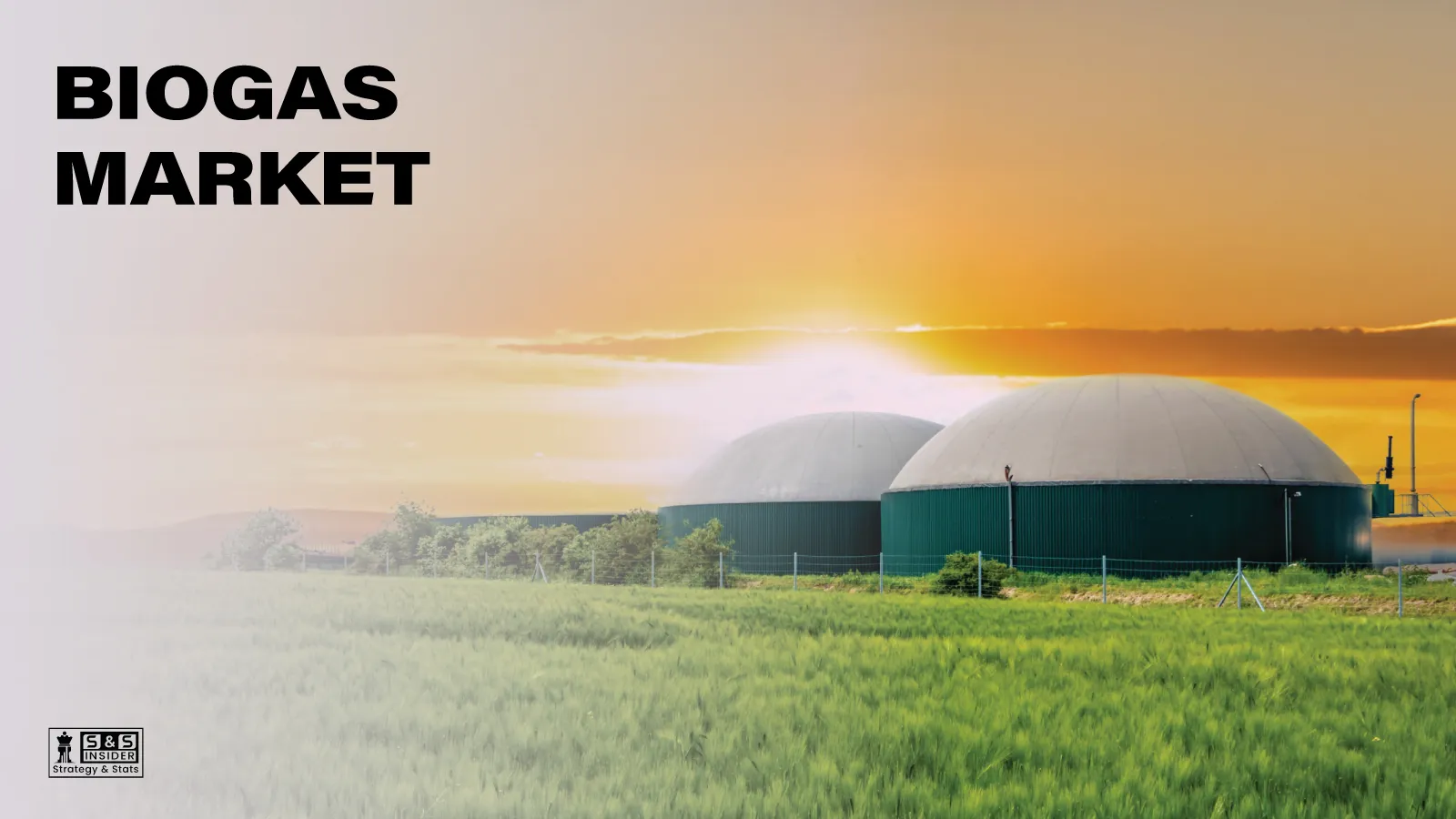
Growing biogas industry in Europe is due to increasing investment from governments, utilities, agricultural operators, municipalities and industrial companies for renewable energy, waste recovery and low-carbon fuels Biogas generated from agricultural residues, animal excreta, food waste, sewage and other organic materials offers a useful pathway for transforming waste to electricity, heat, biomethane and transport fuel. This integrated renewable energy generation and associated circular waste management is reinforcing biogass strategic contributions to national decarbonization programs across Europe.
The Europe Biogas Market held a value of USD 30.22 billion in 2025, holding a share of 40.8% of the total global biogas market revenue and is expected to be worth USD 48.56 billion by 2035 at a CAGR of 4.80% during the forecast period 2026-2035. The driving factors behind the growth of the European biogas market are the increasing demand for renewable energy sources, positive government policies and decarbonization, increasing investment in anaerobic digestion infrastructure, and the growing use of biogas and biomethane as an alternative to natural gas. At the global level, the Biogas Market held a value of USD 74.06 billion in 2025 and is expected to reach USD 120.54 billion by 2035, at a CAGR of 5.0% from 2026-2035, with Europe being the largest regional market.
Gain Actionable Intelligence on the Biogas Market – Request a Free Sample Report
Why Europe Leads the Global Biogas Industry
One of the most mature biogas ecosystems worldwide has developed in Europe, supported by demand for alt fuels, carbon-emission reduction initiatives, renewable-energy policies and a-developed ag & waste-man infrastructure. The financial incentives offered by the governments as well as the policies in favor of the promotion of green energy technologies have been strengthening increased biogas deployment across some of larger European economies.
Germany continues to be a substantial contributor toward regional demand, comprising about 24.15% of Europe’s biogas revenue in 2025. We have existing large-scale biogas production supported by an extensive agricultural base and established waste management sector. Italy continues its expansion led by government decarbonisation, the UK and France add further significant incremental demand as Europe sustains leadership.
Organic Waste Remains the Core Feedstock
The overall biogas market was dominated in 2025 by organic residue and waste, which accounted for around 77.0% Istanbul share. Agricultural residues, animal manure, food waste management and municipal organic waste continue to be plentiful and especially well-suited for anaerobic digestion, offering biogas operators a stable and relatively low-cost feedstock base.
Energy crops are likely to grow at a higher rate, with an estimated CAGR of 8.93%. Crops including corn, silage and grasses are excellent candidates to supply raw feedstock that is on average higher in energy yield per unit area with more stable feedstock quality, making this route practical where dedicated biogas production systems are economically disposable.
Biomethane Is Expanding Europe’s Commercial Opportunity
Of utmost importance in terms of growth for the European biogas sector is the upgraded processing of raw biogas into biomethane. Biogas can be transformed into a higher-grade renewable gas by removing carbon dioxide, hydrogen sulphide, moisture and other impurities which makes it usable for more general energy purposes.
In the wider market, vehicle fuel and renewable natural gas is the application category that will grow most quickly with a projected CAGR of 8.58%. This is especially pertinent as governments and energy companies across Europe continue to explore alternatives to traditional fossil fuels, looking for new sources of homegrown renewable gas. In 2025, electricity generation continued to be the leading application for hydrogen generation with substantial revenue share of around 34.3%.
Technology Development Is Improving Biogas Efficiency
The biodigesters segment accounted for the highest share in 2025 due to its fastest growing technology sections, with a market share of around 58.1% overall. Their long usage duration through agricultural, municipal, and industrial uses still supports their extensive deployment.
Segmentation of the global biogas market is based on technology in which waste water digesters are anticipated to register highest growth at around 9.0% CAGR during the forecast period. Anaerobic digestion can therefore be integrated into wastewater treatment facilities, enabling municipalities to reduce their total sludge volume while also recovering renewable energy and thereby unlocking a further opportunity for European cities which are looking to become more resource efficient and cut waste-management emissions.
Companies Supporting Europe’s Biogas Expansion
EnviTec Biogas AG
 is expanding its biomethane upgrading technology to agricultural and municipal customers looking for renewable natural gas production from an existing biogas facility. The commercial merits of upgrading conventional biogas to high-grade biomethane for a broader range of energy applications is clearly increasing, and the company’s attention on technology upgradation highlights that point very well. EnviTec's initiatives place the company firmly inside a growing European trend of matching renewable gas production to more sustainable commercial use of agricultural or municipal waste.
Hitachi Zosen Inova AG
 has further developed waste-to-energy and anaerobic digestion technologies for official use. It has a tech stack supporting customers interested in integrated organic waste management and biogas production. Integrated approaches to design systems supplying bio-logs of waste treatment include energy generation from renewables, and these solutions are becoming more relevant for municipal infrastructure planning and long-term decarbonization strategies that target urban and regional circular waste systems in the next few years.
ENGIE SA
 is one of the core companies featured in the biogas competitive landscape Europe and global. ENGIE is in the biomethane production, anaerobic digestion, renewable energy integration and organic waste recovery industry with companies such as Bright Renewables, PlanET Biogas Group, SUEZ, Weltec Biopower, Air Liquide Nature Energy Biogas Gasum DMT Environmental Technology.
Market Challenges and Future Outlook
However, the long-term potential is strong and,for advanced biogas facilities to deploy more quickly than most currently planned with high initial capital requirements limiting deployment. Capital expenditures related to anaerobic digestion system, upgrading of intestate equipment, supporting infrastructure and operation management like facilities can put a dent in the pocket. Technical complexity also continues to be an issue since Agri-Tech biogas production relies on homogeneity of the feedstock and a skilled approach to process management.
Europe will remain one of the largest biogas markets globally through 2035 due to growing demand for renewable energy, increased pressure on sustainable waste management and biomethane production for injection into gas grids, as well as growing decarbonization initiatives which should provide a continued source of investment. Over the region, Germany, Italy, France and the UK are predicted to continue as key contributors while further technological advances in anaerobic digestion and gas upgrading should bolster biogas's commercial potential.