
Endometriosis Diagnostic Biomarker & Emerging Therapeutics Market Report Scope & Overview:
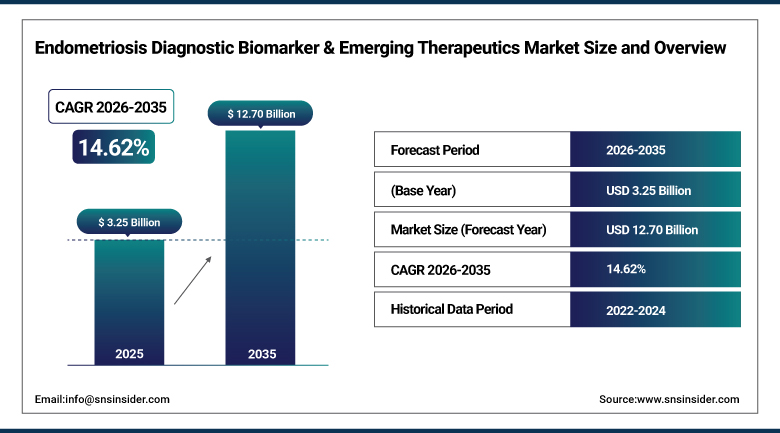
The Endometriosis Diagnostic Biomarker & Emerging Therapeutics Market was valued at USD 3.25 billion in 2025 and is expected to reach USD 12.70 billion by 2035, growing at a CAGR of 14.62% from 2026–2035.
The endometriosis diagnostic biomarker & emerging therapeutics market is witnessing robust growth in the global market owing to increasing prevalence of endometriosis and delayed diagnosis. Rising investments in biomarker discovery and precision medicine are accelerating innovation. Growing clinical research activities are supporting development of non-invasive diagnostic solutions. Pharmaceutical companies are focusing on targeted therapeutics and hormone-sparing treatment approaches. Rising demand for early disease detection, personalized therapies, and improved patient outcomes is driving market expansion. Increasing collaborations between biotechnology firms, diagnostic developers, and research institutions are further accelerating market adoption.
As per the data available through WHO, the global prevalence of endometriosis among women and girls of reproductive age ranges around 10%, which includes about 190 million people. It takes around 7 to 10 years for endometriosis to be diagnosed because of symptom overlap and invasive diagnostic techniques that are required. Both NIH and FDA support new diagnostic and therapeutic biomarker studies for endometriosis.
To Get more information Endometriosis Diagnostic Biomarker & Emerging Therapeutics Market - Request Free Sample Report
Endometriosis Diagnostic Biomarker & Emerging Therapeutics Market Trends:
-
AI adoption is contributing to improved methods of biomarker identification and personalized diagnostics in endometriosis cases.
-
Multidisciplinary omics tools are contributing to advancements in molecular diagnostics and precision medicine for endometriosis treatment.
-
Healthcare IT tools are facilitating advanced data analysis and clinical decision-making for endometriosis.
-
Pharmaceutical involvement is contributing to the development of targeted therapies for managing endometriosis.
-
Biomarker-based diagnosis is becoming significant for early and noninvasive disease diagnosis.
-
Collaborations between clinicians are advancing innovation in novel endometriosis treatment options.
U.S. Endometriosis Diagnostic Biomarker & Emerging Therapeutics Market Outlook:
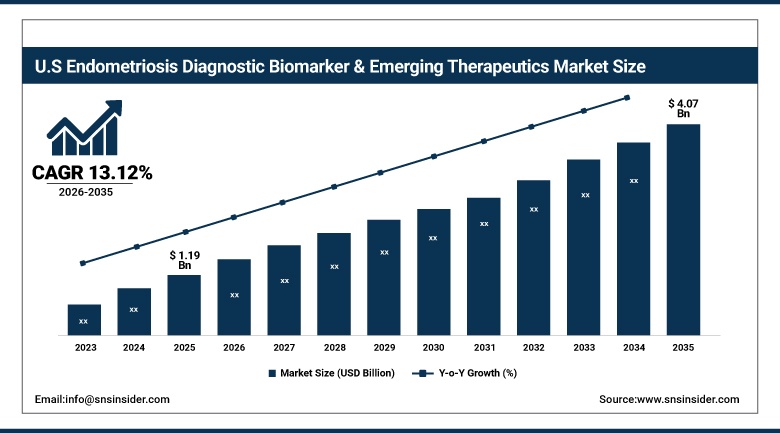
The U.S. Endometriosis Diagnostic Biomarker & Emerging Therapeutics Market was valued at USD 1.19 billion in 2025 and is expected to reach around USD 4.07 billion by 2035, growing at a CAGR of 13.12% from 2026–2035.
The U.S. endometriosis diagnostic biomarker & emerging therapeutics market is expanding steadily owing to strong investments in women's health research. Increasing prevalence of endometriosis and demand for earlier diagnosis are supporting market growth. Rising adoption of biomarker-based diagnostic technologies is driving implementation across healthcare institutions. Growth in targeted therapeutics and precision medicine approaches is further accelerating demand. Pharmaceutical and biotechnology companies are focusing on innovative drug development and companion diagnostics. Increasing clinical trials, regulatory support, and research collaborations are strengthening market penetration.
WHO estimates that endometriosis affects 10% of women and girls of reproductive age and about 190 million people worldwide. The U.S. CDC and NIH estimate 6.5 million women to be affected by the disease. It is estimated that there are diagnostic delays between 7 to 10 years. FDA and NIH are focusing on the development of precision medicine, use of biomarkers in diagnosis, and clinical trials in order to improve early diagnosis.
Endometriosis Diagnostic Biomarker & Emerging Therapeutics Market Segment Analysis:
-
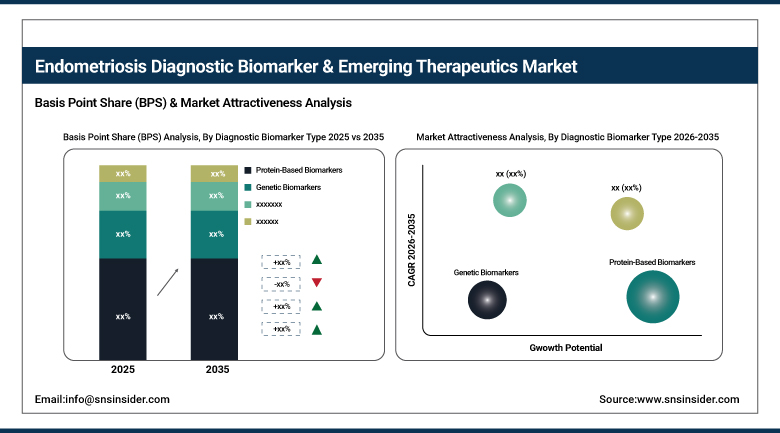
By Diagnostic Biomarker Type, protein-based biomarkers dominated the market with 38.50% share in 2025; while genetic biomarkers are the fastest growing segment with CAGR of 17.75% during 2026 to 2035.
-
By Drug Type, hormonal therapies dominated the market with 52.60% share in 2025; while emerging targeted therapeutics is the fastest growing segment with CAGR of 24.53% during 2026 to 2035.
-
By Drug Class, GnRH agonists dominated the market with 31.80% share in 2025; while GnRH antagonists are the fastest growing segment with CAGR of 20.43% during 2026 to 2035.
-
By End User, hospitals dominated the market with 44.10% share in 2025; while specialty gynecology clinics is the fastest growing segment with CAGR of 20.44% during 2026 to 2035.
By Diagnostic Biomarker Type, protein-based biomarkers dominated the market, while genetic biomarkers are the fastest growing segment.
Protein-based biomarkers segment led the endometriosis diagnostic biomarker & emerging therapeutics market in terms of revenue in 2025, owing to substantial clinical research proving that protein biomarkers are used to diagnose endometriosis. In addition, their ability to be tested through blood tests makes them more applicable clinically. Availability of advanced technology for protein studies and physicians’ inclination towards reliable diagnostic markers further reinforced the market leadership of the segment.
Genetic biomarkers segment will witness the fastest CAGR during 2026-2035. The factors fueling the growth of the segment include increasing investment in genomic studies and the development of precision medicine for the management of endometriosis. Improvements in next-generation sequencing technologies have made it easier to identify genetic variations associated with the disease. Moreover, increased demand for personalized diagnostic techniques is driving the growth.
By Drug Type, hormonal therapies dominated the market, while emerging targeted therapeutics is the fastest growing segment.
The hormonal therapies segment held the dominated revenue share in the endometriosis diagnostic biomarkers & emerging therapeutics market in 2025. This is due to the clinical usage and well-defined guidelines for symptom management that are used in the treatment of the condition. The therapies are able to manage pain, inhibit lesion growth, and enhance the quality of life of patients. The familiarization of doctors with such products and their easy availability, good reimbursement and consistency in prescription helped to consolidate their market position.
The emerging targeted therapeutics segment is anticipated to witness the fastest CAGR from 2026 to 2035. This is because of the growing focus on understanding the molecular pathophysiology of the condition. Many pharmaceutical firms are working hard on developing a pipeline of novel non-hormonal therapies with enhanced safety profiles. The increasing preference for personalized treatment, low exposure to hormones, and better efficacy is promoting investments in the market.
By Drug Class, GnRH agonists dominated the market, while GnRH antagonists is the fastest growing segment.
The GnRH agonists segment had the dominated market revenue share in 2025 due to their proven clinical efficacy in reducing the production of estrogen and managing endometriosis-related symptoms. High recognition among physicians and consistent presence in clinical guidelines were key factors contributing to increased prescribing frequency. Good reimbursement potential, clinical efficacy, and regulatory approval played a significant role in increasing the popularity of this class in hospitals and specialty gynecology centers.
The GnRH antagonists’ segment is expected to register the fastest CAGR between 2026-2035 due to the increasing acceptance of oral medications that can provide quick relief and are more convenient for patients. Effective management of symptoms, ease of dosing, and low burden of treatment are major advantages of this class of medication. Increased clinical research, regulatory approval, and investment in innovative hormone-modulating agents are fueling their adoption rate.
By End User, hospitals dominated the market, while specialty gynecology clinics is the fastest growing segment.
Hospital segment held dominated market share in endometriosis diagnostic biomarker & emerging therapeutics market in 2025. Dominance was due to strong diagnostic facilities and presence of multidisciplinary gynecological care. Hospitals are able to provide advanced imaging, laboratory tests, and minimal invasive surgery for proper diagnosis. Adoption of emerging therapeutics, higher number of admissions, favorable reimbursement policies, and referral from primary health providers also contributed to the dominance of the segment.
Specialty gynecology clinics segment will register fastest CAGR during 2026-2035 period. Factors such as increased preferences towards specialized healthcare for women and individualized approach of treatments are fueling the growth of the segment. These clinics offer early diagnosis through advanced biomarker techniques and therapeutic treatments. Increasing awareness about endometriosis, short waiting time, increase in outpatient care, and rise in fertility services is driving the growth of the segment.
Regional Analysis:
|
Region |
Major Country |
Share within Region, 2025(%) |
|---|---|---|
|
North America |
United States |
87.40% |
|
Europe |
Germany |
24.38% |
|
Asia Pacific |
China |
39.41% |
|
Middle East & Africa |
UAE |
17.12% |
|
Latin America |
Brazil |
45.86% |
North America Endometriosis Diagnostic Biomarker & Emerging Therapeutics Market Insights.
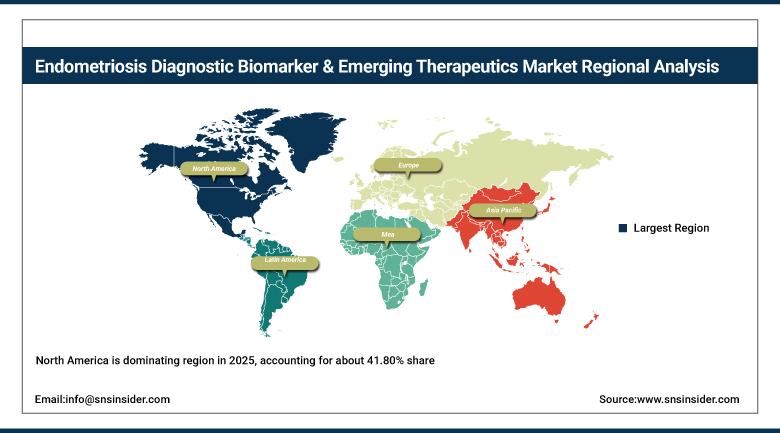
North America endometriosis diagnostic biomarker & emerging therapeutics market is dominating region in 2025, accounting for about 41.80% share, driven by strong research infrastructure and rapid adoption of innovative diagnostic technologies. The region benefits from significant pharmaceutical investments and advanced biotechnology capabilities. Increasing clinical trials and regulatory support are significantly strengthening product commercialization. Expansion of precision medicine initiatives is accelerating demand. A strong focus on women's health research and early disease diagnosis further reinforces the region’s dominant position in the market.
Worldwide, there is evidence in the scientific literature that diagnosis of endometriosis continues to be greatly delayed, with patients suffering from a delay of 4 to 11 years between symptom onset and diagnosis. In order to shorten this waiting period, research efforts being carried out with support from NIH are working on developing a new non-invasive diagnostic method based on biomarkers. Such efforts use genomics, proteomics, and innovative imaging techniques to help detect and diagnose this disease.
Get Customized Report as per Your Business Requirement - Enquiry Now
Europe Endometriosis Diagnostic Biomarker & Emerging Therapeutics Market Insights.
Europe endometriosis diagnostic biomarker & emerging therapeutics market is characterized by stable growth in 2025 owing to increasing investments in women's healthcare and molecular diagnostics. Key countries include Germany, France, United Kingdom, Italy, and Spain. Rising adoption of precision medicine is driving clinical implementation. Increasing collaborations between biotechnology companies and academic institutions are boosting innovation. Growth in biomarker validation studies and targeted drug development is further supporting market expansion. Strong regulatory frameworks are encouraging advancement of personalized diagnostic and therapeutic solutions.
According to the European Society of Human Reproduction and Embryology, there is substantial delay in the diagnosis of endometriosis, with diagnosis occurring beyond 7 years since symptom onset. Chronic pelvic pain and infertility are among the major complications associated with endometriosis according to the World Health Organization, with infertility being the issue for 30%-50% of those affected by endometriosis.
Asia Pacific Endometriosis Diagnostic Biomarker & Emerging Therapeutics Market Insights.
Asia Pacific is the fastest growing region in the endometriosis diagnostic biomarker & emerging therapeutics market, registering a CAGR of about 17.60% during 2026–2035. Rapid healthcare infrastructure development and expanding biotechnology investments are driving strong demand across China, India, Japan, South Korea, and Australia. Increasing awareness regarding endometriosis is boosting market growth. Rising investments in genomic medicine are further accelerating adoption. Growth in pharmaceutical research and diagnostic innovation is supporting large scale market expansion.
According to the research by the National Institute for Health and Care Research, along with other international clinical guidelines, endometriosis is typically misdiagnosed for several years because of symptom similarity and a lack of diagnostic tools. In the Asia-Pacific region, nations like Japan, China, India, and Australia are developing women’s health programs. More and more clinical researches are being conducted into biomarker detection tests and novel treatments that will help to manage endometriosis individually.
Middle East & Africa and Latin America Endometriosis Diagnostic Biomarker & Emerging Therapeutics Market Insights.
The Middle East & Africa along with Latin America regions are witnessing steady growth due to expanding healthcare infrastructure and increasing awareness of women's reproductive health. Key contributing countries include Brazil, Mexico, UAE, Saudi Arabia, and South Africa. Increasing demand for early diagnosis is driving adoption. Growth in specialty gynecology services is further supporting market expansion. Rising investments in biotechnology research and advanced diagnostic technologies are boosting regional demand.
As demonstrated in WHO reproductive health indicators, delayed diagnosis continues to be a major concern globally, with many patients living with their symptoms for several years before diagnosis. In the Middle East, Africa, and Latin America, better availability of specialist gynecology services, high-resolution imaging, and minimally invasive techniques are contributing to early diagnosis and treatment. Research initiatives in the region are also working towards developing better biomarker tests and therapies for endometriosis.
Market Dynamics:
Growth Drivers: Pharmaceutical research advances precision medicine through innovative targeted long-term therapies.
There is an increase in the investments being made by the pharmaceutical and biotechnology industries towards novel therapy research for managing endometriosis. Targeted therapies are helping in the reduction of the dependence of hormonal treatment methods. The advancements in precision medicine are helping in developing personal treatments that rely on biomarker profiles. Increased number of clinical trials is aiding the evaluation of new drugs. Regulatory assistance for women's health is fueling the development and commercialization of products. Strategic collaborations between research organizations, diagnostic developers, and pharmaceutical firms are promoting innovation.
In accordance with the NIH’s U.S. research portfolio, endometriosis continues to be an important area of research, and many biomedical researchers are studying the disease pathogenesis, molecular biomarkers, and possible treatments. Hormonal therapy is FDA-approved to treat pain associated with endometriosis; however, there is ongoing precision medicine research on the use of molecular biomarkers and tailored treatment options for endometriosis.
Restraints:Limited awareness and absent standardized biomarkers delay diagnosis and clinical adoption.
A number of females suffer from delayed diagnosis due to the similarities of symptoms with that of several other gynecological diseases. There are no global guidelines for biomarker diagnosis, which results in lack of assurance on the part of health professionals. It has become common practice to rely on imaging tests and surgical procedures for diagnosis. Variability in disease manifestation makes the formulation of consistent diagnostic methods difficult. Lack of awareness about the disease in underdeveloped health care systems hinders its early detection.
Opportunities:AI and multi-omics accelerate biomarker discovery and personalized diagnostic development.
Technologies like artificial intelligence and multi-omics are revolutionizing molecular research in diseases such as endometriosis. Combination of genomic, proteomic, transcriptomic and metabolomic data aids in discovering markers that are significant in the clinic. Algorithms in machine learning expedite the process of marker validation and patient stratification. Increasing adoption of diagnostic methods through precision medicine is becoming common among health practitioners. Digital health platforms are getting more investment for better data analytics. The above technological innovations offer numerous growth opportunities to the market for endometriosis diagnostic biomarker & emerging therapeutics.
As defined through genomics projects conducted by the National Institutes of Health and National Human Genome Research Institute, the multi-omics framework utilizes genomic, transcriptomic, proteomic, and metabolomic information to aid in the discovery of biomarkers through non-invasive methods. The World Health Organization notes that endometriosis often takes several years to diagnose. This makes it important to develop artificial intelligence-based diagnostic techniques and personalized targeted therapies.
Recent Developments:
-
2026: Hope Medicine Inc. dosed the first patient in its global Phase 3 clinical trial evaluating HMI-115 for endometriosis.
-
2025: Kissei Pharmaceutical Co., Ltd. initiated a Phase III clinical trial in Japan evaluating its oral GnRH antagonist Linzagolix.
-
2025: AbbVie Inc. filed a patent infringement lawsuit against Hetero Labs Ltd. regarding its leading oral endometriosis drug Orilissa.
-
2024: TiumBio Co., Ltd. announced positive topline results from its Phase 2a clinical trial evaluating Merigolix for endometriosis-associated pain.
Endometriosis Diagnostic Biomarker & Emerging Therapeutics Market Key Players are:
-
AbbVie Inc.
-
Bayer AG
-
Pfizer Inc.
-
Theramex
-
Kissei Pharmaceutical Co., Ltd.
-
ASKA Pharmaceutical Co., Ltd.
-
TiumBio Co., Ltd.
-
Hope Medicine Inc.
-
Gesynta Pharma AB
-
Jiangsu Hengrui Pharmaceuticals Co., Ltd.
-
Celmatix Inc.
-
EndoCyclic Therapeutics
-
DotLab
-
Hera Biotech Inc.
-
AIMA Laboratories Inc.
-
Kephera Diagnostics, LLC
-
EndoSure Inc.
-
Maipl Therapeutics, Inc.
-
Gedeon Richter Plc.
-
Organon & Co.
Endometriosis Diagnostic Biomarker & Emerging Therapeutics Market Report Scope:
| Report Attributes | Details |
|---|---|
| Market Size in 2025 | USD 3.25 Billion |
| Market Size by 2035 | USD 12.70 Billion |
| CAGR | CAGR of 14.62% From 2026 to 2035 |
| Base Year | 2025 |
| Forecast Period | 2026-2035 |
| Historical Data | 2022-2024 |
| Report Scope & Coverage | Market Size, Segments Analysis, Competitive Landscape, Regional Analysis, DROC & SWOT Analysis, Forecast Outlook |
| Key Segments | • By Diagnostic Biomarker Type (Genetic Biomarkers, Protein-Based Biomarkers, Hormonal Biomarkers, Immunological Biomarkers) • By Drug Type (Hormonal Therapies, Non-Hormonal Therapies, Analgesic & Anti-Inflammatory Drugs, Emerging Targeted Therapeutics, Combination Therapies, Others) • By Drug Class (GnRH Agonists, GnRH Antagonists, Progestins, Combined Oral Contraceptives, Aromatase Inhibitors, Others) • By End User (Hospitals, Diagnostic Laboratories, Specialty Gynecology Clinics, Research & Academic Institutes, Pharmaceutical & Biotechnology Companies, Others) |
| Regional Analysis/Coverage | North America (US, Canada), Europe (Germany, UK, France, Italy, Spain, Russia, Poland, Rest of Europe), Asia Pacific (China, India, Japan, South Korea, Australia, ASEAN Countries, Rest of Asia Pacific), Middle East & Africa (UAE, Saudi Arabia, Qatar, South Africa, Rest of Middle East & Africa), Latin America (Brazil, Argentina, Mexico, Colombia, Rest of Latin America). |
| Company Profiles | AbbVie Inc., Bayer AG, Pfizer Inc., Theramex, Kissei Pharmaceutical Co., Ltd., ASKA Pharmaceutical Co., Ltd., TiumBio Co., Ltd., Hope Medicine Inc., Gesynta Pharma AB, Jiangsu Hengrui Pharmaceuticals Co., Ltd., Celmatix Inc., EndoCyclic Therapeutics, DotLab, Hera Biotech Inc., AIMA Laboratories Inc., Kephera Diagnostics, LLC, EndoSure Inc., Maipl Therapeutics, Inc., Gedeon Richter Plc., Organon & Co. |

Frequently Asked Questions
The protein-based biomarkers dominated in 2025 due to clinical validation, blood-based testing availability, and demand for minimally invasive endometriosis diagnostics.
The endometriosis diagnostic biomarker & emerging therapeutics market was valued at USD 3.25 billion in 2025.
The endometriosis diagnostic biomarker & emerging therapeutics market is expected to grow at a CAGR of 14.62% from 2026 to 2035.
The major growth factors include rising endometriosis prevalence, diagnostic delays, biomarker investments, precision medicine adoption, AI and multi-omics advancements, targeted therapies, and expanding clinical research collaborations.
North America dominated the endometriosis diagnostic biomarker & emerging therapeutics market in 2025.
