
Hematology Diagnostics Market Report Scope and Overview:
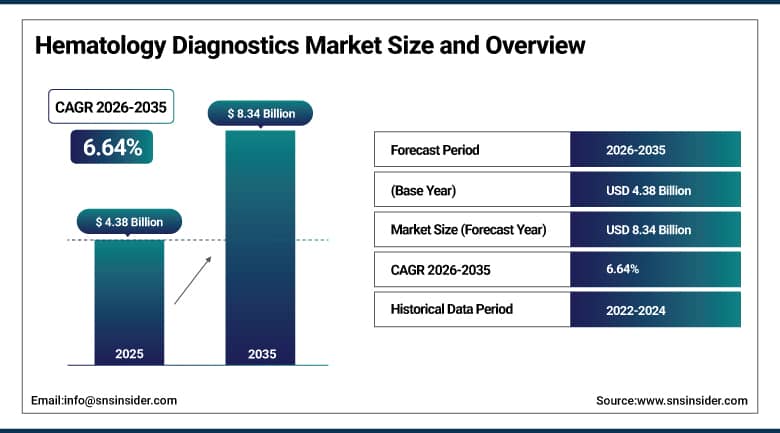
The Hematology Diagnostics Market was valued at USD 4.38 Billion in 2025 and is expected to reach USD 8.34 Billion by 2035, growing steadily at a CAGR of 6.64% from 2026–2035.
The increased incidence and prevalence rates of diseases affecting the blood have resulted in an increase in the need for efficient diagnostic tools. Regulatory trends play a vital role in how products enter the marketplace. Hematology diagnosis technologies have developed through advancements in technology such as automation, integration of AI technology, and Point of Care testing, thus enhancing accuracy and efficiency in all laboratory and hospital environments from the most comprehensive through to even small community laboratories that serve rural and marginalized patients. Expenditure by healthcare institutions in various areas has continued to influence the market dynamics, where the increased prevalence of conditions such as anemia, leukemia, and hemophilia has influenced the need for diagnostic tests.
In September 2024, Beckman Coulter and Scopio Labs expanded their long-term partnership with a global distribution agreement for Scopio’s Full-Field Bone Marrow Aspirate Application. The CE-marked X100/X100HT with FF-BMA enhances digital bone marrow imaging and analysis, advancing hematology diagnostics through deeper partnership integration between established hematology analyzer manufacturers and emerging digital pathology imaging specialists whose AI-driven analysis capability increasingly complements traditional automated blood analysis platforms across both hematology malignancy diagnosis and routine bone marrow assessment workflows.
Market Size and Forecast:
-
Market Size in 2026E: USD 4.67 Billion
-
Market Size by 2035: USD 8.34 Billion
-
CAGR: 6.64% from 2026 to 2035
-
Fastest Growing Region: Asia Pacific
-
Largest Region: North America
To Get More Information On Hematology Diagnostics Market - Request Free Sample Report
Hematology Diagnostics Market Trends:
-
AI-driven automated blood analyzers and flow cytometry systems are enhancing diagnostic accuracy and testing efficiency.
-
Point-of-care hematology diagnostics are expanding rapidly across emergency and outpatient department settings.
-
Liquid biopsy applications in hematology diagnosis are broadening market scope for cancer identification testing.
-
Telehematology and cloud-based diagnostic platforms are enabling remote analysis through digitalized imaging solutions.
-
Biomarker-based hematology tests are gaining momentum, supporting targeted treatment approaches for hematological malignancies.
U.S. Hematology Diagnostics Market Outlook:
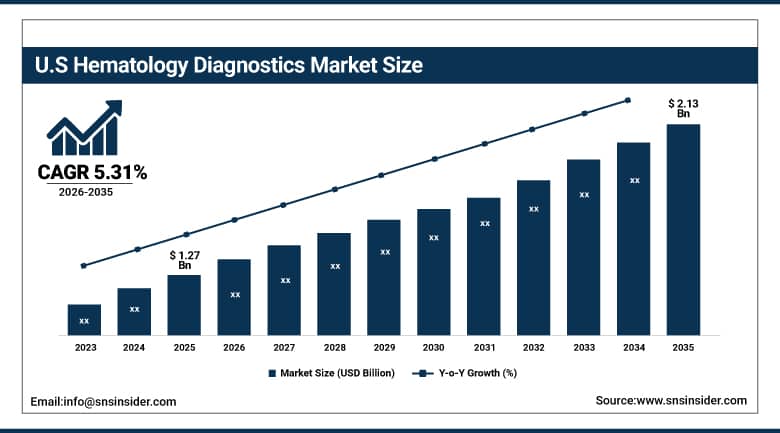
The U.S. Hematology Diagnostics Market was valued at USD 1.27 Billion in 2025 and is expected to reach USD 2.13 Billion by 2035, growing at a CAGR of 5.31% from 2026 to 2035.
In the U.S., the presence of higher health care costs, advanced research capabilities, and favorable reimbursement policies is boosting the industry's growth, while continuing to invest in innovative diagnostic technologies makes the nation an undisputed frontrunner within the global hematology diagnostics market. The large amount of conducted hematological tests and extensive research and development activities make the nation hold the topmost revenue-generating position among the world regions, which is facilitated by numerous academic medical centers and commercial reference laboratories.
In September 2024, Zoetis Inc. introduced Vetscan OptiCell, the first cartridge-based, AI-powered hematology analyzer designed for advanced Complete Blood Count analysis. Launched in the U.S., the innovative analyzer enhances efficiency, reduces costs, and optimizes clinic workflow, improving veterinary patient outcomes, demonstrating how hematology diagnostic innovation increasingly extends beyond human healthcare into adjacent veterinary diagnostic applications that share much of the same underlying analyzer and reagent technology platform.
Hematology Diagnostics Market Segment Analysis:
-
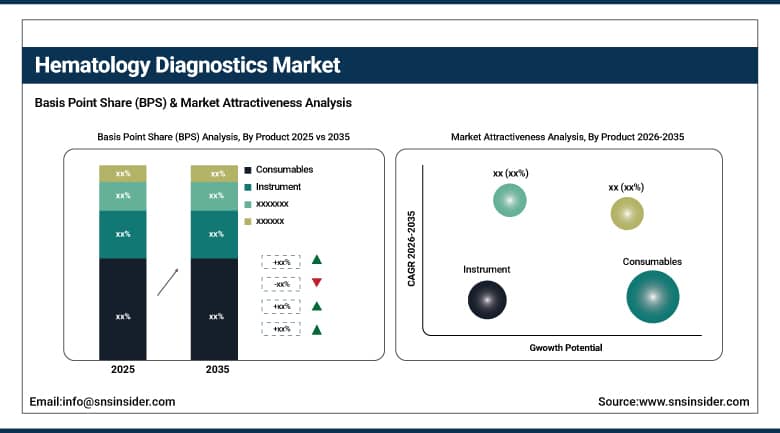
By Product, consumables held the largest share of 63.0% in 2025 due to high and periodic demand for reagents, test kits, and disposable elements, while instruments are set to experience significant growth through automation and AI-based diagnostic technology adoption.
-
By Test Type, blood count accounted for the highest revenue share of 42.0% in 2025 due to extensive complete blood count test application, while platelet function is expected to record the highest growth rate through bleeding disorder and cardiovascular testing demand.
-
By End-Use, hospitals contributed the highest revenue share of 37.0% in 2025 due to large patient flow and sophisticated laboratory facilities, while diagnostic labs are likely to expand at the highest growth rate through rising hospital outsourcing trends.
By Product, consumables dominate, instruments grow fastest
In 2025, the consumables segment held the largest share of the hematology diagnostics market at 63.0% due to the high and periodic demand for reagents, test kits, and other disposable elements utilized in diagnostic tests. The increasing number of hematology tests, as well as the requirement for precise diagnostic consumables, helped propel its strong market presence, with this recurring revenue model providing diagnostic laboratories and hospitals predictable, ongoing consumable procurement that complements their initial instrument capital investment across multi-year analyzer service contracts.
The instruments segment is set to experience significant growth in the future driven by technological improvement in automated hematology analyzers, high demand for high-throughput diagnostics, and adoption of AI-based diagnostic technology. The move towards automation in laboratories and hospitals further fuels the growth of this segment, as facilities increasingly replace older manual or semi-automated systems with next-generation analyzers capable of substantially higher daily test throughput and reduced per-sample turnaround time.
By Test Type, blood count dominates, platelet function grows fastest
The blood count segment accounted for the highest revenue share of 42.0% in 2025 due to the extensive application of Complete Blood Count tests for the diagnosis of numerous hematological and systemic diseases. The rising incidence of anemia, infections, and blood disorders, along with regular health screening, made it the most dominant test type in the market, with the World Health Organization estimating anemia prevalence among more than 1.92 billion individuals worldwide sustaining baseline blood count testing demand across both routine wellness screening and acute diagnostic workups.
Platelet function segment is expected to record the highest growth rate during the forecast period. This is because of the increase in incidence rates of bleeding disorders, thrombocytopenia, and cardiovascular conditions that require sophisticated platelet function tests. Furthermore, growing awareness and technological innovations in coagulation analyzers are driving the growth of this segment, as clinicians increasingly recognize the diagnostic value of platelet function assessment beyond standard blood count parameters, particularly for patients on antiplatelet therapy requiring ongoing clinical monitoring throughout their treatment course.
Regional Analysis:
|
Region |
Major Country |
Share within Region, 2025 (%) |
|---|---|---|
|
North America |
United States |
82.5% |
|
Asia Pacific |
China |
44.8% |
|
Europe |
Germany |
22.4% |
|
Middle East & Africa |
UAE |
22.8% |
|
Latin America |
Brazil |
43.8% |
North America Hematology Diagnostics Market Insights
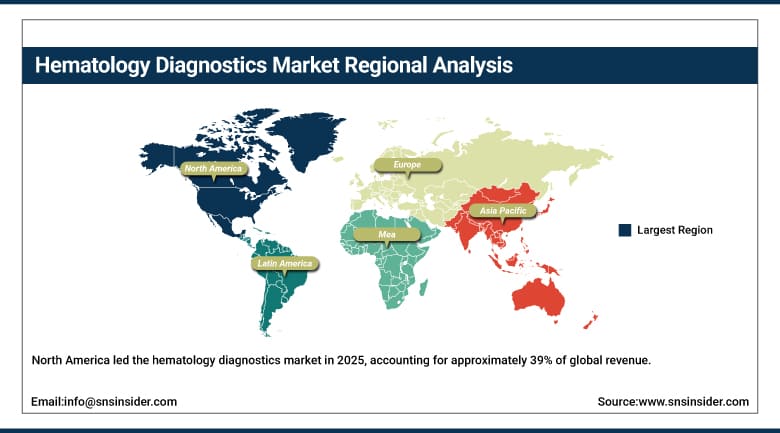
North America led the hematology diagnostics market in 2025, accounting for approximately 39% of global revenue, attributable to the presence of established healthcare infrastructure, high healthcare spending, and extensive use of sophisticated diagnostic technologies. The region is supported by a robust network of diagnostic laboratories and hospitals well-equipped with cutting-edge hematology analyzers spanning both academic medical centers and independent reference laboratory networks.
The rising incidence of blood diseases like leukemia, anemia, and thrombocytopenia, coupled with encouraging government programs promoting early detection of diseases, also supported market growth. The U.S. was especially responsible for the largest share of regional revenue due to high volumes of hematology tests and substantial research and development investments, with Canada contributing supplementary regional demand through its own established provincial healthcare laboratory testing infrastructure.
Get Customized Report as Per Your Business Requirement - Enquiry Now
Europe Hematology Diagnostics Market Insights
Europe is a significant hematology diagnostics market where established healthcare infrastructure, stringent diagnostic equipment regulatory frameworks, and growing automated analyzer adoption collectively sustain regional demand. Germany accounts for a substantial share of European revenues through Siemens Healthineers’ domestic manufacturing leadership and the country’s broader diagnostics industry, supported by a deep network of academic medical centers conducting advanced hematology research.
The United Kingdom’s National Health Service testing infrastructure and France’s growing diagnostic laboratory consolidation contribute substantial secondary regional demand. European data protection regulation continues to shape vendor product development, particularly regarding electronic medical record interfacing requirements for automated hematology systems that must comply with differing national data residency requirements across EU member states, adding implementation complexity for vendors operating pan-European distribution networks.
Asia Pacific Hematology Diagnostics Market Insights
Asia-Pacific is estimated to be the highest-growing area in the market for hematology diagnostics, powered by an increasing population of older adults, heightened healthcare awareness, and speedy technology advances in diagnosis. The area is experiencing growing diagnostic laboratories and hospitals, most notably in up-and-coming economies like China and India, where demand for hematology testing is on the rise across both urban tertiary care centers and expanding rural healthcare networks.
Government programs supporting healthcare infrastructure development and diagnostic service access are fueling market growth across the region. Asia-Pacific is likely to experience high growth in hematology diagnostic test volumes and serve as a critical growth driver during the forecast period, as rising rates of anemia and other blood diseases sustain testing demand.
MEA & Latin America Hematology Diagnostics Market Insights
The Middle East and Africa hematology diagnostics market is expanding through growing healthcare infrastructure investment in the UAE and Saudi Arabia, where rising chronic disease prevalence is creating new demand for advanced diagnostic testing capability. South Africa’s growing diagnostic laboratory network contributes secondary regional demand, supported by international diagnostic equipment manufacturers expanding their distribution footprint across the continent.
Latin America’s hematology diagnostics market is developing through growing healthcare access in Brazil and Mexico, where rising anemia and blood disorder prevalence alongside expanding insurance coverage are gradually increasing demand for both hospital-based and independent diagnostic laboratory testing capability across the region’s major metropolitan healthcare networks and increasingly its expanding rural primary care infrastructure.
Market Dynamics:
Growth Drivers: Rising blood disorder prevalence and AI-driven diagnostic automation fueling sustained market growth
The rising prevalence of blood disorders such as anemia, leukemia, and hemophilia is increasing the demand for early and accurate diagnostic testing. Based on the World Health Organization, anemia is prevalent among more than 1.92 billion individuals worldwide, and thus blood count tests are a standard diagnostic process, with AI-driven automated blood analyzers and flow cytometry systems enhancing the accuracy and efficiency of diagnostics across both high-volume reference laboratories and smaller point-of-care testing environments.
An additional important contributor is the rise in aging populations due to their vulnerability to blood-related diseases, which makes them susceptible to frequent blood testing. The expansion in healthcare spending coupled with governmental initiatives that support preventive healthcare services has helped boost the market for laboratory and point-of-care diagnostic facilities. In addition, the rising application of point-of-care diagnosis in emergencies and outpatient clinics is expected to propel market growth owing to an increasing preference for quick bedside diagnoses among clinicians compared to delayed results from the centralized laboratory.
Restraints: High instrument costs and skilled personnel shortages constraining market accessibility
The market for hematology diagnostics is faced by restraints, mainly caused by the expensive nature of the diagnostic equipment used. Automated hematology analyzers and flow cytometry equipment are expensive, and thus limited in terms of installation in low budget healthcare facilities and diagnostic labs, while the difficulties in getting regulatory approvals for hematology diagnostic devices is also another challenge in the market, since different geographical locations require varied approvals before such products can be distributed.
Shortage of skilled labor also forms part of the major limitations of hematology diagnostics because the advanced hematology diagnostic devices require skilled people who can operate and maintain them. The shortage of such labor is particularly noted in areas which are not easily accessible, and dependence on reagents is another major hindrance in the market because of the volatile nature of prices for such reagents.
Opportunities: AI-powered analyzers and decentralized point-of-care testing creating expanded diagnostic market categories
The hematology diagnostics market presents significant opportunities, particularly in the development of next-generation hematology analyzers with AI and machine learning capabilities. The convergence of big data analytics and digital pathology in hematology diagnosis provides better prediction and diagnosis of diseases, thus making precision medicine more viable, while the emerging market of point-of-care testing and portable hematology analyzers is a driving force for decentralized diagnostic solutions particularly suited to rural and resource-constrained healthcare settings.
Strategic collaborations between pharmaceutical companies and diagnostic firms for the development of hematology-based companion diagnostics are fueling innovation, with emerging economies in Asia and Latin America presenting attractive opportunities owing to developing healthcare infrastructure and rising investments in diagnostic services. Government-initiated screening programs for anemia, hemophilia, and leukemia are also driving further demand for hematology diagnostics, particularly as public health systems prioritize early disease detection over costly late-stage treatment intervention across both pediatric and adult patient populations.
Recent Developments:
-
2024: Beckman Coulter and Scopio Labs expanded their long-term partnership with a global distribution agreement for Scopio’s Full-Field Bone Marrow Aspirate Application, enhancing digital bone marrow imaging and analysis.
-
2024: Zoetis Inc. introduced Vetscan OptiCell, the first cartridge-based, AI-powered hematology analyzer designed for advanced Complete Blood Count analysis, launched initially in the U.S. veterinary market.
-
2024: Sysmex Corporation continued expansion of its XN-Series automated hematology analyzer platform, incorporating enhanced flow cytometry capability for high-throughput diagnostic laboratory environments worldwide.
Hematology Diagnostics Market Key Players are:
-
Abbott Laboratories
-
Beckman Coulter Inc.
-
Sysmex Corporation
-
Horiba Ltd.
-
Bio-Rad Laboratories Inc.
-
Siemens Healthineers AG
-
F. Hoffmann-La Roche Ltd.
-
Shenzhen Mindray Bio-Medical Electronics Co. Ltd.
-
Nihon Kohden Corporation
-
EKF Diagnostics Holdings plc
-
Danaher Corporation
-
Thermo Fisher Scientific Inc.
-
PerkinElmer Inc.
-
Boule Diagnostics AB
-
Diatron MI PLC
-
Medica Corporation
-
Drew Scientific Group
-
ERBA Mannheim
-
Quidel Corporation
-
ARKRAY Inc.
Hematology Diagnostics Market Report Scope:
| Report Attributes | Details |
|---|---|
| Market Size in 2025 | USD 4.38 Billion |
| Market Size by 2035 | USD 8.34 Billion |
| CAGR | CAGR of 6.64% From 2026 to 2035 |
| Base Year | 2025 |
| Forecast Period | 2026-2035 |
| Historical Data | 2022-2024 |
| Report Scope & Coverage | Market Size, Segments Analysis, Competitive Landscape, Regional Analysis, DROC & SWOT Analysis, Forecast Outlook |
| Key Segments | • By Product (Instrument, Consumables) • By Test Type (Blood Count, Platelet Function, Hemoglobin, Hematocrit) • By End-Use (Hospitals, Diagnostic Labs, Others) |
| Regional Analysis/Coverage | North America (US, Canada), Europe (Germany, UK, France, Italy, Spain, Russia, Poland, Rest of Europe), Asia Pacific (China, India, Japan, South Korea, Australia, ASEAN Countries, Rest of Asia Pacific), Middle East & Africa (UAE, Saudi Arabia, Qatar, South Africa, Rest of Middle East & Africa), Latin America (Brazil, Argentina, Mexico, Colombia, Rest of Latin America). |
| Company Profiles | Abbott Laboratories, Beckman Coulter Inc., Sysmex Corporation, Horiba Ltd., Bio-Rad Laboratories Inc., Siemens Healthineers AG, F. Hoffmann-La Roche Ltd., Shenzhen Mindray Bio-Medical Electronics Co. Ltd., Nihon Kohden Corporation, EKF Diagnostics Holdings plc, Danaher Corporation, Thermo Fisher Scientific Inc., PerkinElmer Inc., Boule Diagnostics AB, Diatron MI PLC, Medica Corporation, Drew Scientific Group, ERBA Mannheim, Quidel Corporation, and ARKRAY Inc. |
Frequently Asked Questions
The Hematology Diagnostics Market is expected to grow at a CAGR of 6.64% from 2026 to 2035.
The Hematology Diagnostics Market was valued at USD 4.38 Billion in 2025.
Rising prevalence of blood disorders such as anemia, leukemia, and hemophilia, increasing aging population requiring regular blood tests, and AI-driven automation in hematology analyzers are the primary growth factors.
Consumables held the largest share of 63.0% in 2025 due to high and periodic demand for reagents and test kits.
North America led the market in 2025 with the highest revenue share through established healthcare infrastructure.
