
Organic Food and Beverages Market Report Scope & Overview:
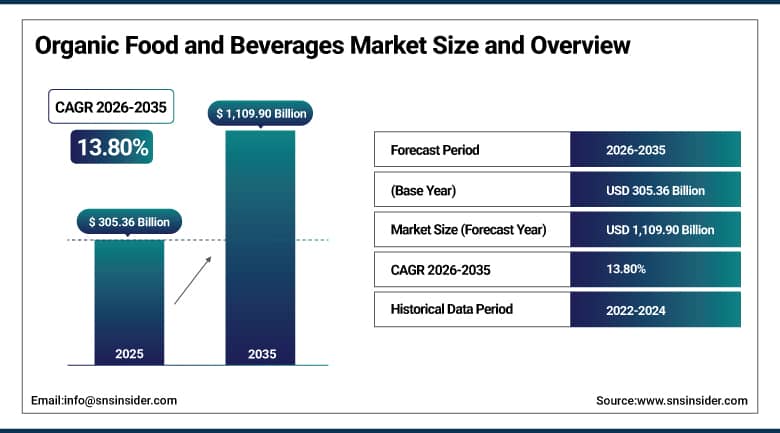
The Organic Food and Beverages Market was valued at USD 305.36 Billion in 2025 and is expected to reach USD 1,109.90 Billion by 2035, growing at a CAGR of 13.80% from 2026 to 2035.
The Organic Food and Beverages Market is witnessing robust growth owing to increased awareness among consumers regarding health and nutrition. There is an increase in the number of people who are conscious about their eating habits and health due to pesticides, chemicals, and food safety issues, which is resulting in their opting for certified organic food products. Growth in disposable income and premiumization trends are also contributing to the growth in organic food and beverage sales. In addition to this, an expansion in the product range through supermarkets, specialty stores, and e-commerce platforms is boosting sales. Manufacturers are launching innovative organic snacks, beverages, dairy products, cereals, and ready-to-eat foods.
Danone completed its acquisition of Kate Farms, integrating the company's specialized nutrition formulas for everyday consumption and tube feeding into Danone's existing specialized nutrition portfolio, with Danone Group's Deputy CEO explaining that Kate Farms is complementary to the company's specialized nutrition offerings, reflecting continued strategic acquisition activity among leading organic and natural food companies seeking to expand their portfolios across complementary health-focused categories.
To Get More Information On Organic Food and Beverages Market - Request Free Sample Report
Organic Food and Beverages Market Trends
-
Growing transparency regarding sourcing, farming practices, and processing methods continues to enhance consumer trust across baby food, dairy, and packaged staples.
-
Rising utilization of digital labeling tools, QR codes, and front-of-pack claims continues to provide information on origin, certification, and formulation.
-
Expanding availability of diverse frozen organic options continues alongside rising adoption of sustainable packaging solutions across the category.
-
Increasing integration of certified organic private labels within mainstream discount supermarket networks continues to broaden consumer accessibility.
-
Growing direct-to-consumer e-commerce subscriptions and organic auto-replenishment programs continue bypassing brick-and-mortar retail setups.
U.S. Organic Food and Beverages Market Outlook
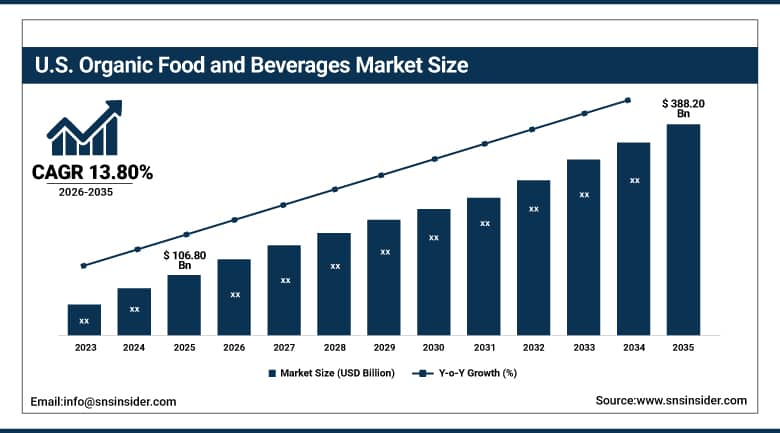
The U.S. Organic Food and Beverages Market was valued at USD 106.80 Billion in 2025 and is projected to reach USD 388.20 Billion by 2035, growing at a CAGR of 13.80% during 2026-2035.
The United States continues as the leading country within North America, supported by the world's largest organic food retail network, growing consumer demand for non-GMO and pesticide-free products, and a well-established organic farming sector. Leading brands continue to expand plant-based and high-protein organic product portfolios addressing rising consumer wellness priorities. Growing protein innovation across dairy and plant-based alternatives continues to reinforce sustained domestic market development nationwide.
Danone launched Silk Protein in North America, a high-protein variant of its best-selling plant-based milk alternative brand, reflecting the company's continued investment in protein innovation as it activates its broader organic and plant-based portfolio to capitalize on buoyant global demand for protein-fortified products spanning dairy, plant-based, and ready-to-drink beverage formats.
Organic Food and Beverages Market Segment Analysis
-
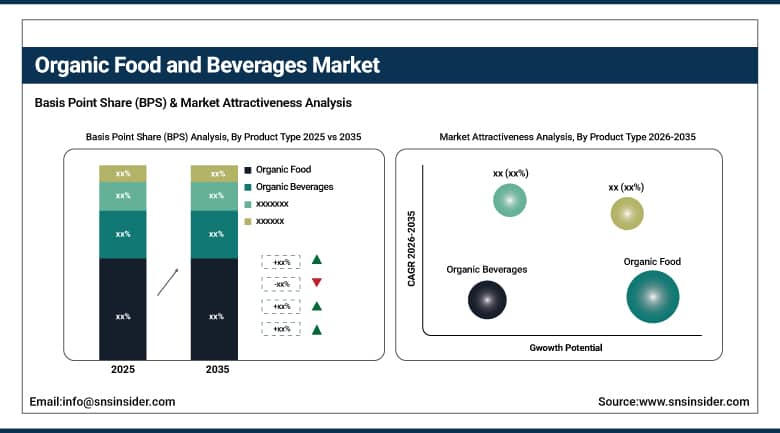
By Product Type, Organic Food led the Organic Food and Beverages Market with a 41.10% share in 2025, while Organic Beverages (Coffee & Tea) is the fastest-growing product type segment with a CAGR of 17.10% from 2026-2035.
-
By Form, Fresh/Chilled led the Organic Food and Beverages Market with a 63.04% share in 2025, while Frozen is the fastest-growing form segment with a CAGR of 7.65% from 2026-2035.
-
By Distribution Channel, Supermarkets/Hypermarkets led the Organic Food and Beverages Market with a 57.09% share in 2025, while Online Retail is the fastest-growing distribution channel segment with a CAGR of 8.49% from 2026-2035.
By Product Type, Organic Food Dominates the Organic Food and Beverages Market While Organic Beverages Register the Fastest Growth
Organic Food dominated the Organic Food and Beverages Market in 2025 owing to the preference for food products that are healthy, unprocessed, and sustainable. Increasing awareness about pesticides, safety, nutrition, and sustainable environment has led consumers to opt for organic products. Moreover, the increasing availability of organic products, increasing adoption rate of household, and the diversification in organic products have fueled Organic Food demand and helped it maintain its dominant market position.
There has been tremendous growth witnessed by Organic Beverages, especially organic coffee and tea, due to increased consumer demand for healthier and natural beverages. The increasing demand for functional drinks, together with an awareness on health risks from chemicals and pesticides, has resulted in the growing popularity of organic products. Increased product availability, specialty coffee and tea products, ethical sourcing practices, and rising incomes have contributed towards increased sales of premium drinks.
By Form, Fresh/Chilled Products Dominate the Organic Food and Beverages Market While Frozen Products Witness the Fastest Growth
Fresh/Chilled products dominated the Organic Food and Beverages Market in 2025 due to the preference among consumers of fresh and minimally processed organic products, which are considered healthier and more nutritious. Categories like fruits and vegetables, dairy, meats, and others can be considered as part of the fresh products' category in the overall organic consumption market. The growing health consciousness among consumers and the demand for clean-label products is driving the growth of this segment with a considerable market share.
Frozen products are expected to grow rapidly as consumers increasingly prioritize convenience, due to the growing consumer preference for convenience, longer shelf-life, and minimal wastage of food without undermining the organic aspect. The advancement in technologies for freezing and preserving is aiding in maintaining the nutritional value, taste, and freshness of the products, which in turn increases consumer acceptance. The growing popularity of frozen organic fruits, vegetables, ready-to-cook meals, and snacks is boosting their demand among consumers.
By Distribution Channel, Supermarkets/Hypermarkets Dominate the Organic Food and Beverages Market While Online Retail Experiences the Fastest Growth
Supermarkets/Hypermarkets dominated the Organic Food and Beverages Market in 2025 driven by Supermarkets/Hypermarkets since these markets offered diverse ranges of products, one-stop shopping convenience, existing cold chain logistics, and high accessibility to consumers. Such stores allow consumers to buy from an organic section and also compare brands, certifications, prices, and types of products. The promotional campaigns, loyalty programs, investments made by retailers on their organic private label products, and increasing space for these products have boosted the organic products' presence and frequency of purchase, thus giving the channel dominance.
Online Retail is the fastest-growing distribution channel since consumers are favoring convenience, variety of products, delivery at home door, and price comparisons. The online retail allows consumers access to specialized organic products that might not be available in brick-and-mortar shops. Subscription options and recommendations make the consumers visit the website repeatedly. Logistics, delivery of the cold chain, payments through digital channels, and rising smartphone usage are facilitating growth in online groceries.
Regional Analysis
|
Region |
Country |
Share (2025) |
|---|---|---|
|
North America |
United States |
80.60% |
|
Europe |
Germany |
24.80% |
|
Asia Pacific |
China |
34.60% |
|
Middle East & Africa |
UAE |
20.60% |
|
Latin America |
Brazil |
24.60% |
North America Organic Food and Beverages Market Insights
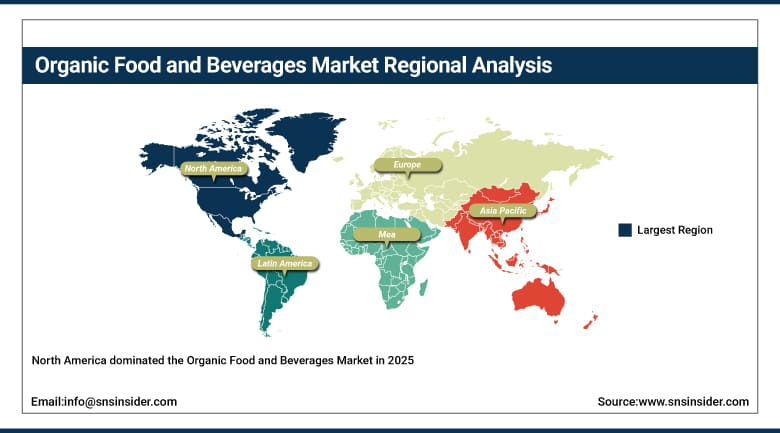
North America dominated the Organic Food and Beverages Market in 2025, owing to high consumer awareness about health and wellness. The well-established system of organic certifications, wide availability through retail channels, and rapidly growing e-commerce portals is contributing to product availability. Increasing consumer concern about food safety, pesticides, and additives is driving the adoption of organics. Increasing disposable income and the demand for clean label and sustainable products are driving market growth.
The United States accounted for approximately 80.60% of the North American market in 2025, reflecting the world's largest organic food retail network, growing consumer demand for non-GMO and pesticide-free products, and a well-established organic farming sector. Canada is contributing to regional growth through steady organic product adoption and growing consumer interest in sustainably sourced food alternatives.
Get Customized Report as Per Your Business Requirement - Enquiry Now
Europe Organic Food and Beverages Market Insights
Europe accounted for a considerable proportion of the total Global Organic Food & Beverages Market in 2025, owing to high demand for healthy and sustainable foods among consumers. Germany was one of the biggest contributors due to a prevalence of organic private label foods within the country’s discounter and normal grocery stores. Growing awareness regarding the need for reducing pesticides and maintaining food safety and sustainability is likely to continue driving organics' demand in Europe.
Germany led the European market with a 24.80% regional share in 2025, supported by deeply entrenched public commitment to sustainable agriculture and integration of organic private labels within discount chains including Aldi and Lidl. France, the United Kingdom, and Italy are also contributing meaningfully to regional growth, supported by strategic maneuvers by core grocery retail groups to optimize organic price points.
Asia Pacific Organic Food and Beverages Market Insights
The Asia Pacific region is projected to grow at a CAGR of 18.1% during the forecast period from 2026 to 2035, owing to increased consumer consciousness towards health and nutrition and sustainability of food. With increasing disposable income and urbanization, the demand for high-quality organic foods is increasing in countries like China, Japan, India, and Southeast Asia. Improved availability of organic products via supermarkets, specialty stores, online portals, and food service channels is boosting the demand for organic products.
China accounted for approximately 34.60% of the Asia Pacific market in 2025, supported by its rapidly expanding health-conscious consumer base and growing domestic organic food manufacturing capacity. Japan, India, and South Korea are also contributing meaningfully to regional growth, with rising urban middle-class consumption patterns driving sustained regional demand.
Middle East & Africa and Latin America Organic Food and Beverages Market Insights
The Middle East & Africa region is exhibiting steady growth as health and wellness awareness expands across the Gulf states, supported by growing modern retail infrastructure. Latin America is similarly benefiting from expanding organic agricultural production capacity and growing consumer interest in sustainably sourced food and beverage alternatives across major regional economies.
The UAE led the Middle East & Africa market with a 20.60% regional share in 2025, supported by growing health-conscious consumer demand and expanding modern retail penetration. Brazil represented 24.60% of the Latin American market in 2025, driven by expanding organic agricultural production, with Mexico also contributing to regional growth through rising interest in organic food and beverages.
Market Dynamics
Growth Drivers: Health Consciousness and Mainstream Retail Integration Driving Market Growth
The driving forces behind the Organic Food and Beverages Market include heightened consumer health awareness and consciousness about well-being, environment protection, health awareness, transition from GMOs, clean label demands, and accessibility. More and more consumers are becoming increasingly inclined towards the use of organic products because of their concern about chemicals such as pesticides and fertilizers which are used in regular farming practices along with GMOs.
Increasing transparency about ingredients, agricultural production processes, and manufacturing techniques has been helping consumers become more assured about the product categories such as baby foods, dairy, and packaged staples. The increasing use of digital labels and QR code technology has been helping consumers gain information about the origin and certification of the product.
Restraints: Premium Pricing and Supply Chain Certification Complexity Limiting Market Expansion
Despite favorable underlying demand, the market faces meaningful restraints related to premium pricing for organic products relative to conventional alternatives, which continues to limit broader mainstream adoption among budget-conscious consumers, particularly in price-sensitive emerging markets. Complex certification and traceability requirements across different jurisdictions continue to add cost and compliance burden for manufacturers and distributors.
Growing competitive intensity among an expanding roster of organic brands, particularly amid mainstream FMCG portfolio integration diluting the values that made pioneering organic brands distinctive, continues to concern activists and consumers about quality and company practice erosion. Weather-dependent organic crop yield variability also continues to introduce supply chain unpredictability affecting product availability and consistency.
Opportunities: Protein Innovation and Digital Traceability Investment Creating New Growth Avenues
Substantial opportunity exists in continued development of protein-fortified organic and plant-based products, as manufacturers increasingly combine organic positioning with functional nutrition benefits addressing evolving consumer wellness priorities. Companies that successfully commercialize high-protein organic dairy and plant-based alternatives stand to capture significant share of category growth as protein remains a cornerstone of food and beverage innovation.
Growing digital labeling and traceability tool investment presents a further significant growth avenue, as organic brands increasingly utilize QR codes and front-of-pack claims to build consumer trust and encourage repeat purchases. Expanding organic private label integration within discount retail networks across emerging markets in Asia Pacific and Latin America also represents meaningful untapped opportunity for organic food and beverage manufacturers.
Recent Developments:
-
2026: So Delicious Dairy Free, a Danone North America subsidiary, launched new Organic Oatmilk, the brand's first foray into the booming oatmilk category.
-
2025-2026: A coalition of major manufacturers including Danone, Savencia, Andros, Bel Bonduelle, Unilever, and Nutrition & Santé aims to reach EUR 3 billion in sales for affordable plant-based alternatives.
-
2025-2026: Alpro announced it will begin making its oat milk from 100% British-grown oats.
-
2025-2026: Danone continued expanding its high-protein yogurt portfolio across tubs and ready-to-drink formats, activating its broader yogurt portfolio to capitalize on global protein demand.
Organic Food and Beverages Market key players are:
-
Danone S.A.
-
Nestlé S.A.
-
General Mills Inc.
-
The Hain Celestial Group, Inc.
-
CROPP Cooperative (Organic Valley)
-
Amy’s Kitchen, Inc.
-
Dole plc
-
SunOpta Inc.
-
Nature’s Path Foods Inc.
-
Eden Foods, Inc.
-
Arla Foods amba
-
Conagra Brands, Inc.
-
Kellanova
-
Unilever PLC
-
The Kraft Heinz Company
-
HiPP GmbH & Co. Vertrieb KG
-
Alnatura Produktions- und Handels GmbH
-
Sresta Natural Bioproducts Pvt. Ltd. (24 Mantra Organic)
-
Organic India Pvt. Ltd.
-
Fonterra Co-operative Group Limited
Organic Food and Beverages Market Report Scope:
| Report Attributes | Details |
|---|---|
| Market Size in 2025 | USD 305.36 Billion |
| Market Size by 2035 | USD 1,109.90 Billion |
| CAGR | CAGR of 13.80% From 2026 to 2035 |
| Base Year | 2025 |
| Forecast Period | 2026-2035 |
| Historical Data | 2022-2024 |
| Report Scope & Coverage | Market Size, Segments Analysis, Competitive Landscape, Regional Analysis, DROC & SWOT Analysis, Forecast Outlook |
| Key Segments | • By Product Type (Organic Food, Organic Beverages) • By Form (Fresh/Chilled, Frozen, Dried, Canned) • By Distribution Channel (Supermarkets/Hypermarkets, Online Retail, Specialty Stores) |
| Regional Analysis/Coverage | North America (US, Canada), Europe (Germany, UK, France, Italy, Spain, Russia, Poland, Rest of Europe), Asia Pacific (China, India, Japan, South Korea, Australia, ASEAN Countries, Rest of Asia Pacific), Middle East & Africa (UAE, Saudi Arabia, Qatar, South Africa, Rest of Middle East & Africa), Latin America (Brazil, Argentina, Mexico, Colombia, Rest of Latin America). |
| Company Profiles | Danone S.A., Nestlé S.A., General Mills Inc., The Hain Celestial Group, Inc., CROPP Cooperative (Organic Valley), Amy’s Kitchen, Inc., Dole plc, SunOpta Inc., Nature’s Path Foods Inc., Eden Foods, Inc., Arla Foods amba, Conagra Brands, Inc., Kellanova, Unilever PLC, The Kraft Heinz Company, HiPP GmbH & Co. Vertrieb KG, Alnatura Produktions- und Handels GmbH, Sresta Natural Bioproducts Pvt. Ltd. (24 Mantra Organic), Organic India Pvt. Ltd., Fonterra Co-operative Group Limited |
Frequently Asked Questions
The Organic Food and Beverages Market is expected to grow at a CAGR of 13.80% from 2026 to 2035.
The Organic Food and Beverages Market was valued at USD 305.36 Billion in 2025.
The market is driven by increasing consumer awareness about health, wellness, and environmental sustainability, growing health awareness, and demand for clean-label products.
The Organic Food segment dominated the Organic Food and Beverages Market in 2025, accounting for approximately 41.10% market share.
The North America region dominated the Organic Food and Beverages Market in 2025, accounting for approximately 43.39% market share.
