
Sparkling Water Market Report Scope & Overview:
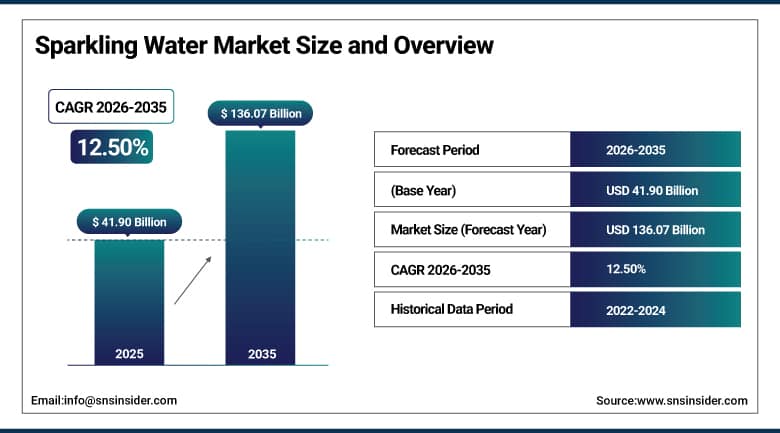
The Sparkling Water Market was valued at USD 41.90 Billion in 2025 and is expected to reach USD 136.07 Billion by 2035, growing at a CAGR of 12.50% from 2026 to 2035.
The expansion of the global Sparkling Water Market can be attributed to the rising consumer preference for healthy and low calorie beverages because consumers have reduced their consumption of sugary sodas. The growing health consciousness of consumers is driving the demand for refreshing and sugar free beverages. Innovations in the form of flavored or functional sparkling waters containing vitamins, minerals, and plant extracts are also fueling consumer interest in these products. The increasing availability of sparkling water through supermarket chains, convenience stores, restaurants, cafes, and online platforms is also fueling growth in this market. Furthermore, premiumization, lifestyle changes, urbanization, and attractive packaging formats like cans and recyclable bottles are aiding market growth.
PepsiCo announced its acquisition of prebiotic soda brand Poppi for nearly USD 2 billion in 2025, strengthening its presence in the growing functional beverage category built on a sparkling water, apple cider vinegar, and prebiotic fiber formula, reflecting the accelerating convergence between traditional sparkling water and functional soda categories as major beverage companies compete for health-conscious consumer spending.
To Get More Information On Sparkling Water Market - Request Free Sample Report
Sparkling Water Market Trends
-
Growing prebiotic and functional sparkling beverage innovation is reshaping the category beyond traditional plain and flavored formats.
-
Rising urban millennial and Gen Z demand is driving adoption of better-for-you hydration products aligned with wellness and clean-label preferences.
-
Expanding modern retail, café chain, and premium convenience store penetration is broadening visibility and trial of global sparkling water brands.
-
Increasing focus on environmental sustainability is stimulating a shift toward eco-friendly packaging and can-based formats.
-
Growing online distribution is enabling rapid new product launches and direct-to-consumer engagement across emerging functional sparkling brands.
U.S. Sparkling Water Market Outlook
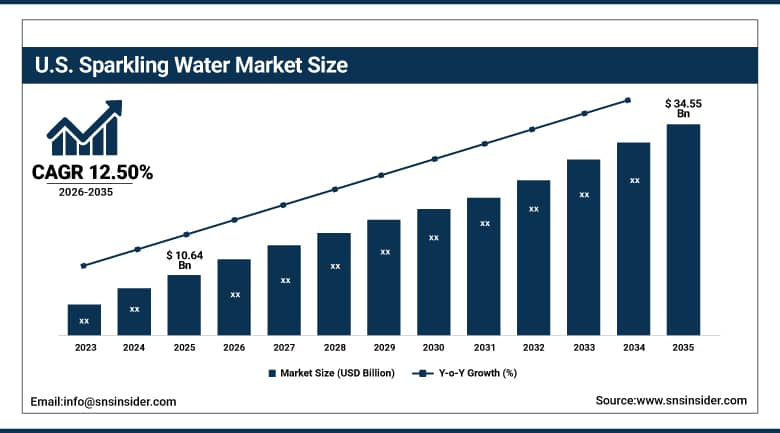
The U.S. Sparkling Water Market was valued at USD 10.64 Billion in 2025 and is projected to reach USD 34.55 Billion by 2035, growing at a CAGR of 12.50% during 2026-2035.
The U.S. Sparkling Water Market is expanding because of the increasing preference among consumers of healthy and calorie-free drinks, especially in light of the trend where consumers have been moving away from carbonated soft drinks. Increasing awareness of health and wellness is fueling the consumption of sparkling water. Innovation in product development with flavors, natural, and functional products is widening the scope of consumer reach. The deep penetration of products via supermarkets, convenience stores, and club stores, along with the increased use of online stores and channels, is helping fuel the market's growth.
PepsiCo launched Pepsi Prebiotic Cola in 2025, containing sparkling water, three grams of prebiotic fiber, and five grams of cane sugar, available in stores nationwide in early 2026, reflecting PepsiCo's continued expansion into the functional sparkling beverage category following its acquisition of Poppi and intensifying competition with rival Coca-Cola's Simply Pop product line.
Sparkling Water Market Segment Analysis
-
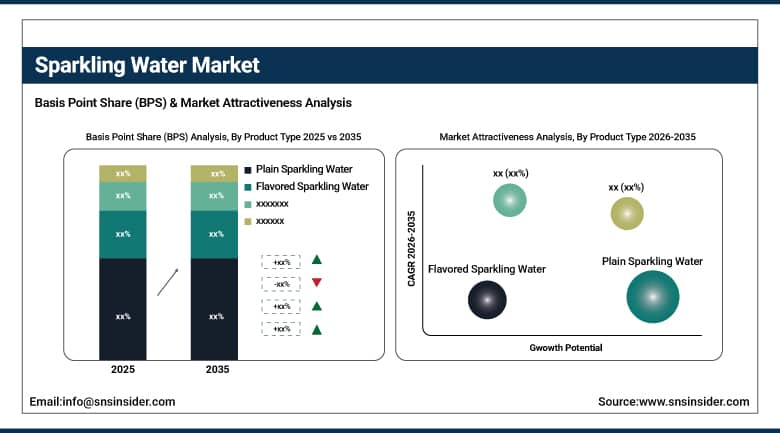
By Product Type, Plain Sparkling Water segment dominated the Sparkling Water Market in 2025 with approximately 58% share; Flavored Sparkling Water segment is the fastest-growing segment.
-
By Packaging Type, Bottles segment dominated the Sparkling Water Market in 2025 with approximately 63% share; Cans segment is the fastest-growing segment.
-
By Distribution Channel, Store Based segment dominated the Sparkling Water Market in 2025 with approximately 82% share; Non-Store Based segment is the fastest-growing segment.
-
By End Use, Household Consumption segment dominated the Sparkling Water Market in 2025 with approximately 52% share; Foodservice & Restaurants segment is the fastest-growing segment.
By Product Type, Plain Sparkling Water dominated, while Flavored Sparkling Water was the fastest-growing segment
Plain Sparkling Water dominated the market due to the general consumer notion that this is a simple, refreshing and adaptable beverage in place of still water and other sugar-laden drinks. The absence of distinct flavor in this category ensures that it is easily consumable on a number of different occasions such as eating or hydration activities. In addition, the widespread availability of this beverage coupled with existing customer awareness also contributes to its dominance. Another factor that makes this product a strong choice is that it suits the needs of health enthusiasts who want carbonated water without any flavor and calories.
Flavored Sparkling Water is the fastest-growing segment due to the increasing consumer preferences for beverages that offer varieties. Flavor profile of these beverages includes fruit or botanical and other types. Product innovations and seasonal offerings as well as unique flavor combinations are attracting many consumers. This category will continue to gain ground especially amongst the young generation consumers who prefer convenient beverages with distinctive taste experiences.
By Packaging Type, Bottles dominated the market, while Cans are the fastest-growing segment
Bottles dominated the sparkling water market since they offered convenience, portability, and high suitability for household and on-the-go consumption. The re-sealing feature allowed consumers to save half-filled drinks. Therefore, bottles could be used in various situations. Additionally, bottled products were easily found in supermarkets, convenience stores, vending machines, and any other retail outlets. Packaging infrastructure, consumer familiarity, and availability of various bottle sizes also contributed to their popularity, especially for those who purchase sparkling water for individual and household consumption.
Cans are the fastest-growing packaging segment because they offer portability, convenient single-serve consumption, and space-saving ability. Consumers prefer light packaging of the beverages that they would like to consume while commuting, doing some outdoor activities, going on social events, or drinking right away. Also, cans allowed for the creation of appealing packaging that could help manufacturers to attract younger consumers. Increasing popularity of portable beverage formats along with sparkling water introductions contributed to the rising can usage.
By Distribution Channel, Store Based distribution dominated the market, while Non-Store Based distribution is the fastest-growing channel
Store Based distribution dominated the sparkling water market due to consumers’ need for convenient and easy access to products. In stores such as supermarkets, hypermarkets, convenience stores and others, there is a variety of packs of products available, along with different flavors and pricing, which helps in creating more frequent buying opportunities for consumers. Consumers will be able to purchase their products in addition to their food products and beverage assortment. Therefore, existing retail channels and presence on the shelves will continue to fuel store based distribution.
Non-Store Based distribution is the fastest-growing channel as customers are increasingly valuing time saving, convenience and ease of shopping. This is made possible by online grocers and e-tailing websites that make it easier for consumers to purchase their desired products and order delivery from the comfort of their homes. Sparkling water brands are increasingly utilizing this route in addition to their existing distribution network due to improvements in delivery infrastructures and consumers’ increased awareness of online beverage purchasing.
By End Use, Household Consumption dominated the market, while Foodservice & Restaurants is the fastest-growing segment
Household Consumption dominated the end-use segment due to the increasing adoption of sparkling water into routine consumption at home. Sparkling water has been used by consumers as an alternative means of quenching thirst, accompanying meals, or replacing carbonated drinks. The increase in awareness of beverages that have minimal additives also contributes to household consumption. Multipacks and large pack sizes also contribute to convenience, thus making sparkling water relevant for the household consumption end use segment and sustaining market leadership.
Foodservice & Restaurants is the fastest-growing end-use segment because sparkling water was being offered by an increasing number of restaurants, cafes, hotels, and other foodservice operators as an alternative beverage choice. Sparkling water can be used as an alternative to alcohol or sodas and accompanies meals and enhances the dining experience. The growth of the foodservice sector, hospitality activities, and interest in premium beverages among consumers is encouraging an increasing number of establishments to offer sparkling water.
Regional Insights
|
Region |
Major Country |
Share within Region, 2025 (%) |
|---|---|---|
|
Europe |
Germany |
22.80% |
|
North America |
United States |
84.60% |
|
Asia Pacific |
China |
30.40% |
|
Middle East & Africa |
UAE |
22.60% |
|
Latin America |
Brazil |
26.40% |
Europe Sparkling Water Market Insights
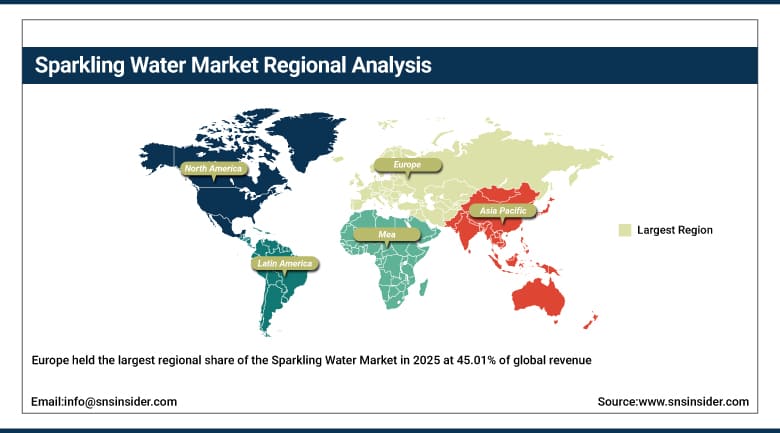
Europe held the largest regional share of the Sparkling Water Market in 2025 at 45.01% of global revenue, driven by deep-rooted sparkling water consumption traditions and an aging population sustaining demand for established brands including Perrier, Gerolsteiner, and San Pellegrino. Strong domestic mineral water production infrastructure continues to reinforce the region's leadership position. Germany led the European market with a 22.80% regional share in 2025, supported by its strong domestic mineral water production and consumption tradition. France, Italy, and the United Kingdom are also contributing meaningfully to regional growth, supported by established sparkling water brand heritage.
Get Customized Report as Per Your Business Requirement - Enquiry Now
North America Sparkling Water Market Insights
North America represented a significant share of the global Sparkling Water Market in 2025, supported by strong health-conscious consumer demand and rapid functional beverage category innovation. The region's mature retail and e-commerce distribution infrastructure continues to reinforce sustained market growth. The United States accounted for approximately 84.60% of the North American market in 2025, reflecting its large health-conscious consumer base and concentration of leading functional beverage brands. Canada is contributing to regional growth through steady sparkling water adoption.
Asia Pacific Sparkling Water Market Insights
Asia Pacific is projected to register the fastest CAGR of 13.5% during the forecast period 2026-2035, driven by urban millennials and Gen Z seeking better-for-you hydration products aligned with wellness and clean-label preferences. Growing penetration of modern retail and café chains continues to reinforce the region's above-average growth trajectory. China accounted for approximately 30.40% of the Asia Pacific market in 2025, supported by rising urbanization and expanding middle-class income levels. Japan and South Korea are also contributing meaningfully to regional growth, with younger consumers increasingly adopting sparkling water as a modern alternative to traditional soft drinks.
Middle East & Africa and Latin America Sparkling Water Market Insights
The Middle East & Africa region is exhibiting steady growth as modern retail infrastructure and health consciousness expand across the Gulf states. Latin America is similarly benefiting from rising disposable income and growing consumer interest in premium hydration alternatives. The UAE led the Middle East & Africa market with a 22.60% regional share in 2025. Brazil represented 26.40% of the Latin American market in 2025, driven by expanding modern retail penetration, with Mexico also contributing to regional growth.
Growth Drivers: Health Consciousness and Functional Beverage Innovation Driving Market Growth
The Global Sparkling Water Market is being fueled mainly by heightened health awareness of consumers, rising obesity rates leading to a shift from sugar-based drinks, and robust retailing due to the changing consumer preference for healthier drinks. Consumers are becoming more aware of the dangers of consuming large amounts of sugar, and they are seeking alternatives that offer healthy options with a no-sugar content and low calories.
There is growing innovation of prebiotic and functional sparkling beverages that is transforming the industry beyond simple and flavored options. Rising demand from millennials and Gen Zs in urban areas is pushing adoption of healthier hydration drinks. Growing retail, café chain and premium convenience store presence is contributing to greater awareness and acceptance of sparkling water brands around the world.
Restraints: Intense Competition and Health Claim Scrutiny Limiting Market Expansion
Although the market conditions seem promising due to the underlying demand, there are significant barriers associated with the high degree of competitiveness that arises from the increasing number of functional beverages available in the market. The growing number of lawsuits against health claims from prebiotic and functional beverages has been posing risks in terms of reputation and litigation for the brands.
Volatility in the prices of raw materials and aluminum cans has been exerting pressure on the profit margins of manufacturers, especially with the ongoing uncertainties regarding trade tariffs. Additionally, saturation of the mature Western markets is expected to increase price-based competition.
Opportunities: Functional Ingredient Innovation and Emerging Market Expansion Creating New Growth Avenues
Substantial opportunity exists in continued development of functional sparkling beverages incorporating prebiotics, adaptogens, and other wellness-focused ingredients that command premium pricing. Companies that successfully commercialize differentiated functional formulations stand to capture significant share of category value growth.
Growing urbanization and rising disposable income across emerging markets in Asia Pacific and Latin America represent a further significant growth avenue. Continued expansion of sustainable, can-based packaging also represents meaningful opportunity for brands seeking to align with evolving consumer environmental preferences.
Recent Developments
-
2025: PepsiCo announced its acquisition of prebiotic soda brand Poppi for nearly USD 2 billion, strengthening its presence in the functional beverage category.
-
2025: PepsiCo launched Pepsi Prebiotic Cola, containing sparkling water and three grams of prebiotic fiber, available in stores nationwide in early 2026.
-
2025: The Coca-Cola Company debuted Simply Pop, a prebiotic soda offshoot of its Simply juice line, entering the functional sparkling beverage category.
-
2025: Spindrift introduced Spindrift Soda, made without unnecessary ingredients like prebiotics, expanding its sparkling water brand into adjacent functional categories.
Sparkling Water Market Key Players
-
The Coca-Cola Company
-
Nestlé S.A.
-
Danone S.A.
-
National Beverage Corp.
-
Keurig Dr Pepper Inc.
-
Talking Rain Beverage Company
-
Spindrift Beverage Co.
-
Asahi Group Holdings, Ltd.
-
Gerolsteiner Brunnen GmbH & Co. KG
-
Sanpellegrino S.p.A.
-
Suntory Holdings Limited
-
AQUA Carpatica
-
Waterloo Sparkling Water
-
RHODIUS Mineralquellen und Getränke GmbH & Co. KG
-
Bisleri International Pvt. Ltd.
-
Liquid Death
-
S.Pellegrino
-
Perrier
Sparkling Water Market Report Scope:
| Report Attributes | Details |
|---|---|
| Market Size in 2025 | USD 41.90 Billion |
| Market Size by 2035 | USD 136.07 Billion |
| CAGR | CAGR of 12.50% From 2026 to 2035 |
| Base Year | 2025 |
| Forecast Period | 2026-2035 |
| Historical Data | 2022-2024 |
| Report Scope & Coverage | Market Size, Segments Analysis, Competitive Landscape, Regional Analysis, DROC & SWOT Analysis, Forecast Outlook |
| Key Segments | • By Product Type (Plain Sparkling Water, Flavored Sparkling Water, Naturally Sparkling Water, Carbonated Mineral Water) • By Packaging Type (Bottles, Cans, Others • By Distribution Channel (Store Based, Non-Store Based) • By End Use (Household Consumption, Foodservice & Restaurants, Events & Catering, Others) |
| Regional Analysis/Coverage | North America (US, Canada), Europe (Germany, UK, France, Italy, Spain, Russia, Poland, Rest of Europe), Asia Pacific (China, India, Japan, South Korea, Australia, ASEAN Countries, Rest of Asia Pacific), Middle East & Africa (UAE, Saudi Arabia, Qatar, South Africa, Rest of Middle East & Africa), Latin America (Brazil, Argentina, Mexico, Colombia, Rest of Latin America). |
| Company Profiles | The Coca-Cola Company, PepsiCo, Inc., Nestlé S.A., Danone S.A., National Beverage Corp., Keurig Dr Pepper Inc., Talking Rain Beverage Company, Spindrift Beverage Co., Asahi Group Holdings, Ltd., Gerolsteiner Brunnen GmbH & Co. KG, Sanpellegrino S.p.A., Primo Brands Corporation, Suntory Holdings Limited, AQUA Carpatica, Waterloo Sparkling Water, RHODIUS Mineralquellen und Getränke GmbH & Co. KG, Bisleri International Pvt. Ltd., Liquid Death, S.Pellegrino, Perrier |
Frequently Asked Questions
The Sparkling Water Market is expected to grow at a CAGR of 12.50% from 2026 to 2035.
The Sparkling Water Market was valued at USD 41.90 Billion in 2025.
The market is driven by increasing health consciousness among consumers, rising obesity rates, and significant retail expansion reflecting healthier beverage preferences.
The Plain Sparkling Water segment dominated the Sparkling Water Market in 2025.
The Europe region dominated the Sparkling Water Market in 2025, accounting for approximately 45.01% market share.
