
Tea Market Report Scope & Overview:
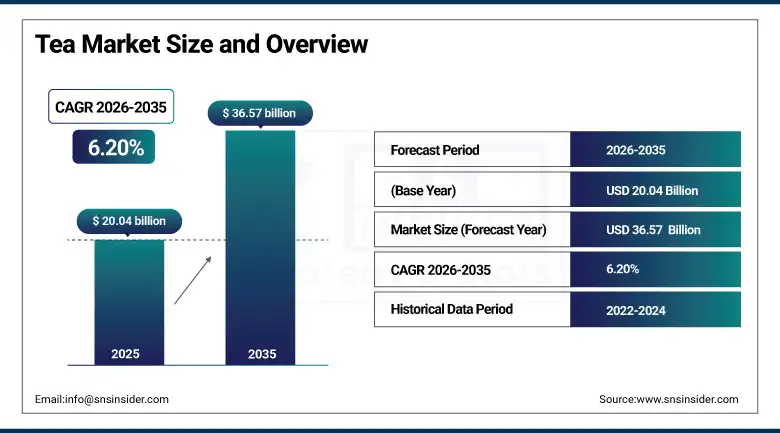
The Tea Market was valued at USD 20.04 billion in 2025 and is expected to reach USD 36.57 billion by 2035, growing at a CAGR of 6.20% from 2026-2035.
There is consistent growth in the tea market because consumers are increasingly turning to healthy, natural, and functional drinks rather than sodas. Growing knowledge about tea's antioxidants, detoxifying power, and immune system boosting qualities is playing a huge role in this increased demand for tea. New products in the form of herbal, organic, and flavored teas are being introduced to attract more customers. Urbanization, growing disposable income, and shifting lifestyles are adding to the consumption of tea. Moreover, the expansion of retail networks and online stores is adding to increased availability, which helps grow the market.
According to the U.S. Department of Agriculture (USDA), beverage consumption patterns are increasingly shifting toward products perceived as natural and low-calorie, including tea, which is widely associated with antioxidants and hydration benefits.
To Get more information On Tea Market - Request Free Sample Report
Tea Market Trends
-
Rising consumer preference for natural, healthy, and low-calorie beverages is driving the tea market.
-
Growing awareness of health benefits such as antioxidants and improved metabolism is boosting market growth.
-
Expansion of premium tea varieties, including herbal, green, and specialty teas, is fueling product diversification.
-
Increasing adoption of ready-to-drink (RTD) tea products and convenient packaging formats is shaping consumption trends.
-
Advancements in tea processing, flavor innovation, and sustainable cultivation practices are enhancing product quality.
The U.S. Tea Market Size Outlook
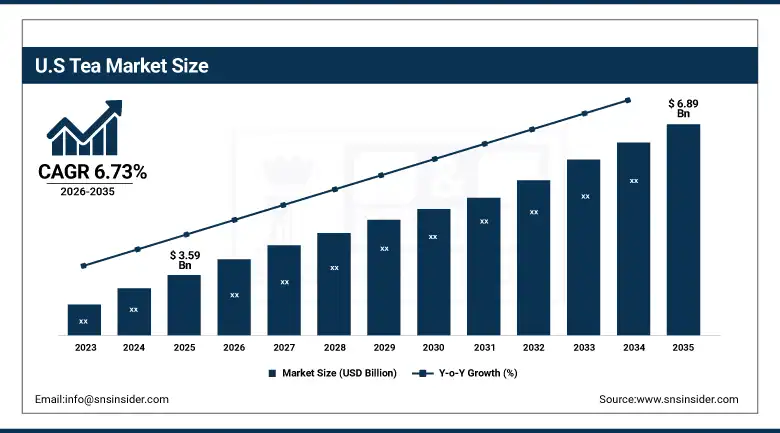
The U.S. Tea Market was valued at USD 3.59 billion in 2025 and is expected to reach USD 6.89 billion by 2035, growing at a CAGR of 6.73% from 2026-2035.
The tea market in the United States is experiencing growth due to health consciousness among consumers, who prefer low-calorie drinks. Customers are moving away from carbonated soft drinks because of the health benefits of drinking tea. Tea market growth is also driven by product innovation, specialty tea expansion, and effective distribution networks via retailing and online sales channels. Besides, changing lifestyles are encouraging tea consumption in cafes.
The U.S. Tea Association notes that Americans consume over 3.8 billion gallons of tea annually, with iced tea accounting for the majority of consumption, reflecting strong and sustained household demand.
The U.S. Census Bureau reports consistent growth in e-commerce retail sales, enabling wider distribution of specialty tea brands through online grocery platforms and direct-to-consumer channels.
Tea Market Segment Analysis
-
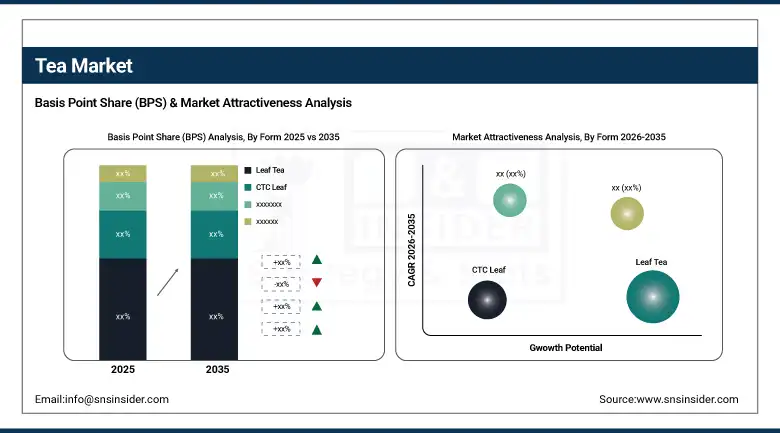
By Form, CTC leaf segment dominated the Tea Market in 2025 with 50.40% share; leaf tea segment is the fastest-growing (CAGR).
-
By Flavouring, unflavoured tea segment dominated the Tea Market in 2025 with 68.15% share; flavoured tea segment is the fastest-growing (CAGR).
-
By Type, black tea segment dominated the Tea Market in 2025 with 48.65% share; herbal tea segment is the fastest-growing (CAGR).
-
By Distribution Channel, hypermarkets/supermarkets segment dominated the Tea Market in 2025 with 40.32% share; online stores segment is the fastest-growing (CAGR).
By Form, CTC leaf segment dominates the Tea Market, Leaf tea segment expected to grow fastest
The CTC leaf segment dominates the tea market owing to the low cost, great taste, and broad appeal among mass consumer groups. The rapid preparation capability of CTC leaves and their great taste are suitable for regular drinking by consumers. The segment has been able to take advantage of economies of scale and efficient supply chain logistics to dominate the market. Efficient and well-established supply chains and consumer preference towards traditional tea consumption have contributed immensely to this segment's dominance across urban and rural areas globally.
The leaf tea segment emerges as the fastest-growing due to the increased preference amongst consumers towards the use of high-end, natural, and less-processed tea leaves. Growing health consciousness and demand for superior quality loose-leaf tea owing to its better aroma and flavor are contributing to the increasing popularity of leaf tea amongst consumers. Premiumization trends, proliferation of café culture, and increasing consumption of artisanal teas are fueling the uptake of this product even further.
By Flavouring, Unflavoured tea segment dominates the Tea Market, Flavoured tea segment expected to grow fastest
Unflavored tea is the largest segment in the tea market owing to the conventional consumption habits and availability of the product as well as cultural preferences within the major countries consuming tea. The product offers consistency of flavor and fits well within the daily habits. In addition, due to low costs associated with the product, the mass production ensures that it is available to a wide customer segment. Retail penetration along with efficient supply chain management results in consistent global demand of the tea.
Flavored tea is the highest growing category due to changing consumer behavior and need for diversified products. Increased use of tea that includes fruits, spices, or herbs has been observed owing to the rising trend of health consciousness and high-end lifestyles. Consumers belonging to younger demographics are keen to consume novel and wellness drinks. Moreover, changing café and beverage culture is supporting growth of this category.
By Type, Black tea segment dominates the Tea Market, Herbal tea segment expected to grow fastest
The black tea holds dominance in the global tea industry owing to its bold taste, high caffeine content, and rich cultural relevance in major producer and consumer nations. This tea finds wide applicability in traditional preparation and forms the base for most packaged tea varieties available in the marketplace. The tea enjoys popularity because of its lower costs, greater shelf life, and easy accessibility through global logistics networks. Its widespread household and industrial use further adds weight to its dominance in the global tea market.
Herbal tea is the fastest-growing segments because of an increase in wellness consciousness among consumers. The growing demand for health beverages, which lack caffeine and have natural components such as chamomile, ginger, and peppermint, is contributing to the segment's growth. Preference for prevention and stress-relieving products is another factor adding to herbal tea's growth. The changing lifestyles of consumers towards health consumption have boosted the segment's growth.
By Distribution Channel, Hypermarkets & supermarkets segment dominates the Tea Market, Online stores segment expected to grow fastest
Hypermarkets and supermarkets dominate the tea market because of the wide variety of products offered, significant retail presence, and heavy consumer traffic. Convenience in purchase, competitive pricing, and ease of comparing various products make hypermarkets and supermarkets popular destinations for purchasing tea products. Effective promotional initiatives and well-established networks of retailers also add value to their popularity and sales potential. Their extensive coverage in both urban and semi-urban locations makes them the leading players in the global tea distribution network.
Online stores are the fastest-growing distribution channel because of rapid digitization, higher prevalence of smartphones, and increased convenience of home deliveries. E-commerce websites provide a wide selection of tea products at highly discounted prices and through subscription services. Adoption of online shopping and improvements in logistics infrastructure are contributing to fast growth rates for online channels. Increased digital accessibility in urban and rural locations is also boosting the growth of the channel in the tea market.
Regional Analysis
|
Region |
Major Country |
Share within Region (%) |
|---|---|---|
|
North America |
United States |
84.6% |
|
Europe |
United Kingdom |
19.2% |
|
Asia Pacific |
Australia |
7.3% |
|
Middle East & Africa |
UAE |
13.9% |
|
Latin America |
Brazil |
46.8% |
North America Tea Market Insights
The North America region is forecast to experience the highest rate of growth in the Tea Market during 2026–2035, at an estimated CAGR of approximately 6.90%. This trend can be attributed to an enhanced level of health awareness among consumers and the preference for natural and organic beverages. People are gradually transitioning from carbonated beverages to tea as a result of its antioxidant nature and other benefits associated with it. Growth in specialty tea cafes, innovation in products, and easy accessibility in retail as well as online stores are some factors contributing to growth in the market.
Europe Tea Market Insights
Europe tea market is witnessing owing to the increasing popularity of high-quality, organic, and premium tea types. The health consciousness of consumers is prompting an increase in the consumption of healthy green, herbal, and wellness teas. The presence of good café culture coupled with higher consumption of ready-to-drink tea beverages is contributing to this expansion of the market. The importance of sustainable sourcing has become an essential buying factor. Moreover, the development of good retail distribution channels as well as growing e-commerce presence is ensuring good availability of products.
Asia Pacific Tea Market Insights
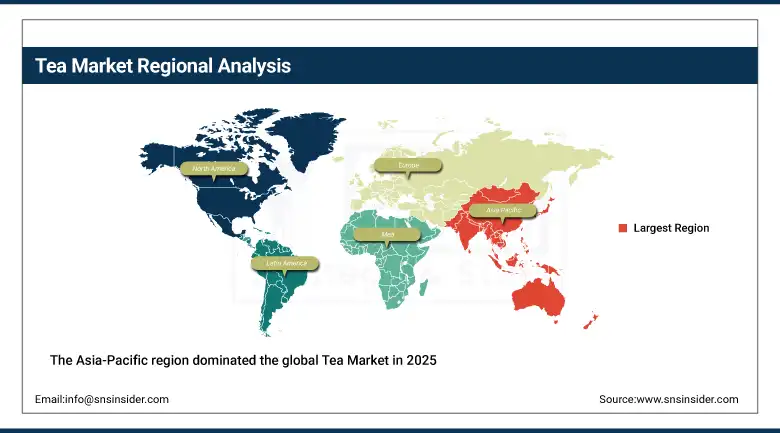
The Asia-Pacific region dominated the global Tea Market in 2025, with a revenue share contribution of about 46.87%. The dominance in the market is attributed to cultural tea consumption, high population numbers, and the existence of tea-drinking traditions among many of the region's top nations. Other factors that contribute to the Asia-Pacific region's leadership include high production levels, favorable climate conditions, and efficient supply chains. Market growth can be attributed to high disposable incomes, urbanization, and increased demand for specialized tea varieties.
Get Customized Report as per Your Business Requirement - Enquiry Now
Middle East & Africa and Latin America Tea Market Insights
Middle East & Africa and Latin America tea markets are expanding steadily owing to the increase in population and the increasing urbanization in addition to the growing acceptance of the habit of tea drinking. The growth in the tea consumption market in Middle East & Africa is due to the existing tea-drinking culture along with the rising demand for flavors and premium tea. Meanwhile, in Latin America, the changing tastes of consumers towards beverages that are considered healthy are encouraging consumption of green and herbal tea.
Market Dynamics
Growth Drivers: Rising health consciousness and preference for natural antioxidant beverages accelerating global tea consumption across demographics worldwide consistently growth trends
Increased knowledge about health and wellness has seen the consumption of tea become more popular since people are moving towards healthier beverages. Tea has been known for a long time now as an antioxidant that helps boost immunity and metabolism. For this reason, it has proved to be a better substitute for soft drinks that people were consuming regularly. There have been a lot of benefits associated with the consumption of herbal, green, and organic teas. Increased fitness consciousness and plant-based lifestyles are some of the factors driving their popularity. High disposable incomes and increased urbanization have seen the popularity of premium tea increase.
Restraints: Fluctuating raw material prices and climatic dependency of tea cultivation increasing production uncertainty and impacting supply chain stability globally
The production of tea can be described as highly sensitive to climatic changes hence rendering the entire process susceptible to several risks including unpredictable rainfall and temperature changes and weather extremes in general. The above-mentioned factors have an impact on the production levels, quality of products, and harvesting periods and, therefore, bring about supply fluctuations. Price variations of raw materials and wages can also act as a source of problems for producers. Small-scale and medium-scale farmers lack the ability to cope with such risks and this creates volatility within the industry.
Opportunities: Growth of ready-to-drink and convenience-based tea formats driven by urban lifestyles and increasing demand for on-the-go beverage consumption solutions
The fast-growing trend of urbanization and hectic lifestyles have made people more interested in consuming beverages that can be easily packed and are readily available in their original form without any loss in taste or quality. People want drinks that they can easily carry along while working or when traveling or relaxing. These factors are prompting tea manufacturers to develop new packaging technologies along with extending the shelf life and adding more flavors to the beverages. The establishment of retail stores, vending machines, and online grocers is increasing the availability of these products as well.
Recent Developments:
-
2026: Tata Consumer expanded its global tea portfolio, strengthening Tetley and Tata Tea premium variants. The company focused on health-oriented blends and digital supply chain upgrades to improve sourcing efficiency and sustainability across global tea operations.
-
2025: Nestlé expanded its tea beverage collaborations in 2025, strengthening cold tea and ready-to-drink innovations. The company focused on healthier beverage options and improved sugar reduction across its global tea portfolio.
-
2025: ITO EN launched new green tea and functional beverage innovations in 2025, focusing on health-driven consumer demand. The company strengthened its leadership in Japan’s bottled tea market with expanded product diversification.
-
2024: Unilever strengthened Lipton’s sustainability commitments, focusing on regenerative agriculture and packaging innovation. The company enhanced global tea supply chain resilience and expanded tea-based wellness products.
Tea Market Key Players are:
-
R. Twining and Company Limited
-
Dilmah Ceylon Tea Company PLC
-
Bigelow Tea
-
PepsiCo
-
YORKSHIRE TEA
-
Starbucks Coffee Company
-
Unilever
-
Caraway Tea
-
Harris Freeman
-
The Republic of Tea
-
Tata Consumer Products
-
Nestlé
-
Hain Celestial Group
-
Associated British Foods
-
Akbar Brothers
-
ITO EN Ltd.
-
McLeod Russel
-
Tetley
-
Celestial Seasonings
-
Tea Forte
Tea Market Report Scope:
| Report Attributes | Details |
|---|---|
| Market Size in 2025 | USD 20.04 Billion |
| Market Size by 2035 | USD 36.57 Billion |
| CAGR | CAGR of 6.20% From 2026 to 2035 |
| Base Year | 2025 |
| Forecast Period | 2026-2035 |
| Historical Data | 2022-2024 |
| Report Scope & Coverage | Market Size, Segments Analysis, Competitive Landscape, Regional Analysis, DROC & SWOT Analysis, Forecast Outlook |
| Key Segments | • By Technology (RFID, GPS, Sensors) • By Product (Smart Collar, Smart Camera, Smart Harness and Vest, Others) • By Animal Type (Dogs, Cats, Other Animals) • By Application (Identification & Tracking, Behavior Monitoring & Control, Facilitation, Safety & Security, Medical Diagnosis & Treatment) • By Sales Channel (Online, Offline) |
| Regional Analysis/Coverage | North America (US, Canada), Europe (Germany, UK, France, Italy, Spain, Russia, Poland, Rest of Europe), Asia Pacific (China, India, Japan, South Korea, Australia, ASEAN Countries, Rest of Asia Pacific), Middle East & Africa (UAE, Saudi Arabia, Qatar, South Africa, Rest of Middle East & Africa), Latin America (Brazil, Argentina, Mexico, Colombia, Rest of Latin America). |
| Company Profiles | R. Twining and Company Limited, Dilmah Ceylon Tea Company PLC, Bigelow Tea, PepsiCo, YORKSHIRE TEA, Starbucks Coffee Company, Unilever, Caraway Tea, Harris Freeman, The Republic of Tea, Tata Consumer Products, Nestlé, Hain Celestial Group, Associated British Foods, Akbar Brothers, ITO EN Ltd., McLeod Russel, Tetley, Celestial Seasonings, Tea Forte |
Frequently Asked Questions
Asia Pacific dominated the Tea Market in 2025.
The CTC leaf segment dominated the Tea Market in 2025.
Rising health consciousness and preference for natural antioxidant beverages accelerating global tea consumption across demographics worldwide consistently growth trends.
The Tea Market was valued at USD 20.04 billion in 2025.
The Tea Market is expected to grow at a CAGR of 6.20% from 2026 to 2035.
