
Intelligent mobility is likely to be heavily influenced by artificial intelligence, which will become one of the most impactful technologies that will affect the future of the automotive industry. Modern vehicles are changing into smart and connected mobility platforms that can analyze the environment, help the driver, forecast the need for maintenance, and even perform some tasks themselves.
The fast evolution of the AI for the automotive industry offers a lot of possibilities for carmakers, IT companies, and customers. Nevertheless, the future of intelligent mobility will depend not only on the level of technological progress but also on such aspects as consumer trust, user-friendliness, and other factors.
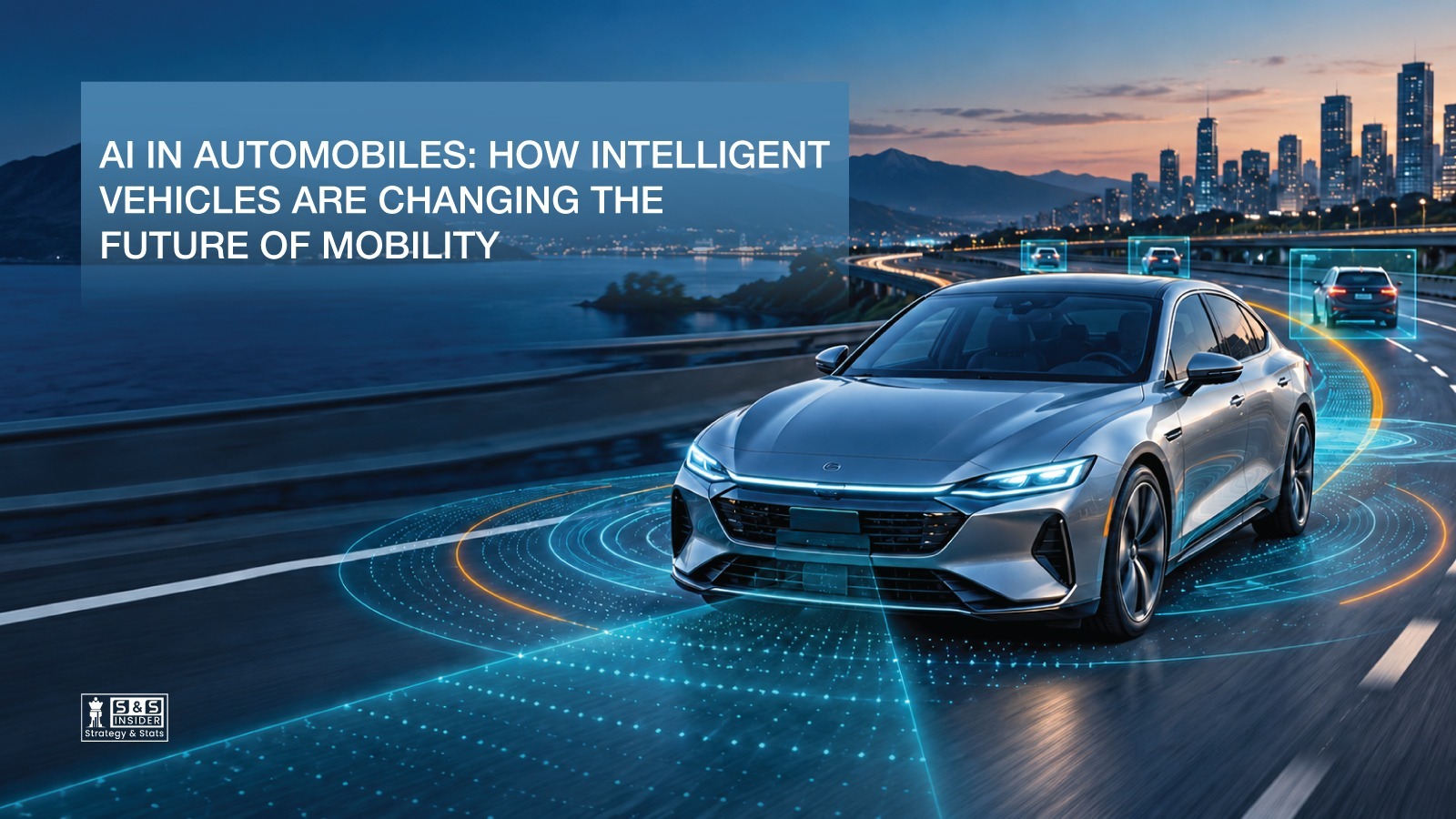
AI is Transforming the Modern Vehicle
AI is already having an impact on many areas of driving. Advanced driver assistance systems may be used to keep track of road conditions, detect any hazards, control vehicle position, and assist drivers in difficult situations. Apart from that, there are applications of AI in infotainment, navigation, voice interaction, predictive maintenance, customization, and connected cars. In that way, vehicles can handle enormous amounts of information and react to changes in the situation around more effectively.
Moreover, the evolution of increasingly advanced software leads to the rethinking of the whole approach to automobile manufacturing by car makers. Instead of seeing the vehicle as a ready-made mechanical device, the automakers begin considering it as constantly developing technology. By making software upgrades, one can add new functions, optimize some systems, and improve the driving experience as a whole. It makes it possible for automakers to establish closer relations with clients even after selling a vehicle.
Consumer Trust Will Shape Autonomous Driving
Autonomous driving represents one of the most ambitious applications of AI in transportation. Instead of simply assisting drivers, autonomous systems are designed to perform increasingly complex driving tasks.
This transition introduces an important challenge: trust.
Drivers must be confident that the systems are capable of identifying risks, interpreting the driving conditions and taking the correct actions. Unlike some consumer technology, automotive AI operates in a scenario where mistakes could have grave consequences.
Creating this trust will require more than simply showcasing the capabilities of the technology. Auto manufacturers must be honest about what the AI systems can do and under what circumstances human involvement is still needed. Such an open approach will help consumers form a realistic expectation of self-driving cars instead of setting up unrealistic expectations for the technology.
Technology Must Solve Problems, Not Create Complexity
With increasing levels of digitalization in vehicles, the other challenge facing automobile manufacturers is that of complexity. Technological features in a car can indeed make sense to consumers when they enhance safety, convenience, and ease of driving. On the other hand, numerous features, difficult interfaces, constant alarms, and hard-to-control functions might add to the complexity of the vehicle and not its intelligence.
By enabling complex operations in the background, the use of AI can reduce the need for overt technology and, thus, add to the convenience of the driver through automation of tasks without the need for continuous engagement on their part. The intelligent vehicle of the future, thus, could be said to be not defined by its technological capabilities, but by how well it uses them.
Advanced Driver Assistance Can Build Familiarity
The transition into self-driving cars will happen slowly and steadily. An Advanced Driver Monitoring System can serve as a valuable link between driving as we know it and automation. Technologies, such as adaptive cruise control, lane assistance, automated parking, collision avoidance, and other driver-assistance tools allow people to get used to AI-powered driving, without losing the sense of participation.
Such a transition will allow for gaining experience in using automated technologies. As drivers get accustomed to technologies that can help them with certain aspects of driving, the idea of increased vehicle automation will be easier to accept. For car manufacturers, it will make sense to create technologies for driver assistance. Such solutions not only help drivers immediately but also contribute to future progress in automation.
Reliability will be Central to AI Adoption
The effectiveness of AI in automobiles will be dependent on the results achieved in real-life situations. Road situations are unpredictable due to changing weather conditions, traffic flows, unexpected pedestrian and cyclist behaviors, and differences in infrastructure from one place to another. AI systems should work in diverse situations. It means that there will be high demands on sensors, computing systems, machine learning algorithms, maps, and software installed in vehicles.
Additionally, reliability will determine consumer perceptions about AI in cars. A reliable and predictable behavior of an automobile will create trust, while an unpredictable behavior of the same despite its sophisticated technical features may generate mistrust. Automakers and technology providers should invest efforts not only in expanding capabilities but also in testing and validation of the system.
Personalization Could Redefine the Driving Experience
AI could also be used for making cars more adaptable to specific users. The smart car technology may enable vehicles to get accustomed to the preferences of the driver in such areas as route planning, setting of the temperature inside the car, entertainment systems, and driver support systems. The car would become better adjusted to the needs of the driver automatically, without any need to adjust its functions manually.
The use of voice-operated assistants could prove especially helpful in the realization of this trend. Drivers could operate their vehicles without having to navigate through numerous menu screens and just talk to the car using natural language.
Global Markets May Follow Different Paths
The adoption of automotive AI will not necessarily progress at the same pace everywhere. Consumer expectations, road infrastructure, regulatory frameworks, economic conditions, technology familiarity, and transportation needs differ across markets. These factors can influence how quickly consumers embrace advanced vehicle technologies. Automakers may therefore need to develop region-specific strategies rather than assuming that a single approach will work globally.
In some markets, autonomous technologies may be closely associated with safety and convenience. In others, consumers may place greater emphasis on affordability, driving control, reliability, or simplicity. Understanding these differences will be important as automakers expand AI-enabled vehicle platforms across international markets.
AI Could Become a Major Automotive Differentiator
With decreasing physical differences in car engineering, software and intelligence can become increasingly important drivers of distinction. Car manufacturers have already been competing in fields like connected services, intelligent cockpits, assisted driving, digital ecosystem, and personalization. AI can help combine all these elements into an integrated car ecosystem.
This can also transform the classic business model of the automotive industry. New possibilities, such as software updates, digital services, subscription offerings, and connected apps can arise beyond the mere selling of the vehicle. At the same time, the companies should guarantee that software development does not overshadow the essence of driving.
What is the Future of Intelligent Mobility
The evolution of automotive AI is not limited merely to the quest for achieving full autonomy for the vehicle. This is the wider process of evolving perception of the vehicle's environment, its interaction with the passengers and transportation per se. The subsequent stage of innovations will revolve around reliability, intuitiveness and usefulness of the AI rather than its advanced functionality.
From this perspective, technological advancement must be combined with proper product development and understanding of customers' needs in the case of automakers. The future car might be no longer about being the most technologically advanced vehicle but rather about providing the experience of intelligent mobility.
In this regard, while progressing further, automotive industry must find answers not only to the questions regarding how intelligent could the vehicle be. It might be even more important to find out whether it could cooperate efficiently with people and how well it can do that. This might become the defining factor for the next generation of cars.



