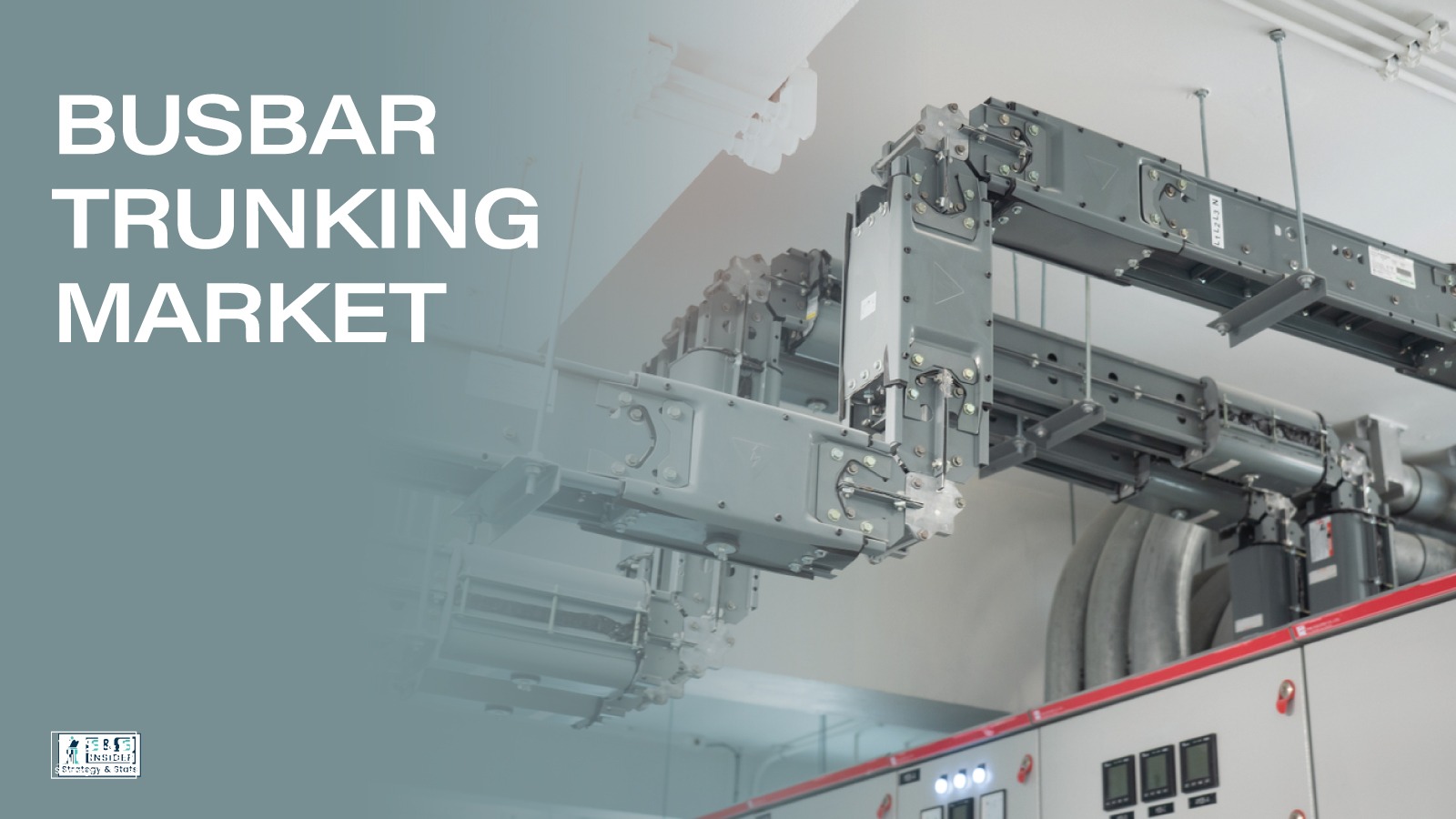
The Busbar Trunking Market is witnessing strong growth owing to high demands for power transmission solutions. Factors including rising urbanization, growing demand for smart cities, industrial automation, development of data centers, and investments in energy-efficient electricity networks are some of the key factors driving market growth. Advanced busbar trunking solutions provide benefits such as improved current carrying capacity, low energy losses, increased safety, easy installation, and low maintenance cost compared to traditional cable-based solutions.
According to SNS Insider, the value of the global Busbar Trunking Market in 2025 was assessed to be USD 7.04 Billion. It is expected to touch USD 14.18 Billion in 2035, growing at a CAGR of 7.26% between 2026–2035. Growth in the market can be attributed to factors such as rising electrification rate, renovation in existing electrical infrastructure, stricter safety regulations, and growing trend of sustainable construction. Furthermore, rising investments in industrial setups, commercial buildings, renewable energy sources, and smart buildings have been strengthening the market demand.
Key Players
Some of the major companies operating in the Busbar Trunking Market are ABB Ltd., Siemens AG, Schneider Electric SE, Eaton Corporation PLC, General Electric Company (GE), Legrand SA, Larsen & Toubro Limited, C&S Electric Ltd., Godrej & Boyce Manufacturing Co. Ltd., Rittal GmbH & Co. KG, Anord Mardix Group, E+I Engineering Ltd., Megabarre Group, NAXSO S.r.l., Pogliano Busbar S.r.l., DBTS Industries Sdn Bhd, EAE Elektrik, P&S Power Technologies Ltd., Cuthbertson Laird Group, and Mersen.
Strategic Developments & Industry Innovations
-
In October 2024, the Siemens company presented SIMOCODE M-CP – a small and effective motor control system intended to enhance the reliability, sustainable development, and efficiency of power management in industrial switchboards.
-
In June 2024, ABB presented ReliaGear™ Busway, a new generation low-voltage busway that is lighter and more modular in its construction than any other busway, offering better installation possibilities and easier maintenance.
-
In April 2024, Schneider Electric announced the launch of I-Line Track – a medium-power busway system for data centers with the hot-plug tap-off units, real-time monitoring options, and smaller installation footprints.
The Following Are the Leading Companies in the Global Busbar Trunking Industry:
1. Siemens AG: Advancing Smart and Sustainable Power Distribution
The Siemens AG Company is one of the most innovative enterprises in the field of electrification, automation, and smart infrastructure. The manufacturer provides busbar systems in its SENTRON and BD2 product series, which ensure safety, modularity, and energy efficiency for building power distribution in commercial premises, industry, data centers, and other types of infrastructure.
Moreover, the company develops its competitive position due to innovations related to digitalization, intelligent power control systems, energy management, and sustainable electric infrastructures. Smart buildings, grid modernization, and industrial automation have been the driving forces behind a rising need for advanced busbar systems.
2. ABB Ltd.: Expanding High-Performance Busway and Electrification Solutions
ABB Ltd. is a prominent manufacturer of electrical and automation products across the globe. It provides an extensive range of busbar trunking and busway systems, which include Busway LX and Isobar systems. These products are offered to industrial plants, commercial buildings, data centers, and critical infrastructure projects.
The company’s continued efforts in extending its portfolio of intelligent power distribution products, through modular busway systems, digital monitoring solutions, and energy-efficient infrastructures, are making it one of the most significant players in the global busbar trunking market.
3. Schneider Electric SE: Delivering Intelligent and Modular Busbar Systems
Schneider Electric is an international expert in energy management and automation systems. The Canalis and I-Line busbar trunking systems offered by Schneider Electric offer efficient power distribution systems to various industries such as industrial plants, commercial buildings, hospitals, data centers, and smart building projects.
Schneider Electric remains focused on digital energy management, smart electrical products, sustainability efforts, and smart energy monitoring systems. The focus of Schneider Electric on operational efficiency and safety adds to their strength in power distribution.
Advancing Electrical Infrastructure Through Smart Busbar Trunking Solutions:
In the years to come, the Busbar Trunking Market is predicted to see steady growth driven by the growing amount of investment made into the construction of smart buildings, industrial automation plants, renewable energy plants, data centers, and extensive urbanization schemes. The innovations seen in lightweight aluminum busbars, low-smoke-zero-halogen insulation materials, plug-and-play system designs, and intelligent monitoring tools are contributing further to improved system efficiency and safety.
Players such as Siemens AG, ABB Ltd., and Schneider Electric are taking a lead by introducing innovative electrification platforms, energy management solutions, and power distribution solutions that are eco-friendly. The growing importance of energy efficiency, reliability of operations, electrical safety, and modern infrastructure development will play an essential role in shaping the future of power distribution networks around the world.