
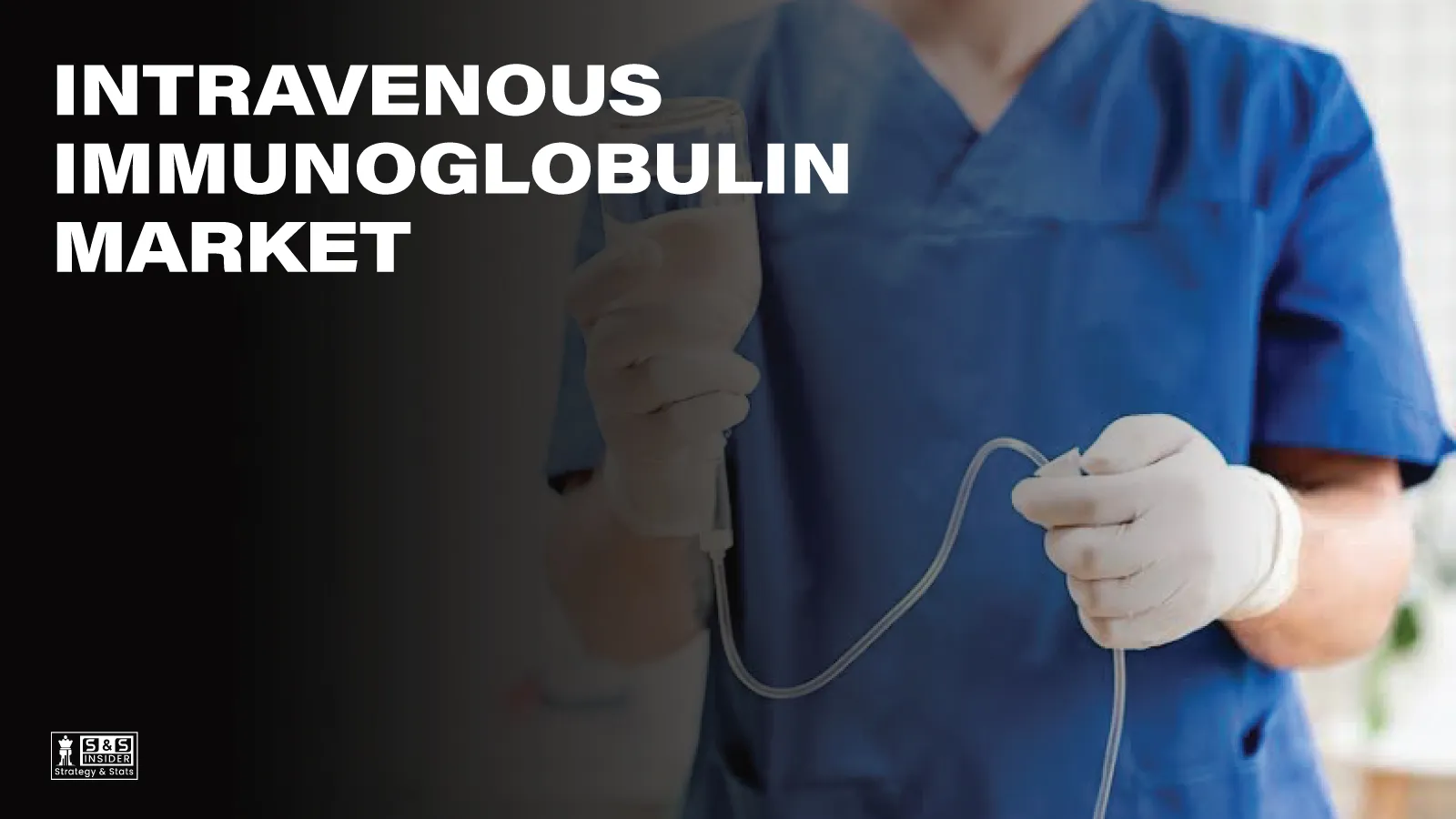
The U.S. Intravenous Immunoglobulin Market will keep growing because more and more cases of immunodeficiency disorders, autoimmune disorders, and neurological disorders require the administration of immunoglobulin derived from plasma as part of their treatment.
As per SNS Insider, the market value of the U.S. Intravenous Immunoglobulin Market stood at USD 7.71 Billion in 2025, reaching USD 16.58 Billion in 2035, which accounts for a CAGR of 7.95%, attributed to an increase in the prevalence of immunodeficiency disorders and neurological disorders, an increasing network of plasma collection centers, and the presence of prominent players and medical facilities in the Northeast region. The above information is part of the global Intravenous Immunoglobulin Market, valued at USD 14.98 Billion in 2025, which is expected to reach USD 30.83 Billion in 2035 at a CAGR of 7.49%.
Gain Actionable Intelligence on This Market – Request a Sample Report
Why the U.S. Leads Global Demand
The U.S. market is served by a wealth of high-profile healthcare institutions, research facilities, and learning institutions, especially in the Northeast corridor region covering New York, New Jersey, Massachusetts, and Pennsylvania. Top firms keep developing their offerings through the launch of new products, research and development activities, and mergers and acquisitions to gain an advantage in this therapeutic area.
An important change occurred in October 2025 with the introduction of a 100% duty on imported finished IVIG products into the country. This has had the effect of significantly increasing the cost of entry for non-domestic firms and compelling payers to review their supplier list.
Key Segment Trends
- IgG dominates product type at approximately 74.75% share in 2025, valued for its versatility across replacement and immunomodulatory therapy.
- Recombinant immunoglobulins are the fastest-growing product type, as manufacturers work to reduce dependence on donor plasma therapy supply.
- Immunodeficiency diseases lead application demand, while neurological disorders are growing fastest, driven by expanding use in chronic inflammatory demyelinating polyneuropathy, myasthenia gravis, and Guillain-Barré syndrome.
- Hospital pharmacies dominate distribution at 57.10% share, while specialty pharmacies are growing fastest as home-based IVIG treatment gains traction.
- Specialty clinics are the fastest-growing end-user segment, at a CAGR of approximately 8.61%, as neurology- and immunology-focused clinics streamline infusion protocols.
Companies Driving Innovation in the U.S. Market
Takeda Pharmaceutical Company
 The FDA has approved Takeda for an expanded indication for GAMMAGARD LIQUID in June 2025, which has enabled more applications of the drug in treating primary immunodeficiencies and other immune diseases. The expanded label helps Takeda in covering more patients in the fastest growing segments of the immunodeficiency treatment space and strengthens Takeda's position among the top branded IVIG products in the U.S. market.
KabaFusion
 KabaFusion teamed up with GC Biopharma U.S. back in July 2024 to bolster its capacity in logistics and supply chain management with regard to immunoglobulin treatments, which would benefit American patients needing dependable IVIG treatment options. It should be noted that this collaboration would be timely considering the increased cost pressure on non-domestic products due to tariffs.
CSL Behring
In 2025, CSL Behring continued building its network for collecting and processing plasma, further establishing itself as the dominant company with more than 22.5% market share. These infrastructure investments will enable CSL Behring to overcome the challenge facing the IVIG industry in general, which is dependent on its limited supply of plasma. These investments will allow CSL Behring to satisfy increasing demand in the U.S. despite difficulties in donor recruitment.
Other major players active in the U.S. include Grifols, Octapharma, Baxter International, and ADMA Biologics, each maintaining significant domestic plasma collection and fractionation infrastructure.
Market Dynamics
Growth Drivers
- Increasing incidence of primary immunological deficiencies, autoimmunity, and Neurology Device
- Growing disease awareness and improving diagnosis rates
- Expanding clinical use of IVIG beyond primary immunodeficiency into neurological and autoimmune conditions
Restraints
- Plasma supply dependency, since IVIG is derived entirely from human donor plasma
- The 100% U.S. tariff on imported finished IVIG products, effective October 2025, sharply raising landed costs
Opportunities
- Continued development of subcutaneous immunoglobulin alternatives to ease plasma supply pressure
- Expanding treatment access in previously underserved patient populations
The Future of the U.S. Intravenous Immunoglobulin Market
The US market will see steady growth until 2035, driven by increasing indications in neurology, development of specialty clinics, and ongoing research and development efforts of market leaders. Those companies that manage to build up their capacity in domestic plasma collection and explore new areas of recombinant and subcutaneous forms will find themselves well placed to cope with growing tariffs.



