In the current industrial scenario, having an optimal level of humidity has become crucial for maintaining product quality, productivity and compliance with regulations. The industries of pharmaceuticals, food processing, electronics, chemical products and lithium-ion batteries are using desiccant dehumidifiers to get rid of any excessive moisture that can affect their products and machines. With the rise in industrial automation and development of new production plants, the need for efficient humidity control solutions is increasing constantly.
Unlike traditional dehumidification using refrigerant dehumidifiers, desiccant dehumidifiers provide better performance in low temperature and humidity conditions, thus making them more suitable for applications that need stringent control of the environment. The increasing investment in energy efficient HVAC equipment, indoor air quality management, cold storages, hospitals, commercial buildings, and hyperscale data centers is driving the demand for these devices. In the electronics industry, according to IPC, it is recommended that relative humidity be maintained at 40% or less for protecting printed circuit boards.
As per SNS Insider, the U.S. Desiccant Dehumidifier Market value stood at about USD 85.4 Million in 2025 and is projected to reach around USD 153.8 Million by 2035, registering a CAGR of approximately 6.07%. The global market size of Desiccant Dehumidifiers was at USD 669.6 Million in 2025 and is anticipated to reach USD 1,207 Million by 2035, recording a CAGR of 6.08% during the forecast period. Growing demand for humidity control, growing EV battery production, increasing pharmaceutical production and investments in commercial infrastructure continue to drive market growth.
Gain Actionable Intelligence on the Desiccant Dehumidifier Market - Request a Sample Report
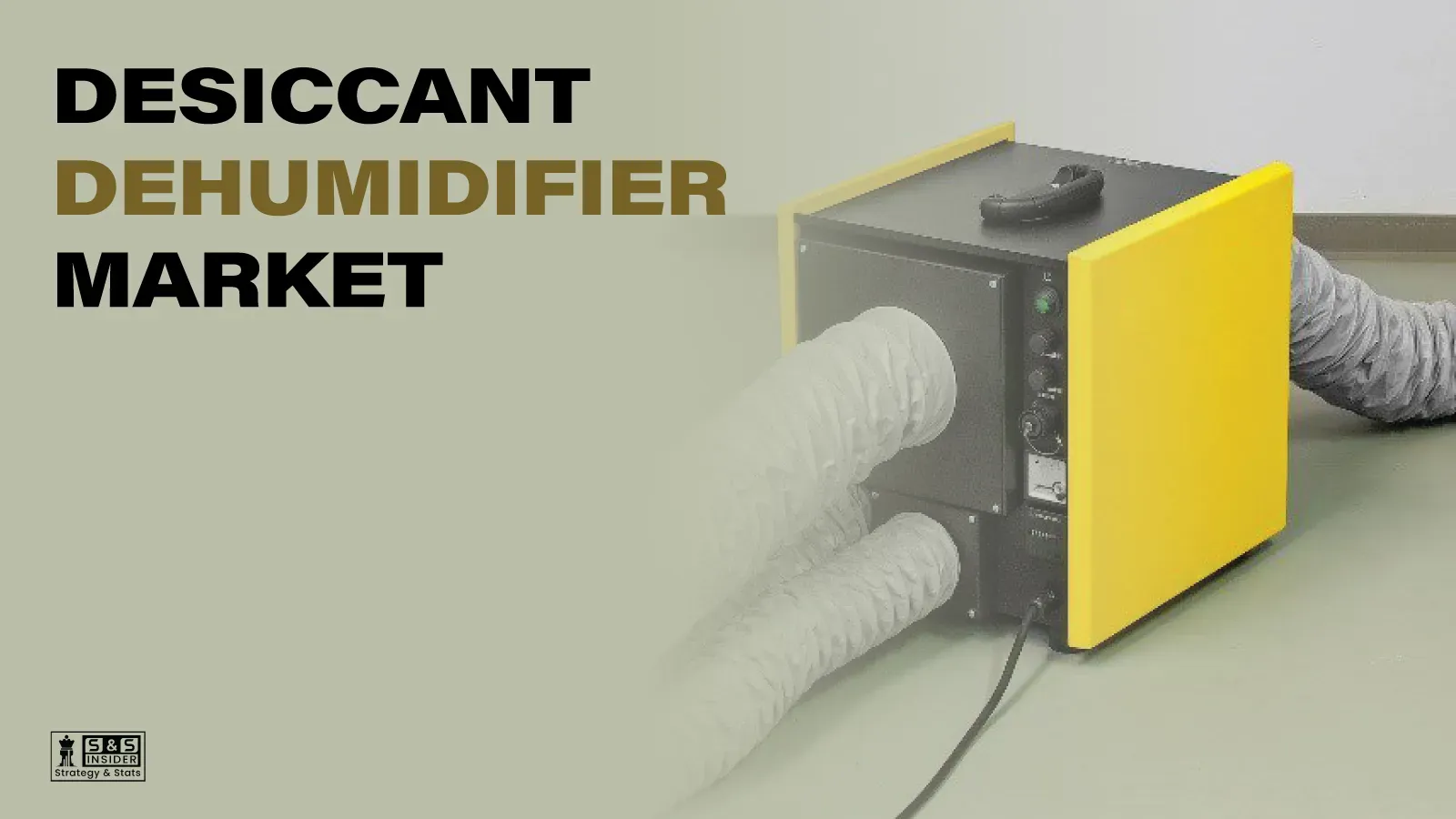
U.S. Desiccant Dehumidifier Market Analysis
The United States is one of the top desiccant dehumidifier markets owing to the growing requirement from pharmaceutical industries, food processing industries, electronics manufacturing industries, warehouses, healthcare institutions, and the rising number of data centers. Various companies in these sectors are making use of sophisticated humidity control equipment for safeguarding their products, maintaining product quality, and meeting growing environmental and quality standards. Investments in battery production facilities and HVAC systems are also playing an important role in the growth of this market.
In addition to this, the market in the US is being driven by fast growth in facilities producing batteries for EVs, increased investment in hyperscale data centers, and upgrade of pharmaceutical and food processing plants that need high humidity control. Increased use of energy efficient HVAC technologies, new constructions of cold storage facilities, and increased focus on stringent environmental and manufacturing regulations are among other factors that are further fueling the use of desiccant dehumidification systems in industry and commercial applications.
Top 5 Leading Desiccant Dehumidifier Leaders
Munters
 Munters is one of the world’s most prominent firms offering air treatment solutions and dehumidification solutions using advanced technologies. Munters serves the pharma industry, food processing plants, semiconductor industry, battery manufacturers, data centers and manufacturing industries where control over humidity levels is extremely important. In order to meet the rising global demand for its products, Munters has ramped up its manufacturing capacity in North America in 2024. This is due to an increase in demand from pharma companies, EV battery makers and hyperscale data centers.
Condair
 Condair has been able to build up its reputation as one of the world’s leading manufacturers of commercial and industrial humidification systems. The company’s product range features sophisticated desiccant dehumidifiers, evaporative cooling equipment, and climate control systems intended for use in the healthcare industry, manufacturing plants, food processing industry, and commercial properties. Condair recently purchased the U.S.-based manufacturer of evaporative media Kuul in July 2024. In addition, the company plans to build a new manufacturing plant in Virginia to improve its presence in the U.S. market.
Atlas Copco AB
 Atlas Copco is an international company dealing with industrial technology. The company offers services of compressed air, gas treatment, and humidity control solutions in several industrial fields. Its air treatment technologies provide solutions for manufacturing companies that require constant environmental conditions as well as moisture management. Atlas Copco announced in February 2025 the company’s decision to invest in increasing its manufacturing capabilities in India via establishing a new manufacturing plant in Talegaon.
Bry-Air
 Bry-Air is known for its proficiency in desiccant dehumidification technology, providing customized systems to control humidity in various industries like pharmaceuticals, food processing, chemical, defense, electronics and lithium-ion battery manufacturing. It emphasizes systems that are energy efficient and can help achieve ultra-low humidity levels even in difficult industrial conditions. Bry-Air keeps on growing globally by adopting innovative desiccant rotor technology and customized solutions to control humidity, thus increasing efficiency in manufacturing processes.
Seibu Giken DST
 Seibu Giken DST is one of the top manufacturers that focus on desiccant rotor technology and dehumidifiers for industries. The products of Seibu Giken DST find widespread application in the production of pharmaceuticals, food, electronics, clean rooms and industrial storage facilities where highly reliable humidity regulation is necessary. The company constantly engages in R&D to refine the materials of desiccant rotors and boost energy efficiency in accordance with rising demand from battery producers and clean room operations.
What the Future of Desiccant Dehumidifier Technology Holds
The development of desiccant dehumidifiers in the coming years will be fueled by increasing automation within industries, increased battery manufacturing, compliance with regulatory laws, and an increase in the demand for efficient climate control equipment. Industries like those involved in making batteries for electric vehicles, the semiconductor industry, pharmaceutical cleanrooms, and hyperscale data centers require ultra-low humidities which regular dehumidifiers cannot provide. As these industries expand around the world, there will be an increasing need for desiccant dehumidifiers.
Technological innovations like hybrid desiccant refrigerant systems, innovative silica gel and molecular sieve rotor materials, IoT-based monitoring, predictive maintenance and smart energy management are anticipated to increase efficiency and reduce operating costs of the system. This will help in maximizing the performance and sustainability of operations in the industry.
The development of healthcare facilities, food processing plants, electronic manufacturing companies, commercial buildings and renewable energy ventures will lead to continued innovation of desiccant dehumidification technology in order to adhere to increasing standards of the environment. Companies that invest in innovation, energy efficiency and smart humidity management technologies will be in a good position to take advantage of the emerging opportunities.