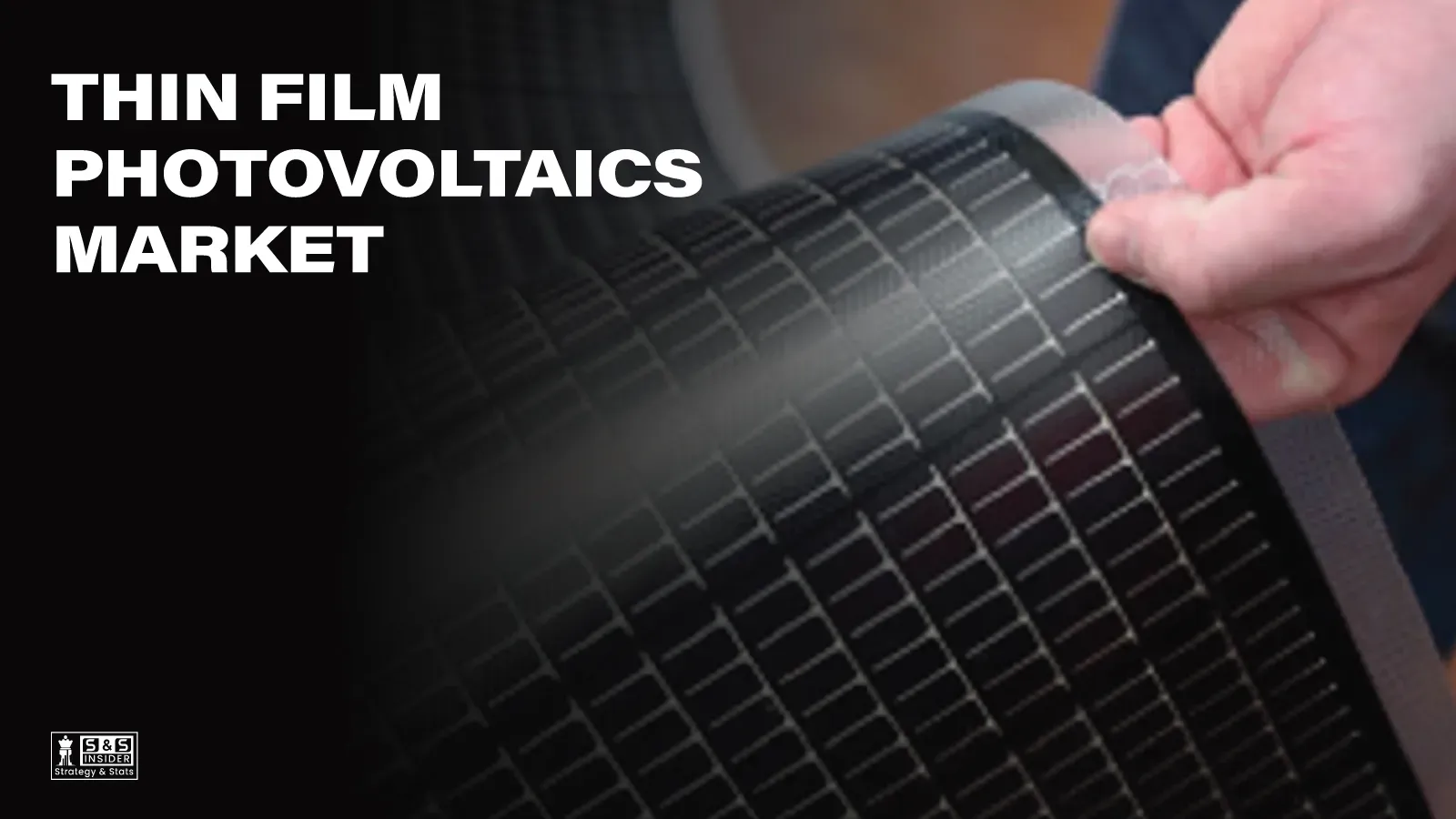
The Thin Film Photovoltaics Market has been gaining strong momentum with the increasing focus of governments, utilities, enterprises and customers on renewable energy technologies. The benefits of thin film photovoltaic technologies include their flexibility, light weight, material efficiency and effectiveness in different environmental conditions. The increased emphasis on large-scale solar power plants, building integrated photovoltaic modules and novel solar materials is increasing the applicability of technologies such as cadmium telluride, CIGS, perovskites and others.
The Thin Film Photovoltaics Market was valued at USD 12.25 billion in 2025, with a forecast to reach USD 33.25 billion by 2035, at a CAGR of 10.50% during 2026-2035. Factors driving the market include increased investments in renewable energy, government policies, additions to solar power capacity, and need for flexible and economical photovoltaics. Further, the development of more efficient CdTe, CIGS, and Perovskite technologies will add impetus to the business prospects of thin film solar cells.
To Get More Information on Thin Film Photovoltaics Market – Request Free Sample Report
Top 6 Thin Film Photovoltaics Companies
1. First Solar, Inc.
 First Solar is among the leading companies operating in the global thin film solar cell manufacturing industry, especially in the utility scale solar segment. It has developed a competitive edge due to the application of cadmium telluride technology and increasing manufacturing capacity, catering to large-scale solar systems in both domestic and international markets. In 2025, First Solar attained production capacity surpassing 21 GW in its operations in the United States and abroad, whereas its Series 7 panels recorded production efficiency of 22.1%. The long-term order backlog of the company for the period beyond 2030 shows continued faith in CdTe technology from utility scale solar developers.
2. Oxford PV Ltd.
 Oxford PV is concentrating on the perovskite silicon tandem solar cell technology development, which is expected to present significant prospects in the high-efficiency photovoltaic market segment. The company's technological development efforts are especially relevant given the need to improve solar energy conversion efficiency and expand the use of solar panels in rooftop and building-integrated applications. During 2025, Oxford PV continued with its commercialization development plans, installing a pilot production line that is expected to reach a module efficiency rating of more than 28%. The company intends to introduce its technology commercially during 2026.
3. AVANCIS GmbH
 AVANCIS GmbH is a major player in the CIGS thin film photovoltaic sector whose technology is especially designed for building-integrated and commercial photovoltaic applications. The growing trend of sustainable buildings and energy efficient buildings has provided scope to develop thin film technologies which could be utilized in the architecture of buildings. The growing trend of building decarbonization and integration of renewable energy in Europe is anticipated to boost the demand for CIGS modules. AVANCIS gets advantage of its operations in Germany where building integrated photovoltaics, commercial roofs, and solar technology research are contributing towards the development of the regional thin film market.
4. Solar Frontier K.K.
 The Solar Frontier company is associated with thin-film photovoltaic technology and participates in the overall development of the CIGS solar technologies. The significance of the company on the market is determined by increasing requirements for solar technologies that will be able to work under the conditions of rooftops, businesses, and special installations. With an increasing demand for photovoltaic cells that can be used in various types of surfaces and constructions, CIGS technology will be still important.
5. Ascent Solar Technologies, Inc.
 Ascent Solar Technologies participates in producing flexible thin film solar products intended for use in situations where rigid photovoltaic modules may be less suitable. Flexible and lightweight photovoltaic modules are becoming more important in portable electronics, transportation, aerospace, defense industries, and other special applications. As more devices become interconnected and portable power sources come into use, there will be more opportunities for flexible solar products. It is anticipated that developments in substrate technology, encapsulation technology, and thin film materials technology will enhance the reliability of flexible photovoltaics.
6. Heliatek GmbH
 Heliatek specializes in thin-film photovoltaics and its applications for building integration and light-weight solar energy generation. The technologies of Heliatek fit into the trend towards the use of sustainable construction materials with integrated energy generation capabilities. The trends towards the increased implementation of the criteria for green buildings, stricter energy requirements, and net-zero buildings would contribute to the growth of building-integrated photovoltaic technologies. Thin-film technologies have certain strengths in this field due to the flexibility and light weight of the materials.
What is Driving the Growth of the Thin Film Photovoltaics Market?
The increasing trend toward adoption of renewable energy in the global arena is among the most critical drivers for the growth of the market. The share of solar power in the new installations of renewable energy capacity continues to be significant, providing scope for the use of various photovoltaic products. Thin-film technology stands to gain from the growth owing to its competitiveness and special application potential.
Incentives by the government and targets for renewable energy will further boost market growth. Policies aimed at minimizing carbon footprint, increasing energy security within the domestic environment, and fostering investment in clean energy have facilitated the use of utility scale solar power farms and PVs. The commercialization of innovative materials is yet another critical driver of growth. While CdTe is commercially viable, CIGS offers adaptability in specialized uses. The perovskite material has gained increasing attention due to its high efficiency and ability to produce low-cost products.
The Road Ahead
The future growth of the Thin Film Photovoltaics Market will be influenced by further developments in the field of solar energy efficiency, scalability, materials, and construction integration. While utility scale power generation currently is the largest segment of use of photovoltaics, innovations in BIPV, electric vehicles, portable devices, and flexible photovoltaic modules are expected to create new avenues for growth. The development and commercialization of perovskite and tandem solutions may become the next step for the thin film photovoltaic market, whereas the investments in CdTe and CIGS are likely to make their place in this market stronger.
As the market is expected to grow from USD 13.41 billion in 2026 to USD 33.25 billion by 2035, the use of thin-film PVs will play an increasingly important role in the global transition to renewable energy. Companies that can improve the efficiency, longevity, cost-efficiency of production and applicability of their thin-film PVs will have an advantage in the next phase of industry development and innovation.