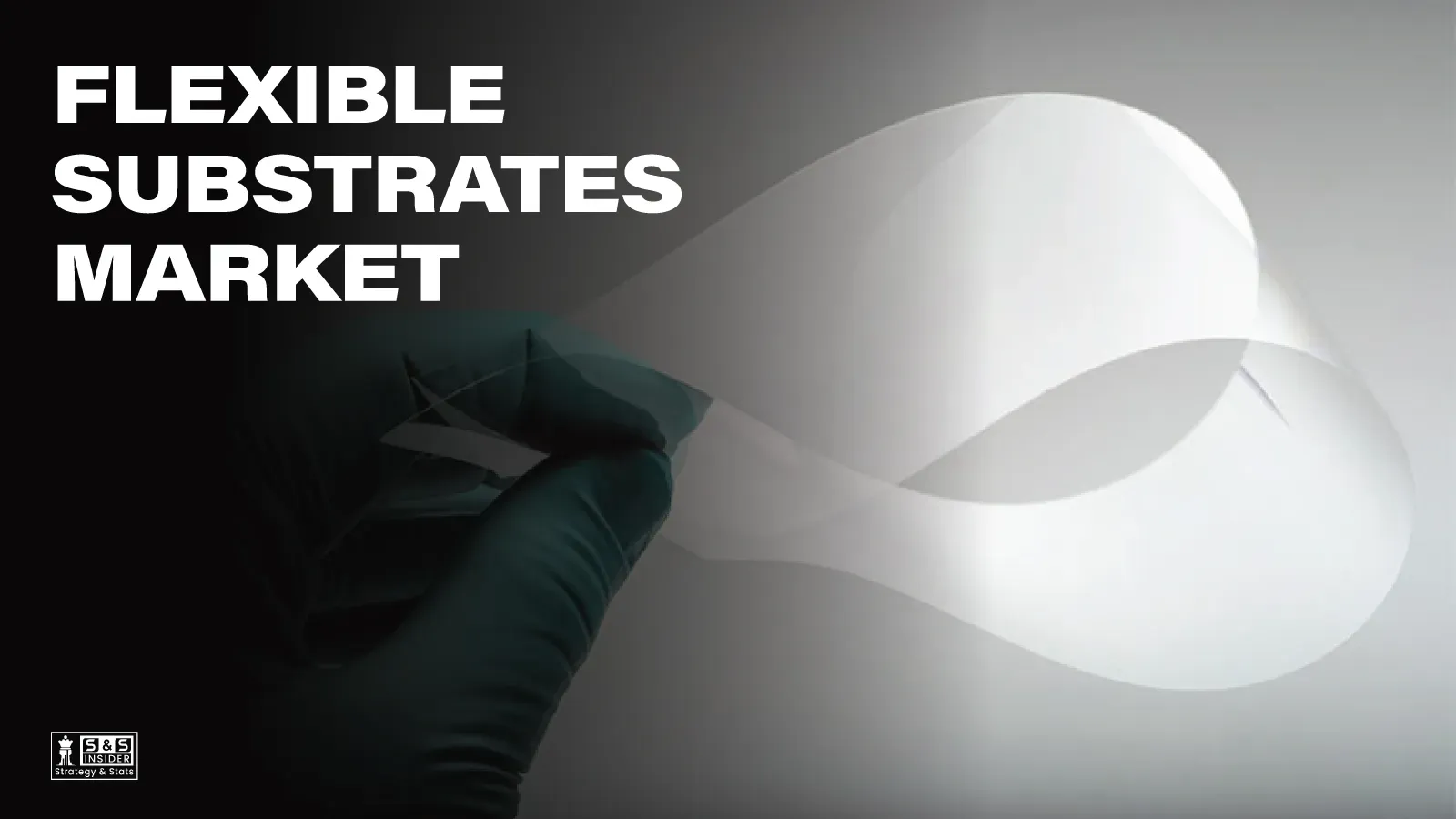
Flexible Substrates Market is witnessing robust traction owing to the increased use of lightweight, thin, sturdy, and mechanically versatile materials by manufacturers from various industries like electronics, automobiles, healthcare, energy and industrial applications. Flexible substrates play a key role in supporting technology like foldable displays, wearables, printed sensors, flexible circuits, automotive electronics and thin film photovoltaics. With rising demand for miniaturized, energy efficient, and high-performance devices, the significance of substrates is set to grow substantially.
The Flexible Substrates Market was valued at USD 0.95 billion in 2025 and is projected to grow to USD 2.47 billion by 2035 at a CAGR of 10.00%. The market is estimated to be valued at USD 1.05 billion in 2026. This growth is attributed to the increased use of flexible electronics, rising demand for OLED and flexible displays, developments in polyimide and flexible glass technologies, and increasing applications in renewable energy systems. Increased use of IoT devices, wearable sensors, and connected electronic systems will also help in the growth of the market.
To Get More Information on Flexible Substrates Market – Request Free Sample Report
Top 4 Flexible Substrates Companies
1. DuPont
 DuPont is one of the prominent players within the flexible substrates market owing to the availability of its advanced materials and high-performance polyimide films. The materials from DuPont are well-known for their applicability in applications which demand thermal stability, electrical characteristics, and flexibility. The Kapton polyimide film line from DuPont finds applications in the fields of electronics, aerospace, automotive and advanced communication technologies. In 2024, DuPont introduced a new Kapton polyimide film known as Kapton RS, intended for applications such as 5G antennas and 77 GHz automotive radars.
2. Corning Incorporated
 Corning Incorporated is one of the significant players in the flexible substrates market owing to its cutting-edge glass technology. With flexible and ultra-thin glass becoming increasingly significant for electronics companies due to the need for improved optical properties, dimensional stability, durability, and barriers, flexible glass is particularly crucial for high-end applications like foldable phones, OLED displays and photovoltaics. In comparison to polymer material, ultra-thin glass provides excellent scratch resistance and stability along with the ability to develop advanced and thinner electronics.
3. Toray Industries
 Toray Industries is a leading provider of innovative technologies in polymers and specialty materials used in flexible electronics and substrates. Toray's experience with films and advanced materials contributes to the creation of light-weight, durable, and sophisticated electronic parts. Polymer substrates are the most important material type in the Flexible Substrates Market as they form a large portion of total consumption due to their lower cost, flexibility and ability to use in large scale production. Polyimide, PET and PEN are still commonly used materials in flexible displays, printed electronics, sensors and circuits.
4. Sumitomo Chemical
 Sumitomo Chemical is yet another significant player in the advanced materials and electronics space. Sumitomo Chemical is pertinent to the Flexible Substrates Market owing to its association with specialty materials in display and electronics applications. The proliferation of flexible OLED display screens and advanced consumer electronics is driving up the demand for materials that can meet stringent requirements concerning flexibility, optics and reliability. The significance of advanced substrate technology is rising due to the development of foldable smart phones and other such bendable gadgets. Sumitomo Chemical's presence within the regional electronics and materials ecosystem supports its relevance in this evolving market.
What Is Driving the Growth of the Flexible Substrates Market?
The growing popularity of flexible electronics is among the top contributing factors to market growth. Both customers and industries demand products which are not only thin, light, portable, but also operable in small and non-conventional form factors. Foldable phones and flexible OLED screens are among the major areas of development. Such products need substrates which can be bent without compromising structural and operational characteristics. Flexible substrates are utilized throughout multiple layers of advanced electronics, thus having greater material significance compared to rigid electronics.
There are also advancements made through the fast-growing trend towards the usage of wearable technology and Internet of Things devices which are also driving the market forward. The development of sensors, health monitors, smart fabrics and systems needs material solutions that will be able to change their shape without compromising electronic functionality. Manufacturing technologies are also advancing, and improvements are being seen in polymer films, flexible glass, metal foils and other substrates in terms of their heat resistance, conductivity, durability and flexibility.
The Road Ahead
The future of the Flexible Substrates Market will increasingly be shaped by the growth of foldable electronics, wearable devices, advanced displays, automotive technologies, semiconductor packaging, and flexible renewable energy systems. Plastic materials are expected to remain essential for high-volume applications, while ultra-thin flexible glass is likely to gain stronger adoption in premium electronics and high-performance applications. Roll-to-roll manufacturing will also remain a critical technology for improving scalability and production efficiency.
The market for Flexible Substrates Market is forecasted to rise from USD 0.95 billion in 2025 to USD 2.47 billion in 2035, where advanced substrates materials are forecasted to play an increasingly vital role in facilitating the transition towards the next generation of electronic technologies that are lighter, thinner, smaller, very well connected, and adaptable in nature. Overall, the rising popularity of flexible substrates will ensure the strategic importance of flexible substrates in the future of advanced electronics.