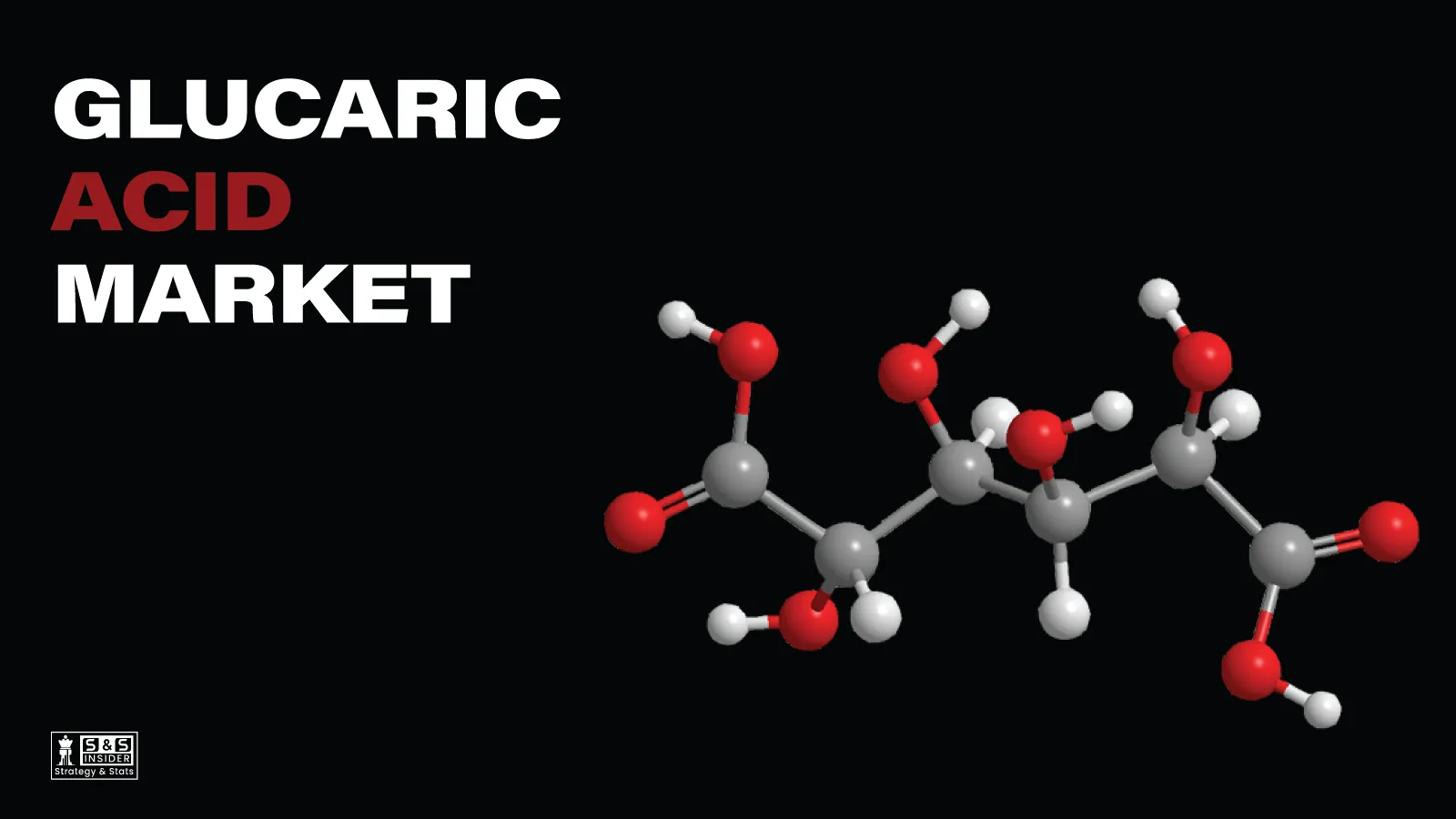
The Glucaric Acid Market in Europe is experiencing growth as detergent companies and speciality chemicals firms adopt this biodegradable dicarboxylic acid as a substitute for artificial phosphates. Glucaric acid, which is derived from oxidizing glucose, possesses excellent chelation capabilities that make it suitable in cleansing products and water treatment as well as its new use in pharmaceuticals and nutraceuticals.
As per the analysis of SNS Insider, the Europe Glucaric Acid Market reached USD 217.50 Million in 2025 and is anticipated to grow up to USD 505.53 Million by 2035, at the rate of approximately 8.80% between 2026 and 2035. This is further supported by the Global Glucaric Acid Market, which reached USD 750.0 Million in 2025 and will grow up to USD 1,775.5 Million by 2035 at 9.0% CAGR driven by rising demand for phosphate replacements in cleaning agents and growing pharmaceutical interest in glucaric acid derivatives.
Gain Actionable Intelligence on the Glucaric Acid Market - Request a Sample Report
Why Europe Continues to Drive Demand
The growth of Europe's glucaric acid market is driven by the increasing pharmaceutical industry research on glucaric acid derivatives and strong environmental regulations that prohibit the use of phosphates in detergents. The strong demand due to the regulations has kept the consumption constant despite high cost of producing glucaric acids compared to traditional synthetics.
Germany is the biggest consumer, generating an estimated 24.20% of European revenue due to its sizeable production of specialty chemicals and industrial products. The UK and France also generate considerable demand. It is expected that the demand from the region will continue rising in future years due to Europe's increasing focus on bio-based chemicals.
Segment Trends Shaping the Region
The pure form of glucaric acid had the largest global share of 44.5% in 2025 on account of its economic feasibility and wide range of applications in detergents and other chemicals. Calcium D-Glucarate is the fastest-growing product type on the account of nutraceuticals and pharmaceuticals use after FDA GRAS approval for functional foods in 2024.
Detergents and cleaning agents are the biggest application segment accounting for 40.8% of global application share owing to regulations related to phase-out of phosphates. Food ingredients is the fastest-growing application area owing to rising application in functional foods and beverages besides its conventional industrial applications.
Companies Driving Europe's Glucaric Acid Industry
BASF SE
 One of the companies that is still playing a vital role in the production of glucaric acid in Europe is BASF, which plays an essential part in enabling Europe to move towards sustainability and to replace chemical phosphate products by bio-based alternatives. Being the biggest chemical manufacturer in Germany, BASF’s involvement in bio-based chemistry research further confirms Germany’s dominance as the leading market for glucaric acid in Europe.
Novozymes A/S
 The company Novozymes was still making strides in its efforts to develop its production technology that uses enzyme and fermentation for specialty bio-chemicals in 2025, and aimed at forging more collaborations with manufacturers of glucaric acid to increase their efficiency in production. This effort towards developing fermentation technology will definitely assist Novozymes in tackling one of the industry's main restraints.
Solvay S.A.

Solvay has an active involvement in the specialty and sustainable chemicals scenario in Europe, contributing to the European move towards bio-industrial chemistry. As the European laws limit the use of synthetic phosphates in cleaning products, Solvay's involvement in the production of glucaric acid can be seen as part of the larger trend in the European chemical industry for sustainability-certified feedstock.
Other established players supporting the European market include Corbion N.V., DSM-Firmenich AG, Roquette Frères, and Merck KGaA, alongside global producers such as Cargill and Archer-Daniels-Midland Company.
Market Dynamics and Outlook
Replacement by phosphates continues to be the leading structural growth driver in Europe, supported by increasing levels of environmental consciousness and increased R&D on biochemicals. Higher production cost premiums compared to synthetically produced products continue to be a major constraint, especially in the detergent applications that have high price competitiveness, while fermentable sources have been unable to match the efficiencies of established petroleum-based technologies.
Higher value nutraceutical and pharmaceutical uses via clinical research of calcium D-glucarate for its detoxifying effects will be the most significant opportunity, as producers leverage fermentation developments coupled with pharmaceutical grade quality certification in the European glucaric acid market to 2035.