
As more organizations move toward the process of transforming into digitalization, workload management among various cloud services has now evolved into a strategic need from being just an operational one. Companies have started leveraging multiple clouds for better flexibility, lower chances of vendor lock-in, cost optimization, and business continuity. But workload management across various cloud service providers poses complexities that create a high demand for efficient multi-cloud management solutions.
The cloud management platforms used nowadays are allowing companies to have their processes automated, monitor performance of the infrastructure, implement governance strategies, and enhance security in various cloud computing environments like public, private, and hybrid clouds. Artificial intelligence, automation, and FinOps are adding value to cloud management practices as well.
The Multi-Cloud Management Market was valued at USD 15.96 billion in 2025 and is projected to reach USD 178.88 billion by 2035, expanding at an impressive CAGR of 27.34% during 2026–2035. Rapid enterprise cloud adoption, growing hybrid cloud deployments, and increasing investments in AI-powered cloud management solutions are expected to fuel sustained market growth over the coming decade.
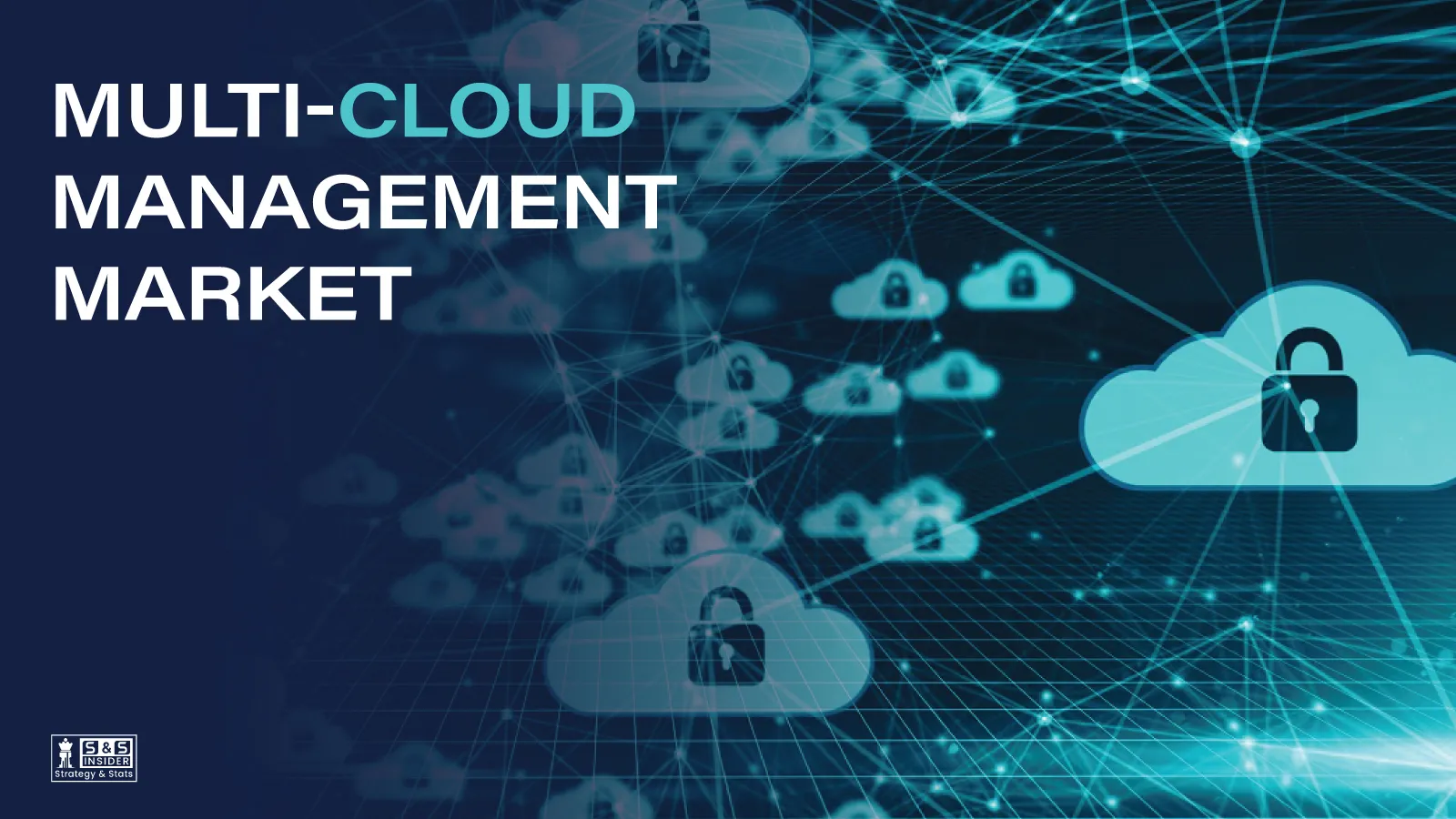
Top 5 Multi-Cloud Management Companies
1. IBM Corporation
IBM is one of the industry leaders when it comes to hybrid and multi-cloud management. This is possible due to its broad range of cloud software. The firm’s IBM Cloud Pak products allow managing applications, automation, monitoring, and consistent governance on different cloud platforms. The IBM platform provides such features as containers, Kubernetes, AI automation, and enterprise security, which makes it a good choice for the highly regulated industries such as finance, healthcare, and government services. Moreover, due to the open hybrid cloud approach, enterprises can transform their legacy applications without interrupting current activities.
In 2024, IBM has improved cloud management functions by acquiring HashiCorp worth $6.4 billion, expanding its automation, infrastructure provisioning, and multi-cloud orchestration portfolio.
2. Microsoft
Microsoft has become a dominant force in enterprise cloud management through Azure Arc, which allows organizations to manage on-premises, multi-cloud, and edge computing resources from a single control plane. Its platform simplifies governance, compliance, security monitoring, and workload management across distributed cloud environments. Similarly AI-Powered functionalities are also leveraged into Microsoft products via Azure AI, Microsoft Defender for Cloud and Azure Monitor, which helps predictive analytics, automates the security aspects and provide intelligent resource optimization. These characteristics increase cloud performance while minimizing operational complexity for enterprises.
With more businesses running AI applications on diverse cloud ecosystems, Microsoft's integrated cloud management landscape draws attention from enterprises in the midst of an enterprise-wide digital transformation.
3. Red Hat
Red Hat OpenShift, which is one of the best Kubernetes solutions, has helped make Red Hat one of the leading organizations in hybrid cloud technologies due to the open-source nature of the platform. This makes it possible for companies to develop, deploy and manage applications uniformly from their private data centers or from the public cloud provider. It provides you with container orchestration, application portability, DevSecOps automation and centralized management capabilities to enable companies to become more proficient in cloud-native development with proper security and compliance. OpenShift is widely used by us in the financial services, manufacturing, telecommunications, and health care industries.
In December 2024, Red Hat expanded its collaboration with AWS to increase the availability of RHEL AI and OpenShift AI, simplifying enterprise AI deployments across hybrid and multi-cloud environments.
4. BMC Software

BMC Software is an established vendor that offers IT operations and cloud management solutions that assist in improving the increasing complexity of cloud environments. This multi-cloud management platform incorporates automation, service management, observability, and AI-driven operations in one single package. BMC Software offers its solutions for monitoring cloud infrastructure, automating workflows, governance, and cloud optimization in various providers. The strength of BMC in large enterprises has helped the organization become a reliable partner for organizations looking to achieve operational efficiency.
In 2024, BMC launched two solutions called HelixGPT and Helix Edge, which are built on AI technology to help streamline cloud operations, automate IT service management, and increase productivity in cloud ecosystems.
5. CloudBolt Software
 CloudBolt Software is among the major suppliers of cloud financial management and cloud automation tools that help enterprises maximize the benefits of using the cloud. This tool provides the user with capabilities for infrastructure provisioning, policy management, cloud governance, and FinOps. The strong point of the CloudBolt software is in the use of artificial intelligence algorithms that allow the company to provide cloud cost optimization services that help the customers to gain real-time insights into their cloud cost while maximizing cloud resource allocations and workloads.
In 2024, CloudBolt introduced its next-generation Augmented FinOps platform, leveraging artificial intelligence and machine learning to deliver advanced cloud cost forecasting, lifecycle management, and automated financial optimization for enterprise cloud operations.
The Future of Multi-Cloud Management
As companies grow their digital business further, multi-cloud management will be a critical part of future IT strategies. Companies are anticipated to make use of cloud-native solutions, artificial intelligence processing capabilities, edge computing, and hybrid clouds, thus increasing the need for the platform for managing such systems.
Artificial intelligence will have a transformational effect here in terms of allowing predictive resource management, automation of compliance monitoring, intelligent workload placement, and security management. On the other hand, FinOps will become an integral part of enterprise strategy due to the need to manage cloud costs.
Rising digitization in various sectors such as healthcare, banking, manufacturing, and government will further speed up the adoption of state-of-the-art multi-cloud management systems. The contributions of small and medium enterprises in the growth of the market will be substantial due to the rising availability of inexpensive cloud management solutions.
With the focus on flexibility, resilience, and efficiency, firms that provide intelligent automation, governance, and cloud management services will continue to be leaders in cloud transformation for enterprise. Their contributions will be essential in enabling businesses to fully realize the benefits of multi-cloud environments in the digital world.



