
Warships, such as destroyers, frigates, submarines, aircraft carriers and patrol ships, are essential to defending territorial waters, ensuring maritime trade routes and bolstering national defence infrastructure. As geopolitical tensions rise and strategic competition intensifies in critical maritime regions, governments are focusing on the enhancement of naval capabilities via the acquisition and modernisation of advanced vessels.
The modern naval battle field requires more and more ships which are multi-role, stealthy and with the endurance to operate over long ranges. Consequently, the defence forces are moving towards next generation naval platforms with advanced propulsion systems, increased weapon integration and improved surveillance technologies. These developments are changing the global naval defence landscape and are creating consistent demand for technologically advanced naval vessels in developed and emerging economies.
Driven by increasing investments in maritime defense and fleet modernization programs, the Naval Vessels Market is forecast to increase from USD 117.09 billion in 2025 to USD 222.70 billion by 2035, reflecting a compound annual growth rate CAGR of 5.17% over the 2026–2035 period.
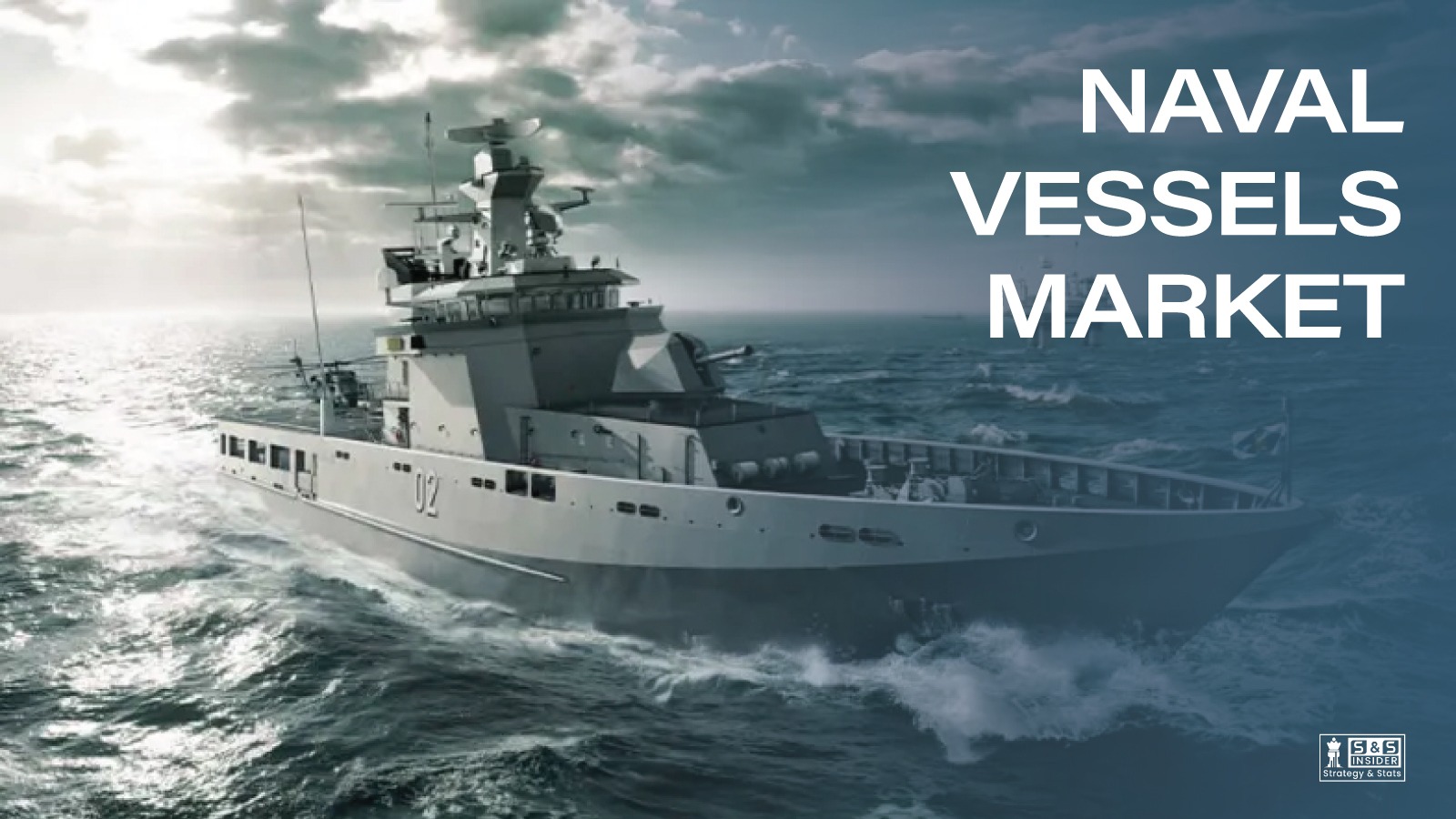
Naval Vessels Market
Key Players
The leading companies operating in the Naval Vessels Market include BAE Systems, General Dynamics, Huntington Ingalls Industries, Lockheed Martin, Northrop Grumman, Naval Group, Saab AB, Thyssenkrupp Marine Systems (TKMS), Fincantieri S.p.A., Mitsubishi Heavy Industries, Kawasaki Heavy Industries, Daewoo Shipbuilding & Marine Engineering (DSME), Hyundai Heavy Industries (HHI), Hanwha Ocean, Larsen & Toubro (L&T), Garden Reach Shipbuilders & Engineers (GRSE), Mazagon Dock Shipbuilders Limited (MDL), Navantia, Austal Limited, and Damen Shipyards Group.
Strategic Developments & Industry Innovations
Naval defence sector is developing with breath-taking speed with changes in shipbuilding, propulsion and fighting technologies. Governments throughout the world are investing in nuclear powered submarines, stealth enabled destroyers and multi-role war ships, aiming for increased operational flexibility and survivability in the combat environment of today.
Technological advances are improving situational awareness and mission effectiveness via the integration of modern radar sensors systems, battle management systems and automated defence platforms. Besides, navies have been rapidly integrating digital shipbuilding technologies, modular ship design and AI-based maritime surveillance systems for improving operational efficiency and decreasing lifetime costs.
Leading Companies in the Global Naval Vessels Industry
1. BAE Systems: Advancing Next-Generation Naval Combat Capabilities

BAE Systems is one of the world’s leading global defence, aerospace and security companies and has a strong presence in the global naval vessels market. The company designs and builds advanced surface combatants, submarines and naval systems that support today’s maritime security operations. Naval solutions are geared to enhancing combat readiness, stealth, and multi-domain operational performance.
The company is engaged in the development of next generation destroyers and frigates with advanced weapon systems, radar technologies and integrated combat management platforms. BAE Systems is also investing in digital shipyard technologies and autonomous naval systems to enhance operational efficiency and lifecycle performance. It is a major player in global maritime defence modernisation programmes, leveraging its long history of naval engineering.
2. General Dynamics: Strengthening Submarine and Surface Fleet Technologies

General Dynamics is a major naval defence contractor, with a focus on high end production of submarines and surface ships. The company builds high performance naval boats for surveillance, strategic deterrent and multi-mission combat operations. Its systems are widely used by the defence forces around the world for their reliability, endurance and cutting edge technical integration.
The company specialises in nuclear-powered submarines, state-of-the-art combat systems and fully integrated naval solutions delivering superior performance in the most challenging maritime conditions. General Dynamics remains committed to investing in next generation shipbuilding technology and digital engineering systems to meet the increasing defence needs and to maintain its competitive advantage in the global naval vessels market.
3. Lockheed Martin: Enhancing Naval Combat Systems and Integrated Defense Solutions

Lockheed Martin, with 114,000 employees worldwide, is principally engaged in the research, design, development, manufacture and integration of advanced technology systems, products and services. The company assists naval forces with state-of-the-art command and control systems, radar technologies and advanced weapon integration platforms.
It enhances the operational effectiveness of modern naval fleets through its emphasis on network-centric warfare capabilities and real-time situational awareness systems. Lockheed Martin continues to develop advanced naval defence solutions that enable multi-domain operations and enhance maritime security across global defence networks.
4. Northrop Grumman: Advancing Naval Surveillance and Mission Systems

Northrop Grumman is a multinational defence contractor that focuses in sophisticated naval systems, surveillance technologies and mission-critical defence solutions. The firm supplies integrated solutions to increase naval situational awareness, reconnaissance, and operational coordination.
Its solutions allow fleet modernisation with enhanced communication systems, autonomy and sensor integration. Northrop Grumman’s continuous commitment to innovation in naval defence further cements its position as a leading player in global maritime security systems.
Data-Backed Trends Guiding Future Business Opportunities
The growth in the global military spending is a major factor supporting the growth of the Navy Vessels Market. Governments are investing again in modernising ageing vessels, developing state-of-the-art maritime defence technology and renewing naval fleets. Such tendency is especially acute in the zones of high geopolitical tension and territorial dispute.
The other major trend is the increasing demand of multi-role and stealth capability of naval vessels. So contest situations are driving the build up of modern navy ships with better stealth characteristics, increased manoeuvrability and integrated combat systems to boost survivability and operational flexibility. Nuclear propulsion and hybrid energy sources are also changing the capabilities of navy ships. The upgrades will mean longer mission persistence, fewer operational limitations and improved strategic depth.”
Naval operating efficiency is being enhanced with digital shipbuilding, AI-based navigation system and automated defence technologies.



