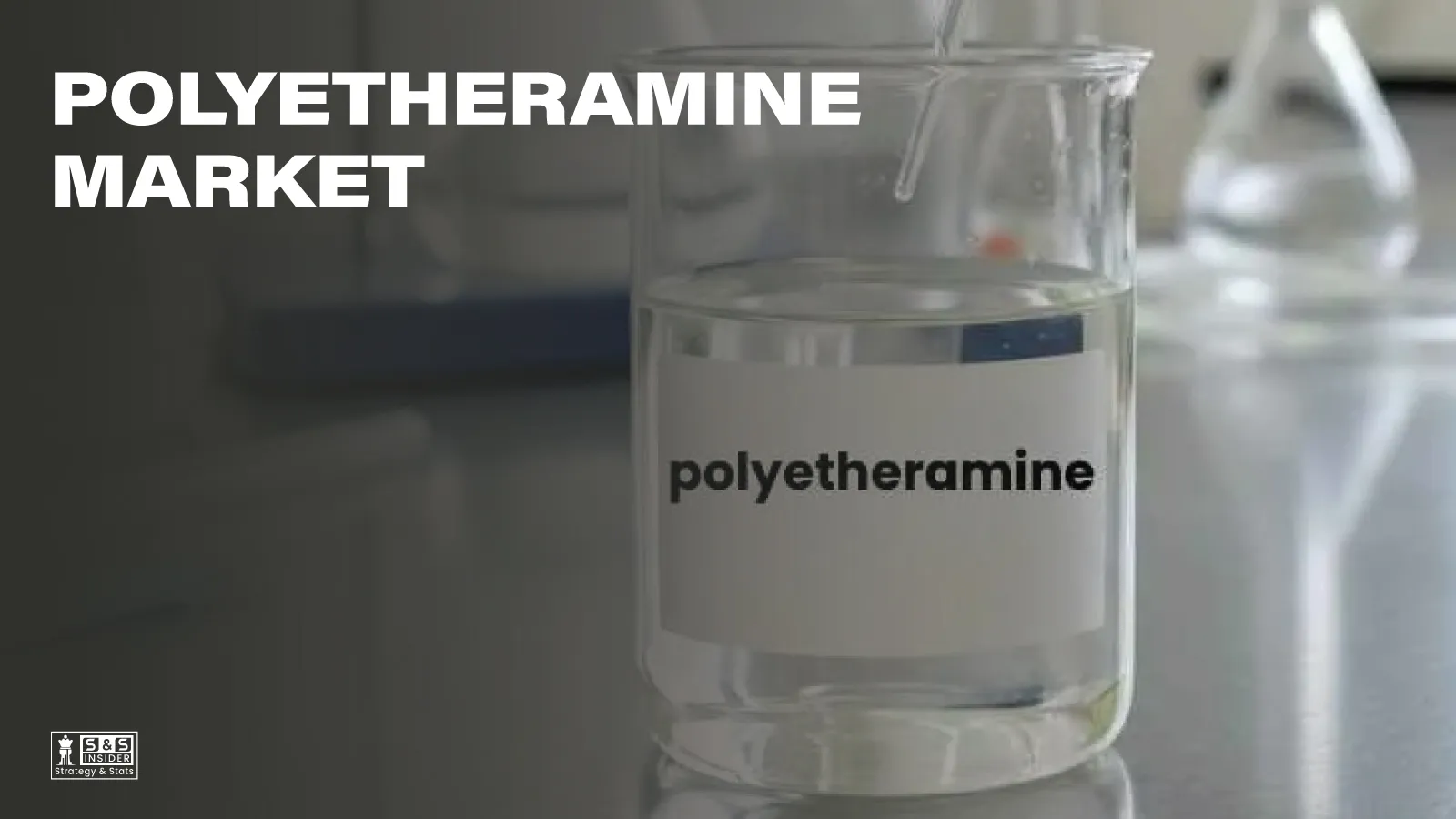
The Polyetheramine Market is gradually growing due to the increased use of this type of specialty chemicals in various sectors including the production of wind turbine blades, infrastructure coatings, and aerospace composites. The Polyetheramines, which have polyether chains with terminal amine functional groups, provide more flexibility compared to traditional curing agents, thus making them an important ingredient in toughened coatings and structural adhesives.
As per SNS Insider, the Polyetheramine Market was worth USD 1.29 Billion in 2025 and is expected to reach USD 2.72 Billion by 2035 growing at a CAGR of 7.92% during 2026-2035. The polyetheramine product category was introduced into the market by JEFFAMINE products range from Huntsman Corporation.
To Get More Information on the Polyetheramine Market – Request Free Sample Report
Wind Energy Is Reshaping Demand Patterns
Production of wind turbine blades has become one of the main commercial factors behind high polyetheramine consumption. Curing of epoxy resins using diamines ensures mechanical and chemical resistance and high thermal stability necessary for production of fiber glass and carbon fiber blades, as manufacturers aim to go beyond the 80-meter mark in length of rotors. Development of offshore wind farms is particularly important because turbines used offshore have more composite materials per MW installed compared to turbines located on-shore.
The importance of this factor is that diamine is the fastest-growing polyetheramine type while monoamine accounted for the leading market share in 2025 at about 46% due to its importance in fuel additives applications where its simple molecular structure allows easy and inexpensive formulation.
Coatings Lead Today, Composites Are the Future
In 2025, epoxy coatings were worth approximately 38% of the market, due to the enormous infrastructure protection needs that use polyetheramine-based epoxy coatings. In response to increasing VOC regulation by the US EPA and the EU REACH program, coating manufacturers are being forced to develop waterborne or high solids epoxy coatings where polyetheramines offer their compliant low viscosity curing capability.
The fastest growing market segment is composites. Aside from turbine blades, aerospace structural composites, automotive bumpers body panels, flooring systems, and battery enclosures all contribute to growing polyetheramine consumption. With each new generation of turbine blades getting bigger, the polyetheramine content per blade goes up with each generation.
Regional Demand Patterns
Asia Pacific is the world leader with China alone making up 52.3% of the regional revenues via its construction, industrial coating, and wind energy manufacturing industry segments. Local producers such as Wuxi Acryl Technology, Yangzhou Chenhua, and Yantai Minsheng are currently operating on a commercial scale alongside international companies such as Huntsman and BASF.
North America is the fastest-growing region with a CAGR of 9.07%. It is led by the USA which makes up 81.4% of regional revenues. Growth in North America is highly influenced by government policies where the Inflation Reduction Act tax credits to wind energy and the USD 1.2 trillion Infrastructure Investment and Jobs Act are supporting a sustained multiyear demand for polyetheramine-cured composites and coatings.
Europe is a large, sustainability driven region with Germany representing 28.7% of regional revenues due to its status as the largest wind energy market within the EU region, as well as being home to the manufacturers of automotive composite parts used for BMW, Mercedes-Benz, Volkswagen, and Audi. North Sea and Celtic Sea offshore wind farm development keeps driving investment in composite manufacturing capacity in the region.
Companies Shaping the Market
Huntsman Corporation
 Huntsman launched a line of tri-functional polyetheramine resins branded as JEFFAMINE in January 2025 for use in superior epoxy resins in aerospace and automotive composites. Being the original and most specified brand in the industry, Huntsman’s latest development in tri-functional technology is set to cater to the growth segments within the fastest growing market segment with the need for high-performing large composites.
BASF SE
 In 2025, BASF increased its offering of polyetheramine products for waterborne epoxy coating systems, which require low VOC content. The growth in demand for water-mixable curing agents was driven by regulations that have made it difficult to use solvent-based coatings in Europe and North America for infrastructure coating applications. This was attributed to the company’s strengths in manufacturing chemicals as well as in the bio-based amine chemistry field of study.
Evonik Industries

The Evonik Company introduced a new line of products of VESTAMIN polyetheramines in 2025 aimed at meeting specific requirements of offshore wind turbine manufacturers with regard to fatigue resistance and resistance to corrosion from salt in offshore wind blade composites manufacturing. The development of such products is necessary for offshore wind industry that has greater structural and corrosion protection demands compared to onshore blade applications.
Other major producers are Evonik's German counterpart Clariant AG, Covestro AG, Dow Chemical Company, and Wuxi Acryl Technology from China, who increased the production capacities in 2025.
Growth Drivers, Restraints, and Outlook
The wind energy composite demand and global infrastructure protective coating expenditure are the two main sources of growth, owing to the need to rehabilitate aged bridges, pipelines, and utilities infrastructure in North America and Europe. The major limitation of the industry includes the instability in raw material costs of petro-based propylene oxide and ammonia from natural gas. Market consolidation is also a factor because of few global suppliers of the product.
The offshore wind energy development and bio-based polyetheramine certifications are the two future areas of growth, especially because of the need to meet sustainable procurement policies required by construction companies, car makers, and wind energy developers until 2035.