
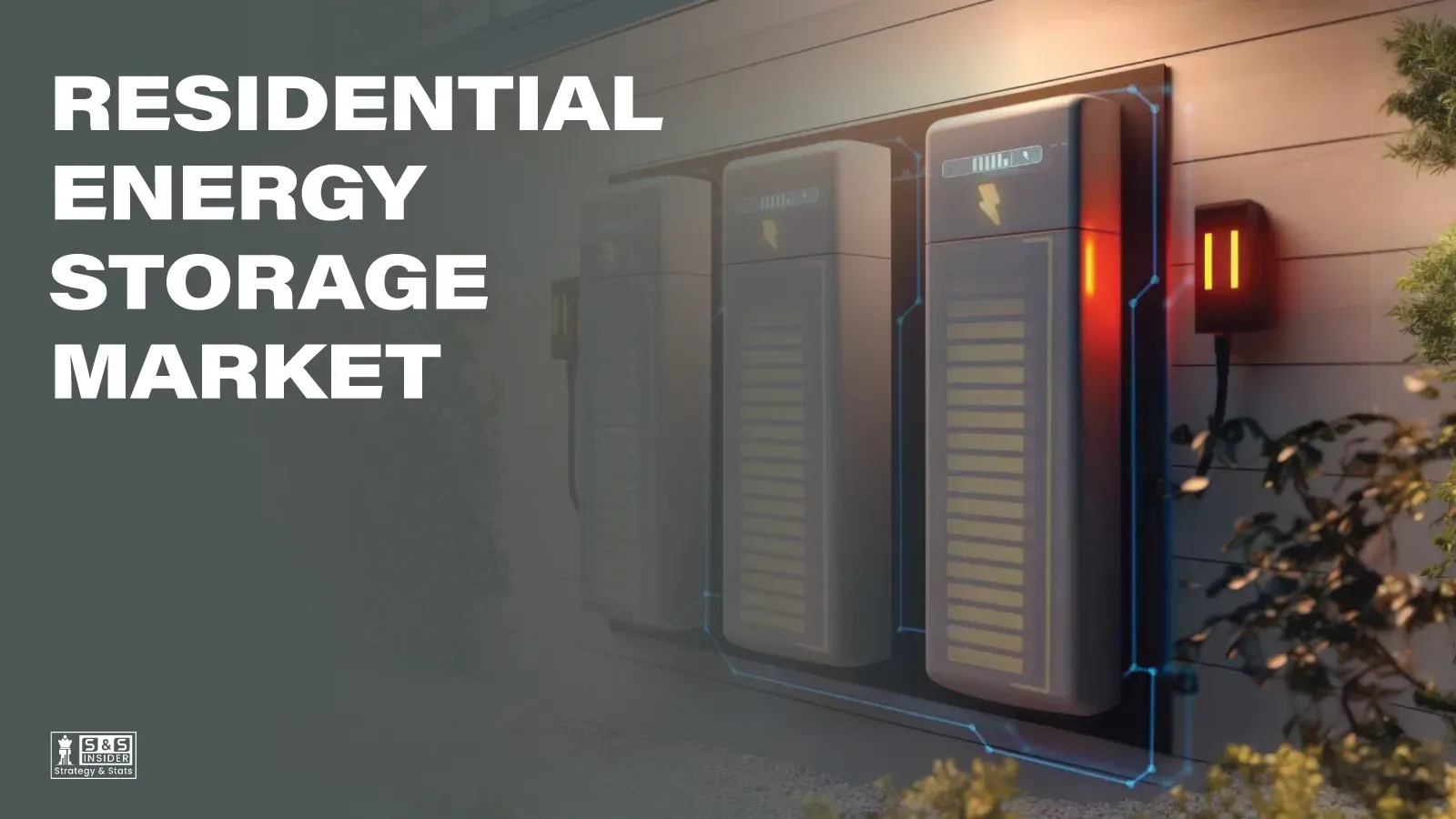
Market for Residential Energy Storage is quickly emerging as one of the most significant components of the global green energy industry, as consumers start to look for efficient and sustainable sources of electricity. Residential energy storage systems allow the accumulation of electricity that is generated by rooftop solar panels or by the grid, thus providing backup energy in case of a blackout and managing electricity usage. Worsening conditions of the grid, increasing prices of electricity and the switch to renewables are making residential energy storage more popular.
As per SNS Insider, Residential Energy Storage Market is expected to witness a valuation of USD 1.96 billion in 2024, and will reach USD 5.60 billion by 2032, growing at a CAGR of 14.08%. Growing trend of integration of residential batteries with solar PV, EV chargers, and home energy management software is changing the way homes produce, store, and use electricity. Constant advancements in lithium-ion batteries technology, government incentives, and energy management technologies are some other factors aiding growth in this market.
Gain Actionable Intelligence on the Residential Energy Storage Market - Request a Sample Report
Top 3 Residential Energy Storage Companies
1. Panasonic
 Panasonic is among the top companies making energy storage for use in households. The company is a pioneer in the development of highly efficient lithium-ion batteries that are ideal for use in households with solar power generation and energy autonomy. Panasonic has continued to improve on its market presence by improving on battery safety, long life span and intelligent energy management technology. Panasonic has also continued to form business partnerships with solar installation companies, utilities and smart home solutions companies.
2. Eaton
 Eaton has positioned itself as one of the key suppliers of intelligent residential power management and energy storage systems. Its offerings include battery storage, electrical distribution, backup power and home energy management systems, which allow homeowners to control electricity consumption and improve the reliability of the grid. Eaton’s systems are used in numerous residential solar power generation projects and distributed energy systems. The company remains committed to investing in digital energy solutions and modern electrical grids. With the growth of residential electrification due to electric cars, heat pumps, and smart devices.
3. ABB
 ABB is one of the most renowned tech companies which provides residential energy storage systems via highly efficient power electronics, inverters, battery integration systems, and energy management software. Residential product offerings by ABB help facilitate the installation of roof-top solar power systems, battery storage facilities, electric vehicle chargers, and automated home systems to enable efficient use of renewable energy sources. ABB remains committed to developing smart grids, intelligent monitoring systems, and digital energy management systems, thereby enhancing battery efficacy and system efficiency.
Growth Drivers Transforming the Residential Energy Storage Market
The market for residential energy storage technologies has been fueled by the increased demand among consumers for self-sufficiency, high cost of electricity, and the installation of rooftop solar power generation equipment. Homeowners have been buying battery storage units in order to become less dependent on the utility grids and provide electricity in case of any disruption caused by the weather conditions or problems with the electricity grid itself. Governmental incentive programs include tax credits and rebates for renewable energy sources.
Innovation in technology has been revolutionizing the industry as well. The lithium-ion batteries hold the lion's share of the market owing to their increased efficiency, longer lifespan, decreasing prices, and ability to interact with smart energy management systems. The development of AI, cloud computing, energy prediction software, and VPPs has made it possible for consumers to save on energy costs and optimize consumption.
Increased electrification of households has brought about new opportunities for residential energy storage providers. The increased uptake of electric cars, heat pumps, intelligent appliances, and all-electric houses has increased the need for electricity among households, thus making battery storage an important part of the residential energy storage system in the future. There is also increased affordability through third-party ownership and leasing systems.
Regional Growth Strengthens the Global Residential Energy Storage Industry
The North American region is the leading player of the Residential Energy Storage Market due to the presence of solar panel installations, favorable government policies, robust power grids, and worries about the reliability of the power grid owing to natural disasters such as hurricanes, wildfires, and winter storms. The U.S. is the largest country in terms of residential energy storage and will continue to be a driving force with the help of various federal tax credits, renewable policies, and net-metering policies.
Asia-Pacific region is expected to witness the highest growth over the forecast period owing to urbanization, increase in residential electricity demand, and supportive policies from the government for installing renewable energy sources. The region is witnessing heavy investment from countries, such as China, Japan, South Korea, and Australia in residential solar, battery energy storage, and energy management solutions in homes. Growing battery manufacturing capacity, favorable policies for clean energy, and growing awareness among consumers about energy independence have resulted in rapid growth of the market.
Residential energy storage market in Europe is still witnessing strong growth due to factors such as high prices of electricity, carbon neutrality targets and increased need for energy security after the regional disruption in supply. The region’s government has been encouraging the development of distributed renewable energy systems via policies and regulation, financial and non-financial incentives among others in order to install solar-plus-energy storage in homes.
The Road Ahead
Residential Energy Storage Market's future will be defined by continuous development in the fields of batteries technology, artificial intelligence, digital energy management, and integration of renewable energy. The development in the area of lithium-ion, solid-state, and next generation batteries is resulting in increased efficiency and lifespan of residential energy storage systems, thus making them more affordable for customers. Energy management software based on artificial intelligence will help people to manage the use of energy within their households and take part in demand response programs.
The manufacturers that are currently working on lithium-ion battery technologies, integration with smart homes, virtual power plants, and energy management systems will be very well poised to take advantage of future markets. Due to increasing use of solar energy, electrification of homes, and government efforts in promoting green energy, residential energy storage will become increasingly important in developing energy systems of the future.



